

We use the law to promote and defend justice and human rights as part of the @OpenSociety Foundations.
- Tweets20K
- Following2K
- Followers37.9K
- Likes268
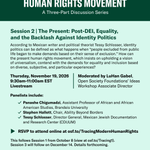



ALT Tracing the Modern Human Rights Movement Session 2 | The Present: Post-DEI, Equality, and the Backlash Against Identity Politics According to Mexican writer and political theorist Tessy Schlosser, identity politics can be defined as what happens when “people excluded from public life began to make demands based on their sense of exclusion.” How can the present human rights movement, which insists on upholding a vision of universalism, contend with the demands for equality and inclusion based on diverse, subjective, and particular experiences? Thursday, November 19, 2026 9:30am-11:00am EST Livestream Moderated by LuHan Gabel. Open Society Foundations’ Ideas Workshop Associate Director Panelists Panashe Chigumadzi, Assistant Professor of African and African American Studies, Brandeis University Stephen Hallett, Chair, Ability Beyond Borders Tessy Schlosser, Director General, Mexican Jewish Documentation and Research Center (CDIJUM) RSVP: osf.to/TracingModernHumanRights


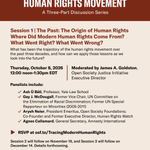
ALT Session 1 The Past: The Origin of Human Rights. Where Did Modern Human Rights Come From? What Went Right? What Went Wrong? What has been the trajectory of the human rights movement over the past three decades, and how can we apply those lessons as we look into the future? Thursday, October 8, 2026 12 noon–1:30 pm EDT Livestream Moderated by James A. Goldston, Executive Director, Open Society Justice Initiative Panelists include: Aslı Ü. Bâli, Professor, Yale Law School Gay J. McDougall, Former Vice Chair, UN Committee on the Elimination of Racial Discrimination; Former UN Special Rapporteur on Minorities (2005–2011) Aryeh Neier, President Emeritus, Open Society Foundations; Co-Founder and Former Executive Director, Human Rights Watch Agnès Callamard, General Secretary, Amnesty International RSVP at osf.to/TracingModernHumanRights Session 2 will follow on November 19, and Session 3 will follow on December 14. Details forthcoming.

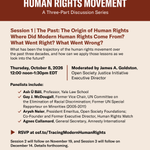
ALT Session 1 The Past: The Origin of Human Rights. Where Did Modern Human Rights Come From? What Went Right? What Went Wrong? What has been the trajectory of the human rights movement over the past three decades, and how can we apply those lessons as we look into the future? Thursday, October 8, 2026 12 noon–1:30 pm EDT Livestream Moderated by James A. Goldston, Executive Director, Open Society Justice Initiative Panelists include: Aslı Ü. Bâli, Professor, Yale Law School Gay J. McDougall, Former Vice Chair, UN Committee on the Elimination of Racial Discrimination; Former UN Special Rapporteur on Minorities (2005–2011) Aryeh Neier, President Emeritus, Open Society Foundations; Co-Founder and Former Executive Director, Human Rights Watch Agnès Callamard, General Secretary, Amnesty International RSVP at osf.to/TracingModernHumanRights Session 2 will follow on November 19, and Session 3 will follow on December 14. Details forthcoming.


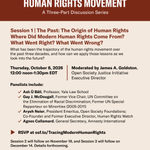
ALT Session 1 The Past: The Origin of Human Rights. Where Did Modern Human Rights Come From? What Went Right? What Went Wrong? What has been the trajectory of the human rights movement over the past three decades, and how can we apply those lessons as we look into the future? Thursday, October 8, 2026 12 noon–1:30 pm EDT Livestream Moderated by James A. Goldston, Executive Director, Open Society Justice Initiative Panelists include: Aslı Ü. Bâli, Professor, Yale Law School Gay J. McDougall, Former Vice Chair, UN Committee on the Elimination of Racial Discrimination; Former UN Special Rapporteur on Minorities (2005–2011) Aryeh Neier, President Emeritus, Open Society Foundations; Co-Founder and Former Executive Director, Human Rights Watch Agnès Callamard, General Secretary, Amnesty International RSVP at osf.to/TracingModernHumanRights Session 2 will follow on November 19, and Session 3 will follow on December 14. Details forthcoming.


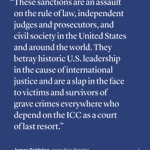
ALT “These sanctions are an assault on the rule of law, independent judges and prosecutors, and civil society in the United States and around the world. They betray historic U.S. leadership in the cause of international justice and are a slap in the face to victims and survivors of grave crimes everywhere who depend on the ICC as a court of last resort.” - James Goldston, executive director of the Open Society Justice Initiative

