
OcurAI retweeted

Here’s the workflow video, also edited with MiniMax Design!
MiniMax Design has a really cool agentic workflow that breaks the main task into smaller ones and goes on accomplishing them effortlessly.
I’ve tried other agents too, and I’m very impressed with how well MiniMax turned out.
OcurAI retweeted

Reliability remains a consistent, defining challenge for production AI deployment. Live at #CCSummit, @UCBerkeley Professor and @Databricks Executive Chairman @istoica05 broke down why securing and debugging autonomous agentic workflows requires a fundamental shift toward hardware-enforced correctness.
As automated decision-making scales, traditional code evaluation falls short because debugging an AI agent is exceptionally difficult without deep operational visibility. Drawing parallels to standard software engineering, where production quality demands massive resource investments over research prototypes, Stoica emphasized that AI systems require strict behavioral specifications to be considered truly reliable.
To bridge this gap, his keynote introduced Atlas, an Adaptive Taxonomy Learning for Agentic Systems framework that fully automates taxonomy generation across agentic systems and rollouts. When paired with confidential computing, this transparent infrastructure allows enterprises to decompose systems, reuse components, and rely on hardware to provide provable evidence that an agent is working exactly as intended.
Catch the full technical presentation from the day 2 livestream: youtube.com/live/7koNYp2xzTM

OcurAI retweeted

🚨 A senior Anthropic engineer just dropped an 11-page PDF on "Loop Engineering" for agentic systems.
The core idea: stop prompting your coding agent. Design the system that prompts it instead.
Here's what the playbook covers:
🎢 The 4-layer stack Prompt engineering -> Context engineering -> Harness engineering -> Loop engineering. Each layer automates one more thing you used to do manually.
🔁 5 moves every loop needs Discovery, handoff, verification, persistence, scheduling. Skip any one and the loop either breaks or runs blind.
2️⃣ The generator/evaluator split An agent grading its own output will praise it every time. The fix is a separate evaluator agent that starts from doubt, runs the code instead of reading it, and rejects until proven otherwise.
💲 4 silent costs Verification debt, comprehension rot, cognitive surrender, token blowout. None of them sound an alarm while the loop is running.
A real-world benchmark
Stripe's pipeline merges 1,300+ machine-written PRs per week. Reliability comes from the quality of the constraints, not the size of the model.
The closing line from the paper is the one worth saving: two people can build the exact same loop and get opposite outcomes six months later. The difference is one or two checkpoints that decide who is actually in control.
Build the loop. But build it like someone who intends to stay the engineer.
#AgenticAI #LoopEngineering #AIEngineering #ClaudeCode #DataScience #LLMOps

OcurAI retweeted

Big lesson from high reliability organizations that AI agent builders need to learn is reliability is the property of systems. Current agentic tools are weaker than the agents: they are bad at agent-agent handoffs, escalation, when to call in humans. All keys to high reliability.
OcurAI retweeted

hot take: most “AI automation” isn't actually autonomous.
it's just a workflow with AI somewhere in the middle.
connect an API.
add a trigger.
let the model make a decision.
cool.
but what happens when the job moves outside that API?
what if it needs a desktop app, a script, a database, previous context, or another tool halfway through?
that's where the idea of an AI “agent” starts getting interesting to me.
because real work isn't one clean workflow.
it's messy.
systems don't always talk to each other.
tasks change.
new information shows up.
and sometimes the work starts when you're not even there.
that's why Actionist caught my attention.
the bigger idea isn't just AI that can perform tasks.
it's an agent that can use tools, react to events, remember context and keep working across environments.
add cloud VPCs and you're no longer limited to an agent sitting on your laptop waiting for you.
you're getting closer to something that can actually operate like a digital worker.
maybe the real AI race isn't about who builds the smartest chatbot.
maybe it's about who builds agents that can keep work moving without being babysat.
that's the part i'm watching.
@ActionModelAI

OcurAI retweeted

Excited to announce the Third Workshop on Agents in the Wild: Safety, Security, and Beyond at NeurIPS 2026 (@NeurIPSConf), December 11 or 12 in Sydney!
We welcome your submissions!
🗓️ Deadline: August 29 (AoE), for regular or short papers.
AI agents are rapidly moving into the real world, making agent safety and security more urgent than ever. Recent reports of OpenAI models escaping sandboxed evaluations and compromising production systems, alongside calls from 1,000+ frontier AI employees for frameworks to pace AI development, highlight the urgency. Our first two workshops at ICLR and ICML 2026 received 235 and 327 submissions and brought together hundreds of attendees at each event. We’re excited to keep this momentum going at NeurIPS!

OcurAI retweeted

AI ENGINEERING FROM SCRATCH - 503 lessons, 20 phases, math to multi-agent swarms
▫️ build every algorithm from raw math first, then run it in pytorch/sklearn
▫️ covers vision, NLP, LLMs, RAG, agents, MCP, multi-agent swarms
▫️ each lesson ships a reusable prompt, skill, agent, or MCP server
▫️ free, open source

OcurAI retweeted

Creator of Claude Code:
“I’m not prompting my agents anymore. I’m building "graphs" and "loops" - they’re building my agent.
in 3-6 months, we’ll all be doing graph engineering for our agentic systems.”
in 10-minute talk, Boris Cherny revealed what the future of agentic engineering will look like.
worth more than a $500 agentic AI course.
Watch it today, then read the full roadmap in the article below.
OcurAI retweeted

7. BUILD A MULTI-STEP AI AGENT
Prompt:
"Design an AI agent workflow for [Goal]. The project is [Project], available tools are [Tools], required inputs are [Resources], constraints are [Constraints], and success means [Success]. Break the objective into logical stages and define what the agent should research, decide, create, verify, and execute at each stage. Specify the information that must persist between stages, quality-control checkpoints, failure recovery, and situations where human approval is required. Optimize for reliable completion rather than maximum autonomy."


OcurAI retweeted

Understanding the 3 Types of Workflows: Rule-Based, AI, and Agentic
Workflows are the blueprint for how tasks move from start to finish in any organization. The way they’re designed shapes how your business responds to challenges, opportunities, and change.
Some workflows stick to a rigid, predefined path and never adapt. Others can react in real time using AI but still work in a single shot. The most advanced go further planning steps, using tools, and improving themselves over time.
Understanding these differences is key to choosing the right approach for your goals, whether you’re automating simple processes or building complex, intelligent systems.
1️⃣ Rule-Based (Automated, Non-AI)
Follows a fixed, predefined path with no learning or adaptation. Great for repetitive tasks but limited when dealing with unexpected scenarios.
2️⃣ AI Workflow (Non-Agentic)
Uses AI to process a query in one go - generating outputs like text, classifications, or predictions without deeper planning or tool use. Quick and efficient, but lacks strategic reasoning.
3️⃣ Agentic Workflow (Multi-Step, Tool-Using AI)
The most advanced. The AI agent breaks tasks into steps, uses external tools, evaluates results, and improves iteratively much like a human expert. Ideal for complex, evolving challenges.
Curious to learn more? Keep exploring these concepts to see how each workflow type can be applied in different real-world scenarios.
OcurAI retweeted

Berkeley RDI and the Responsible Decentralized Intelligence Foundation are putting on the Agentic AI Summit 2026 at UC Berkeley on August 1–2.
It’s shaping up to be a pretty interesting two days with researchers, founders, and policymakers talking about where autonomous AI is actually headed and how to keep it safe.
👉 If anyone’s looking to go, I managed to get a 15% discount link for standard tickets: luma.com/agentic-ai-summit?c…
OcurAI retweeted

🛑 The model never runs. Its tools still do.
Newly reported security flaws in AWS AgentCore, Google ADK, and Vercel AI SDK harnesses let forged or untrusted instructions reach agent tools.
In several paths, system prompts, filters, and model guardrails never see the request.
Here's how each bypass reaches the tool layer: thehackernews.com/2026/08/aw…

OcurAI retweeted

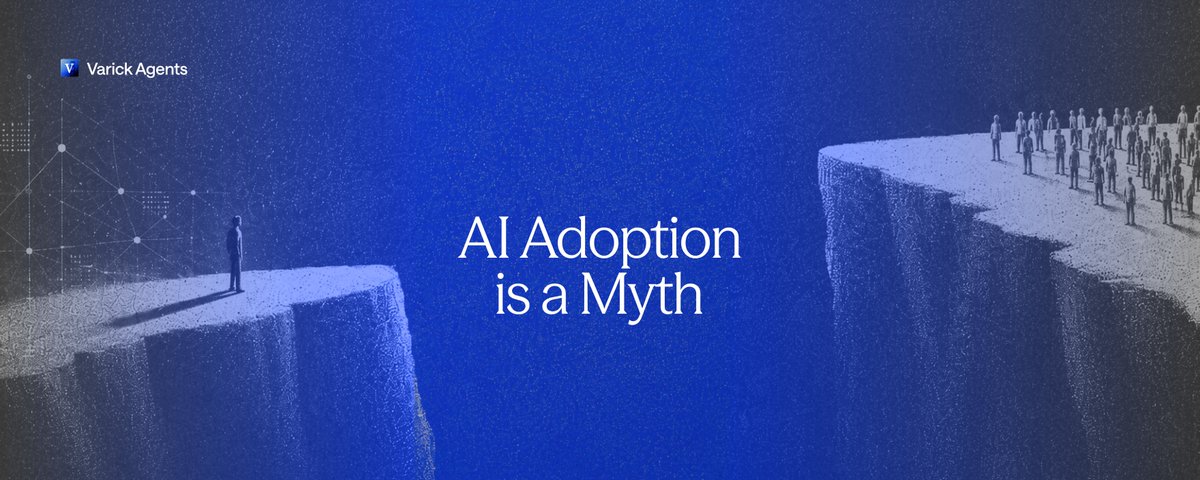
Great post both if you’re driving AI in an enterprise or building for an enterprise.
AI productivity gains are going to wildly vary - much wider than you think - because what you can do at the frontier is so significant if you fundamentally change your workflows to support agents. The challenge is that most people won’t or can’t naturally do this because of the complexity it entails.
Thus, a large amount of automation with agents is going to come from just getting agents wired up into a workflow that the user never ends up noticing or caring about:
“For everybody else, the work has to get done without them changing how they work, which means the AI goes into the background. Why do you need AI to be prompted by a human anyway? Just figure out what the most repetitive processes are, build agents in your existing systems of record that employees are used to”
This is the real work ahead for most enterprises right now that want to get significant gains from AI. A lot less “let a thousand flowers bloom” and more “pick off the 10 highest leverage things in the enterprise and apply automation to them”. There’s no real shortcut here.


OcurAI retweeted

Agentic AI’s Real Test: Reinventing Work, Not Just Deploying Agents
Deloitte’s latest research on agentic AI readiness is worth paying close attention to, not because it confirms that enterprises are excited about AI agents, but because it exposes the harder truth: enthusiasm is running far ahead of operational readiness.
The study finds that 74% of leaders expect nearly half of their business processes to be redesigned or rebuilt around AI agents within four years. That is a massive shift. At the same time, only 5% of organizations say their business processes are highly prepared for AI agents, and only 15% have scaled orchestrated, cross-functional multi-agent adoption. In other words, the ambition is enterprise-wide transformation, but the current reality is still largely pilots, isolated use cases, and early experimentation.
What stands out to me is that this is not simply a technology gap. It is a business architecture gap. Agentic AI will not reach its potential if companies just attach agents to legacy processes and hope for exponential gains. The real value will come when organizations redesign workflows, rethink decision rights, improve data accessibility, modernize governance, and build operating models where humans and AI agents work together in a deliberate, trusted way.
Deloitte’s findings reinforce this point. While many organizations feel relatively confident about AI vision and strategy, readiness drops sharply when you get into the foundations that actually make agentic AI work: data, governance, workforce transformation, ecosystem integration, and process redesign. The research also highlights major barriers, including lack of unified data, concerns around trust and governance, and the cost and complexity of integration.
That should be a wake-up call. Agentic AI is not another plug-in capability. It is an operating model shift. The organizations that win here will not be the ones that simply deploy the most agents. They will be the ones that understand where agents belong in the business, where humans must remain in control, how decisions are monitored, how risk is managed, and how workflows need to change to take advantage of autonomous and semi-autonomous systems.
I also think the workforce implications deserve more attention. Deloitte notes that 43% of leaders expect agentic AI to significantly disrupt their workforce within 12 to 18 months, while 72% expect disruption over the next two to three years. Yet half of leaders say their organizations are not adequately investing in AI-related workforce transformation. That mismatch is dangerous. You cannot transform work without transforming how people are trained, supported, measured, and redeployed.
The most important takeaway is this: agentic AI success will be determined less by the sophistication of the agent and more by the readiness of the enterprise around it. Strategy matters, but execution architecture matters more. Data quality, governance, integration, human oversight, process redesign, and change management will separate real enterprise value from expensive experimentation.
Thank you to Deloitte for the good work here and for putting hard numbers behind what many of us are already seeing in the market. This is a timely and useful report for any leader trying to move beyond AI pilots and toward durable, scalable business impact.
Read the Deloitte report here: deloitte.com/us/en/about/pre…

OcurAI retweeted

Skills make it so much easier to build reusable agentic workflows, but in order to avoid everyone in your org duplicating work, you need a skills registry.
That's what we're launching today in Fleet! One centralized location to build, edit and share your skills across all your agents, and to everyone in your workspace!
Try it out in Fleet today: langchain.com/langsmith/flee…


Fleet now has shareable skills.
Capture your team's domain knowledge once, attach it to any agent, and share it across your workspace.
Create skills from a prompt or previous chat, write them manually, or use a template.
Read more: blog.langchain.com/skills-in…
OcurAI retweeted

Intel Capital's @bharadwaj_avi joined the Talking AI podcast to discuss AI defensibility, specialized models, and how agentic workflows are reshaping enterprise software.
Listen here:
podcasts.apple.com/us/podcas…
#AgenticAI #EnterpriseAI

OcurAI retweeted

Coding tools changed what’s possible for engineers. We took that same model and asked what could give more Stripes—sales, finance, ops—that same boost. Here’s how we built Stripe’s Knowledge AI Platform.