

Col. BU Okorie (Rtd) Esq. is on a mission to demystify military law in Nigeria.
Abuja, Nigeria
Joined November 2022
- Tweets957
- Following13
- Followers42
- Likes700


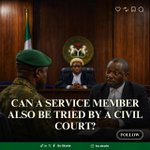

Does the military operate above the law? And when a soldier commits an offence, who has the authority to try them — a military court or a civilian court?
The Armed Forces have a specialised justice system designed to uphold discipline, order and operational effectiveness.

1
1
16
However, military justice does not exist outside the wider legal system.
Understanding where military jurisdiction begins, how military trials work, and where civil courts come in is essential to understanding justice within the Armed Forces.
1
1
5
Military justice is specialised, but it remains subject to the law.
#MilitaryJustice #MilitaryLaw #ArmedForcesAct #RuleOfLaw #NigerianLaw #CivilCourts #MilitaryTribunal
5
Alas!
What a great loss to the bereaved families and friends. May God save us from the tragedy of undelayed gratification and that of unfriendly friends!
1
11
I recently came across this video of the Flamingos of Nigeria at the FIFA U-17 Women's World Cup, and it took me back to their memorable 4–0 victory over Ecuador in October 2024. Watching those young women display such determination, resilience and self-sacrifice
2
1
30
its people first.
These young women have given us their best in the most recent Tournament, knowing they were representing millions of Nigerians. If they could show such commitment to their country, surely those entrusted with leading Nigeria should do better.
1
8
Military trials have their own procedures, but the requirement of fair hearing remains important.
Chapter 1 of Introduction to Military Law Practice and Procedure in Nigeria emphasises the need for military trial procedures to comply with the constitutional requirements of fair

1
9
hearing.
This is an important reminder:
Military discipline does not remove the need for due process.
Follow for more insights on military justice in Nigeria.
#buokorie #militarylaw #legaleducation
2
Military law is not relevant only to those in uniform.
Lawyers who practise at court-martial trials and law students seeking to understand this specialised area can also benefit from a practical understanding of military trial procedure.


1
1
11
Introduction to Military Law Practice and Procedure in Nigeria was written with both military and civilian readers in mind.
Explore the book today.
To get a copy, send a WhatsApp message to 07087622283.
#buokorie #militarylaw #Nigerianarmy #legaleducation
1
6
A court-martial is governed by a detailed legal framework, but how much do you know about the process?
From its constitution and jurisdiction to evidence and appeals, every stage matters.


1
1
19


Military Drill is the foundation for military discipline while military discipline is the Soul of military law
Videocredit: Nigeria Defence Academy
#buokorie #militarylaw #legaleducation
1
25
Military service does not automatically remove the jurisdiction of the civil courts.
The Armed Forces Act expressly provides that nothing in the Act restricts the offences for which a person may be tried by a civil court or the jurisdiction of a civil

1
1
23
court to try a person subject to service law, subject to the Act’s provisions.
The relationship between military and civil justice is therefore an important part of military law practice.
1
1
4