

product manager & AI researcher @NeurIPSconf @ICMLconf @KDD_news @SOSPconf @ACM_CHI | prev @deshawgroup @sentientagi @princeton
Palo Alto, CA
Joined July 2024
- Tweets514
- Following372
- Followers3.8K
- Likes2.8K





Pinned Tweet
I am ready to share that after 2 phenomenal years as the product lead at @SentientAGI, I decided to leave the company.
This decision was not easy to make. I wish the rest of the team the best as they continue working on frontier AI research and supporting the open-source AI community. It has been an honor and a pleasure working with everyone.
With that said, the road ahead won't be any less exciting. My posts will remain centered on the latest and greatest in AI, and I'll take some time to pursue many new ideas!

Oleg Golev retweeted

Gemini 4 Neon: frontier-level intelligence with fast end-to-end task completion across complex software engineering, knowledge work, and science workflows.
Begins rolling out today in the Gemini API in @GoogleAIStudio, Gemini for business, for paid Google AI Pro and Ultra subscribers in Google @Antigravity, and for Google AI Pro and Ultra subscribers in the @GeminiApp.

Congratulations!

General Translation has raised $27m led by @martin_casado at @a16z to localize the world’s best companies.
Today, @generaltxn serves Ramp, Cursor, and Sierra by translating apps, sites, docs, slide decks, and even product videos into dozens of languages.
a16z invested alongside @upfrontvc, Peter Thiel, Fei-Fei Li, and more. 🧵
1
8
434
Oleg Golev retweeted

Last year, @SentientAGI and @Princeton researchers @edoardocontente, @viswanathpramod, @sewoong79, @oleg_golev, and @ZeruiCheng published “OML: A Primitive for Reconciling Open Access with Owner Control in AI Model Distribution."
This groundbreaking research on model fingerprinting is what paved the way for @sentient_found’s Fingerprinting Leaderboard.


Models cost millions to train and minutes to copy. Fine-tuning and distillation can erase where they came from.
Introducing the Fingerprinting Leaderboard, an open benchmark for model provenance — built so the proof lives in the weights, not the paperwork.
fingerprint.sentient.foundat…
Oleg Golev retweeted

Small bird, fast wings, Kolibri is here.
78B parameters. 3.46B active. Up to 1M tokens of context. Built in Europe.
Now the weights are yours. Run it on your own hardware, under Apache 2.0.
Oleg Golev retweeted

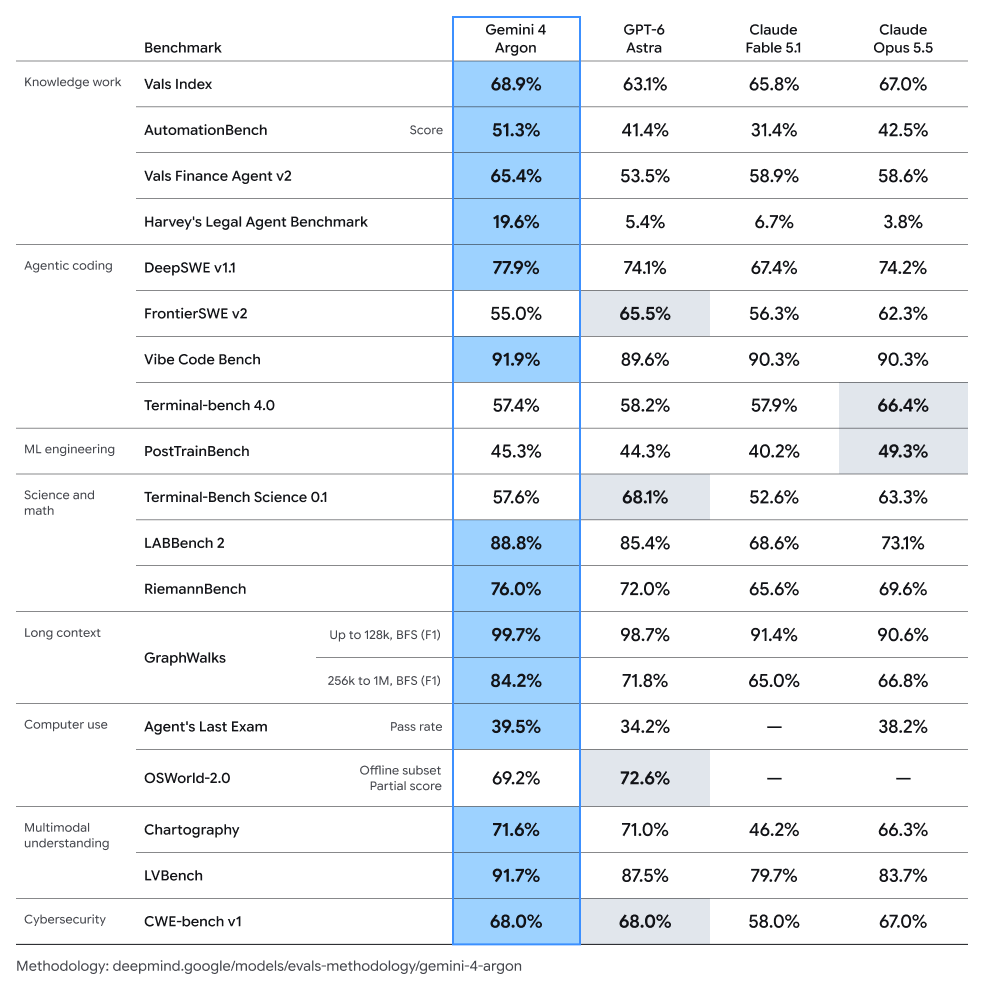
Introducing Gemini 4 Argon – our new frontier model.
It’s built for complex workflows across coding, enterprise knowledge work, and cybersecurity defense – rolling out today to a set of trusted testers through our Fairwind Program.





Oleg Golev retweeted

go fuck yourself @sama
claiming that you solved navier stokes because 10000 agents ran in circles for 88hours on a multimillion dollar gpu cluster to formalize in lean a blowup case under controlled external forcing is pure scientific vulgarity the clay mathematics institute millennium prize does not ask m whether you can artificially force a singularity in a fluid by injecting an ad hoc smooth external forcing term f(x,t) to twist the vortex until it breaks the real problem questions the fundamental stability and global smooth existence for 3dimensional incompressible euler & navier stokes equations under natural conservation laws and viscous dissipation alone using a mathematical loophole on forced equations to parade a century old victory is a major conceptual scam Altman
technically & epistemologically what you present as an agi breakthrough is nothing more than bruteforce combinatorial autoformalization the ai did not understand fluid mechanics it simply navigated a continuous search space previously mapped out and constrained by the monumental work of human mathematicians like tristan buckmaster/ levent alpöge / diego córdoba or tarek elgindi coordinating 10000 agents to check the logical consistency of a 100 page proof via lean is a software engineering feat and computational parallelization triumph not an intrinsic scientific discovery it is the victory of the compute bulldozer over abstract human intuition repackaged for the public as a higher mathematical consciousness
to this theoretical imposture you add a disgusting ethical and industrial cynicism taking advantage of private codex sessions and informal preprints from academic researchers to siphon their research leads and then trying to redact or erase the contribution of levent alpöge under the pretext that he works at rival anthropic is intellectual serfdom openai behaves like a feudal lord of silicon appropriating the cognitive subsistence of independent scholars threatening their careers behind closed doors if they protest and turning community academic labor into a privatized pressrelease
this entire staged event serves a desperate financial agenda in a pre ipo panic facing the slowdown of scaling laws and growing investor skepticism over the profitability of foundational models openai needs to manufacture an artificial sputnik moment claiming to solve a millennium prize without immediately submitting the proof to traditional peer review means using the prestige of fundamental mathematics as cheap marketing fuel to inflate a delusional valuation!!!
real science is not a clout chase on social media or a compute spike spent to rob the clay mathematics institute it is a quest for elegance physical truth and universal rigor to decode reality true artificial intelligence will not emerge from hostile corporate takeover of academic work hidden behind computational bruteforce but from architectures capable of generating new conceptual paradigms by masquerading constrained formalization as the collapse of physics greatest mysteries you did not solve navier stokes you only proved how far silicon valley will go to prostitute scientific integrity for capitalist spectacle

We’re sharing a solution to the Navier-Stokes Millennium Prize Problem, one of the deepest problems at the frontier of mathematics.
The proof was produced by a group of agents, using an OpenAI next-generation model significantly more capable than GPT-6 Astra.
The problem concerns whether the description of smooth three-dimensional fluid motion modeled by the Navier-Stokes equations can break down. It has remained unresolved for roughly 90 years.

Oleg Golev retweeted

I resigned from Anthropic today. I spent the last three years doing pretraining research at both OpenAI and Anthropic. Neither company is acting responsibly. They are racing straight to self-improving superintelligence and gambling with our lives. More thoughts below.

This new paper is interesting in that it more rigorously confirms something we’ve all seen anecdotally—AI agents get distracted quite easily.
Both skill design / depth, appropriate for the intelligence of the model, and skill injection methods, are critical to ensure the LLMs don’t regress severely when used inside complex reasoning harnesses.

Are agent skills always worth using?
The answer is no?
This paper provides some important insights to understand this more.
(bookmark it)
Paper summary:
Adding procedural skills to an agent is usually scored by average task success. That number nets gains against damage and hides half of what happened.
Setup: nearly 6,000 paired runs across two office automation benchmarks and three model harness stacks, comparing the same agent with and without skills.
A regression is a task the agent solved without skills and then failed once skills were added. Regressions are large enough that the best performing skills separate themselves mainly through fewer regressions. Larger gains contribute much less.
Three mechanisms drive it.
Skill description osmosis, where a skill changes agent behavior just by sitting in context even when it is never invoked. Grounding displacement, where a prescribed procedure overrides how the agent reads its inputs. Verification displacement, where the procedure suppresses checks the agent would otherwise run on its own output.
Trace analysis surfaces that procedural guidance is the stage least often responsible for failure, while grounding and verification dominate the errors that remain. Existing skills are almost entirely procedure.
Paper: arxiv.org/abs/2607.22520
Learn to build effective AI agents in our academy: academy.dair.ai/

Oleg Golev retweeted

Releasing the model weights and technical report of Kimi K3.
Kimi K3 is our most capable model: a 2.8T MoE model with native visual understanding and a 1M-token context window.
New model architecture: 2.5x the intelligence per unit of compute, not just more params.
Alongside Kimi K3, we're opening up more of the stack behind it — high-performance attention kernels, MoE communication library, and infrastructure for running agent environments at scale.
Model weights: huggingface.co/moonshotai/Ki…
Tech report: github.com/MoonshotAI/Kimi-K…
Tech blog: kimi.com/blog/kimi-k3


Oleg Golev retweeted
Q2 was an amazing quarter, with our AI investments redefining what’s possible across every part of our business.
Alphabet revenue grew 24% YoY and Google Cloud accelerated to 82% growth. We saw exciting momentum across the board from Search to YouTube to the Gemini app (which reached 950M monthly active users). Our model APIs are processing 22B tokens/min (up from 16B+ last quarter) driven by our workhorse Flash models. We’re also seeing great adoption of Gemini Enterprise, used by 90% of the Fortune 100, as well as strong demand for our security solutions.
Outstanding results and momentum, and such an exciting moment—thanks to all of our partners and employees around the world! 🙌 About to hop on the call!

Oleg Golev retweeted

extremely unprofessional. if kimi wants to make it as a frontier lab, they need to act like one: perhaps silently route people to worse models, and maybe write a blog post about the collapse of humanity

Kimi K3 has received far more love than we expected, and our GPUs are feeling it.
Over the past 48 hours, demand has pushed close to the limits of our current capacity. To protect the experience of existing subscribers, we're temporarily pausing new subscriptions and prioritizing compute for current members. Existing subscribed users are not affected.
We're adding capacity as fast as we can and will reopen new subscription spots in batches.
Going forward, we'll also split membership into two more focused plans: Kimi Membership for Kimi Web, App, and Work; and Kimi Code Membership for coding workflows. This will help us match compute more precisely and keep the experience stable.
Thank you for your patience and understanding!
Oleg Golev retweeted
What if the harness matters as much as the model itself, both for how many tokens you burn and how often you actually solve the task?
That’s the question @iamnamanvats and @oleg_golev explore in “The Scaffold Effect in Coding Agents”, accepted at the incoming @icmlconf 2026.
Here's how to use Sentient’s findings to cut your own coding agent's inference costs by up to 40x, and why your choice of harness may matter more than your choice of model ↓
