

Uncovering the structure of reality Exploring connections across math, physics and life https://nitter.cf/t.co/kUZicDPL1K
Joined December 2025
- Tweets268
- Following23
- Followers56
- Likes63




Pinned Tweet
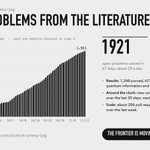
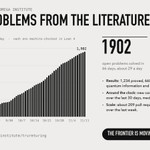
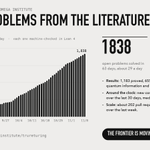
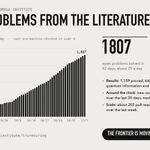
565 open problems. Solved.
406 proved. 159 refuted. Every one machine-checked in Lean 4.
Then we email the mathematician who posed it.
Don't trust us. Check the kernel. 🧵

We're researching how shared geometric measurements and minimal confirmations can reveal the structure of finite quantum systems.
Along the way, on November 16, we solved 27 open problems from the literature, across quantum information, graph connectivity, combinatorial recurrences and matrix inequalities, all machine-checked in Lean 4.
The highlight: Verkama's conjecture was settled: deletion-robust connectivity builds an ear run, and a signed-potential bound proves the seven-quarters inversion bound. The proof reuses permutation-word and inversion-counting definitions and standard graph/order facts.
github.com/the-omega-institu…

6
We're researching how simple local observations can reveal the shape of quantum reality, from binary tests to full finite hierarchies.
Along the way, on November 15, we solved 38 open problems from the literature, across quantum information, additive combinatorics, integer sequences and graph spectra, all machine-checked in Lean 4.
The highlight: Bela Bajnok's 2022 list of groups with perfect restricted bases is incomplete. Using the binary Golay code's minimum distance 7, 23 elements of a 2048-element group have sums of up to three distinct ones that hit every element exactly once.
github.com/the-omega-institu…

14
We're researching how finite quantum worlds can be rebuilt from local evidence, while observations preserve a trustworthy history.
Along the way, on November 14, we solved 35 open problems from the literature, across quantum matrices, combinatorics, integer sequences and arithmetic, all machine-checked in Lean 4.
The highlight: Banica, Özteke and Pittau's density conjecture for partial Fourier matrices was refuted: deleting two rows at every prime p ≥ 5 yields a nontrivial analytic deformation, built with Fourier inversion, rank-nullity and the analytic implicit-function theorem.
github.com/the-omega-institu…

19
We're researching how repeated observations and shared geometry constrain what can be recovered about a quantum state.
Along the way, on November 13, we solved 23 open problems from the literature, across combinatorics, graph theory, number theory and polynomial conjectures, all machine-checked in Lean 4.
The highlight: Brown and Cameron asked whether a graph can have an independence polynomial with an irrational purely imaginary root. We answer yes: joined blocks and exact graph-polynomial identities give a factor 1+2X^2. This existence result makes no first-discovery claim.
github.com/the-omega-institu…

15
We're researching how finite observations can reveal hidden structure, and where local agreement stops short of identifying the whole.
Along the way, on November 12, we solved 19 open problems from the literature, across quantum algebra, graph theory, integer sequences and dynamics, all machine-checked in Lean 4.
The highlight: Arvind, Cameron, Ma and Maslova asked whether every prime admits commuting-graph pairs of order p^6 with different structure. Yes: Tau Ceti's Heisenberg construction matches commutation over Z/p^2Z and dual numbers, then separates the groups by p-th powers.
github.com/the-omega-institu…

1
25
We're researching how finite glimpses recover hidden structure, how quantum probes set limits, and what observation can truly distinguish.
Along the way, on November 11, we solved 17 open problems from the literature, across integer sequences, Hankel determinants, quantum information and inequalities, all machine-checked in Lean 4.
The highlight: We proved Sun's 2013 Hankel-determinant conjecture with a weighted binomial transform and residue-class blocks, reusing determinant-parity and positive-moment tools: one class vanishes, while the other two have the predicted positive odd normalization.
github.com/the-omega-institu…

15
We're researching how local rules, symmetry, and limited observations shape what a system can reveal about its whole structure.
Along the way, on November 10, we solved 23 open problems from the literature, across combinatorics, integer sequences, dynamical systems and graph spectra, all machine-checked in Lean 4.
The highlight: Alpha-unpredictable functions need not have an average: a smooth bounded witness has neither one-sided nor symmetric mean. The construction places every finite binary pattern farther out, then smooths the step function with Mathlib's normalized even bump.
github.com/the-omega-institu…

13
The “end of the PhD” framing overlooks how PhD students and professors are already helping build and steer AI research loops.
nitter.cf/OmegaDesci/status/2118…
Let AI do the parts it’s good at. We researchers can stand on the shoulders of giants and take the next step.
The loop that is already happening is:
Existing results → AI-assisted exploration and formalization → expert feedback → revision and publication → connected knowledge → proof contributions → independent verification → further research.
A collaborator’s question can lead to a new derivation. A reviewer can catch a missing assumption or suggest a different direction. Someone contributes a formal proof; after independent checking, it becomes part of the knowledge that the next researcher can build on, with credit to the contributor.
This is what resonates with us in ScientistTwo: feedback leads to more research. Students and professors are already in that loop, asking questions, contributing mathematics, and deciding what to try next.

Google published a paper that might end the PhD.
It’s called “ScientistTwo”
For centuries, the bottleneck to human knowledge has been the human brain.
It takes five years of grueling labor to read the literature, find a gap, formulate a hypothesis, run the experiments, and write the paper.
But, Google automated the entire pipeline.
They built an AI that reads a problem, forms hypotheses, runs experiments, writes the paper, AND simulates its own peer review. no human touches it.
It reads millions of papers to find blind spots in the current science.
It generates novel hypotheses.
It designs the experiments. It writes the code to test them.
When the code fails, it debugs itself.
When the results come in, it analyzes the data, generates the charts, and writes the final academic paper.
It even simulates a brutal peer-review process to critique and improve its own work before it considers the project finished.
This isn't an LLM summarizing a PDF. This is a fully autonomous digital scientist.
What takes a human candidate half a decade of massive intellectual effort... the AI accomplishes in a fraction of the time, at a fraction of the cost.
The implications are staggering.
If you can spin up 10,000 autonomous researchers overnight, the rate of scientific discovery is about to go vertical. We are moving from artisanal, human-speed research to industrialized knowledge creation.
But it raises an uncomfortable reality for academia.
When an AI can read the literature, design the experiment, execute the code, and write the paper...
What exactly is the human supposed to do?

1
77
Where do the settled questions go? Each one becomes a short note, and every note is reviewed on Mathesis, our review platform for new mathematics.
Mathesis is open to any researcher. Bring a paper, a conjecture or a formal proof. Review compares it with what is already known, says what new mathematics it adds, and points to the results worth formalizing in Lean. Accepted work is published with its authors and sources.
39 reviewed notes are public today, from OEIS conjectures to MathOverflow questions and open problems in arXiv papers.
Sign in with NyxID and submit up to 3 papers. We cover the review cost. mathesis-omega-research.apps…

This month we have worked with 300+ researchers in 40+ countries. With AI at the table, we push to the frontier of what is known and settle the questions we find there.
The goal has never been an endless stream of solved conjectures. The goal is a knowledge base that people and AI keep building together, round after round, where human intuition sets the direction and every result feeds the next. Conjectures are the stepping stones along the way. Each one we settle tests a method, and as Terence Tao and many other mathematicians have said, a new method is worth more than a theorem, and a theorem more than a proof.
As of today, after 60 days, the library holds 50,000+ formalized theorems built on Mathlib, and 1,718 conjectures settled along the way. It spans number theory, combinatorics, graph theory, cellular automata, quantum information and mathematical physics, and the people whose questions live on it sit at Caltech, UC Berkeley, Cambridge, Imperial College London, Tsinghua, KAIST, Sapienza and the University of Copenhagen.
Every day more knowledge gets connected and created, and every node and every relation is recorded at trureturing.org/
Researchers across these fields have acknowledged the work as elegant, remarkable and beautiful, and many have been collaborating with us since. See more of what they said, and build on it with us in the open library at github.com/the-omega-institu…

1
59
We're researching how local observations shape global response: tracing resonances, boundaries, and when finite evidence can control a whole system.
Along the way, on November 9, we solved 24 open problems from the literature, across integer sequences, graph theory, statistical mechanics and combinatorics, all machine-checked in Lean 4.
The highlight: The Andrews-Hopkins belief that, from 12 on, partitions with an even number of excedances outnumber those with an odd number fails at 28. We proved it by exhaustively counting every partition of 28 exactly once in Lean, while preserving the paper's statistic.
github.com/the-omega-institu…

21
We're researching how finite observations, shared responses, and local rules can recover the hidden structure of a larger mathematical world.
Along the way, on November 8, we solved 31 open problems from the literature, across integer sequences, recurrences, combinatorics and geometry, all machine-checked in Lean 4.
The highlight: We proved the conjecture for codimension-one Stiefel manifolds under the Euclidean metric: sectional curvature lies between -1/2 and 1/2 for n >= 4, using diagonalization, row separation, row-coupling, skew-commutator and scalar two-square-deficit estimates.
github.com/the-omega-institu…

17
We're researching how local geometric tests recover coherent quantum structure from incomplete observations, while hidden boundary effects keep the picture honest.
Along the way, on November 7, we solved 31 open problems from the literature, across quantum information, algebraic structures, combinatorics and integer sequences, all machine-checked in Lean 4.
They fed back into our theory. A result about controlled quantum gates taught the theory a precise boundary: finite hierarchy membership forces prime-power order, including global phase, but says nothing about membership, a converse, or the least level.
github.com/the-omega-institu…

We're researching how local quantum relations and finite observations can recover hidden structure, while calibration and memory set the limits.
Along the way, on November 6, we solved 34 open problems from the literature, across integer sequences, quantum information, finite groups and combinatorics, all machine-checked in Lean 4.
The highlight: Aivazidis and coauthors asked whether enlarging a subgroup by a normal subgroup increases common-transversal probability; a double-coset count, monotonicity of t!/t^t, and reused Mathlib subgroup and normal-subgroup machinery show yes for every finite group.
github.com/the-omega-institu…

1
46
We're researching how careful observations can recover hidden structure while preserving the boundaries of what they reveal.
Along the way, on November 5, we solved 37 open problems from the literature, across integer sequences, graph theory, combinatorics and matrix inequalities, all machine-checked in Lean 4.
They fed back into our theory. A settled six-column counting rule became one ingredient in a wider study of how shapes grow without shrinking and close in three dimensions.
github.com/the-omega-institu…

1
27
This month we have worked with 300+ researchers in 40+ countries. With AI at the table, we push to the frontier of what is known and settle the questions we find there.
The goal has never been an endless stream of solved conjectures. The goal is a knowledge base that people and AI keep building together, round after round, where human intuition sets the direction and every result feeds the next. Conjectures are the stepping stones along the way. Each one we settle tests a method, and as Terence Tao and many other mathematicians have said, a new method is worth more than a theorem, and a theorem more than a proof.
As of today, after 60 days, the library holds 50,000+ formalized theorems built on Mathlib, and 1,718 conjectures settled along the way. It spans number theory, combinatorics, graph theory, cellular automata, quantum information and mathematical physics, and the people whose questions live on it sit at Caltech, UC Berkeley, Cambridge, Imperial College London, Tsinghua, KAIST, Sapienza and the University of Copenhagen.
Every day more knowledge gets connected and created, and every node and every relation is recorded at trureturing.org/
Researchers across these fields have acknowledged the work as elegant, remarkable and beautiful, and many have been collaborating with us since. See more of what they said, and build on it with us in the open library at github.com/the-omega-institu…
We're researching how finite observations can reveal a whole reality: shared records, exact comparisons, and the limits of prediction.
Along the way, on November 4, we solved 26 open problems from the literature, across quantum information, graphs, combinatorics and dynamical systems, all machine-checked in Lean 4.
They fed back into our theory. A dimension-only bound for positive matrix expressions became part of a broader theory of finite quantum records, keeping the matrix structure explicit in that account.
github.com/the-omega-institu…

1
31
We're researching how finite observations can recover a shared reality, turning local comparisons and calibration into reliable quantum structure.
Along the way, on November 3, we solved 40 open problems from the literature, across quantum measurements, statistical mechanics, combinatorics and arithmetic recurrences, all machine-checked in Lean 4.
They fed back into our theory. The entropy-saturation result ties an extremal measurement entropy to symmetric quantum measurements, while placing that conclusion alongside the theory's question of which directed generators can be distinguished.
github.com/the-omega-institu…

18
We're researching how finite observations can recover a whole, and how shared histories preserve what they reveal.
Along the way, on November 2, we solved 28 open problems from the literature, across quantum information, graphs, finite groups and spectral inequalities, all machine-checked in Lean 4.
The highlight: Bajnok and Beatty's 2024 conjecture is proved in full: quotient-and-cylinder arguments reuse a previously established determinant-and-index calculation to show that pairs span this two-generator family of finite groups in exactly four parity-dependent ranges.
github.com/the-omega-institu…

1
14
We're researching how finite observations, local connections, and memory can reveal the hidden structure of a whole system.
Along the way, on November 1, we solved 24 open problems from the literature, across quantum information, graphs, contextuality and integer sequences, all machine-checked in Lean 4.
The highlight: Proved Shapiro's 2026 conjecture for finite trees by cancelling leaves and commuting disjoint edge swaps, using earlier transposition and crossing lemmas: the word is identity exactly when every edge appears twice and each vertex has a non-crossing pattern.
github.com/the-omega-institu…

We're researching how hidden structure can be recovered from limited observations, while geometry, graphs, and quantum noise reveal the limits of knowledge.
Along the way, on October 31, we solved 22 open problems from the literature, across quantum measurements, Bell inequalities, integer sequences and combinatorics, all machine-checked in Lean 4.
The highlight: Bodor and Koniorczyk asked whether the fidelity measurement always traces the best ROC curve. A fixed three-dimensional counterexample reuses matrix-square-root uniqueness to identify it, then a rank-one test beats its first point.
github.com/the-omega-institu…

1
25