

Graphic Designer || Web3 Artist & Innovator | Content Creator || Aspiring Project Ambassador.
Joined February 2022
- Tweets25K
- Following1.9K
- Followers2.3K
- Likes14.5K





Pausing and revoking are not the same thing, and most people treat them as one button.
When I looked at @meetmotes, I noticed the docs describe two different stops. Pause blocks new risk. Revoke ends the session. But the cash doesn't come back the moment you hit either one. If you have open DeFi positions, they may need to settle first, and withdrawals still need the owner's authorisation and solvency checks.
That's easy to miss when you're nervous and want out fast. You hit stop, assume your money is free, and then find out it's still tied up in something.
So my rule is to know the exit before I need it. What's still open, what it would take to settle it, and whether the agent can still add risk while I'm trying to leave.
Read their Getting Started page for the withdrawal and pause details: docs.meetmotes.com/getting-s…

25
31
118
friday night i log off. monday morning i log back in. the one question i kept asking about @meetmotes was simple: what does my agent do in the gap?
the answer in their docs is that the permission you sign has an end date. the agent gets a window, not a standing key. and every trade it proposes carries its own deadline, so an old quote can't get used on monday.
a window is only as safe as you make it, though. so i'd set it to close before i leave, not after. short window, small cap, and a clear way to pause or revoke before i go offline.
the part i keep thinking about is how often people actually check what they signed. most of us approve something and forget it's still running.
what's your weekend rule for letting an agent run? drop it below, i'm curious what everyone else sets.

3
3
43
friday night i log off. monday morning i log back in. the question i kept asking about @meetmotes was simple: what does my agent do in the gap?
the answer in their docs is that the permission you sign has an end date. the agent gets a window, not a standing key. and every trade it proposes carries its own deadline, so an old quote can't get used on monday.
a window is only as safe as you make it, though. so i'd set it to close before i leave, not after. short window, small cap, and a clear way to pause or revoke before i go offline.
the part i keep thinking about is how often people actually check what they signed. most of us approve something and forget it's still running.
what's your weekend rule for letting an agent run? drop it below, i'm curious what everyone else sets.

26
i'm the kind of person who goes offline friday night and doesn't look at my phone till monday. so the question i kept asking about @meetmotes was simple: what happens to my agent while i'm gone?
from what i read in their docs, the permission you sign has an end date. the agent gets a window, not forever. and every trade it proposes has its own deadline, so an old quote doesn't get a second life.
that doesn't mean nothing can go wrong. a window is only as safe as how short you make it. i'd set it to close before i leave, not after.
my weekend rule: short permission, small cap, and i know how to revoke it before i log off.
what's your weekend rule for letting an agent run? drop it below, i'm curious what other people set.
26
22
125
I connected my wallet to @meetmotes. Here's what it's built to do.
Connecting a wallet to an AI agent sounds scary, so I went in asking one thing: what can it actually be used for?
From the docs, Motes gives each NFT holder their own AI agent with a smart account. You fund that account with USDC, state your goal in plain language, and the agent works on supported DeFi apps.
The intended capabilities are swaps and spot trading, lending and borrowing, and liquidity positions. The docs say these depend on protocols and protections being in place, so I can't yet tell you which are live today.
The agent never gets your private key. You approve a narrow permission covering which assets it can use, which venues, the most it can move per trade, and when the permission expires.
Each trade it proposes shows what it's selling, what it expects back, and the minimum it will accept.
You can pause it, revoke its access, and withdraw what's withdrawable. Open positions may need to settle first.
Prediction market trading is planned too, and any agent holding real USDC carries real risk.
Full details here: docs.meetmotes.com/getting-s…

34
The Boring Risks Nobody Puts in the Pitch
Every AI agent demo looks clean. The trade goes through, the chart goes green, and nobody shows the moment the network gets congested.
@meetmotes is one of the few I've seen that writes the unglamorous risks down. Their docs list what the execution service has to handle: chain reorganisations, RPC outages, transaction sequencing, gas spikes, stale account state and changing oracle availability.
Read that list slowly. An agent can have a tight policy and still act on old data, or send a transaction into a flooded network. Good permissions don't fix bad timing.
Gas is the part that surprised me. On Robinhood Chain, gas is paid in ETH, and the docs say any gas funding, sponsorship or relayer behaviour will be disclosed clearly. They also draw a line I think matters: someone paying your gas doesn't mean they hold your funds. Sponsorship is a separate decision from custody.
When a product makes the interface feel easy, it's tempting to assume it's also looking after your money. Those are two different questions, and you should ask both.
So before you judge an agent by its wins, ask what happens during a bad block, a dead RPC, or an expensive gas hour. The answer tells you more than any screenshot.
Read their operational notes yourself: docs.meetmotes.com
Or start here: meetmotes.com

1
2
51
i've watched money lose its value up close. defi has its own version of that
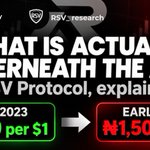
the naira went from about ₦460 to the dollar in mid-2023 to around ₦1,500 by early 2024. same naira in your pocket, roughly a third of what it could buy in dollars
the @RSV_Research paper names three ways defi does this to people. lending liquidations that cascade when price falls, token emissions that end in death spirals, and yield paid in tokens that lose value before you can use them ↓

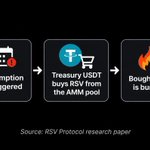
underneath all of it sits the treasury. its usdt reserve sets NAV, backs what you can borrow and funds the redemption buybacks, so one pool of reserves does three jobs
that is the shift the paper keeps returning to: from inflation-driven finance to reserve-driven finance, where what sits behind a token matters more than how loud its apy is ↓
1
9
it's a design from a research paper, so what matters next is how it holds up live. whether it works or not, "what is actually underneath it" is a better question than "how high is the apy"
that's the question i'll be watching @RSV_Research answer in practice
#RSV #DeFi #Web3

11
Scammers don't need to hack anything. They just need you to trust a name.
That's why one line in the @meetmotes docs stopped me: a network name alone does not authenticate an ERC-20 token or a protocol adapter.
Read that twice. A token labeled "USDC" can be a fake. A DeFi app that looks official can be a copy. The name is only a label, and anyone can paste a label on anything.
So what do they point you to instead? The address. The docs say supported contracts will be published in an official verified registry, and you check the address against that registry and the block explorer.
Check the chain too. Mainnet is chain ID 4663 and testnet is 46630. One digit off and you're on a different network, with different assets and a different explorer, and it's easy to miss until something goes wrong.
Their deposit guardrail says it plainly: verified token and account destination. That's the step to take seriously, because nothing else can catch a wrong address for you.
Before you send a single USDC, check the address, the chain ID, and the explorer. Then send.
Full docs: docs.meetmotes.com
Or start here: meetmotes.com
28
A boarding pass proves you can get on the plane. It doesn't show the gate agent your passport, your address and your travel history.
Most onchain data works the other way. Show the claim, and you expose everything behind it.
Primus is built around that problem, using two techniques.
zkTLS lets an attestor prove that data really came from its source over HTTPS, without seeing the raw data. That's the boarding pass. The fact gets checked, and the file stays at home.
FHE lets computation run directly on encrypted data. Only the owner can decrypt the result, so the numbers can be worked on without being exposed.
Put together, you get what institutions need: a claim anyone can verify, built from data that stays private.
Primus also says it sits above existing onchain financial rails, so nothing has to move to a new chain.
If you want to try it yourself, the XP tasks refresh weekly. Connect your wallet on the page so your activity registers:
s.kaito.ai/ErvbwaR
@primus_labs @KaitoAI

114
86
278
10% of a Token Means Nothing Until You Know the Rest
Airdrop news always lands the same way. A big percentage, a happy crowd, and nobody asks the next question.
@meetmotes has a planned $MOTES token, with 10% of the total supply reserved for an airdrop to NFT holders. It runs under a published eligibility methodology, and the NFT-count multiplier is capped at 50 eligible NFTs per holder. I'd guess the cap is there so one wallet can't scale forever, but that's my reading, not something the docs spell out.
What I respect is that the docs don't fill the gap with a number that looks good. Total supply, emissions, vesting and the other allocations are not specified yet. They tell you what's missing.
So I'm treating it this way. 10% is a share, and a share of an unknown total is just a feeling. Until supply, emissions and vesting are published, I can tell you how the airdrop is meant to work, but not what it's worth, and anyone claiming a number is guessing.
The token is still planned, not live, and nothing in the overview promises a return.
If you're thinking about a Mote because of the airdrop, those are the three things I'd wait for first: total supply, emission schedule, and vesting.
All of this comes from their own overview: docs.meetmotes.com
Or start here: meetmotes.com
21
Institutions look at more than speed when they pick a chain. They pick one they can defend to compliance.
That comes down to two questions. Can we keep our data private? Can we prove our claims?
BNB Chain now has a live answer to both, through the ZKredit middleware it built with Primus and Brevis. BNB Chain describes ZKredit as privacy-preserving identity verification. The raw data stays on the user's device, and only a zero-knowledge proof of a fact gets submitted onchain. The data never goes public.
That's the difference between a pilot and a product. Lending, onboarding and compliance all run on facts about people and companies. Those facts can be used onchain without the records behind them being published.
The ZKredit proofs are generated with zkTLS, which lets an attestor prove that data really came from its source over HTTPS without seeing the raw data. Primus also says it sits above existing onchain financial rails, so teams on BNB Chain don't have to move anywhere to use it.
Primus's zkTLS verification layer also went live on BNB Chain in June.
My take: a chain is institution-ready when "prove it" and "keep it private" stop being a trade-off. On BNB Chain, that's already happening in identity and credit.
If you want to try the product, the XP tasks refresh weekly. Connect your wallet on the page so your activity registers:
s.kaito.ai/ErvbwaR
@BNBChain @primus_labs @KaitoAI
128
101
248
Before You Fund Any AI Agent, Ask Where the Money Sits
Forget the strategy for a second. Before I care what an agent can do, I want to know two things: where does my money sit, and how do I get out?
With @meetmotes the answer starts with the structure. One NFT, one agent, one smart account. You send USDC to that account, and the docs say deposits belong to the account, not to the agent service.
The agent gets a narrow permission to act, never your unrestricted private key.
Getting out is part of the same flow. The dashboard shows your holdings, open commitments, fees charged, and the actions that were denied as well as the ones that went through.
You can pause automation, revoke sessions, and withdraw whatever is withdrawable.
One caution from me. The dashboard is the app reporting on itself, and inspecting your account's permission status shows what's set, not that the limits hold.
The docs say the smart account enforces the permissions, so the real proof is the contract. Once the official addresses are published, that's what I'd check on the block explorer.
That "withdrawable" word is the one I'd read twice. Open DeFi positions may need to settle before the cash is free, and withdrawals need the owner's authorisation and pass solvency checks first.
So the exit exists, but it isn't always instant.
Honestly, this is the order I wish more projects explained things in. Where the money is, who can touch it, how you leave.
Then the fun part about what it can trade.
It's all laid out here if you want to check me: docs.meetmotes.com/getting-s…
Or start here: meetmotes.com
1
12
117