

Specialist in Emergency Medicine & in Anesthesia and Intensive Care Medicine. Ex-ED physician. Università di Trieste, università di Padova, università di Udine.
Bagnaria Arsa, Friuli-Venezia
Joined December 2017
- Tweets4.4K
- Following2.6K
- Followers348
- Likes22.5K






Daniele Orso retweeted

#TBT Core EM Ep 218 (2026):
SCAPE with Dr. Naz Sarpoulaki.
Wet lungs, dry tank. POCUS for B-lines, NIPPV now, high-dose nitro for the afterload, diuretics later.
coreem.net/podcast/episode-2…
Daniele Orso retweeted

Just published nice #Lancet commentary on what makes a #MetaAnalysis believable.
pubmed.ncbi.nlm.nih.gov/4261…

Daniele Orso retweeted

Concerning the pCO2 gap, attached two nice papers (free internet) that profoundly discuss the rationale behind. In our recent ESICM shock guideline we recommend assessment in pts with a CVC. Not targets but a low Scvo2 and high pCO2 gap are relevant clues to further optimize CO


Daniele Orso retweeted
And concerning the diastolic shock index (DSI) and the recent proposal by the Reims group (Vneri) they are ways to better characterize vascular tone. DBP is the best surrogate! And it is better adjusted for HR (strong physiological basis). Attached free articles on it


Daniele Orso retweeted

A narrow pulse pressure suggests a small stroke volume. A wide pulse pressure suggests a hyperdynamic circulation. A low diastolic pressure suggests vasodilatation.
But how much can we really infer from arterial pressure?
In tomorrow's Complicated Ways to Learn Very Little, I work through the physics of pulse pressure, arterial compliance and runoff, before examining whether the diastolic shock index (DSI) tells us anything useful.
Both PP and DSI contain physiological information. The question is whether they tell us anything we couldn't establish more directly. And whether that information changes what we do.
Pulse Pressure & DSI: Complicated Ways to Learn Very Little, Part 3. Friday at 08.00 UTC.
Link to my Substack in the reply.
🤖 Made with AI
Daniele Orso retweeted

A new study in JAMA highlights an often-overlooked part of ED boarding: the delay between hospital admission and when the inpatient team actually begins managing care.
Researchers found that more than 17% of patients waited at least 4 hours after admission before inpatient management began, suggesting that traditional boarding metrics may not capture the full transition from the emergency department to inpatient care.
📌 Read more: ja.ma/4zqCdxG
Daniele Orso retweeted
I'm a big proponent of stopping non-essential medications for patients admitted to ICU. If you continue a dozen home meds and add two dozen ICU meds, you create a 36-drug medication list that's impossible to safely maintain (in terms of drug-drug interactions, GFR shifts, additive toxicities).
This is actually a great opportunity for deprescribing:
[#1] At admission, pare back the med list & focus on treating the acute problem.
[#2] At discharge, think carefully about whether all those meds were needed in the first place, make sure the home med list is short & sensible.


Among older inpatients, a #DrugBurdenIndex stewardship intervention increased deprescribing of anticholinergic and sedative medications at discharge, but the increase was not sustained after stewardship support ended.
ja.ma/4sR6NhC

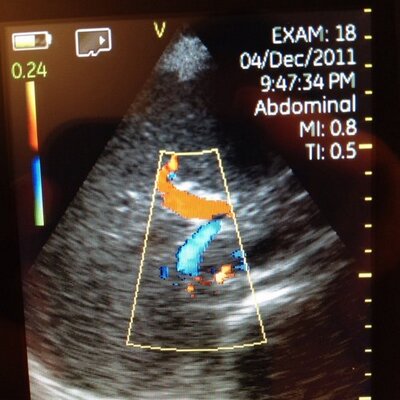
ALT Flowchart tracking 22,297 patients across 6 hospitals from Jan 2022 to July 2023. Shows 24,772 excluded admissions and 5,733 included patients broken down by pretrial, control, intervention, and sustainability periods across hospitals A-F in a data table.
Daniele Orso retweeted

🫀Mixed shock: a normal pressure does not mean an intact circulation
A patient can have an acceptable mean arterial pressure yet remain hypoperfused. Another can have a preserved ejection fraction but inadequate forward flow. These are not contradictions: pressure, flow and tissue perfusion describe different aspects of the circulation.
Melo et al. propose viewing shock as impaired energy transfer across four connected interfaces: left ventricle to systemic arteries, arterioles to capillaries, capillaries to venules, and right ventricle to pulmonary arteries. The practical question becomes: where is the dominant bottleneck now?
Echocardiography examines the two ventricular interfaces. At the left ventricle, LVOT velocity-time integral (VTI) estimates forward stroke distance, while ventricular size, contractility, arterial load and Doppler patterns explain why it is reduced. A low VTI could reflect myocardial depression, inadequate filling, excessive afterload or dynamic outflow obstruction. Ejection fraction alone cannot distinguish these mechanisms.
The often-neglected RV-pulmonary arterial interface may be decisive. RV dilation, septal flattening, a reduced TAPSE/PASP ratio or shortened pulmonary acceleration time can suggest impaired RV adaptation to pulmonary load. Septal displacement may then restrict LV filling and lower systemic output, creating the appearance of left-sided failure when the initiating constraint is right-sided.
The microcirculation completes the picture. Capillary refill time adds a rapidly repeatable measure of peripheral perfusion; a preserved VTI with ongoing hypoperfusion should redirect attention toward vascular tone and flow distribution. After fluid, vasoactive or ventilator adjustments, repeat perfusion assessment and targeted echo: each intervention is also a physiological test.
This is a conceptual narrative review, not validation of an outcome-improving algorithm. Echo-derived coupling surrogates have limitations, and the four-interface strategy still requires prospective testing.
In mixed shock, treating the number is not the same as relieving the constraint that produced it.
Reference 📚
Melo et al. 2026. Current Pulmonology Reports. doi.org/10.1007/s13665-026-0…
#Hemodynamics #CriticalCare #Echocardiography #Shock #POCUS

Daniele Orso retweeted

Restricting fluids is one of the first things we ask of patients with heart failure.
Four RCTs, 682 patients: no difference in death or heart failure hospitalisation.
@CardioJob (Radboud, who led the FRESH-UP trial) joins bit.ly/3VjQdtZ on the Heart podcast 🎧
🎧 Apple: apple.co/4Abz2Kn
🎧 Spotify: bit.ly/3WnhFro
🎧 Podbean: bit.ly/4BOx18G
▶️ YouTube: bit.ly/483tCFd
📄 Paper (free to read): bit.ly/4AbBgJt
#CardioTwitter #HeartFailure #MedEd

Daniele Orso retweeted

Why does more norepinephrine sometimes make things worse? In some patients, afterload outruns contractility, ventriculo-arterial coupling falls apart, and stroke volume drops. 🎩 tip to the authors. eddyjoemd.com/foamed

Daniele Orso retweeted

"The ability to think about what is not happening is a cognitive achievement that comes at an emotional cost".

Daniele Orso retweeted

Gaussian Mixture Models (GMMs) are a flexible method for modeling data that comes from multiple overlapping sources. They assume that the data is generated from a mixture of Gaussian distributions, making them well-suited for identifying clusters with different shapes, sizes, and orientations.
✔️ Works well when clusters overlap or are not clearly separated
✔️ Provides soft assignments, giving a probability for each point’s cluster membership
❌ Requires specifying the number of components ahead of time
❌ Can be sensitive to initialization and may settle on a suboptimal solution
❌ Assumes each component follows a Gaussian distribution, which may not reflect real-world data
Beyond clustering, GMMs are used for density estimation, anomaly detection, image segmentation, and modeling continuous data in tasks like speech recognition. They’re effective when a probabilistic view of the data structure is needed. In high-dimensional spaces or when data distributions deviate strongly from Gaussian, methods like Variational Inference, Dirichlet Process Mixtures, or kernel-based density estimators may offer better results.
The image shows how GMMs can model a complex distribution using multiple overlapping Gaussians. Each peak in the histogram corresponds to a component learned by the model, illustrating how the mixture adapts to fit the data. Credit for the visualization: en.wikipedia.org/wiki/Mixtur…
🔹 In R, the mclust package supports GMMs with built-in tools for model fitting, selection using BIC, and visualization.
🔹 In Python, use GaussianMixture from scikit-learn, customize covariance structure, and compare models with BIC or AIC.
Looking for clear, useful insights on data science with R and Python? Subscribe to my newsletter.
Further details: statisticsglobe.com/newslett…
#datascienceeducation #datastructure #RStats #DataAnalytics #Statistics #RStudio
Daniele Orso retweeted

A concise overview of the most significant new recommendantions on clinical lung ultrasound #LungUltrasound #PoCUS #CriticalCare
rdcu.be/tUEVcDpAGTKa

Daniele Orso retweeted

🫀Finerenone vs spironolactone in heart failure with mildly reduced or preserved ejection fraction: a real-world study. see@ ow.ly/LcYk5100u04
@EJHFEiC @AmrAbdin10 @GiuseppeGalati_ @HanCardiomd @EJHFEiC @JanBiegus @ppponikowski #HFA_ESC @hvanspall @FudimMarat @gcfmd @MarcoMetra @GianluSava
#ESCHeartFailure

Daniele Orso retweeted
💉Acute metabolic acidosis in critical care: are we treating the pH or the patient?
Severe metabolic acidosis is frequently associated with cardiovascular dysfunction, impaired myocardial contractility, hyperkalemia, and increased mortality. Yet an important question remains: does correcting the arterial pH actually improve patient outcomes?
This review examines the physiological consequences of acute metabolic acidosis and the evidence supporting sodium bicarbonate and renal replacement therapy (RRT).
The physiology is more complex than simply restoring bicarbonate concentration.
Acidemia can impair cardiac contractility and alter pulmonary vascular resistance. However, it also increases ionized calcium and shifts the oxyhemoglobin dissociation curve to the right, potentially facilitating tissue oxygen unloading.
Correcting acidosis may therefore modify several physiological processes simultaneously, without necessarily improving global hemodynamics.
What have randomized trials demonstrated?
The BICAR-ICU trial found no overall mortality benefit from sodium bicarbonate in severe metabolic acidemia. A predefined subgroup with moderate to severe acute kidney injury (AKI) suggested improved outcomes and reduced RRT requirements.
However, the subsequent BICARICU-2 trial, specifically enrolling patients with severe acidemia and moderate to severe AKI, did not demonstrate a mortality reduction.
Importantly, bicarbonate reduced the need for RRT by approximately 15 absolute percentage points.
This distinction matters. Reducing dialysis exposure is clinically meaningful, but it is not equivalent to demonstrating improved survival.
Sodium bicarbonate is also not physiologically neutral.
Its buffering reaction generates CO₂, which requires adequate alveolar ventilation for elimination. In patients with respiratory dysfunction, CO₂ accumulation may aggravate hypercapnia and potentially worsen intracellular acidosis.
Rapid alkalinization can also reduce ionized calcium, promote hypokalemia, and increase sodium and fluid loads. These effects may be particularly relevant in patients with myocardial dysfunction or limited renal reserve.
When should we consider RRT?
Severe refractory acidemia, often around pH 7.15-7.20, may justify RRT, particularly when accompanied by AKI, hyperkalemia, or fluid overload. Nevertheless, no universal pH threshold is supported by definitive evidence.
Early RRT solely to normalize biochemical values may expose patients to unnecessary complications.
In lactic acidosis, restoring tissue perfusion and addressing impaired oxygen utilization remain fundamental. In ketoacidosis, suppressing ketogenesis is essential.
Bicarbonate and RRT are supportive interventions, not substitutes for treating the cause.
Reference 📚
Aamir N, 2026. Current Opinion in Nephrology and Hypertension. doi.org/10.1097/MNH.00000000…
#CriticalCare #MetabolicAcidosis #Hemodynamics #AcuteKidneyInjury #IntensiveCare

Daniele Orso retweeted

ノルアドレナリンが循環動態を良くする機序は動脈での血管収縮だけではありません。実は静脈に作用して、前負荷を増やす効果もあるんです。
このことを説明するのに毎回紹介している文献がこちら。ノルアドレナリンの作用機序が一枚で図示されていてお気に入りなんです。link.springer.com/article/10…

Daniele Orso retweeted

#ICU Evidence #006:
21.7%. That is how often a severe respiratory virus was found only in the lower respiratory tract, leaving the upper tract completely clear. 🫁
A multi-center study in CHEST highlighted the massive clinical challenges of diagnosing Severe Respiratory Viral Infections (SARI).
Researchers analyzed paired upper (URT) and lower respiratory tract (LRT) samples across 346 patients.
Here is what the data revealed:
•The Blind Spot: Relying solely on standard nasal or throat swabs completely missed the virus in over 1 in 5 cases.
•Higher Viral Loads: Median viral loads were significantly higher in the lower respiratory tract than in the upper tract.
•Common Pathogens: The most prevalent viruses detected were Influenza Type A, Rhinovirus/Enterovirus, and RSV.
Takeaway:
Testing only the upper respiratory tract can create a false sense of security. Sampling the lower respiratory tract significantly improves diagnostic sensitivity, especially in later stages of illness, and is critical for accurate clinical decision-making.
📖 Source: CHEST 2026; 170(1):41-53
#MedEd #FOAMed #foamcc


Daniele Orso retweeted
🧵 Presented today at #LIVES2026:
Among patients with #SepticShock undergoing surgical source control, intraoperative dobutamine plus norepinephrine reduced new-onset or worsening #AcuteKidneyInjury within 7 days after surgery compared with norepinephrine alone. These findings support consideration of this intraoperative hemodynamic strategy for reducing postoperative kidney injury in this surgical population.
ja.ma/4dF23oY

Daniele Orso retweeted
Same lactate, same MAP, same "septic shock" label. Different disease underneath. Maybe that's why so many sepsis trials come up empty. 🎩 tip to the authors
eddyjoemd.com/foamed
