

Your go-to source for evidence-based orthopaedics. Join our community of over 50,000 health practitioners worldwide – start today with a free 30-day trial!
Joined November 2010
- Tweets4.5K
- Following735
- Followers16.8K
- Likes258









RETATRUTIDE & KNEE OA IN OBESE PATIENTS.
Obesity is the most prevalent disease in the world.
It's a risk factor for a host of negative outcomes, including knee osteoarthritis (patients with obesity have a 60% lifetime risk of knee OA).
Weight loss drugs have ballooned in popularity in recent years as a result.
Retatrutide -- an experimental, triple-receptor agonist developed by Eli Lilly -- is the latest iteration which has shown considerable promise as a weight loss drug.
However, Phase 3 efficacy have been lacking. Until now.
The TRIUMPH-1 trial, just released in the NEJM, randomized 2,339 patients with obesity and no diabetes to receive a once-weekly subcutaneous injection of retatrutide (at a dose of 4, 9, or 12mg) or a placebo for 80 weeks.
They found that:
1) Patients on retatrutide lost ~20% more weight than the placebo group.
2) Among participants with knee OA, there were pain reductions as high as 61.6%.
3) Among those with sleep apnea, the reduction in apnea-hypopnea events was as high as 57.3%.
4) Among pre-diabetic patients, more than 90% reverted to normoglycemia.
5) The most frequently reported adverse events were gastrointestinal in nature.
The results demonstrate the potential for this novel weight loss drug to not only reduce obesity -- but also mitigate the downstream consequences.
Citation: Jastreboff, Ania M., et al. "Retatrutide, a triple hormone receptor agonist, for treatment of obesity." N Engl J Med 395 (2026): 1781-1793.

580
GLP-1 AGONISTS FOR JOINT ARTHROPLASTY PATIENTS.
GLP-1s -- like Ozempic, Wegovy, and Mounjaro -- have become blockbuster drugs in recent years.
Naturally they have drawn the interest of the orthopaedic community.
Obesity and Type 2 diabetes are both important risk factors for developing osteoarthritis, and are associated with poor outcomes following hip and knee arthroplasty.
Could GLP-1s improve clinical outcomes for arthroplasty patients with either of these conditions?
A recent meta-analysis in the Bone and Joint Journal of 10 cohort studies, with close to 100,000 THA and TKA patients, found that those on GLP-1s had:
1) A 27% lower risk of 90-surgical complications, and a 22% lower risk of medical complications -- particularly among THA patients.
2) A 21% lower risk of readmission.
3) A $1,500 reduction in costs-per-patient in the first 90 days in TKA patients.
4) A significantly lower odds of prolonged hospitalization.
Overall?
The current observational data suggests that, in diabetic or obese patients, the use of GLP-1s before THA or TKA may lead to a reduction in complications and readmissions -- and potential cost-savings.
The Study Team: Branavan Rudran Chris Little Antony Palmer Andrew Judge Alberto Carli Andrew Price Abtin Alvand BSc(Hons) PhD FRCS (Tr and Orth)
Citation: Rudran, Branavan, et al. "Glucagon-like peptide-1 receptor agonists are associated with improved 90-day outcomes after total hip and knee arthroplasty: a systematic review and meta-analysis." The Bone & Joint Journal 108.8 (2026): 986-994.
THE BENEFITS OF BRACING FOR KNEE OA.
Over 350 million people have symptomatic knee osteoarthritis globally.
Preventative and non-surgical interventions for symptom management are critical, particularly in the early stages.
These typically include education, exercise, weight management, and analgesics.
Knee bracing is among the options -- but the evidence and recommendations on its use are mixed and limited.
To help settle the debate, the PROP OA trial, published in the BMJ, randomized 466 patients with symptomatic knee OA to receive advice, written information, and exercise -- with or without a compartment-specific knee brace.
The goal was to see whether adding knee bracing to the conventional battery of treatments makes a difference.
They found:
1) Small improvements in patient-reported knee health at 3 & 6 months (but not 12 months).
- The benefit was expectedly larger among patients with high brace adherence.
2) Bracing led to improvements in pain, incidence of knee buckling, self-efficacy, response rate, and function (that diminished over time).
3) More patients in the bracing group experienced skin irritation or redness -- but they also had a lower rate of swelling and soreness.
Overall, knee bracing demonstrated an ability to safely and effectively reduce symptoms for patients with knee osteoarthritis.
These benefits, however, are likely to be small and short-lived.
Do you recommend braces for your knee OA patients?
Citation: Holden, Melanie A., et al. "Provision of knee bracing for knee osteoarthritis (PROP OA): multicentre, parallel group, superiority, statistician blinded, randomised controlled trial." bmj 392 (2026).
658
SHOULD WE OPERATE ON ACHILLES TENDON RUPTURES?
The incidence of Achilles tendon ruptures has been increasing.
In the unfortunate event, most patients face the all too common dilemma: should we operate or not operate?
Whether that operation should be open or minimally invasive is also another open question.
While many trials and observational studies have explore this dilemma, there has always been a lack of large, high-quality multicentre trials on the question.
A large multi-centre, randomized trial out of Norway, published in the NEJM (2022), aimed to help settle the debate.
They randomized 554 patients with acute Achilles' tendon ruptures to receive either non-operative treatment, open repair, or minimally invasive surgery.
At 12 months, they found:
1) No difference in Achilles-specific health status between all three groups.
2) Similarly, no differences in quality of life.
3) There was a higher rate of re-rupture (n=11; 6.2%) in the non-operative group, compared to both the open-repair and minimally invasive groups (n=1 each; 0.6%).
4) There were 9 nerve injuries in the minimally invasive group, vs. 5 in the open-repair group and 1 in the non-operative group.
The takeaway?
There was no difference in efficacy outcomes between operative and non-operative treatment for acute Achilles tendon ruptures. While non-operative had a higher rate of re-rupture, it had a fewer nerve injuries.
The Authorship Team:
Ståle Myhrvold Espen F. Brouwer Tor Andresen Karin Rydevik Madeleine Amundsen Wolfram Grün Faisal Butt Morten Valberg Morten Valberg Svend Ulstein Sigurd Hoelsbrekken
Citation:
Myhrvold, Ståle B et al. “Nonoperative or Surgical Treatment of Acute Achilles' Tendon Rupture.” The New England journal of medicine vol. 386,15 (2022): 1409-1420.
SHORT VS LONG ANTIBIOTIC REGIMENS IN ORTHOPAEDICS.
Most patients with orthopaedic infection get at least 4 weeks of systemic antibiotic therapy.
But increasingly, local antibiotics through an implanted carrier is delivered alongside systemic therapy.
They have a host of advantages, such as greater concentration, limited systemic absorption, and potentially fewer side effects.
But one thing we don't know is: could it allow us to reduce our reliance on systemic therapy?
In this multi-center, non-inferiority trial published in the New England Journal of Medicine, 500 patients with orthopaedic infection who received an implantation of a local antibiotic carrier were randomized to receive either long (>4 weeks) or short (<7 days) of systemic antibiotic therapy.
They found:
Short therapy was non-inferior to long therapy in the risk of treatment failure.
The secondary outcomes also showed:
The risk of antibiotic side effects was more than 50% lower than the short therapy group.
Overall survival at 12 months was greater in the short therapy group.
The results are compelling and clinically important: not only is short-course antibiotics non-inferior to long-course antibiotics, but there's even an early signal that it can have meaningful advantages in patient safety.
Citation: McNally, Martin, et al. "Short or long antibiotic regimens in orthopedics." The New England journal of medicine (2026): 10-1056.
CAN PHYSIOTHERAPIST-LED ER ORTHOPAEDIC CARE WORK?
Roughly 15% of ER presentations are orthopaedic.
Many are not seen as low-acuity, leading to prolonged wait times -- which further leads to compromised patient safety, reduced health system performance, and poorer quality of care.
To address the issue of prolonged wait times, some ERs are trying physiotherapist-led models.
But to date, there has yet to be a high-quality RCT evaluating its efficacy.
Until now.
The RESHAP-ED trial, published this week in the Lancet, randomized 1,491 patients presenting to the ER with an uncomplicated musculoskeletal condition to either physiotherapist-led care or physician/nurse practitioner-led care.
The goal was to see whether it A) reduced wait time, B) reduced costs.
The study found that:
1) Patients got treated 1 hour faster -- with a 3x higher odds of being seen on time.
2) There were no differences in patient-reported outcomes (pain, quality of life) or adverse events.
3) Patients were significantly more satisfied with care.
4) Economic evaluation found physiotherapist led care to be less costly and more effective (98.1% cost-effectiveness probability).
The evidence shows physiotherapist-led ER care can work -- cheaply and effectively -- for uncomplicated musculoskeletal conditions.
Congrats to the team: Chathurani Sigera Tarcisio Folly de Campos, PhD Danielle Coombs Christopher Williams Eileen Rogan James Edwards Ian Harris Vasi Naganathan Lisa Harvey Rachelle Buchbinder Kirsten McCaffery PhD, FAHMS, GAICD Kirsten Howard Philip Haywood Marina Pinheiro Sana Shan Laurent Billot Stacey Llewellyn Chris Maher Gustavo Machado for the RESHAP-ED Investigators
Citation: Sigera, Chathurani et al. “Physiotherapist-led care for musculoskeletal conditions in the emergency department (RESHAP-ED): a randomised controlled trial with economic evaluation.” Lancet (London, England) vol. 408,10562 (2026): 1326-1336.
2
586
DOES PLATELET CONCENTRATION AFFECT ROTATOR CUFF REPAIR OUTCOMES?
100,000s of rotator cuff repairs are performed every year.
But the risk of retear is high -- as high as 40% in some populations.
PRP injections have been growing in popularity as a way to reduce this risk.
But scientific findings are mixed, making it hard to conclude whether it truly works.
PRP w/ higher platelet concentrations have been associated with better outcomes in knee OA and lateral epicondylitis.
Could it explain the mixed results in rotator cuff repair?
A recent meta-analysis published in the American Journal of Sports Medicine included close to 700 patients from 10 studies to find out.
They found no differences in ALL clinical outcomes and retear rates by platelet dosage.
Whether its because of the difference in target tissues, healing environment, or delivery method, this study found no evidence that PRP platelet dose concentration influences outcomes.
What other factors might be at play regarding PRP efficacy in rotator cuff repair?
Growth factor? Preparation systems? PRP activation? Leukocyte concentration?
Congrats to the team: Joseph Lim Emilea Stepaniuk John Belk Carson Keeter, MS Jacob Oeding Jason Dragoo Eric McCarty
Citation: Lim, Joseph J et al. “Platelet Concentration Does Not Influence Clinical Efficacy and Retear Rates of Rotator Cuff Repair With Platelet-Rich Plasma: A Systematic Review and Meta-analysis With Meta-Regression.” The American journal of sports medicine vol. 54,10 (2026): 2597-2609.
IS ASPIRIN ALONE GOOD ENOUGH IN JOINT REPLACEMENT SURGERY?
Thromboembolic events are among the most feared complications in total joint replacement.
Many surgeons extend prophylaxis for around a month post-op.
& they often prescribe rivaroxaban: it's been found to be more effective than low-molecular-weight heparin -- but has bleeding risks.
However, recent randomized trials have challenged the prolonged use of rivaroxaban by showing that switching to aspirin after 5-days of treatment is just as safe and effective.
But we can take the question even further: is aspirin alone just as good?
A recent 5,000+ patient randomized trial in the NEJM Group compared aspirin only, or rivaroxaban for 5 days plus aspirin in hip and knee arthroplasty patients.
They found aspirin was:
Non-inferior to combo therapy for preventing venous thromboembolism.
No differences in risk of bleeding.
No differences in risk of death.
Given its low cost and high accessibility, this finding could increase the cost-effectiveness of thromboprophylaxis in total joint arthroplasty.
Citation: Shivakumar, Sudeep et al. “Rivaroxaban Then Aspirin vs. Aspirin Alone after Total Hip or Knee Arthroplasty.” The New England journal of medicine, 10.1056/NEJMoa2603649.
IS ROBOTIC TKA TRULY SUPERIOR?
Just published in the Lancet.
As a orthopaedics we tend to think more tech = better outcomes.
This is particularly the case for robotic TKA -- whose use has gone up as much as 40% in some countries.
Theoretically, its supposed to improve precision, and subsequently improve patient outcomes.
But does it really have any advantage over conventional TKA?
The RACER-Knee trial -- a large, pragmatic multicentre RCT -- randomized 339 patients to receive robotic-assisted or conventional TKA to find out.
After 12 months post-op, they found:
No differences in ALL clinical outcomes between groups.
Similar safety profiles.
A longer operative time with robotic assistance.
Higher costs with robotic TKA -- with only a 4% probability of cost-effectiveness at the highest threshold.
Everyone knows robotic-assisted TKA is more costly.
The key result of this study is that the clinical advantage most patients expected from it is absent: the two surgeries provide almost identical in patient outcomes.
Citation: Parsons, Helen et al. “Robotic-arm-assisted versus conventional total knee replacement (RACER-Knee): a pragmatic, multicentre, participant-masked and assessor-masked, superiority, randomised controlled trial.” Lancet (London, England) vol. 408,10558 (2026): 924-934.

THE SCIENCE STUDY.
Surgical vs. Non-surgical Treatment of Pediatric Medial Epicondyle Fractures.
The optimal treatment for medial epicondyle fractures in children is perhaps the greatest controversy in pediatric orthopaedics.
It the classic "to operate or not to operate" dilemma.
Some surgeons say surgery restores natural anatomy, stability, and function.
Detractors say the difference is negligle.
The SCIENCE Study -- conducted across 3 countries and published in the Lancet -- randomized 335 children to receive either surgical fixation or immobilization to find out the truth.
After 12 months, they found:
No important differences in function.
No important differences in quality of life or pain.
Even aamong patients with elbow dislocation, who are theoretically supposed to benefit from surgery, no such advantage was observed.
Moreover, the surgical group had more frequent complications and higher rates of school absence.
The economic analysis also yielded a resounding result: a 0% probability of cost-effectiveness at traditional WTP thresholds.
Based on the evidence, authors conclude that surgical fixation offers no benefit, is not cost-effective, and exposes children to avoidable surgical risks -- for these reasons, they recommend against operative treatment for these injuries.
Does this change the way you think about managing pediatric elbow fractures?
Citation: Perry, Daniel C et al. “Surgical fixation versus non-surgical care for children with a displaced medial epicondyle fracture of the elbow (the SCIENCE study): a multicentre, randomised controlled, superiority trial and economic evaluation.” Lancet (London, England) vol. 407,10528 (2026): 577-586.
Congrats to the study team: Dan Perry juul Achten Alex Zimmermann Rebecca Kandiyali Duncan Appelbe James Wright David Ferguson Kemble Wang Nichola Wilson Amy Moscrop James Mason Daphne Kounali Matthew Costa, for the SCIENCE Study Collaborators
1
4
886
Read our ACE Report here: myorthoevidence.com/AceRepor…

216
ASPIRIN VS. ENOXAPARIN IN ARTHROPLASTY.
Venous thromboembolism (VTE) is a major [and potentially fatal] complication after arthroplasty.
Surgeons are increasingly using aspirin for thromboprophylaxis -- its cheap, easy to administer, and generally safe.
But we had no definitive evidence on its efficacy vs. enoxaparin.
The CRISTAL Trial, a cluster-randomized, non-inferiority trial of 9,711 hip/knee arthroplasty patients, compared the aspirin (100mg/d) or enoxaparin (40mg/d) to help guide practice.
They found:
A greater risk of VTE with aspirin (3.5% vs. 1.8%, p=0.007).
The difference large enough to warrant stopping the study early.
Yet, much of the difference was due to a higher rate of below-knee deep vein thrombosis (p=0.004) -- the most common VTE in joint arthroplasty, and least clinically important variant.
The findings require a nuanced interpretation.
On one hand, the two drugs are clearly not equivalent. Enoxaparin was better.
On the other hand, its superiority was driven by a lower rate of below-knee DVT, which might not be clinically relevant.
Given its convenience, cost & risk profile, is there still an argument to be made for aspirin?
Citation: CRISTAL Study Group et al. “Effect of Aspirin vs Enoxaparin on Symptomatic Venous Thromboembolism in Patients Undergoing Hip or Knee Arthroplasty: The CRISTAL Randomized Trial.” JAMA vol. 328,8 (2022): 719-727.
1
9
1,786
Read our ACE Report here: myorthoevidence.com/AceRepor…

1
243
TO OPERATE OR NOT TO OPERATE: SCIATICA.
With a lifetime prevalence as high as 43%, sciatica is a serious burden.
Both for patients and the healthcare system.
Surgery (usually discectomy) is increasingly used for unresponsive cases and in developed countries.
100,000s are performed each year.
Yet the evidence supporting its effectiveness has been largely inconclusive.
So researchers from Australia, Canada, the Netherlands & China sought to conduct a systematic review and meta-analyses of 24 RCTs to see if operative treatment is really the right answer.
When comparing discectomy vs. non-operative treatment (physio; analgesics; etc) or steroid injections, they found:
Less leg pain with discectomy, but the benefit declined over time.
One year out, there was little to no difference at all.
For disability, benefits were even smaller, and similarly declined over time.
The risk of adverse events was also similar between discectomy and non-surgical treatment.
The overall message?
For patients who value the early improvement more than the costs and risks of surgery, discectomy makes sense.
But the decision is a personal one -- non-surgical treatment options achieve similar results, albeit at a slower pace and with the possible chance of surgery with non-response.
Citation: Liu, Chang et al. “Surgical versus non-surgical treatment for sciatica: systematic review and meta-analysis of randomised controlled trials.” BMJ (Clinical research ed.) vol. 381 e070730.

Read our ACE Report on this paper here: myorthoevidence.com/AceRepor…

1
196
THE HEALTH TRIAL.
Hip fractures, including displaced femoral neck fractures, are among the top 10 causes of disability worldwide.
The two main surgical options are 1) hemiarthroplasty, or 2) total hip arthroplasty.
The THA was generally thought to provide better function and quality of life.
However, its not without its concerns: mainly the risk of dislocation, and subsequently, the need for secondary operations.
For this reason, its not been clear which one is truly superior.
To settle the debate, enter: The HEALTH Trial.
Published in the New England Journal of Medicine in 2019, the HEALTH Investigators randomized 1,495 patients with displaced femoral neck fractures to receive one of the two procedures.
After 2 years, they found:
1) Minimal difference in the rate of unplanned secondary procedures -- although they were more frequent early on in the THA group, and later on in the hemiarthroplasty group.
2) Superior function in THA group -- but not good enough to be clinically important.
3) A higher risk of dislocation/hip instability in the THA group (HR 2.00 [0.97–4.09])
4) A higher risk of serious adverse events in the THA group (HR 1.16 [0.90–1.51])
The results painted a different picture than our previous evidence led on.
On one hand, THA does improve function, albeit not by a meaningful amount.
On the other hand, there does appear to be a increased risk of dislocation with THA.
Overall, hemi-arthroplasty held its own -- and in settings where THA is not easily accessible, or cost is prohibitive, its a great option.
The HEALTH Trial is a quintessential example of the ability of high-quality orthopaedic RCTs to change and inform practice.
Citation: HEALTH Investigators et al. “Total Hip Arthroplasty or Hemiarthroplasty for Hip Fracture.” The New England journal of medicine vol. 381,23 (2019): 2199-2208
1
3
728
Read our ACE Report on this classic ortho RCT here:
myorthoevidence.com/AceRepor…

156
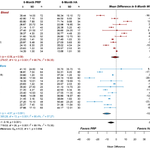
PRP for Knee Osteoarthritis -- Blood Volume As A Proxy for Platelet Dose
A Systematic Review and Meta-Analysis
The debate on PRP injections is one of the hottest in orthopaedics.
Some studies say it works, others don't.
A major modifying factor is composition, especially platelet-count.
However, the often go unreported.
Could we use blood volume as a proxy?
This meta-analyses of 62 randomized controlled trials (n=4,969) found that PRP outperformed both hyaluronic acid (HA) and corticosteroids.
But what was more interesting was the effect of blood draw volume:
Better pain and function improvement vs HA were observed with blood draws greater than 40mL.
In blood draws less than 40mL?
No differences vs. HA.
It's further proof of the importance of PRP composition, and the possible utility of using blood volume as a proxy for platelet count.


1
3
704
Citation: Centeno, Christopher J et al. “Autologous platelet-rich plasma versus hyaluronic acid, corticosteroids or saline for knee osteoarthritis: can blood draw volume serve as a proxy for platelet dose? A systematic review and meta-analysis.” International orthopaedics vol. 50,5 (2026): 981-997.
ACE Report: myorthoevidence.com/AceRepor…

213
Digital Interventions for Geriatric Hip Fractures
A Systematic Review and Meta-Analyses of RCTs
Hip fractures present a host of treatment-related challenges, both during and after the operation.
Particularly for elderly patients, adequate rehabilitation is a major problem.
But the advent of digital health interventions (DHIs) -- accelerated by the COVID-19 pandemic -- has provided a popular and promising strategy for enhancing clinical outcomes during physiotherapy.
They are increasingly being used (and scientifically studied), but what is the evidence of their effectiveness?
According to this recent systematic review of 13 studies, DHIs provide:
Improved hip function.
Improved functional independence.
The evidence on quality of life and balance outcomes is inconclusive, but promising.
Digital health interventions have a role in orthopaedics.
The key will be to identify optimal use-cases, both for this indication and outside of it.
1
587
Citation: Fan, Wei et al. “Effects of Digital Health Interventions on Functional and Psychological Outcomes in Older Patients With Hip Fractures: Systematic Review and Meta-Analysis of Randomized Controlled Trials.” Journal of medical Internet research vol. 28 e79563.
ACE Report: myorthoevidence.com/AceRepor…

266