

The Philadelphia Church of God is a spiritual family with members in 50 countries living the abundant way of life revealed in the Bible.
Worldwide
Joined June 2012
- Tweets8.3K
- Following82
- Followers3.9K
- Likes1.4K


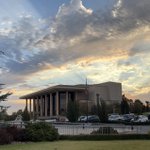



.@ArmstrongAud, sundog (rain on the way) and fire rainbows, captured just now by Imperial Academy science and photography instructor Stephen Coats.

Herbert W. Armstrong College students Jean-Philippe Guillaume, Marin Hallett, Aiden Halley and Breanna Villanueva worked in the campus greenhouse this week. (Photo: Matthew Castillo)

First frost of the season at Edstone Hall, which passed its 12th year as a PCG office yesterday. (Photo: David Howard)

Philadelphia Church of God retweeted

This magazine about biblical archaeology is free, and unlike most free publications, it’s very well done, beautifully laid out, and contains absorbing reading in every issue. I look forward to each new edition when it arrives.


Philadelphia Church of God retweeted
The Bible says King Solomon built fortifications in 4 cities: Jerusalem, Hazor, Megiddo and Gezer.
Such fortifications were accompanied by a city gate. Such gates were used for defensive purposes but also for ritualistic ceremonies and juridical practices.
City elders sat in judgement at the gates and also heard the pleas of the poor and needy there.
In recent decades, archaeologists discovered fortifications and six-chambered city gates at Hazor, Megiddo and Gezer.
The eminent Israeli archaeologist Yigael Yadin recognized the fortifications and gates were all constructed in the same way and date to the same period—the period of Solomon.
Yadin argued the archaeological evidence supported the biblical record.
But what about the Jerusalem gate? In 1986 archaeologists Eilat Mazar and her grandfather Benjamin Mazar uncovered a fourth parallel gate structure in Jerusalem.
See below a photograph of the late Eilat Mazar, who spent her distinguished career at Hebrew Univeristy, in front of that gate.
The Jerusalem gate matched the construction formula of the others, in some cases to the nearest inch, suggesting a centralized authority in Solomon’s capital with a blueprint for the construction of such fortified structures as far away as northern Israel.

Philadelphia Church of God retweeted

Archaeology and Irish dance in Israel—explaining an unlikely pairing!
armstronginstitute.org/1534-…

Philadelphia Church of God retweeted
I’m struck by how biblical minimalists and skeptics never give up.
1. There’s no King David. He’s a legendary ruler like King Arthur.
2. Yes, David existed, but he was a small-time tribal chieftain and Jerusalem was a provincial “cow town.” Where’s his palace?
3. True, there’s a monumental building dated to David’s time, but that doesn’t mean it’s his palace.
4. Okay, maybe it’s David’s palace, but how do we know it was completed in David’s time?

Philadelphia Church of God retweeted
HOW EILAT MAZAR FOUND KING DAVID’S PALACE
The Phoenician capital shown below was discovered on a hill in Jerusalem in the mid-20th century by the British archaeologist Kathleen Kenyon.
A capital is the top decorated part of a pillar.
So the discovery of this capital signaled Phoenician architecture.
But what were the Phoenicians from the faraway islands of Phoenicia doing in Jerusalem?
Archaeologist Eilat Mazar opened her Bible and read in Second Samuel 5:11 that King Hiram of Phoenicia sent carpenters and stonemasons to build King David’s palace.
So, Mazar concluded, that’s why the Phoenicians were in Jerusalem. They came to build David’s palace.
Mazar realized that the Phoenician artifact quite likely revealed the location of the palace.
She organized an archaeological dig at that site and, sure enough, out of the ground came giant pillars, huge walls—the ruins of a monumental building.
The ruins and debris were dated to the 10th century B.C.—the time of David.
What I find most amazing is not merely that Mazar found King David’s palace, which had been lost to history and was concealed under the ground for more than 2,500 years.
Even more amazing is that she used a passage from the Bible to discover the precise location.
She worked with a Bible in one hand and her archaeological tools in the other.
Eilat Mazar was not a believer. She did not follow the theology of the Bible.
But she trusted the historicity of the Bible, and then she let the stones speak for themselves.

Royalty Week for young students in England last week included bringing out the fine china and also a visit to Kenilworth Castle last week! (Photos: Lauren Howard)


Philadelphia Church of God retweeted
THE ELIAKIM SEAL
According to the Bible, Eliakim son of Hilkiah was dispatched by King Hezekiah to negotiate with the Assyrians. (Isaiah 22:20)
This was in the 8th century B.C., as the Assyrians, having overrun the northern kingdom of Israel, prepared to attack the southern kingdom of Judah.
Eliakim is a minor figure in Scripture. If we were casting him in a movie, we’d call him a biblical “extra.”
But can Eliakim’s existence be confirmed archaeologically?
In 2014, an excavation in Tel Lachish supervised by Yosef Garfinkel uncovered a seal dated to the 8th century that said “Belonging to Eliakim son of Yehozarah.”
Yehozarah? The Eliakim of the Bible was the son of Hilkiah.
But a second seal, found in the same vicinity, cleared up the confusion.
It read, “Belonging to Yehozarah, son of Hilkiah, servant of Hezekiah.”
Scholars realized immediately that Hilkiah was the grandfather, Yehozarah the son and Eliakim the grandson.
The familial connection, far from undermining the veracity of the Eliakim seal, confirms it.
Once again the Bible is historically authenticated down to its minute details.

Philadelphia Church of God retweeted
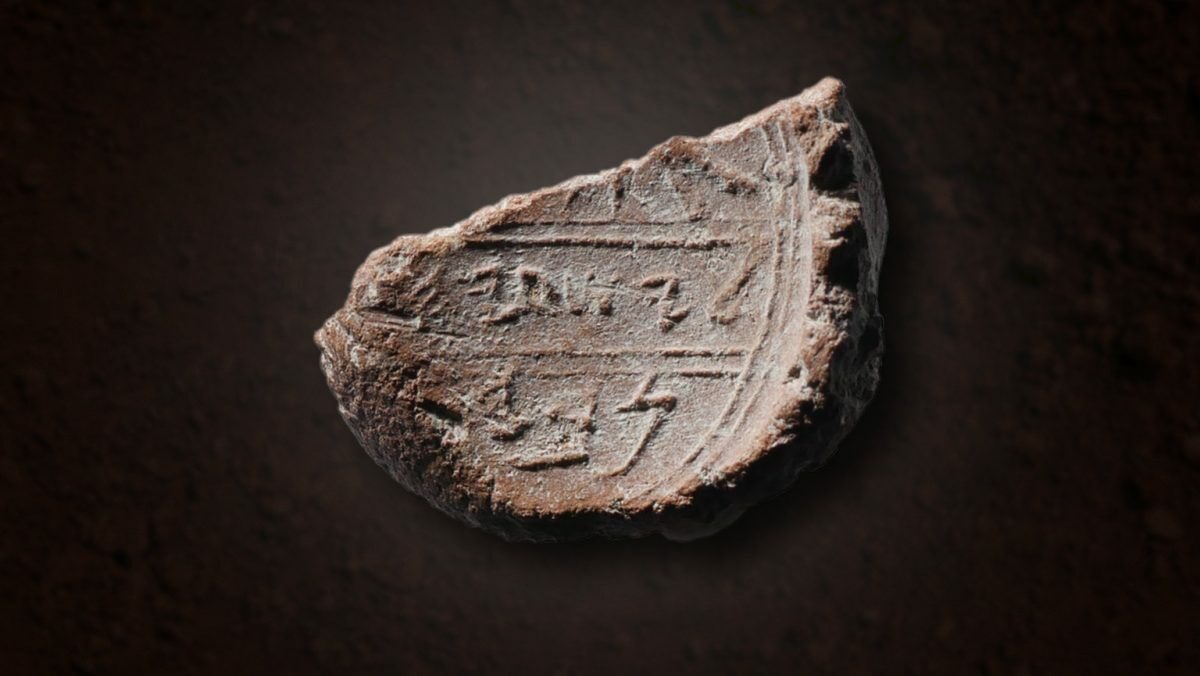
This is the seal of the prophet Isaiah.
It’s dated to the 8th century BC when he lived. It was found near the seal of King Hezekiah, whom Isaiah advised.
It says: ISAIAH THE PROPHET but the last letter is missing, as the seal is broken.
Are you convinced it’s the prophet?
Philadelphia Church of God retweeted
Skeptics and biblical minimalists had said for decades that King David was a mythical ruler—just like King Arthur.
The discovery in the early 1990s of the Tel Dan Stele—a 9th century BC victory monument from the king of Syria celebrating his victory over the “House of David”—came as an unpleasant surprise.
So rattled were the minimalists that one of its key members, Niels Peter Lemche, promptly declared the artifact a forgery.
Unfortunately for him the discovery was made by Avraham Brian, an archaeologist with an impeccable reputation.
Not only that, but a second fragment of the same stele was unearthed from the ground in the same location a couple of years later.
Today no serious scholar doubts the authenticity of the Tel Dan Steele confirming both King David and his dynasty the House of David.


Another angle of @ArmstrongAud, from a new weather cam (via staff member and skywatcher Stephen Coats).

How to get the message out? Marketing meeting led by editorial dept. manager Joel Hilliker devotes about half a dozen staff members from headquarters plus three from offices in Australia, Canada and United Kingdom to answer. (Photo: Matthew Friesen)

Meanwhile, back at the ranch ....
The food services department recently received meat from four cows, 15 sheep and 350 chickens, and the herd of cows on the ranch continues to grow. (Photos: Josh Wainwright)


