

CEO at DigitalOcean
Boston
Joined October 2007
- Tweets2.3K
- Following1.9K
- Followers5.5K
- Likes317






.... a giant leap for mankind !! congratulations to the @SpaceX team

11
3,585
The word "Cloud" is getting stretched these days. A rack of GPUs (or CPUs for that matter) with an API in front of it is not a cloud. So what is one?
A cloud is a complete platform. Compute is the raw material, not the product. The product is everything that turns compute into something you can build on: networking, storage, data, identity, orchestration, and now models and agents. A cloud cannot be stitched together from multiple vendors. It needs to be on a unified platform from owned hardware to modern software.
A cloud runs many kinds of workloads at once: post-training next to inference, agents next to databases, headless jobs next to streaming and gaming. Each workload strains the system in a different way. Running all of them together is what makes it resilient.
A cloud is multi-tenant by nature. It has to serve the very largest customers and the long tail of builders on the same foundation. If a few buyers set the roadmap, you're servicing a contract, not building and operating a cloud.
A cloud learns from its customers, hundreds of thousands of them. No company, however well funded, can recreate what hundreds of thousands of customers show you in production every day: the edge cases, the failure modes, the use cases nobody planned for.
A cloud is hardened. Security, isolation, and enterprise SLAs measured in multiple nines aren't features you add at the end. They're the result of years of being trusted with things that can't break. Running a cloud with Enterprise SLAs is a hard non-glamorous engineering undertaking.
And there's no compression algorithm for operational expertise. You can't buy it, raise it, outsource it or shortcut it. You can only earn it, one incident, one customer, one year at a time.
QM, @ycombinator's open-source agent harness, now deploys in one click on @digitalocean: compute, sandboxes, inference, database and storage.
One cloud. One bill. Your choice of models.

“DigitalOcean makes it easy to get started.” @ycombinator Labs’ Joshua France on the first one-click deployment for QM, YC’s open-source agent harness.
Check out QM on DigitalOcean today: do.co/4k99Sr2. To learn more: do.co/3VdWasG.
Check out Claude Fable 5.2 on @digitalocean serverless. We have faster Day 0 access on our serverless platform than I have on my Claude desktop. Go figure !!
Claude Fable 5.2 from @AnthropicAI is live on DigitalOcean Serverless Inference.
Anthropic calls it its most capable GA model for technical work and reports output up to 30% faster than Fable 5.1. 8/40 per 1M input/output tokens. One account, one bill. do.co/4AvIpW3
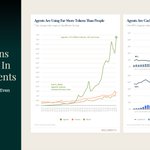
A shift most of the industry hasn't priced in: agents are becoming the buyer of cloud. About half of the unique visitors to digitalocean.com are now agents, not people.
And they don't just run on the cloud. They select it, sign up, and deploy. More than 37,000 unique customers have already deployed on DigitalOcean through an agent this year.
For fifteen years, cloud was designed for a human reading a console and a docs page. An agent can't wait for someone to interpret a dashboard, and it can't file a ticket. It chooses the platform it can read, reason about, and use end to end. Clear APIs, auth, and billing are now the front door.
I think this will prove as consequential as self-serve cloud. Self-serve took the sales rep out of the buying loop. Agents take the human itself out of it. We are building for agents as builders and as buyers, and we are increasingly winning both.

We @DigitalOcean are different by design.
That starts with who we serve, what we build and how we monetize our infrastructure:
→ 680,000 paying customers, spanning a broad base of developers and businesses.
→ A full cloud platform: compute, storage, databases, inference and agent execution.
→ Software that creates multiple revenue streams from the capacity we bring online.
→ A differentiated financial profile: 60%+ growth guidance for 2027 with positive operating margin and cashflow
As agents move into production, they need memory, data, orchestration and secure sandboxes. Bringing these capabilities together on one cloud creates value for customers and increases the revenue we can generate from every megawatt.
Our growth equation has two levers: expanding capacity and delivering more software value on that capacity.
In this interview, I explain how that architecture shapes our business and why we’re built for the agentic era. 👇
$DOCN
youtube.com/watch?v=DlcoL62B…

Introducing Cuttlefish: control your agents on @DigitalOcean from your iPhone.
Run Codex, Claude Code or OpenCode in persistent, hardware-isolated cloud sandboxes. From your phone:
→ Follow sessions and steer agents as they work.
→ Approve or deny tool calls.
→ Inspect files and preview what your agents build.
→ Checkpoint, fork, pause and resume sessions.
The architecture matters: execution and working state live in the cloud. Your agents keep running when your phone is locked, offline or the app is closed.
Durable execution. Mobile supervision. Your choice of agent.
Another step toward the cloud built for agents and the people directing them.
Cuttlefish is now in public preview.
Meet Cuttlefish
digitalocean.com/blog/introd…

Day zero and Kimi K3.1 Pro is now LIVE on @digitalocean serverless inferencing
.@Kimi_Moonshot K3.1 Pro is #4 of 221 models on the @ArtificialAnlys Intelligence Index (as of Oct 23), and you can download the weights.
It’s now on DigitalOcean Serverless Inference. Upgrading from K3 is a one-string change. do.co/4xsz0fI
$321M in Q3 revenue. 40% YoY growth. 45% adjusted EBITDA margin. A record $160M in incremental ARR.
Our fifth consecutive quarter of accelerating growth at @DigitalOcean.
Behind these results is a clear shift: customers are adopting our complete AI-Native Cloud to help agents think, act and improve.
→ Token volume grew ~10x quarter over quarter.
→ ~90% of AI customer revenue came from customers also using Core Cloud.
→ Our software makes our megawatts more valuable: $18M ARR per average active megawatt across our fleet.
We’re raising our outlook again: we now expect 44–45% revenue growth in Q4 and 60%+ for full-year 2027.
A complete platform. A diversified customer base. Disciplined financial execution. Different by design.
Thank you to our customers and the DigitalOcean team. The agentic era is here, and we’re building the cloud for it. $DOCN

We are going to be busy !! Our @digitalocean team is bringing Agent Flow and Token Flow conversations to BoxWorks (@Box), LanceDB Reverie (@lancedb), SGLang Summit (@sgl_project), @TomorrowXSummit, and Founders You Should Know (@foundersysk).
Come find us. We’d love to hear what you’re building, what’s working, and where you’re getting stuck.
If you’re building with agents, models or data, we’ll probably be in the same room this month. @Box|Works, @lancedb Reverie, @sgl_project Summit, @TomorrowXSummit, @foundersysk, plus a happy hour with @sgl_project after their Summit. Come find us.

Better agents need a learning loop: run, evaluate, improve.
Join us Nov 12 in SF with @NVIDIAAI, @sgl_project and @MLHacks after SGLang Summit for lightning talks and demos on building agents that learn from experience.
Request your spot: do.co/48pUak2

Most agents ship once and stay the same. The best ones learn from every run.
Nov 12 in SF: happy hour with @NVIDIAAI, @sgl_project, and @MLHacks after SGLang Summit. Lightning talks and demos on building that loop. Request your spot: do.co/48pUak2

It’s not that difficult to just pick the best Inference Provider. Looks like the data is suggesting @digitalocean 😁

Picking a good inference provider is difficult.
Picking the best inference provider for an open model is surprisingly hard: The reason: no single provider does it all. On OpenRouter, GLM 5.3’s GPQA score ranges from 78% to 89% (quite a large gap, despite the caveats†), and the trends in GPQA is not strongly correlated with other tasks, so it varies by workload.
Why discuss this now?
Recently, Jon Barron and colleagues showed that standard softmax implementations hide two silent bugs: Softmax Collapse, where the target gradient rounds to zero, and Softmax Cancellation, where identical logits still produce a gradient. Widely speaking, inference has the same problem, except it's harder to get something agreed to be a 'correct' outcome.
In my experience, providers on alternative chips tend to have worse silent framework bugs, though these issues are apparent on NVIDIA inference frameworks as well.
MoE models are especially fragile: the router bias and router output need fp32, etc. (there's a long list of half-patched issues). As deployment engines grow more complex, these bugs get almost exponentially harder to catch.
(Note†: SGLang or vLLM in their default configurations should give the best accuracy. The issue come from what providers add, like some custom quantization, speculative decoding, and custom kernels, or even simply forgetting to update to the latest versions of the frameworks that improve accuracy. And consider the case where you have no open reference at all (i.e they take care of both post-training and inference, so you don't own your own canon copy of the model, where you wouldn't know if there's some error in the stack silently reducing your quality).

Agent autonomy needs permissions enforced at execution time.
That’s why we built Action Gateway in @digitalocean Managed Agents: credentials stay outside model context, each gateway tool call gets an allow/deny/ask decision, and human approval applies to the exact action proposed.
Even agent-written code chaining tools follows the same rules. It cannot approve its own next step.
A model’s suggestion to call a tool is a request, not authority.
Action Gateway keeps credentials out of model context and checks every tool call against policy: allow, deny, or ask a human. It aligns with @nvidia’s Open Agent Safety Platform. do.co/4ierrTS
You can now manage your @digitalocean infrastructure straight from @bot
11 skills for DigitalOcean, including product guidance, App Platform deploys and logs, managed databases, and cost estimates before you take billable actions
Get started: Install the DigitalOcean app in Grokbot, then ask it to deploy an app, check your balance, or provision something!
x.ai/bot/plugin/79762613

Day0 launch of @MiniMax_AI M3.1 Flash model on @digitalocean Serverless today
.@MiniMax_AI reports 73.67% on DeepSWE and 72.5% on AutomationBench-AA, which it calls the best result among open models.
M3.1 Flash is now on DigitalOcean Serverless Inference and Dedicated Inference. $0.15 input, $0.60 output per 1M tokens. do.co/4xsz0fI
can someone from @SpaceX pls help ?

3
9
1,923
This week’s PHP2Shell disclosures and the AI-assisted attacks involving ConnectWise show how quickly the security equation is changing. In some cases, attackers reached privileged cloud access in under three hours.
As we give agents the ability to execute code, call APIs and use credentials, we need enforceable boundaries around every action. Which systems can they access? Where can they send data? What happens when they exceed their permissions?
My view: those controls belong in the infrastructure, outside the agent’s own reasoning loop.
That’s why I’m excited that @digitalocean is supporting @nvidia's OpenShell Reference Architecture. It brings together Vera Rubin for inference, Vera CPUs and OpenShell for agent execution, and BlueField-4 DPUs running NVIDIA Sentry for independent monitoring and policy enforcement in silicon.
An agent’s effective permissions matter as much as its model’s capabilities. Building an AI-native cloud means taking responsibility for both.
Read NVIDIA’s announcement
blogs.nvidia.com/blog/cloud-…
