

A bookstore with opinions. Books, history, ideas & the rabbit holes they lead you into. Got a PIN/ZIP code? We shall deliver. Complaints? Roast @BuyFromPI
India
Joined December 2013
- Tweets49.7K
- Following46
- Followers17.6K
- Likes52.3K




Pinned Tweet
Dear Readers ❤️
Your messages about #NavratriWithPI truly touched us. We missed it too, and we owe you one!
Shop with us from 28th to 31st October to unlock #DiwaliWithPI. Big bookish love awaits! 📚🪔

VRAT WARS: THE INDIAN EDITION
In India, the calendar doesn't just tell you the date. It tells you what you might be giving up today.
Somvar, Mangalvar, Guruvar, Ekadashi, Pradosh, Navratri. And that's before we get to regional traditions. At this rate, the calendar needs a vrat manager.
And then comes Karva Chauth.
Over the decades, this regional observance has acquired a national audience. The Punjabi roots of influential film families, Partition and the reach of Hindi cinema helped carry certain customs far beyond their original geography. Bollywood didn't invent Karva Chauth. It gave an existing tradition a publicity budget most others could only dream of.
And with fame comes scrutiny. Some celebrate it, others criticise it, and everyone seems to have a theory. Apparently, a vrat is incomplete until it has survived a prime time debate and a few thousand social media opinions.
Meanwhile, Hartalika Teej has its own religious narrative, associated with Parvati's determination and penance. In Bihar, Jharkhand and parts of eastern India, mothers observe Jitiya for their children's well being.
Which raises an interesting question. If a wife's vrat for her husband's well being is interpreted as patriarchy, what should we call a mother's vrat for her children? Matriarchy, perhaps? Or Matriarchy Junior? Maybe we could pause before assigning labels.
And here is something interesting. The Nārada Purāṇa describes the Hāritālaka Vrata in Chapter 112 and the Karaka Vrata in Chapter 113. Two observances, two consecutive chapters, one text. While their admirers and critics may find themselves at loggerheads today, the text makes room for both.
Karva Chauth, therefore, is not a Bollywood invention. Cinema helped popularise it, not create it. Across Sanatan traditions, many festivals and vrats have scriptural references, while others have been preserved through regional customs and generations of practice.
Some vrats get a Bollywood publicity department. Others continue quietly within their communities. Popularity measures visibility, not necessarily antiquity, significance or devotion.
In a diverse country, there is room for Karva Chauth, Hartalika Teej, Jitiya, countless other traditions, and those who observe none.
Perhaps the vrat we could all consider is giving up the urge to manage everyone else's spiritual calendar.

Padhega India retweeted
Some books don’t just describe a civilization; they challenge it to look in the mirror.
Have you read Naipaul’s India: A Wounded Civilization?
📚 padhegaindia.in/product/the-…

“No civilization was so little equipped to cope with the outside world; no country was so easily raided and plundered, and learned so little from its disasters.”
- V. S. Naipaul, India: A Wounded Civilization
Few writers have made a sentence about India quite so difficult to ignore or read without wanting to argue back.
Agree or disagree with Naipaul, his writing raises uncomfortable questions about India's history, civilisational confidence and relationship with its past.
📚 THE INDIAN TRILOGY by V. S. NAIPAUL, published by @picadorbooks.
An Area of Darkness:
The encounter between the India Naipaul imagined and the country he found.
India: A Wounded Civilization:
A provocative examination of India's historical experiences and civilisational predicament.
India: A Million Mutinies Now:
A portrait of a changing India, seen through the ambitions and struggles of its people.
All three landmark works, together in one volume, with an introduction by Paul Theroux.
Naipaul can be perceptive, controversial and infuriating, sometimes all at once. You don't have to agree with a writer to engage seriously with his arguments.
An appeal to every Indian reader: whatever your ideology or philosophy, read this trilogy. Challenge Naipaul, question his conclusions, and make up your own mind.
📖 Get your copy:

Padhega India retweeted
The countdown is ON! ⏳
Secure your pass to #DiwaliWithPI now. 📚❤️
Our BIGGEST sale yet is coming, and trust us, it’s going to be MASSIVE! 🪔✨
What if the person who admires you most is also the one capable of destroying you?
Eriko has a prestigious job, a beautiful apartment and a seemingly enviable life. Yet, beneath the surface, she is profoundly lonely. Then she discovers Shoko, a lifestyle blogger whose messy, unfiltered existence fascinates her. An unlikely friendship begins, but admiration soon gives way to obsession.
In Hooked, Asako Yuzuki explores the darker side of human connection. When does admiration become imitation? When does affection turn into possession? And do we love people for who they are, or for who we want them to be?
There's an unsettling irony in Eriko's work in the seafood trade, involving Nile perch, a fish associated with ecological disruption. Could our hunger for companionship be just as destructive?
Following the international success of Butter, Yuzuki once again peels back the respectable surfaces of everyday life to expose loneliness, envy and the desperate human need to belong.
And the book itself is gorgeous! Its striking magenta, yellow and gold artwork, bold typography, fish illustration and beautiful gilt-like edges make this edition a collector's delight. A stunning object wrapped around a deeply unsettling story.
📚 Presenting the Special Collector's Edition of Hooked by Asako Yuzuki, translated by Polly Barton and published by HarperCollins India.
🔗 padhegaindia.in/product/hook…
#BuyOriginal 💮 #BuyFromPI

Padhega India retweeted
We are still watching this one on loop, wake us up when something even half as good as this comes. ❤️🥹🥰
Honestly, if this were fiction, we’d say too good to be true. ❤️
But look at life, being this lovely. Just couldn’t help sharing this one on our timeline.
🎥 Credit: @peek_humour
#NewBookAlert 💮
Presenting Without Fear or Favour by Justice Sanjay Kishan Kaul, with Jay Vinayak Ojha. Published by @juggernautbooks.
🔗 padhegaindia.in/product/with…

Padhega India retweeted

गांधी हत्या कांड को समझना है, तो केवल 30 जनवरी 1948 की घटना जानना पर्याप्त नहीं। उस घटना तक पहुँचने वाली परिस्थितियों, विभाजन की त्रासदी, सांप्रदायिक तनाव और तत्कालीन राजनीतिक निर्णयों की पड़ताल भी आवश्यक है।
‘हे राम: गांधी हत्याकांड की प्रामाणिक पड़ताल’
प्रखर श्रीवास्तव की यह पुस्तक महात्मा गांधी की हत्या से जुड़े घटनाक्रम और उसकी ऐतिहासिक पृष्ठभूमि को विस्तार से समझने का प्रयास करती है।
आज़ादी के आंदोलन का अंतिम दौर, भारत का विभाजन, पाकिस्तान को 55 करोड़ रुपये देने का विवाद, शरणार्थियों की दुर्दशा, सांप्रदायिक दंगे और तत्कालीन राजनीतिक नेतृत्व के बीच मतभेद जैसे विषय इस पड़ताल का हिस्सा हैं।
गांधी हत्या से जुड़े सवालों, प्रचलित धारणाओं और उन पहलुओं को भी पुस्तक में उठाया गया है, जिन पर अक्सर पर्याप्त चर्चा नहीं होती। लेखक ने पुलिस की जाँच रिपोर्टों, केस डायरी, गवाहों के बयानों और अदालती कार्यवाही से जुड़े दस्तावेज़ों के आधार पर घटनाओं को समझने का प्रयास किया है।
इतिहास के विवादित अध्यायों को समझने के लिए भावनाओं और पूर्वधारणाओं से आगे बढ़कर मूल स्रोतों, दस्तावेज़ों और तथ्यों को पढ़ना ज़रूरी है। यह पुस्तक पाठकों को उसी दिशा में विचार करने का अवसर देती है।
‘हे राम’ के दसवें संस्करण के प्रकाशन पर लेखक @Prakharshri78 और प्रकाशक @jansabha91 को हार्दिक बधाई! किसी पुस्तक का दसवें संस्करण तक पहुँचना उसके प्रति पाठकों की निरंतर रुचि और उसके विषय की प्रासंगिकता को रेखांकित करता है।
इतिहास के इस महत्वपूर्ण दस्तावेज़ को पढ़िए और स्वयं तथ्यों से परिचित होइए।
🔗 पुस्तक यहाँ उपलब्ध है: padhegaindia.in/product/hey-…

Congratulations @Prakharshri78, team @jansabha91 and @Modhgil. 10th reprint in such a short period of time, is actually an achievement worth celebrating. Our best wishes 🙏

गांधी हत्या कांड को समझना है, तो केवल 30 जनवरी 1948 की घटना जानना पर्याप्त नहीं। उस घटना तक पहुँचने वाली परिस्थितियों, विभाजन की त्रासदी, सांप्रदायिक तनाव और तत्कालीन राजनीतिक निर्णयों की पड़ताल भी आवश्यक है।
‘हे राम: गांधी हत्याकांड की प्रामाणिक पड़ताल’
प्रखर श्रीवास्तव की यह पुस्तक महात्मा गांधी की हत्या से जुड़े घटनाक्रम और उसकी ऐतिहासिक पृष्ठभूमि को विस्तार से समझने का प्रयास करती है।
आज़ादी के आंदोलन का अंतिम दौर, भारत का विभाजन, पाकिस्तान को 55 करोड़ रुपये देने का विवाद, शरणार्थियों की दुर्दशा, सांप्रदायिक दंगे और तत्कालीन राजनीतिक नेतृत्व के बीच मतभेद जैसे विषय इस पड़ताल का हिस्सा हैं।
गांधी हत्या से जुड़े सवालों, प्रचलित धारणाओं और उन पहलुओं को भी पुस्तक में उठाया गया है, जिन पर अक्सर पर्याप्त चर्चा नहीं होती। लेखक ने पुलिस की जाँच रिपोर्टों, केस डायरी, गवाहों के बयानों और अदालती कार्यवाही से जुड़े दस्तावेज़ों के आधार पर घटनाओं को समझने का प्रयास किया है।
इतिहास के विवादित अध्यायों को समझने के लिए भावनाओं और पूर्वधारणाओं से आगे बढ़कर मूल स्रोतों, दस्तावेज़ों और तथ्यों को पढ़ना ज़रूरी है। यह पुस्तक पाठकों को उसी दिशा में विचार करने का अवसर देती है।
‘हे राम’ के दसवें संस्करण के प्रकाशन पर लेखक @Prakharshri78 और प्रकाशक @jansabha91 को हार्दिक बधाई! किसी पुस्तक का दसवें संस्करण तक पहुँचना उसके प्रति पाठकों की निरंतर रुचि और उसके विषय की प्रासंगिकता को रेखांकित करता है।
इतिहास के इस महत्वपूर्ण दस्तावेज़ को पढ़िए और स्वयं तथ्यों से परिचित होइए।
🔗 पुस्तक यहाँ उपलब्ध है: padhegaindia.in/product/hey-…
Om Shanti. 🙏
“Delhi hai dilwalon ki”- thankfully, that lie is dying. A city where a man can be stabbed to death over extra chole. What a shame. What a disgrace.

#Delhi | A 35-year-old car driver, who was stabbed multiple times following an alleged dispute over asking for "extra choley" in outer Delhi's Nihal Vihar area, died during treatment, according to news agency.
The victim, identified as Sandeep, was allegedly attacked during a scuffle with a choley-bhaturey seller near Jwalapuri Nala on Sunday.
Details here 🔗 toi.in/MlYgeZ
Catch every update on the TOI App 👉 timesofindia.sng.link/Cqhd4/…

Padhega India retweeted

Padhega India, tabhi toh badhega India!
Can't help but recall @palkisu's words, “When reels replace textbooks & algorithms become teachers, an uninformed generation turns into a national security risk.”
If not a national security risk, it'll certainly lead to a hollow India!
The bar is so low that @virendersehwag asks, “Have you watched Mahabharata?” instead of “Have you read it?”
And the answer is still no. 💀
Hey Bhagwan! What a battle we have ahead of us. 😭
The countdown is ON! ⏳
Secure your pass to #DiwaliWithPI now. 📚❤️
Our BIGGEST sale yet is coming, and trust us, it’s going to be MASSIVE! 🪔✨
Padhega India retweeted
Dear Readers ❤️
Your messages about #NavratriWithPI truly touched us. We missed it too, and we owe you one!
Shop with us from 28th to 31st October to unlock #DiwaliWithPI. Big bookish love awaits! 📚🪔
Why did Amba become the reason behind Bhishma’s eventual downfall?
Why was Vidura, arguably the wisest of Dhritarashtra’s brothers, destined to serve rather than rule Hastinapura?
Why did Puru, the youngest of Yayati’s sons, inherit his father’s kingdom when his elder brothers were ahead of him in the line of succession?
And what exactly did Duryodhana say to Shalya to persuade him to become Karna’s charioteer?
These aren't footnotes to the Mahabharata. They are stories that help us understand the epic in all its extraordinary complexity.
In Completing Vyasa’s Mahabharata: 67 Upakathas for the Modern Reader, Abhinav Agarwal takes us beyond the familiar tale of the Pandavas and Kauravas to explore 67 lesser-known narratives that add fascinating layers to Vyasa’s masterpiece.
From Amba’s extraordinary journey to the story of Yayati and his sons, these are tales of ambition, curses, boons, love, duty and consequences that echo across generations.
Some answer questions you may never have thought to ask. Others will make you look at familiar characters in an entirely new light.
Because the Mahabharata isn't merely the story of a war fought over a kingdom. It is a vast world of stories, each revealing another piece of the puzzle.
Think you know the Mahabharata? Here are 67 stories that might surprise you.
📚 Completing Vyasa’s Mahabharata: 67 Upakathas for the Modern Reader by @AbhinavAgarwal, published by BluOne Ink.
🛒 padhegaindia.in/product/comp…

The bar is so low that @virendersehwag asks, “Have you watched Mahabharata?” instead of “Have you read it?”
And the answer is still no. 💀
Hey Bhagwan! What a battle we have ahead of us. 😭
QUAD sounds like a meeting. AJAI (Australia-Japan-America-India) sounds like the outcome. 😎
And AJAI means “invincible” in Sanskrit. Just saying. 😉


Padhega India retweeted

Sylvia Plath is not for the faint hearted, but she is an exceptional writer, and this book was amazing.
“I took a deep breath and listened to the old brag of my heart: I am, I am, I am.”
Sylvia Plath, The Bell Jar
Sylvia Plath published her first poem at eight. Most of us were still negotiating bedtime.
But childhood poetry was only the beginning. Plath was a brilliant student, a short-story writer, a novelist and an ambitious young woman who landed a guest editorship at Mademoiselle magazine in New York. She published The Bell Jar under the pseudonym Victoria Lucas, wrote The Colossus, and left behind Ariel, one of the most influential poetry collections of the twentieth century.
Yet, for all the literary acclaim, there is a question worth asking: what happened when Plath wasn't writing for an audience?
What did she dream about beyond becoming a writer? What amused her, irritated her, challenged her ambitions? What did she make of the ordinary business of living, long before posterity turned her into a literary icon?
That's where her journals become fascinating. They offer something no biography can quite replicate: Plath's own words, written without the knowledge of how the world would eventually read her life.
Today, on her birth anniversary, we bring you The Unabridged Journals of Sylvia Plath, edited by Karen V. Kukil.
Forget the finished poems for a moment. Here is the writer in the making: observing, questioning, experimenting and trying to make sense of herself and the world.
Because the most interesting thing about a writer isn't always what makes it into print. Sometimes, it's what she wrote when nobody was supposed to be reading.
Meet Sylvia Plath beyond the legend.
📚 padhegaindia.in/product/the-…
#BuyOriginal 💮 #BuyFromPI

Padhega India retweeted
Meet the gang we didn’t know we needed. 🧒🏻 🐴 🦊 🐭
There’s a boy trying to figure life out, a mole whose priorities are wonderfully straightforward (cake, mostly 🍰), a fox who has his reasons for staying quiet, and a horse who seems to understand that sometimes, just being there is enough.
They’re an unlikely bunch. No grand plans, no life hacks, no five-step guide to becoming a better human. Just four friends, wandering together, asking questions, getting things wrong, and reminding one another that nobody has to have it all figured out.
In The Boy, the Mole, the Fox and the Horse, Charlie Mackesy gives us the sort of friendship we all hope to find: one where you can be brave or scared, silly or silent, and still belong.
And in Always Remember, that gentle wisdom returns like a familiar friend dropping by just when you need them. ❤️
These aren’t books that shout advice at you. They sit beside you. They make you smile when you’re feeling a little lost, remind you to be kinder to yourself, and quietly suggest that asking for help is its own kind of courage.
And if you have a little one at home, make The Boy, the Mole, the Fox and the Horse one of their first books. Gift it to them early. They may not understand every word today, but some stories grow with us, and become even more meaningful as we grow older. 🥹📚
Presenting a set of two endearing books by @charliemackesy, published by @PenguinIndia.
📚 padhegaindia.in/product/char…
#BuyOriginal 💮 #BuyFromPI

After almost THREE DAYS, multiple rounds of discussion, endless deliberations and what can only be described as a national-level selection process, we have finally arrived at our 10 winners. 😂🏆
We even sought help from @grok, twice. Let's just say artificial intelligence is still some distance away from replacing human confusion. 🤦🏻♂️
But before the other 60+ participants start preparing their legal notices, a clarification: choosing these ten does NOT mean the rest of your answers weren't good. Quite the opposite. Many were equally wonderful, some arguably better, and we may simply have lacked the wisdom, intelligence or functioning brain cells to recognise their greatness. 🙈
The hardest part? Every single time we opened the replies to evaluate them, we ended up watching that beautiful video all over again. We went in to judge the answers and came out emotionally compromised. Repeatedly. 😂❤️
Jokes apart, a huge thank you to everyone who participated. The warmth, nostalgia, humour and wonderfully different perspectives you shared made this giveaway far more special than we had anticipated. Every response reminded us that the same little moment can mean a hundred different things to a hundred different people.
Congratulations to our ten winners! 🎉📚 And to everyone else, please know that your participation was genuinely appreciated. This was never an easy list to finalise.
Winners, please DM us tomorrow with your details so we can arrange your book gifts. Don't make us launch another three-day investigation just to deliver them. 😂❤️
Thank you for making this little experiment so lovely.

🎁 #PIGiveaway 📚
Watch this video. What’s the FIRST thought that comes to your mind?
No rehearsed answers. No overthinking. Just be yourself and tell us honestly! ❤️
We’ll gift a book to the authors of the 10 most heartwarming, intriguing and honest answers.
Let the thoughts flow! 👇
Giraffe like mammals. Prehistoric hippopotamus relatives. Elephants and rhinoceroses that roamed a very different India. This was the subcontinent, millions of years ago.
Fossils discovered in the Shivalik hills reveal a prehistoric world of extraordinary diversity, including multiple kinds of elephants, mastodons and rhinoceroses, alongside mammals that no longer roam the subcontinent.
Who were these animals? What happened to them? And how did India's changing landscapes shape the wildlife we know today?
Few people were better placed to help us explore these questions than Dr. A.J.T. Johnsingh, one of India's pioneering wildlife biologists and conservationists. A legendary field scientist, he dedicated his career to studying India's wild mammals and protecting the landscapes they depend on.
Alongside him is Dr. P.O. Nameer, an accomplished wildlife scientist specialising in mammalian taxonomy, ecology and biogeography.
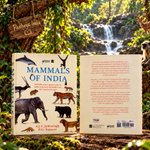
Their book, Mammals of India, documents more than 450 recognised mammal species, bringing together scientific knowledge, illustrations and distribution maps in a comprehensive guide to India's extraordinary mammalian diversity.
From prehistoric giants to elusive species few of us could identify, this is a journey into a side of India's natural history that deserves far more attention.
📚 Presenting Mammals of India by Dr. A.J.T. Johnsingh and Dr. P.O. Nameer, published by @HarperCollinsIN.
🔗 padhegaindia.in/product/mamm…
#BuyOriginal 💮 #BuyFromPI
