

A growing collection of clinically isolated bacteria and yeast for research, verification studies & product development. Enquiries: [email protected]
Nottingham, England
Joined February 2018
- Tweets77
- Following177
- Followers93
- Likes20






NUH Pathogen Bank retweeted
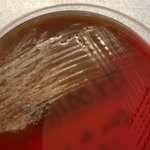
This Gram-negative bacilli causes sporadic and epidemic infections globally. It utilises the xylose and decarboxylates the lysine in XLD media increasing the pH creating red colonies. It metabolises thiosulphate in the media to produce hydrogen sulphide (black centres) What am I?


NUH Pathogen Bank retweeted

🧫 Happy World Antibiotic Awareness Week 🧫
Nikala (our wonderful Pre Analytical Improvement Nurse) and co have been very busy educating antibiotic stewardship and training about microbiology. Spreading awareness…and treats! Did you see them?!
#WAAW2024 #WAAW24 #Microbiology


NUH Pathogen Bank retweeted
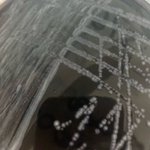
This aerobic weakly staining Gram-negative rod requires L-cysteine to grow. Its colonies have a ground glass appearance. Clinically this organism commonly causes pneumonia and Pontiac fever. Who am I?

ALT Black agar plate with white ground glass colonies growing on it
NUH Pathogen Bank retweeted
I grow slowly in aerobic conditions and can be seen as fine, branching, beaded GPB on a Gram stain. I am partially acid-fast when a modified Ziehl-Neelsen is applied. I classically cause respiratory infections and brain abscesses. What am I?

NUH Pathogen Bank retweeted
A cause of ‘culture negative’ endocarditis due to the requirement of pyridoxal and/or cysteine for growth. Growth is enhanced in anaerobic conditions on chocolate or fastidious anaerobic agar. A pleomorphic organism that can appear as a GPCC, GPCB or GPB. What am I?

NUH Pathogen Bank retweeted

Celebrating #HealthcareScienceWeek2024 by visiting different teams
@nottmhospitals
Thanks to Jemma from @PathogenBank for explaining about this important research resource
@nuh_HCS
@WeHCScientists
@TeamCAS3
@ClinicalNuh
@IBMScience


NUH Pathogen Bank retweeted

Don't miss our study where we show that oral supplementation with B. bifidum and L. acidophilus in premature infants drives a fecal microbiota composition and environment more similar to a healthy full-term breast-fed infant.
biorxiv.org/content/10.1101/…

NUH Pathogen Bank retweeted

Thanks to the team at @nottmhospitals microbiology department for showing me their labs today - real challenge of antibiotic resistance needs taking more seriously

NUH Pathogen Bank retweeted

Designing a clinical trial? See the #CTToolkit for advice on best practice: ow.ly/X9k630m78x1 #clinicaltrials #ResearchResource
NUH Pathogen Bank retweeted

With the 100,000 genomes project up and running, the infrastructure is in place to scale up to 5m genomes - the next step to population-wide UK genome database. gov.uk/government/news/matt-…
NUH Pathogen Bank retweeted


Zoonotic Transfer of Clostridium difficile Harboring Antimicrobial Resistance between Farm Animals and Humans. Open access! https://nitter.cf/t.co/efUHImIHvL @ASMicrobiology #ASMClinMicro

NUH Pathogen Bank retweeted

There are so many inspiring women in science! Travel back in history to visit a few in our comic strip ow.ly/Q5Iv30iO9Mf #IWD2018
NUH Pathogen Bank retweeted

This week was Rare Disease Day. Read articles handpicked by the editors of Letters in Applied Microbiology + Microbial Biotechnology - free for a limited time: ow.ly/2neX30iFhQg

NUH Pathogen Bank retweeted

Not usually on my listeria high risk food list.... melon!! bbc.com/news/world-australia…
NUH Pathogen Bank retweeted

Every patient @nottmhospitals from age 0 to 110, on every ward, from ED front door to discharge is now screened for #sepsis on every set of observations.
Brilliant work by @mchale_sm and @nottmchildrens with @sallydp1 @sepsisnurseabby and @NervecentreHQ

NUH Pathogen Bank retweeted

New release: List of Blueprint priority diseases 2018 https://nitter.cf/t.co/e928ryTqbj
@WHO calls on the medical community to unite in greater R&D efforts for these 8 diseases to develop treatments and vaccines to help control #outbreaks. #publichealth #HealthSecurity

NUH Pathogen Bank retweeted
Sir Alexander Fleming announced his discovery of the mold byproduct penicillin on this day in 1929. His paper only tentatively suggested that penicillin “may be an efficient antiseptic” against some bacteria. #ValentinesDay
