






'wild geese. Fontenoy, eh?'
[U]
'Si, Nora'
1909.


The house on Fontenoy Street, off Mountjoy Street where #JamesJoyce stayed when he returned from Europe and sent back to Nora those passionate letters. Note the porcelain 'white lady' in the fanlight. @littlemuseumdub @JamesJoyceCentr @chtmdublin

Dublin Tram (2004)
Jan De Bie.


Dublin’s original tram system (1872–1959) was a rattling work of art and efficiency, albeit an occasionally fatal one. The first horse-drawn trams began service in 1872 between College Green and Rathgar. They were doubledeckers, two and a half tons of painted oak and iron pulled by pairs of horses swapped out every few miles to prevent exhaustion (I hate animals being used for this purpose).
Steel rails embedded in cobblestones made for a smoother ride than the jolting “omnibuses” that came before where, incidentally, we get the word “bus.” Conductors in grimy uniforms called out “Car, sir? Car, madam?” as they clanged through the damp air of Grafton Street. A penny fare could take a labourer to work or a courting couple to Dollymount Strand. Women on the open top deck had modesty boards installed to preserve Victorian decency, a detail that says as much about the age’s moral temperature as it does about how women have always had to put up with perverted nonsense.
The great leap came with electrification in 1901 under William Martin Murphy, founder of the Dublin United Tramways Company (DUTC). Dublin was among the first cities in the world to electrify its entire system, a source of civic pride. Sleek, humming machines replaced horses, drawing current from overhead wires. Capable of 40 miles an hour and fitted with air brakes, many were built locally at Spa Road Works, Inchicore.
At its peak, the network spanned over 60 miles, reaching Dalkey, Terenure, and Clontarf. Trams carried families to the coast, workers to the docks, and clerks from Rathmines and Phibsborough to Dame Street. Each tram bore a front symbol. A star, triangle, or heart, to help illiterate passengers find their route. The doubledeckers became microcosms of class. Upstairs, middle-class commuters smoked pipes and read the Freeman’s Journal, downstairs, the air was thick with talk and sweat.
That feel of slipping between worlds, the muffled rattle of the city outside, the metallic scent of ozone from wires fizzing in the rain, the steady ding of the motorman’s bell, was magical. You might climb to the open deck for a sea breeze nearing Clontarf, but more often huddled below on a rainy morning, pressed between the Guinness breath of aul lads and shawled motts with market baskets and cheap lavendar perfume.
Crime was rare, mostly pickpockets and kids. Accidents, sadly, were common. Carefree children darting into tracks or elderly passengers slipping while boarding. Yet for all its dangers, the tram revolutionised Dublin life, expanding the horizons of the working class.
Motormen and conductors worked punishingly long shifts in all weather. Their meals had to be brought to them by family at the terminus. Their employer, William Martin Murphy, was both visionary and villain. The man who electrified the trams and later led employers during the 1913 Lockout.
The decline came when motor buses arrived in the 1920s. They were flexible, cheap, unbound by rails. The DUTC replaced its trams and rebranded as the Dublin United Transport Company in 1941. One by one, the lines were torn up and sold for scrap.
By July 1949 the last city tram had clanged its bell for the final time. A solitary echo lingered on the Hill of Howth Tramway until May 31, 1959. After that Dublin was a tramless city, its great arteries of steel torned up or buried beneath tarmac till the Luas decades later.


If I could be anything in the world that flew
I would be a bat and come swooping after you
And if the last time you were here, things were a bit askew
Well, you know what happens after dark ...
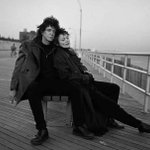
Photo : Robert Quine


Adieu, Donal.
Rest in peace, first met playing with Emmet Spiceland, 'Mary of Dungloe' fest mini moke up the steep street.
Lots of chats two abreast before bike lanes arrved. Ranelagh Park at a time of great grief.

Back in print.
Original frail and rare.
Nice reproduction.
'covers of pissedon green. Last word in art shades.'
Was Beefheart's Ella Guru, a homage?


Patrick Hawe retweeted

Austin Spare was something of an
l'enfant terrible, revered and scorned. In 1956 he persuaded this cat burglar who dropped in one night through his skylight, to stay and have his portrait drawn.


'Exquisite variations he was now describing on an air Youth here has End by Jans Pieter Sweelinck, a Dutchman of Amsterdam where the frows come from.'
[U]
Jan Pieterszoon Sweelinck (1562-1621), composer, organist, and pedagogue.

#Opdezedag in 1621 werd Jan Pieterszoon Sweelinck begraven in het familiegraf in Amsterdam's Oude Kerk, graf 99. Hij was de organist van de kerk, componist, en -blijkbaar- een fantastische zanger; dat laatste leverde hem de bijnaam "de Orpheus van Amsterdam" op.


Reading Borges, Notting Hill.

London, October 29, 1968. Mick Jagger, in costume as the reclusive rock star Turner, at the window of a white Rolls-Royce while filming Performance in Notting Hill. According to the Daily Express, the car was on loan from John Lennon. Directed by Donald Cammell and Nicolas Roeg, the film cast James Fox as a gangster on the run who hides out in Turner's house, with Anita Pallenberg alongside them. Mick even wore a wig for the role. Performance was shot in 1968, but it didn't open until August 1970 in New York, and Mick's "Memo from Turner" became one of the highlights of the soundtrack.
👅 Mick played a reclusive rock star called Turner. Which rock star made the best move into acting? 👅 👇️

ALT Black and white photo of Mick Jagger in 1968, with long dark hair, looking calmly at the camera from the open window of a white Rolls-Royce. He wears a dark jacket with a quilted lapel over a white shirt, and the car's chrome window frame runs down the right side of the picture.
'For sleeking beauties I spinned their nightinveils'
[FW]
Sleeping Beauty interpreted by Harry Clarke.

Patrick Hawe retweeted

Annie French (1872–1965), Scottish painter, engraver, illustrator, and designer associated with the Glasgow School #Womensart #GlasgowGirls

Patrick Hawe retweeted

South African girl group, The Velvettes, with Hazel Futa, Patience "Princess" Gcwabe and Eunice Mumsie Mthombeni, c 1960s. Photo: Mike Peters

Vaults of St. Michans, Recent Coffins, Dublin, Ireland. 1926.
Christ Church. 1926.
Graffiti. 1926.
Emil Otto Hoppé (1878-1972)


Patrick Hawe retweeted

Wiktoria Goryńska - Joanna d'Arc (drzeworyt na papierze żeberkowym, 30 x 30 cm), 1929, Muzeum Narodowe w Warszawie. #PolishMastersofArt

Patrick Hawe retweeted

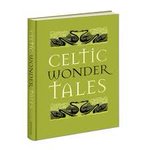
#Otd 1970: Founding in Dublin of what is considered to be the 1st Celtic rock band @horslipsmusic. Songs frequently inspired by traditional Irish airs, jigs & reels. Some lyrics refer to Irish legends. 🎶☘️🎸en.wikipedia.org/wiki/Horsli… youtube.com/watch?v=RUSw3jss… youtube.com/watch?v=RFP0ymJb…


