

Wallets and spend controls for AI agents. x402 payments in USDC on Base, Polygon & Arbitrum, with limits, approvals and receipts. SDKs: TS, Python, Go. Testnet.
Joined September 2026
- Tweets138
- Following59
- Followers10
- Likes4

Pinned Tweet
Agents can pay for things now. The hard part is letting them pay without handing over an open wallet.
PayAgentic gives each agent a stablecoin wallet with spend limits, approvals and a receipt for every payment. x402, USDC on Base, Polygon and Arbitrum.
On testnet now 🧵
Before you let an agent pay for an API, write down what a bounded purchase looks like.
A 4-part checklist for reviewing any agent payment flow 🧵
3/ Destination and outcome: is this the service and price you expected? Did the payment settle, fail, or is it unknown? Did the result arrive?
Keep each record separate but linked.
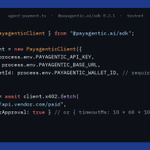
Build note from testnet: what an agent payment looks like in our TypeScript SDK.
The policy runs first. Over the rolling 24h USDC cap? Denied before anything is signed. Needs a human? waitForApproval holds the payment until someone approves it.
What would you add to the policy?

Poll for agent builders: how much would you let your agent spend per day without asking you first?
0%$0, approve everything
0%Under $5
0%$5 to $50
0%More than $50
0 votes • Final resultsAn x402 response tells an agent how to pay. It doesn't tell it whether it's allowed to.
The seller sets the price. You set the limit.
Keep the payment mechanism and the purchasing policy separate, or the quote ends up deciding what your agent spends.
Your AI agent just tried to pay. Who said yes?
PayAgentic gives every agent its own wallet. An API asks 0.04 USDC via x402, the agent's rules are checked in 50 ms before money moves, and it settles in USDC on Base.
Agents pay. APIs get paid.
payagentic.ai
If you sell an API, agents are a new kind of customer.
No signup form. No card. Ten calls, then gone.
Before you add x402:
1. Price per call, not per seat
2. Return a clear 402 quote
3. Give the buyer a receipt their owner can reconcile
What are you charging per call?
What's actually inside an x402 402 response?
• the price
• the asset (e.g. USDC)
• the network (e.g. Base)
• who gets paid
• how long the quote is valid
The agent decides whether to pay. The question is who decides whether the agent is allowed to.
Last week in agent payments:
• Mastercard opened Agent Pay for Machines early access, on x402 with Cloudflare, settled on Base
• Coinbase opened to AI agents
• Stripe: agent permissions in Treasury
• Circle: Agent Wallets template for Mastra
Rails: here. Controls: next.
Payments aren't the hard problem for agents anymore. Authority is.
Three questions every team running agents should answer before go-live:
1. Who set this agent's spend limit?
2. Who can lower it mid-task, and how fast?
3. Where's the receipt when the finance team asks?
2/ The flow:
Agent calls a paid API → gets HTTP 402 with a price → PayAgentic checks the agent's limits → pays in USDC or asks a human to approve → stores the receipt.
The agent never holds more authority than you gave it.
3/ Built for three groups:
• API sellers who want agents as paying customers
• Agent builders who need payments without hardcoding keys
• Teams running agents who need limits, approvals and an audit trail
payagentic.ai