
Staff machine learning scientist at Intercom.
Dublin City, Ireland
Joined September 2012
- Tweets100
- Following1K
- Followers167
- Likes639






Pinned Tweet
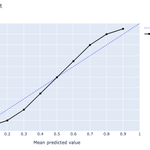
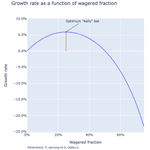
Can ChatGPT beat ML models on NLP tasks? In this post, I show that it does on the name classification task: tabacof.github.io/posts/name…
1
3
434
Pedro Tabacof retweeted

Over the past week, I’ve been overwhelmed by the love and support of friends, industry colleagues, and people I've never met. Thank you to everyone who has shown kindness to my family and me. It means the world to me.
I came to the United States 53 years ago, and becoming an American citizen is one of the greatest gifts and proudest moments of my life. NVIDIA has been my life’s work. Building it into the company it is today alongside my colleagues has been a privilege and an honor. Nowhere but in America could a company like NVIDIA be possible. I love our country, and I love NVIDIA.
I did not live up to the standards expected of everyone at NVIDIA, and I have made serious mistakes in my personal life. I created problems for the Board that I deeply regret. I own my mistakes completely, and I am committed to cooperating with the Board’s independent investigation.
Since my departure, I’ve seen an outpouring of calls from NVIDIA’s employees, investors, business partners, and customers for me to return as CEO. Many continue to reach out to me directly as the company navigates complex technology, market, competitive, and geopolitical dynamics. NVIDIA is a once-in-a-generation company. If the Board of Directors decides that my return is in the best interest of our shareholders, our employees, the company, and America, I would be honored to answer these calls and return as CEO.
Thank you again to everyone who has shared their good wishes. I am profoundly humbled by your support. To my family: I love you, and I will spend the rest of my life being worthy of yours.
Jensen
Pedro Tabacof retweeted

Not sure who needs to hear this but….
A human doesn’t “understand” anything. It’s a network of neurons that produces outputs based on electrochemical activity determined by its current state, prior inputs, learned associations, and context, not an “understanding” of the subject matter.
It’s interesting how many people really want to believe humans have conscious understanding.
I’m not dissing humans. It’s obvious that understanding isn’t necessary to produce correct insights or correlations.
That’s just how neurons and biochemistry work.
Pedro Tabacof retweeted

This viral Stripe chart shouldn't surprise anyone.
It's EU policy coming to its conclusion.
This is what we get when we celebrate publishing regulatory pdfs and closing critical energy sources.
We should get used to charts like this.
So when I speak Europeans campaigning (aka glueing-their-hand-to-something) for all this degrowth wankery, I'm always puzzled as to why exactly. The degrowth is already here—it's just not evenly distributed
Here's 9 facts
1. Productivity growth numbers in the US vastly outpaces EU equivalents. (e.g. 2022→2025 shows a 7x difference)
2. The tech sector alone explains accounts for ⅔ of the EU–US productivity gap since 2000, according to ECB.
3. In 2024 + 2025, 5 AI heavy companies—Nvidia, Meta, Microsoft, Alphabet and Amazon—accounted for 40% of the S&P 500’s total return.
4. Competing in AI requires 3 essential ingredients: capable models, advanced chips, and affordable electricity. So naturally the EU is working against this.
5. Electricity: EU prices for energy-intensive industries are ~2x US levels and 50% above China’s, according to the IEA. Why is this?
6. European governments left themselves dangerously dependent imported gas, while also pulling batshit moves like closing nuclear plants. EU carbon pricing added insult to injury.
7. Models: The EU AI Act adds compliance requirements, training-data + copyright policies, and plenty of risk-management obligations. As with all things EU they'll never explain fully how to be compliant until you're in court. The result: is minimal model development in EU and very delayed AI product+feature roll out from big (easy-to-fine) companies.
8. Chips: Europe’s semiconductor ambitions are undermined by insufficient investment, fragmented funding, slow delivery, and of course high operating costs. Net effect is they're on course to miss their 2030 goals by >40%
9. Putting it all together, we’re making it harder and more expensive to resource, build and deploy AI in Europe, and risking another decade of falling behind.
The result will be even slower growth relative to the rest of the world. – at Dublin City, Ireland


Pedro Tabacof retweeted

Throwing rubbish in a landfill is (usually) better for the environment than recycling it. With few exceptions, recycling ends up emitting more CO2 and costing more money, while landfills are cheap and secure.
- Recycling mid-tier plastics (like plastic bottles or butter tubs) costs thousands of dollars per ton of CO2 saved. It's cheaper to do direct air CO2 capture than that! And there is no shortage of plastic, nor any problem with sequestering it in the ground once we're done with it.
- Modern landfills are extraordinarily secure and are *much* more than just big piles of trash. They capture 75%–95% of methane gas. Groundwater contamination is doesn't really happen with landfills built since 1990. A study of 31 landfills built since 1988 in NY found no adverse effect at all on local groundwater quality.
- The crusade against single-use plastics has driven us to products that use far more materials and energy and would need to be used an absurd number of times to actually be an improvement. A steel straw needs to be used 150 times to be worth using. A ceramic mug needs to be used 1,000 times to beat a polystyrene cup. A cotton bag needs to be reused 173 times to beat single-use.
- Some things ARE worth recycling. Recycling metal saves a huge amount of energy and material – recycling aluminium saves 95% of the energy spent on making fresh stuff. So we do a lot of it already: about 30% of steel worldwide is recycled.
Modern, well-run landfills cause minimal environmental damage. We have plenty of space for them – less than 0.01% of the US is used for landfill and only about 0.02% of Germany. We can even build on top of old landfills, so the land area is not spent permanently.
New in @WorksInProgMag, @robertwiblin and @chalmermagne on why it's usually best to just bury your trash. worksinprogress.co/issue/jus…

Pedro Tabacof retweeted

I watched this the other day and what I find the most striking is that, for the most part, both of them have a purely supply-side approach to forecasting the revenue of OpenAI and Anthropic.
Even Dylan, who is less bullish than Dwarkesh, seems to think that only politics and financial bottlenecks can prevent the kind of hypergrowth that Dwarkesh is talking about, but demand is basically taken for granted.
Nor is this specific to them, to be clear, I made the same reflection to myself countless times in conversation with AGI-pilled people or reading some of the stuff they write.
I constantly find myself wishing that people who believe OpenAI/Anthropic will generate trillions in revenue within 2-3 years explained to me where, in the kind of scenario they envision, that demand is supposed to come from concretely.
Dwarkesh's basic intuition seems to be that AI will soon be able to fully automate many white-collar jobs, so to get a sense of how much revenue OpenAI/Anthropic can generate by replacing them, you can just look at the wage bills for those workers, but that's not how things work.
First, if AI can fully automate most tasks performed by those workers but even a handful of them prove resistant to automation, AI will still generate a lot of value but it will presumably be captured mostly by the remaining workers, their firms or their customers and the current wage bill for those workers will massively overestimate the future revenue of frontier labs.
In that case, demand for AI may not explode in the way Dwarkesh and Dylan expect, because it will be bottlenecked by humans in production.
But let's assume, as Dwarkesh and Dylan presumably do, that AI capabilities will improve so much that it can automate every task those workers perform and their jobs can be fully automated. It still doesn't follow that demand will be as high as they think.
Even when it has become technically possible to replace most white-collar jobs with AI in principle, before it can happen in practice, there will be enormous transition costs and frictions as firms will have to undergo massive reorganization. This will be very slow even if politics doesn't interfere, which it will.
Dwarkesh's argument implicitly assumes that frontier AI companies will be able to charge about the same for tokens that provide services equivalent to that of the worker being replaced, but as long as there is enough competition, the prices they can charge will be pushed down and if he's right about how fast capabilities will improve they may fall very quickly.
Will there be enough competition? Well, if things continue as they have looked so far, OpenAI and Anthropic are ahead of everyone in capabilities but other companies are not that far behind.
So for the price they can charge not to fall very rapidly, you have to assume that the gap in capabilities with their competition starts increasing quickly and that customers of AI services continue to be willing to pay a huge premium for access to state-of-the-art models, which is hardly obvious.
The fact that it’s true now doesn’t mean that it will still be true in 2-3 years, when the capabilities of non-frontier models have improved, the user base of AI services has expanded a lot and they collectively consume a much larger volume of them.
Now, even if prices do fall rapidly, this could in theory be compensated by increased demand in volume. But there is only so much legal, managerial, engineering, etc. services that people want, even if prices fall.
The price elasticity of the demand for those services will eventually fall and, even if improved capabilities shift the demand curve outward, this will only generate so much demand because no matter how good your lawyer gets and how low his rates fall, at some point you don't need more of his services.
Now, obviously with improved capabilities AI may also make it possible to develop new services for consumers, which in turn will create new sources of demand for AI companies.
But even if that's true, and on a long enough time horizon I have no doubt that it will be true, it will still take time before these new markets can generate a large amount of demand for AI services.
That's because even if you assume that AI capabilities improve so much that in a couple of years AI itself will be able to come up with ideas of new services that can take advantage of it, you will still need to let people know about those services, convince people to use them, change their behaviors, etc. and this stuff will take time because however good AI gets those people will still be humans and not AI.
Which brings me to another big issue I have with the kind of purely supply-side analysis Dwarkesh and Dylan do in the podcast, but which again is totally standard in that space, namely that if as many people as they assume lose their jobs because they have been fully automated it's not clear where the demand for the consumer goods and services produced by the customers of Anthropic and OpenAI will come from.
I already mentioned that a while ago, but the thing about AI agents is that even if they reach the point where they can fully replace human workers on the production side, they can't replace them on the consumption side because they don't consume anything except compute and a few B2B services.
The income will still go to someone, but they will probably have a lower propensity to consume and different spending patterns, so there is a macroeconomic problem here about where the ultimate demand for the output of consumer goods and services produced by the customers of OpenAI and Anthropic will come from.
I guess in principle it might be possible to address that with the right public policies, such as fiscal redistribution, but even putting aside the fact that in the kind of scenario Dwarkesh and Dylan envision it's not obvious because a lot of the aggregate demand will be lost in other countries whereas the value will be captured by Anthropic and OpenAI in the US, it will take a while before people can agree on what must be done and make the political deals to do it.
This is also politics getting in the way, but in a very different sense from what they seem to have in mind, which is more something like politicians making it more difficult to build data centers because their constituents think they use too much water or whatever.
Even assuming that the demand for AI will be at the level they assume, it’s not obvious that OpenAI and Anthropic will be able to retain a large part of it as profit, as opposed to upstream suppliers like chip manufacturers, power companies, etc. The relevant question is kind of the production side analogue of the “what will be scarce” question that @alexolegimas asked on the demand side.
Even if you assume that the elasticity of substitution between state-of-the-art and less capable models will still be pretty low even after the latter’s capabilities reach a certain point, which as I already noted is hardly obvious, it’s still not clear that upstream suppliers will not be in a position to capture most of the scarcity rent.
This is a somewhat disorganized rant, but the point is that, for the kind of scenario Dwarkesh and Dylan have in mind (i. e. OpenAI and Anthropic generate several trillions in revenue in 2-3 years) to materialize, many highly non-obvious assumptions have to hold.
I have no doubt that possible replies to the arguments I made could be made, I can think of several myself, but this is just a tweet and it’s already way too long. My own view is that it’s extremely unlikely all those assumptions will hold, but I don’t even care if you disagree with me.
What I would really like to convince AGI-pilled people of, because again I don’t think Dwarkesh and Dylan are being atypical here, is that if they want to make the argument that the kind of timeline they’re defending is plausible there are tons of implicit assumptions that need to be made explicit and a case needs to be made for them.
The fact that people rarely do that frankly suggests to me that, for the most part, they don’t even realize that they need to make those assumptions. They seem to think that people who don’t find their timeline plausible just “don’t know what is coming” and are in denial.
But while it’s probably true that a lot of people are in denial about what AI is capable of I also think AGI-pilled people have very naive views about how improved model capabilities will translate into economic change.
Again, I can hardly be called an AI skeptic, I’m convinced that AI will profoundly transform human civilization and that it will do so much faster than the Industrial Revolution did. I just don’t think it will do so as fast as many people in that space believe.
Maybe I’m wrong, but if people think so, they need to make their case more rigorously because the claims they make are very strong and very strong claims require equally strong arguments. This ain’t it.

Had a lot of fun chatting again with my twin brother @dylan522p
We went through lab economics over the next few years - the shift from inference to training as RSI draws near; and how Anthropic and OpenAI are on track to control most of the world’s usable FLOPs within the next few years (because they can monetize compute better and thus outbid everyone).
And then we discuss whether the >$10T of total AI capex we’ll see by the end of the decade will cause a sovereign debt crisis, where hyperscaler debt raises interest rates, drives non-AI exposed countries into bankruptcy, and crashes non-AI equities.
One question we weren’t able to resolve is whether there’s anything that can counter all the forces barrelling towards centralization in this industry - the economies of scale in training, the scarcity of compute, and eventually continual learning and RSI.
0:00:00 – Two labs will soon control most of the world’s compute
0:07:01 – $6 billion in fab capex enables $1t+ of end revenue
0:13:08 – Compute prices will rise if the labs outbid everyone
0:18:22 – Which layer will capture most of the surplus?
0:25:40 – Will datacenter regulation slow down AI?
0:29:43 – Labs are shifting compute from inference to R&D
0:33:27 – China gets less than 10% of new compute, but its labs need less
0:48:48 – Will AI cause a sovereign debt crisis?
1:07:52 – Will the world's future workforce belong to a few companies?
Pedro Tabacof retweeted

It's not beneath you.
It's more important than any meeting you'll attend this week.
At our recent Fin x Mistral meetup, @PedroTabacof made the case for rolling up your sleeves and getting into the raw data. Revealing that when building AI Agents, manual data inspection has one of the best value-to-impact ratios of anything you can do, yet many skip it.
The advice applies well beyond machine learning: when you're building anything new, don't skip first principles thinking.
Watch the full Fin x @MistralAI recap, linked in the replies.
Pedro Tabacof retweeted
Too many engineers shipping AI today are still treating evals as an afterthought. @PedroTabacof, Principal ML Scientist at Fin, and HenryLagarde, Software Engineer at @MistralAI, argue that this is exactly where things start to go wrong.
Check out the recap from the Fin x Mistral meetup in Paris to hear what 3 years of building and shipping AI in production has taught Pedro and Henry, including:
• The biggest mistakes they've made
• Why looking at data should never be beneath anyone
• The one action that's more important than any meeting you'll attend each week
• And the frameworks Mistral use to trust agents in production
Watch the full conversation at the link in the replies.
Pedro Tabacof retweeted
Last week in Paris, we brought together the Fin and @MistralAI teams for an evening of candid conversation on one of the most underrated topics in AI: evaluation.
@PedroTabacof, Principal AI Scientist at Fin, and Henry Lagarde, Software Engineer at Mistral, walked a room full of engineers and AI builders through the hard-won lessons of shipping AI to production at scale.
From why vibe checks still matter, to why A/B testing is the only real gold standard for decision-making, and what happens when your LLM stops parsing end-of-sentence tokens and starts going full stream of consciousness.
Thank you to everyone who came out, asked great questions, and kept the conversations and demos going long after the onstage talks wrapped. Subscribe to our Luma calendar linked below and join a future meetup in a city near you!


Pedro Tabacof retweeted

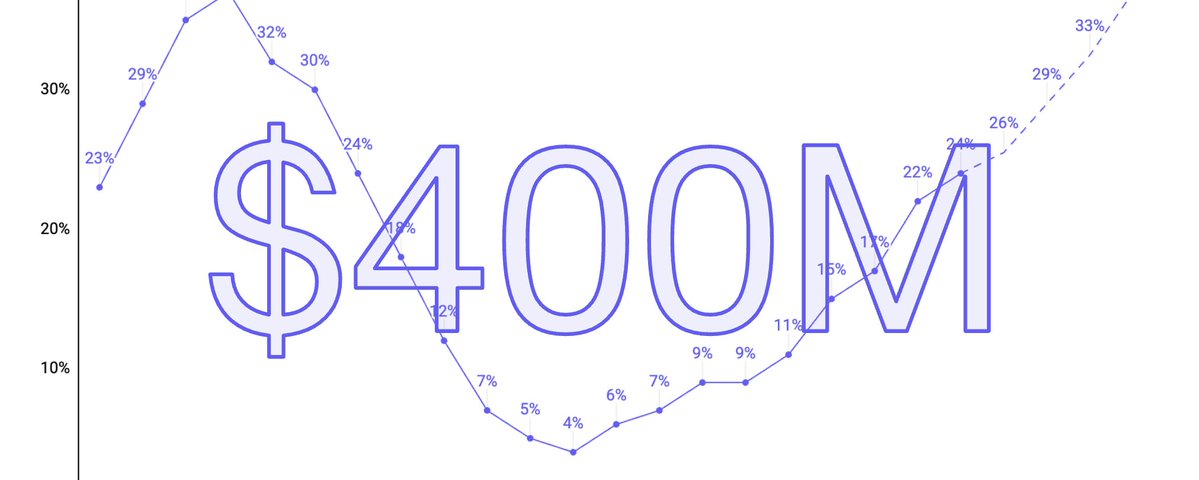
We’re excited to share that we just signed an agreement for @salesforce to acquire @fin_ai for ~$3.6B. The transaction is expected to close in the fourth quarter of Salesforce’s fiscal year 2027.
Fin started as Intercom 15 years ago. We changed our name to cap our transformation just weeks ago. We were a darling of the SaaS era and invented so many of the patterns you see in software today. Nearly four years ago, in need of a reboot, we jumped on weeks-old modern LLMs to create and define the category we know as Customer Agents today.
Salesforce invented modern software and SaaS. And @benioff is like the final boss of tech founder CEOs. In seat for 27 years, he’s one of the last of his era. Still pushing, pivoting, placing big bets. It’s a privilege for @destraynor and I to get to partner with him and join forces with Salesforce upon close at this most fascinating time. And will be very fun to get their help bringing Fin to magnitudes more consumers.
To our customers: Over the past few years we’ve been shipping intensely. Including recently our groundbreaking model, Apex, and our paradigm-defining internal agent, Operator. With the resources of Salesforce this will only accelerate. And yet little will practically change. I’ll still be CEO, Des will still be running R&D, we’ll both still be committed to continuing to lead this category. Thank you very sincerely and deeply for your belief in us.
To all of our friends, our families, and our employees, past and present: While this is not the end, it is a major, pivotal, special, and emotional moment for us. From the bottom of our hearts, thank you. For everything.
To my cofounders, my exec team: Look what we built. Four young lads with a dream and nothing to lose. And a home grown exec team who pulled off the greatest and arguably only late stage software company pivot to AI, and invented one of the most important categories in AI. Thank you for sticking through all of this with me.
And now, time to get back to work. See you at our next product launch in a couple weeks. (:


Pedro Tabacof retweeted

One of the often slept-upon benefits of attending the University of Chicago is that they make you read Marx as part of the core curriculum, which is why this article gave me flashbacks of taking SOSC 114 as a freshman.
Marx, writing during the Industrial Revolution, predicted capitalism would periodically devour itself: firms replace labor with machinery to boost profits, but competition diffuses the technology, drives prices to marginal cost, and the gains get competed away. Meanwhile, displaced workers lose purchasing power, hollowing out the demand the whole system depends on. Production rises but no one can afford to buy what's produced - the contradiction between production and realization.
Citrini's piece describes this exact dynamic, then declares there's "no natural brake." It's the most Marxist piece of financial analysis written in years, and makes the same errors Marx did.
Schumpeter offered the obvious rebuttal 80 years ago: creative destruction doesn't just destroy, it creates industries we can't yet conceive of. Everyone in the replies is already making this point, and I think they're right.
But the sharper rebuttal is Hayek's: prices are the brake Citrini says doesn't exist. Who funds $200bn / qtr in AI capex when equities are down 38%, private credit marks are in the 50s, and consumer demand has collapsed? Cost of capital rises. Incremental build-out becomes uneconomical. Capital gets destroyed and reallocated.
Citrini also unknowingly describes Marx's proletarianization of the petite bourgeoisie: the $180k PM driving Uber is textbook. But the article claims this collapses consumer demand, and that's where it breaks.
The top decile drives 50%+ of spending and their wealth is in equities, not W-2 income; they're long the hyperscalers posting records in Citrini's own model. Blue collar is insulated because AI replaces cognitive labor, not physical.
The professional middle class gets crushed, but aggregate demand doesn't.
The spending class IS the capital-owning class. The K-shaped recovery they fear actually stabilizes the demand base they say is collapsing. In the stable aggregate demand, the petit bourgeoisie finds ways to reinvent itself.
I think the Citrini piece is excellent and worth reading. But history has repeatedly shown that periods of transformative productivity gains ultimately accrue to the consumer through lower prices, more leisure, and higher quality of life. Marx's error wasn't diagnosing the disruption, it was underestimating the system's ability to adapt.

I spent 100 hours over the past week researching, writing and editing the piece we just put out.
It’s a scenario, not a prediction like most of our work. But it was rigorously constructed, dismissing it outright requires the kind of intellectual laziness that tends to get expensive.
And we’ve released it for free. Hopefully you enjoy it.
citriniresearch.com/p/2028gi…

Pedro Tabacof retweeted
Some questions are just easier to answer visually.
@Fin_ai can now send screenshots and GIFs from your existing support content, giving customers step-by-step visual guidance exactly when they need it. This works automatically across channels, with no setup required.
@PedroTabacof shows how it works in practice, and why it’s such a powerful upgrade for customer clarity.
Pedro Tabacof retweeted

@Fin_ai (Intercom’s AI Customer Agent) has officially crossed 10 trillion tokens processed in production.
This excludes backtesting, development traffic, and custom model usage.
In @intercom, we split workloads across multiple vendors to optimize for cost, performance and reliability.
That’s millions of conversations, decisions, and instructions interpreted in natural language.


Pedro Tabacof retweeted

New Fin AI blog!
A few weeks ago we decided to build a lot more in public.
With AI, we're at the equivalent of 1999 for the internet, and most of the invention is yet to come. All of us have a lot to learn, and a lot to gain, by sharing what we know with each other.
Today we're launching a new AI research blog, written by our excellent AI team. It is really good work.
We're learning so much building Fin, so please share it with your teams building AI products. I bet they will find it valuable!
fin.ai/research/

Pedro Tabacof retweeted

No episódio de entrevistas dessa semana do podcast IA Sob Controle, tivemos como co-host um amigo do podcast, nosso caro Ahirton Lopes (@ahirtonlopes), e nós 3 conversamos com o Pedro Tabacof (@PedroTabacof), Staff Machine Learning Scientist na Intercom em Dublin, na Irlanda - uma empresa que vem adotando e apresentando soluções envolvendo IA e agentes em tarefas de atendimento e relacionamento com o cliente.
open.spotify.com/episode/4J8…
Pedro Tabacof retweeted

I spent 5 mins setting up Fin for @remarkablepaper, then asked it a few questions alongside their Agentforce setup.
One of these agents is doing a far better job than the other.

Agentforce is live at @remarkablepaper, where AI and humans now unite to revolutionize customer success. This is just the beginning—Customer 360 + Data + AI is redefining what’s possible. Excited to see Remarkable leading the way! ❤️🤖

Pedro Tabacof retweeted
G2 just named us the #1 AI agent on the market – and it’s all thanks to real feedback from people who actually use Fin.
No fanfare. No empty promises. Just proof that AI is making a difference where it counts, helping CS teams do more, faster, and better.
And we’re not stopping here. We’ll keep building the best bots in the business so your support teams can keep winning.

Pedro Tabacof retweeted
"Working with @AnthropicAI keeps us at the forefront of AI, letting us explore the future and work on the bleeding edge, while delivering stable, reliable, and incredible results for our customers.” – @destraynor
anthropic.com/customers/inte…
Pedro Tabacof retweeted
Every other month, we package up all the new tech we've just built and bring our product leaders together to demo it to our customers and the world. We call these shows Built For You. The last one was chaotic and amazing. We had 5k people live in the comments, cracking jokes and sharing love. If you're an @intercom fan, or just Intercom curious, I think you'll enjoy. The next one in live on LinkedIn in two days! inter.com/bfy-jun