
Husband, Father, Director @centre4fe , Research Associate @famstudies . Substack: https://nitter.cf/t.co/GiVdv0CRkg. Views my own
Joined February 2025
- Tweets663
- Following119
- Followers166
- Likes640





Pinned Tweet
Two working papers in the past month ascribed fertility decline to the smartphone, but they couldn't tell us which aspect of smartphones do it. In this paper, I find that interest in mobile dating apps, unlike social media, leads to an immediate fall in fertility outcomes.

Peter Foreshaw Brookes retweeted

Marriage, it seems, has a serious branding problem - @PeterRFB @FamStudies

This month 611 years ago, the plucky English defeated the French, bringing glory and gratitude to all Anglos for eternity. This is claude's take on it.
Peter Foreshaw Brookes retweeted

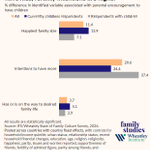
Respondents’ self-rated willingness to take risks predicts higher family desires, higher intentions to have kids among couples who want kids, and more kids overall. On the other hand, caution, anxiety, and safety-ism seem to be a key limiting factor on fertility.
@lymanstoneky @PeterRFB @DrJasonCarroll

Peter Foreshaw Brookes retweeted

At @MarketUrbanism , @salimfurth comments on the disappointing fade of the English New Homes Bonus program.
I had never heard of this program until I was working on something else, asked Claude to recommend me some literature, and it recommended me something on the NHB program... and then I was flabbergasted I'd never heard of it.
The NHB at its peak provided English localities with SIX YEARS of property-tax-revenue-equivalents for every new home they permitted. This was thousands of pounds of direct revenue for every home. They spent billions of pounds on this program from 2011-2026 (it has just this year been eliminated).
So, did paying English localities to permit housing work?
Well, I had Claude figure it out. The answer is... maybe slightly?
I instructed Claude to study 4 different ways of analyzing if the program boosted homebuilding.
First, leveraging a rule change in 2017 that excluded a bunch of localities, we can see if losing the NHB reduced permitting. Answer: no, in fact they maybe increased their permitting after losing the NHB. However, this isn't a clean test: they may have increased their permitting in order to get back into the NHB program by getting over the 0.4% stock additional threshold. So this one is a "Maybe the program kinda worked?" answer.
Second, I was curious about a learning mechanism. You can imagine that pre-NHB, localities that had a "big year" of permitting may have then had "big years" of paperwork, disruptions, and costs, and so "big years" would cause subsequent reductions in permitting. But post-NHB, you can imagine that "big years" of permitting would cause big windfalls of revenues, so might nudge localities to "learn" to permit more. Did Claude find evidence for this? No, not at all. In fact "big years" for permitting seem associated with more NEGATIVE post-year permitting in the post-NHB than the pre-NHB period. Yikes. Talking with @salimfurth he noted that in the post-2017 era, localities might have incentivizes to cluster their permitting all in one year to get over the 0.4% threshold, which could bias these results. Fair.
Third, the NHB was a WAY bigger budgetary impact for some localities (Shire districts) than for others, just because the ratio of new housing construction to municipal budgets varies widely. You'd expect the "more exposed" districts to increase permitting more. The effect here at first seems promising: Shire districts DID have big increases in permits granted! But this is because they had big increases in permits applied for; the actual *rate of granting a permit* DECLINES for Shire districts, despite the NHB literally *paying them to approve*. Moreover, the rise in approvals clearly has a pre-trend before NHB rolled out. NHB also paid localities to clear out long-term empty homes, but we see no Shire-specific reduction in long-term empty homes. So this all suggests little to no effect.
Fourth and finally, the NHB applied *in England only*. We can look at England vs. Wales and Scotland, and then specifically at *municipalities near the borders of England* to see if they changed in a unique way. The answer here is.... maybe? It does look like both the whole regions AND the border-regions only did have higher permitting in England, but it is VERY modest and noisy.
On the whole, this seems like a very big, expensive experiment telling us that "pay for permitting" may not work very well at all. cc @aarmlovi @SCP_Hughes @PeterRFB @johnarnold
As an aside, this is, I think, a fun case of what Claude allows for researchers. Claude caused my awareness of this program which gets shockingly little attention. I didn't have time to do tons of elaborate analyses myself, so I literally just came up with four possible tests of how the program could be evaluated, and told Claude "here are four ways you could test the program to see if it worked; go do these tests and make sure you use best research practices and very good methods along the way"
Claude didn't do perfectly, and I hope a human housing scholar will go investigate in more detail. But being able to run basically four different quasi-causal models on an intervention *the same afternoon I learned of its existence* and doing so at <1 hour time cost to me, the researcher... y'all, AI is the real deal.


The challenge facing us is a de-centering of family life in general. Once that's done, low fertility is liable to happen

“If we are to remedy the predicament of low birth rates, it will most likely be through a renaissance in seeing children as a source of joy.”
🦊 | 🖊️ | @lymanstoneky and @PeterRFB
thecritic.co.uk/the-real-sec…

Peter Foreshaw Brookes retweeted

“Nobody has babies for the general good; people have babies for love or because they like kids or because they care for their kin.”
🦊 | ✍️ | @lymanstoneky and @PeterRFB
thecritic.co.uk/the-real-sec…
Peter Foreshaw Brookes retweeted
“If we are to remedy the predicament of low birth rates, it will most likely be through a renaissance in seeing children as a source of joy.”
🦊 | 🖊️ | @lymanstoneky and @PeterRFB
thecritic.co.uk/the-real-sec…
Peter Foreshaw Brookes retweeted
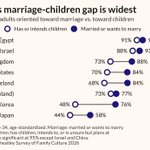
In some countries the overlap between desiring married life and desiring parenthood is smaller than in others.
The country with the widest gap between marriage and children is Korea, where 76% of young adults are married or want to marry but only 48% want or have kids.
@PeterRFB @grantjbailey

What matters is attitudes, not what you proclaim you believe!

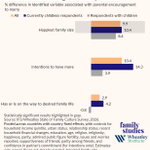
Views about the general or abstracted social good of children are not as consistently associated with actual childbearing, @lymanstoneky @PeterRFB @DrJasonCarroll find.

Peter Foreshaw Brookes retweeted

In today's @DailyMail
"We've become very good at living for today, and much less good at planning for tomorrow"
Marriage and children all involve looking beyond ourselves and making commitments for the future.
Reliable love doesn't happen by accident. It takes decisions.

Peter Foreshaw Brookes retweeted
If we actually cared about the birth rate, we’d stop advertising parenthood as a hair shirt.
So good @karakclairmont @TheFP: How Modern Parenting Became the Suffering Olympics

Peter Foreshaw Brookes retweeted
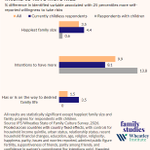
Larger families worry more about being judged for having more kids
@lymanstoneky @PeterRFB @FamStudies


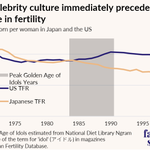
Something in Japanese/Korean culture is driving down fertility desires! After all, marriage/marriage desire is least closely linked to having or intending to have children in those places! With @grantjbailey
What could it be?


Peter Foreshaw Brookes retweeted
@FamStudies rejects the ideas that:
- we can't know why fertility is falling
- we can't do anything about it
Thanks to @TPCarney @dcexaminer for this writeup
@lymanstoneky and @PeterRFB's new report is "Baby Nudges: How Social Influences Shape Fertility Choices"

Peter Foreshaw Brookes retweeted

Raising kids is not something that parents can do on their own. Parents need support and always have, but the proper source of support for most parents is not the government. It’s the community: Extended family, friends, neighborhood, church, and school. washingtonexaminer.com/in_fo…

Fascinating piece! Read my review: persistentruminator.substack…

People usually say that the pill caused the sexual revolution but a) people started having premarital sex in the 1950s, a decade before the pill and b) contraception is widely used by people who don't live very post-sexual-revolution lives (like in Asia). I think the sexual revolution, i.e. more permissive attitudes about sex, caused the pill to be invented and not the other way round.
But then, why did the sexual revolution happen? I have cooked up a theory. Just as how women have more casual sex on college campuses with fewer men, I think women, as a collective, responded to the male shortage caused by the Second World War by shortening their hemlines and having premarital sex.
Read my column here: worksinprogress.co/issue/you…

Where I think there is a big sex ratio problem: differential migration. Women disproportionately move to cities for jobs in services economy, men disproportionately stay where there are industrial jobs. This creates sex imbalances by geography.