

Research, Innovation And Development Department for Ashford & St Peter's Hospitals NHS Foundation Trust
Chertsey, UK
Joined July 2026
- Tweets500
- Following41
- Followers10
- Likes15





The Neer classification counts parts, not fracture lines. A fragment only becomes a part if it is displaced more than 1 cm or angulated more than 45 degrees.
On that definition, most proximal humeral fractures are one-part injuries.
A posterior fat pad sign on a lateral elbow radiograph is never normal. It means an effusion, and in an adult that usually means a radial head fracture you cannot see yet.
An isolated anterior fat pad can be normal.
The terrible triad of the elbow: posterior dislocation, radial head fracture, coronoid fracture.
Each element has to be addressed for the joint to stay reduced. Treating the dislocation alone is what makes it terrible.
1
Anatomical snuffbox tenderness with a normal radiograph is a scaphoid fracture until proven otherwise.
The first film is often clean. Immobilise and re-image, or go straight to MRI. The cost of missing it is a non-union in a young wrist.
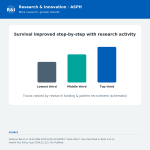
Research-active NHS trusts had lower risk-adjusted mortality for emergency admissions — even after adjusting for staffing & structure (Ozdemir et al., PLoS ONE 2015).
At ASPH, research is part of how we make care safer. 🔬
#Research #NHS #PatientSafety


Do research-active hospitals deliver better care? A 2024 systematic review of 95 studies found 86 reported positive results — better care processes & patient outcomes (Boaz et al.).
The evidence behind our R&D strategy at ASPH.
#Research #NHS #Innovation


1
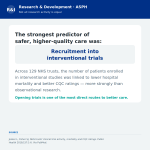
Across 129 NHS trusts, patient recruitment into interventional trials was the strongest research link to lower mortality & better CQC ratings (Jonker & Fisher, Public Health 2018).
Opening trials = safer care. Thank you to all who take part. 🙏
#ClinicalTrials #NHS


Cancer is the most-studied field in the research-and-outcomes literature — and the evidence is largely positive, linking research engagement to better care & outcomes (Boaz et al., 2024).
A reason we prioritise oncology research at ASPH.
#CancerResearch #NHS #ASPH


2
Research improves more than survival. Greater interventional research activity is linked to better CQC ratings across 129 NHS trusts (Jonker & Fisher 2018), and reviews report better care processes too (Boaz et al. 2024).
Better care, day to day.
#NHS #QualityOfCare


2
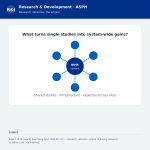
Research-active teams deliver safer, higher-quality care (Ozdemir 2015; Boaz 2015, 2024) — and it depends on people.
Colleagues: open or join a study. Patients: ask your team about research you could take part in.
#ClinicalResearch #NHS #ASPH


A cheap steroid. An NHS trial. Lives saved worldwide.
The RECOVERY trial showed dexamethasone cut 28-day deaths in ventilated Covid-19 patients from 41.4% to 29.3% (RECOVERY Collaborative Group, NEJM 2021).
Why hospital research matters.
#RECOVERY #NHS #ClinicalTrials


2
What happens in a clinical trial?
Phase 1: safety & dose (small group)
Phase 2: does it work? (larger)
Phase 3: vs standard care (large)
Phase 4: monitoring after approval
Voluntary, fully explained, withdraw anytime. Ask your team.
#ClinicalTrials #NHS #ASPH


3
Research should represent everyone it aims to help.
A 2024 review found the evidence is still dominated by the Global North, and flagged equity (Boaz et al.).
Inclusive recruitment — across age, sex & ethnicity — makes research fairer & stronger.
#HealthEquity #NHS


7
Sometimes the key finding is that an operation doesn't help.
CSAW — a UK trial in 32 NHS hospitals — found a common shoulder decompression op was no better than placebo surgery (Beard et al., Lancet 2018).
#ShoulderSurgery #NHS


5
For many proximal humerus (shoulder) fractures, surgery is not the answer.
The NHS PROFHER trial found surgery gave no better outcomes than non-surgical care & wasn't cost-effective (BJJ 2016).
#Orthopaedics #NHS


2
'Negative' trials are among the most valuable research we do.
UK shoulder trials (CSAW, PROFHER) found some operations work no better than simpler care — fewer unnecessary surgeries.
Knowing what to stop matters.
#EvidenceBasedMedicine #NHS


8
