

Proud Bhartiya | Open-Minded Thinker and People professional. Personal X handle; belongs primarily to the thinker, and only occasionally to the HR professional
Gurgaon, India
Joined December 2015
- Tweets1.9K
- Following95
- Followers734
- Likes1.9K





Pinned Tweet
“Once the storm is over, you won’t remember how you made it through, how you managed to survive. You won’t even be sure, whether the storm is really over. But one thing is certain. When you come out of the storm, you won’t be the same person who walked in. That’s what this storm’s all about.”
~ Haruki Murakami
1
68
Any other data that one needs to know the cause of pollution in Delhi?

Delhi NCR's AQI is hovering in the range of 175-250 at 10pm but sensor's from SW Punjab and NW Haryana are already indicating tomorrow Delhi NCR to have another morning with #Smog and AQI in the range of 450 - 800 as wind flow remains from northwest.
Take care!

1
62
One of the self-created menaces of Britain.

🚨BREAKING: Islamists have gathered outside Singh’s Dining in London, an Indian-owned restaurant that does not serve halal meat.
A sign outside the premises reads “proudly non-halal” sign.
They are threatening to burn his shop down, r@pe his family members and kill him.
London has fallen.
1
2
43
नवंबर का महीना कमाल का होता है - दिल्ली में हर मौसम के फूल साथ में खिलते हैं। इसी खुशनसीबी का मुज़ाहिरा आज हमारे दरवाज़े था।
विदा लेती गर्मी और बरसात के बोगनवेलिया (Bougainvillea), जिसे हम बचपन से कागज़ का फूल कहते आए हैं, कई तरह के रंगों में लदा हुआ है, और उसकी पंखुड़ियाँ ज़मीन पर भी बिखरी हैं।
मानसून की विदाई के खिलता लैंटाना (Lantana), यानी पंचफूली, अपने नारंगी-लाल गुच्छों से धूप की तेज़ी का पता दे रहा है। वहीं, आती हुई सर्दी के आशिक़ पेटुनिया (Petunia) और पैंसी (Pansy) हमारे लोहे के गेट पर डोरे डालना शुरू कर चुके हैं; एक कोने में डायन्थस (Dianthus) भी।
बरसात और गर्मी के साथी गुलमेहंदी (Garden Balsam) और लाल कनेर (Oleander) भी लाल रंग में दमक रहे हैं। ऊपर मेहराब पर अपराजिता (Clitoria) के नन्हे नीले फूल झाँक रहे हैं, और पास ही में पीपल (Peepal) के ऊपर लदा सफ़ेद अपराजिता भी चमक रहा है - अब यह दोनों कुछ ही दिनों के मेहमान हैं।
पीला कनेर सर्दियों में विदा ले रहा है, पर माँ को अभी भी पूजा के कुछ फूल दे ही देता है। बसंत में यह फिर अपने पूरे शबाब पर होगा।
बीच में सदाबहार (Vinca) है, जिसने किसी मौसम की परवाह ही नहीं की और साल भर खिला रहता है।
सर्दी, गर्मी और बरसात के फूल एक ही आँगन में साथ खिले हैं, और हमारा दिन खुशनुमा हो रहा है।

1
6
91
If you read this post, you would save a few hundred bucks that you may have spent on the book. It pays to know the mind of those who are against your motherland. The ‘transparent’ Mrs. Gandhi has bared hers.

A review of @SoniaGandhi’s book.
First things first. Sonia ji must be credited with honesty. In this book she has largely revealed her true self, without gloss or make-up.
I have often commented that for Sonia Gandhi the only thing that mattered was her family. Still, I sometimes wondered whether it was really true or whether there was some other, layered reality. Not any more.
Sonia ji herself now confirms it. In writing. The only thing that mattered to her was herself and her immediate family. Everything else, national interest included, was secondary.
This explains, without an iota of doubt, the many unfathomable decisions Congress took once Sonia Gandhi became its chief.
The other striking facet is her absolute disdain for Indians in general and Hindus in particular. Remember, she is not writing in the 1970s, freshly arrived and still adjusting. In 2026, at almost 80, she has lived amongst us for nearly 60 years. Yet consider what she has chosen to write.
Her horror every time she passed the Ganesha statue at the front door of Indira Gandhi’s house. Or her disdain for Indian food, a refrain through more than half the book.
Contrast how she describes her childhood in Italy with her experiences in India. Everyone is entitled to nostalgia about a happy childhood, and by all accounts hers was. She longigly describes the idyllic small-town and village life of Italy. Fair enough.
Now see how India is described, especially her first impressions (not the artificial closing lines). India is either intrigue by wily, cunning people, or dead bodies floating down dirty rivers, or ghoulish, medieval customs not up to her refined tastes. Her first memory of the Sangam is a pungent smell and an allergy to marigolds. What she remembers most of her father’s first visit to India is him giving money to beggars despite her objections. Her first impressions of Amethi are not those of a woman meeting her own people but of a European on a poverty-porn tour. “Shabash,” she says to the ‘natives’ of Amethi whenever they do her bidding, just as the British would address their domestic help in a benevolent mood.
Contrast this with the delight and affection with which she describes her first impression of Afghanistan, because she met people in western clothes with European-looking features, unlike Indians. The passage is revealing. Sixty years after landing in India, her first instinct is still to view us through a European lens when forming her opinions, likes and dislikes.
After reading the full book, though, the ‘only her family mattered’ line needs a qualification. Family means only herself and those biologically related to her: her parents, her siblings and her children. Consider the following.
It is fairly well known that Feroze Gandhi was a womaniser. It is an entirely different matter when a family member confirms it, that too on the authority of Rajiv Gandhi. I doubt there is any other high-profile example of a family member putting such details in writing.
Or the way Sonia ji throws even Rajiv Gandhi under the bus when it suits her. She says the book is not about politics. Yet she purpsefully chose to write about the Shah Bano case and essentially let Rajiv carry the can.
For me, though, the most striking passage is her account of 12 Willingdon Crescent (1977-80). Indira Gandhi has been ousted as PM after presiding over the most despotic period in independent India’s history. Yet loyal, ordinary Congress workers throng her residence every day and raise slogans in her support.
But what does Sonia Gandhi think of those days? Not gratitude for the workers. Not affection for their loyalty. Only disgust and horror at the daily invasion of her privacy in the ‘small house’ she was now forced to live in. More than any other pages in the book, these reveal how Sonia Gandhi really looks at Congress workers. Not as colleagues. Not as comrades in a common purpose. Either as loyal tools (loyal to her family, not to any cause) or as evil manipulators. The hierarchy was clear. No party worker was a fellow human being deserving of respect or equal treatment.
When Congress workers nominate Rajiv Gandhi as PM after Indira Gandhi’s assassination, Sonia Gandhi records her reaction: “Who are they?”; “How dare they?” ‘They’ being people who had given their lives to the Congress party.
I am sure that in honest moments, Congress leaders and workers who have worked with the family over the decades have felt the same disdain and superiority complex and would relate to those words. “Who are you?"
Other passages are just as revealing. She describes her father as a "patriot" and a "their hero", “my hero”. Sonia ji passes critical judgement even on Rajiv and Indira Gandhi. Yet her father, a soldier in Mussolini’s fascist army, is spared any judgement for his political actions.
So are the passages on her finally giving up Italian citizenship, almost 15 years after her marriage. Even then the words used are “their ways”, “proud Italian” and the like.
Nor does she hide that the festival the family most looked forward to was Christmas. Diwali gets a mention once or twice. The family functions and memories almost always revolve around Christmas.
Devi Sita is described as the “consort” of Prabhu Ram. Only a European mind could describe Maa Sita in the vocabulary of European monarchy, entirely missing how a billion Indians look upon Prabhu Ram and Maa Sita.
The glaring factual inaccuracies have already been commented upon. Even the basics are wrong: there were no Uttar Pradesh elections in 2003 that BJP won; Rahul Gandhi is a five-time Lok Sabha MP, not four; Vajpayee formed the first NDA government in 1998, not 1999; and the 2020 COVID lockdown was announced when India had 562 confirmed cases, not tens of thousands of victims. The editors, many of them named and with pedigree, must face tough questions.
Finally, what does the book add up to?
1) A stunning tale of rancour and complaint. Invasion of privacy; betrayals; being forced into public life; being forced to meet ordinary people; the atrocious food she was made to eat; the weird Hindu customs and practices. After 60 years in India and 28 in the Congress party, she is still filled with so much rancour.
2) Barring a pro forma last paragraph, there is not a word of gratitude to the Congress party, its workers or its leaders, who accepted her wholeheartedly and let her mould the party in her own vision. Only complaint. No gratitude to the Almighty either, nor a nod to destiny for placing her at the centre of history-shaping events in the oldest continuously living civilisation in the world. She sees India only through a tourist’s lens, not through the eyes of one who considers this land a blessing.
3) The book fully explains the path Congress has taken since Sonia Gandhi took charge. Only one thing mattered to her: protecting her family. When that clashed with national interest, family interest prevailed. The pleas for foreign interference to save ‘Indian democracy’; the coinage of ‘Hindu terror’; the free pass to jihadi terrorists. Everything was kosher if it served the family’s immediate interest.
4) To her credit, Sonia Gandhi accepts in 2026 that despite all her efforts, she failed to stop the march of India’s civilisational resurgence. The 2014 verdict on Congress, after a decade of Sonia Gandhi’s ‘rule’, was a mere 44 seats. By 2026, Congress of Sonia Gandhi is on the margins, gasping for survival while the Indian civilisation marches on.
One last thought. I began by crediting Sonia Gandhi with honesty. But can someone who writes in 2026 that the cause of the Godhra train fire is disputed really be called honest?
A better word is transparent. Sonia ji has been transparently clear. Thank God for that. She has ensured history will judge her correctly.
1
77
Rishi Raj Gupta retweeted

Every year, the same debate returns: Is stubble burning responsible for the poisonous air that engulfs Delhi-NCR from late October, or is the city simply choking on pollution from its own vehicles and industries? It is time to settle this debate.
Between 26 October and 5 November, Delhi’s PM2.5 levels tripled—from 72 to 226 µg/m³. What drove this surge in pollution?
Read my latest column in @timesofindia to understand the anatomy of Delhi’s air pollution.
👉 timesofindia.indiatimes.com/…

बागवानी रंगमंच की सबसे धीमी विधा है, ऐसा किसी मनीषी ने कहा है। यहाँ न कोई पर्दा उठता है, न तालियाँ बजती हैं; बस बीज बोया जाता है, कलमे रोपी जाती हैं, हाड़-तोड़ मेहनत और फिर इंतज़ार... मौसमों का इंतज़ार - यह एक आम चक्र है। पर ऐसे ही किसी आम दिन प्रकृति हमे अपनी वो जिजीविषा दिखाती है जिसके लिए हम उसे माँ मानते हैं।
आज बगीचे में कुछ ऐसा ही अद्भुत दृश्य दिखा। पेड़-पौधों की सफ़ाई-छटाई करते हुए की यह तीन तस्वीरें देखिए। दो माह पहले बरसात में इस बढ़ते-लटकते हुए ड्रेसिना (इंद्रधनुष पौधा) की डाल को मैंने एक सूखी फ़ाइकस की यूँही पड़ी हुई डंठल से सहारा दे कर बाँधा और तान दिया। इंद्रधनुष बाबू सीधे हो बढ़ चले। आज देखा तो पाया कि फ़ाइकस की उसी सूखी डाल ने जड़ पकड़ ली है और एकदम ऊपरी कोने से क्या सुंदर फ़ुटाव ले लिया - सूखी, बेजान पड़ी हुई डंडी ने फिर से जीवन पा लिया!
शायद ऐसी ही जिजीविषा बारे में ही आचार्य हज़ारी प्रसाद द्विवेदी ने यह कालजयी पंक्तियाँ लिखी हों:
"सब कुछ अविशुद्ध है बबुआ, सब कुछ। शुद्ध है केवल मनुष्य की दुर्दम जिजीविषा; वह गंगा की अबाधित अनाहत धारा के समान सब कुछ हज़म करने के बाद भी पवित्र है।"
सत्य ही तो है। इस चमत्कार के लिए, शुक्रिया ज़िंदगी।


“रहिमन धागा प्रेम का, मत तोड़ो चटकाय।
टूटे से फिर ना जुड़े, जुड़े गाँठ पड़ जाय॥”
Anyone who cheats on their spouse, can and will cheat on anyone else in their lives. Cheating is a choice and no apologies can ever fix it. Your status, smarts, and reasons(?) of cheating don’t matter. 99% trust is 0%, IMO. Once you slip from the 100, there is no coming back.
3
108
Word.

She didn't cry when hundreds were killed in the terror attacks listed here when she led the UPA government.
• October 2, 2004: Dimapur Bombings (Nagaland) — ~30 killed, 100+ injured.
• October 29, 2005: Delhi Serial Bombings (Markets and Bus, New Delhi) — ~60 to 70 killed, 200+ injured.
• March 7, 2006: Varanasi Bombings (Uttar Pradesh) — 28 killed, 100+ injured.
• July 11, 2006: Mumbai Train Bombings (Maharashtra) — 209 killed, 700+ injured.
• September 8, 2006: Malegaon Bombings (Maharashtra) — 35 to 45 killed, scores injured.
• May 18, 2007: Mecca Masjid Blast (Hyderabad, Telangana) — 9 killed, 58+ injured.
• August 25, 2007: Hyderabad Twin Blasts (Lumbini Park and Gokul Chat, Telangana) — 42 killed, 50+ injured.
• February 18, 2007:
• May 13, 2008: Jaipur Serial Blasts (Rajasthan) — 64 to 80 killed, 200+ injured.
• July 25, 2008: Bangalore Serial Blasts (Karnataka) — 1 killed, 20+ injured.
• July 26, 2008: Ahmedabad Serial Blasts (Gujarat) — 56 killed, 200+ injured.
• September 13, 2008: Delhi Serial Blasts (Connaught Place, Karol Bagh, Greater Kailash) — 26 killed, 130+ injured.
• November 26–29, 2008: Mumbai 26/11 Terror Attacks (Maharashtra) — 166 killed, 300+ injured.
• February 13, 2010: Pune German Bakery Blast (Maharashtra) — 17 killed, 60+ injured.
• July 13, 2011: Mumbai Triple Blasts (Zaveri Bazaar, Opera House, Dadar) — 26 killed, 130+ injured.
• September 7, 2011: Delhi High Court Bomb Blast — 15 killed, 79 injured.
• February 21, 2013: Dilsukhnagar Twin Blasts (Hyderabad, Telangana)
— 17 to 18 killed, 131+ injured.
• October 27, 2013: Patna Gandhi Maidan Bombings (Bihar) — 6 killed, 85 injured.
Nor when hundreds of Hindus were getting killed in Kashmir
Cried after 1992 only in 2008 for
Two terrorists (Atif Amin and Mohammad Sajid) who were killed.
Not for the highly decorated Delhi Police Inspector Mohan Chand Sharma was critically injured and later succumbed to his bullet wounds.
Is there any doubt she has nothing to do with India and certainly not Hindus
3
59
पवनजी ने एक सशक्त लेख लिखा है पश्चिम की इस अनैतिकता पर। @DainikBhaskar में अभी पढ़ा। पश्चिम को आदत है सभी को अपने चश्मे से देखने की - शेक्सपियर पर साहित्य शुरू और ख़त्म होता है, ऐसा मानने वाले ना मुंशी प्रेमचंद को जानते हैं, ना गुलजार साहब को समझ पाने की क़ाबलियत रखते हैं। जैसे @SrBachchan साहब कहते हैं कि हमे ऑस्कर पुरस्कारों की क्या ज़रूरत या मोह, वैसे ही जिस नोबेल ने गांधी बाबा को शांति का पुरस्कार ना दे कर निक्सन और किसिंजर या बाद में ओबामा को दिया हो, उस नोबेल और उसके देने वालों का हमे कोई मोह नहीं होना चाहिए।
@PavanK_Varma को साधुवाद।


मेरा नवीनतम लेख का विषय : पश्चिम के चश्मे से ही साहित्य का मूल्यांकन क्यों होता रहे?
bhaskar.com/g/opinion/news/g…

पीतल और कांसे के बर्तन, मिट्टी के दिए और मिट्टी के ही माँ लक्ष्मी के चिह्न, भूरे लुगदी काग़ज़ की पैकिंग, और जूट और सूट के हाथ से सिले बैग… और देसी मिठाइयाँ - सभी कुछ देश के कुशल कारीगरों के हाथ की कारीगरी…। यह सभी हमारे परिजनों और मित्रो को इस दीपावली के उपहार हैं।
गर्व से हिंदुस्तानी।
#VocalForLocal
3
74
Says a ‘historian’ with zero knowledge of background of archeology. This is the falsehood he and his ilk propagated for decades.

Supreme Court’s Babri Masjid verdict was “totally illegitimate” from a historian's point of view, says historian Irfan Habib in a conversation with @dksingh73 and @MandhaniApoorva.
3
127
That Tree Still Shakes Delhi
Circa 1984.
“Some riots took place in the country following the murder of Indiraji. We know the people were very angry and for a few days it seemed that India had been shaken. But, when a might tree falls, it is only natural that the earth around it does shake a little.”
– Rajeev Gandhi; 19 November 1984
Circa 2005.
“I have no hesitation in apologizing not only to the Sikh community but the whole Indian nation because what took place is the negotiation of the concept of nationhood, as enshrined in our Constitution. On behalf of our government, on behalf of the entire people of this country, I bow my head in shame that such a thing took place.”
– Dr. Manmohan Singh; 11 August 2005
It is 2026 now.
That same tree continues to haunt the streets of Delhi and no apology from anyone whatsoever has helped the cause of justice as yet.
As the seekers of justice continue to demonstrate every now and then against the delay in justice in the matter of over 3000 citizens of a minority community massacred over three days in 1984 in broad daylight on the roads of Delhi, I am deeply anguished and saddened to wake up to a morning 42 years later from the day this ghastly event manifested in the most barefaced manner on the streets of Delhi.
Well, didn’t someone say justice delayed is justice denied? May be, the phrase wasn’t meant for the commoners in India…
Authors Manoj Mitta and HS Phoolka, the tireless warriors for justice in the matter and arguably the most knowledgeable people on this case, wrote in their well-researched book, ‘When A Tree Shook Delhi: The 1984 Carnage and its Aftermath’:
“Whichever way you look at India, whether as the world’s largest democracy, or as one of the fastest growing economies in the world, it is hard to imagine that any genocide could have taken place a few years ago right in its capital.”
Well, it did happen. And it is no solace that the masterminds and perpetrators of this rather well organised crime roam scot-free to date. Exactly rhe same way how the Kashmiri Hindu genocide did happen and no one even knows who got punished for it.
How I wish the apology of the then Prime Minister was translated into actions. To a commoner like me, that would have been far more reassuring.
Not to be, as yet. The fight is on…
2
48
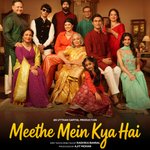
राधिका बंसल की फ़िल्म ‘मीठे में क्या है’ देखी। शहर लखनऊ और नानी का घर - दोनों की मिठास है इसमें। पुरानी पढ़ी पंक्तियां याद आ गईं, जो शायद इसी कहानी के लिए लिखी गई थीं: “वे सूरते-इलाही किस मुल्क की बस्तियाँ हैं, अब देखने को जिनको आँखें तरसतियाँ हैं।”
एक पल में हसातीं और अगले ही पल आसूँ लाती ये कहानी अच्छी है, और राधिका का निर्देशन बेहतरीन।
@NetflixIndia #MeetheMeinKyaHai

This is a must read.

Every October 27, Pakistan stages its annual performance of grievance. Rallies fill streets in Islamabad and Muzaffarabad, resolutions are passed, and speakers declare that Indian troops landing in Srinagar on that day in 1947 began an “illegal occupation.” They call it Jammu and Kashmir Black Day. From where I sit—in the Union Territory of Jammu and Kashmir, as a Kashmiri Muslim woman who has never needed a Pakistani passport or a Pakistani flag to claim her identity—this ritual is not solidarity. It is a refusal to accept history, geography, and the choices made by people who actually live here.
I was born in the Valley after the accession had long been settled in law and in the daily life of my family. My grandmother’s generation remembered the autumn of 1947 differently from the script now recited across the Line of Control. On 22 October, tribal lashkars crossed from the west, burning villages and advancing toward Srinagar. The Maharaja’s forces could not hold them. Only after that invasion did Maharaja Hari Singh sign the Instrument of Accession to India on 26 October. Indian troops arrived the next day not as conquerors but as the force that stopped the raiders short of the capital. My family has never treated that landing as the start of darkness; they treated it as the moment the immediate threat was checked. Pakistan’s version reverses the order of events and then treats the reversal as sacred.
That historical inversion has cost Kashmiri lives for decades. The “unfinished business of Partition” that some in Pakistan still invoke was never a promise that every Muslim-majority territory must join them. Princely states chose. Hyderabad and Junagadh chose differently and were integrated. Kashmir’s ruler, facing invasion, chose India. The United Nations resolutions that followed required Pakistan to withdraw its forces first; that condition was never met. Instead, successive Pakistani governments sustained a proxy conflict that turned the Valley into a place where young men were recruited, trained, and sent back to die. My classmates lost brothers to that cycle. The men who returned as militants rarely asked the women of the household whether they wanted the fight; they simply imposed it. The Black Day commemorations never pause to count those dead or the years of closed schools and empty tourist boats they produced.
I have lived the alternative that Pakistan’s narrative refuses to acknowledge. I studied in a heritage missionary school, then the state university in the Valley, then built a professional career outside the state because the Indian system allowed me to do so without losing my right to return and inherit property. Before 2019, a Kashmiri woman who married outside the permanent-resident framework risked losing her own residency rights; men faced no equivalent penalty. That asymmetry is gone. Central laws on domestic violence and child marriage now apply without the old loopholes. I can vote in local and national elections, contest for panchayat seats, and open a bank account or register a business without anyone demanding proof that my husband is a “state subject.” These are ordinary rights, not gifts. They are the reason many women of my generation treat the old special-status arrangements as constraints rather than privileges.
Pakistan’s annual mourning does not improve any of this. It does not build the roads, colleges, or hospitals that have expanded since the old constitutional barriers were removed. It does not reduce the number of young men still drawn into armed groups whose handlers sit outside Indian territory. When Pakistani leaders speak of the Kashmiri people’s “inalienable right to self-determination,” they mean a right exercised under conditions they themselves refuse to accept—conditions that would require them to end the very interference that has prolonged the dispute. Meanwhile, in the territory they do control, political space is narrower, economic opportunity thinner, and the same religious identity that is invoked as a bond is used to police women’s dress, movement, and speech more tightly than anything I encounter at home.
The dream of a merger is not a plan; it is an inheritance of grievance that serves Pakistan’s security establishment more than any Kashmiri household. It allows successive governments in Islamabad to divert attention from their own unresolved questions of federalism, minority rights, and economic viability. It keeps a generation of Kashmiris on both sides of the Line of Control tethered to an outcome that has become less likely with every passing decade. Most people I know want the conflict to end so that their children can plan ordinary lives—jobs, marriages, travel—without calculating the next shutdown or the next infiltration. They do not want to trade the imperfect but expanding opportunities available inside the Indian Union for the uncertainties of a state whose own citizens already struggle with inflation, energy shortages, and the constant threat of further radicalization.
Pakistan can continue to mark 27 October as a day of protest. It can pass resolutions and stage solidarity walks. What it cannot do is convert that performance into consent from the people who live under Indian administration and who, by the ordinary measures of education, property, and political participation, have chosen to make their lives here. The unfinished business of Partition is not a map that still needs redrawing. It is the acceptance, by those who launched the 1947 invasion and have sustained the conflict ever since, that the accession happened, that it was legal under the rules of the time, and that the majority of Kashmiris who remain on this side of the Line of Control are not waiting to be rescued. We are already home.

2
85
भास्कर की यह खबर पढ़ रहा हूँ - कितने घरों के चिराग अपना खून बेच कर मुस्तकबिल बना रहे हैं। बेसाख़्ता इफ़्तिख़ार आरिफ़ की यह पंक्तियाँ याद आ रही हैं:
“एक चराग और एक किताब
और एक उम्मीद असासा
उसके बाद तो जो कुछ है
वह सब अफ़साना है।”
पढ़ने वाले बच्चों को मदद ना मिले, कैसा देश और समाज है और कैसी उसकी तरक्की? इस दिवाली, एक पढ़ाई करने वाले ज़रूरतमंद बच्चे की मदद कीजिए, दिए अपने आप रोशन हो जाएँगे।
@DainikBhaskar

2
25
Must read

Colonel Shukla's recent critique of the IAF mistakes cultural confidence for institutional decay & selective nostalgia for strategic analysis.
As a veteran IAF officer I find the piece more revealing of the author’s assumptions than of any genuine leadership deficit in the service.
The charge that Sanskrit quotations and references to the Ramayana at official briefings somehow “Hindutva-ise” the Air Force is particularly thin. Indian public life has always drawn upon our civilisational language. When an air marshal opens a media briefing with a verse, it is treated as ideological signalling. Had the same officer quoted Churchill or Clausewitz, it would have been praised as intellectual breadth. The objection appears less about professionalism and more about discomfort with any open affirmation of Indian civilisational identity within uniformed institutions. That discomfort is the author’s, not the IAF’s.
The suggestion that Air Marshal Jeetendra Mishra’s post-retirement appointment is evidence of ideological reward is equally unconvincing. Officers who plan and execute complex operations under real constraints are often asked to take on civilian responsibilities for a variety of reasons, competence being high among them. Reducing a successful operational career to a political transaction does a disservice. It also assumes that every subsequent appointment must be viewed through a single ideological lens. This makes an analyst with an agenda.
On the “zero-error syndrome,” the article recycles an old complaint. Risk aversion is a real institutional tendency in any large military, particularly one that operates under nuclear thresholds and simultaneous continental and maritime pressures. Equating measured caution in 2020 with a permanent loss of offensive spirit is an oversimplification. The same service now accused of timidity has repeatedly demonstrated the ability to hold and dominate difficult terrain when the operational picture and political guidance aligned. Leadership is not measured by how quickly one escalates; it is measured by whether the force remains ready, cohesive and capable when the moment actually arrives.
The claim of a growing disconnect between “lions” and “donkeys” is the oldest refrain in military commentary. Junior officers have always grumbled about seniors; seniors have always fretted about the quality of juniors. What has changed is the volume of public commentary that turns ordinary institutional friction into a civilisation-level crisis. The IAF continues to attract, train and retain officers who fly demanding missions in difficult conditions. That record is more relevant than seminar-room complaints about language and vocabulary.
Colonel Shukla ends by invoking the Truman–MacArthur clash as a model of principled military independence. The analogy is misplaced. India’s constitutional framework and civil-military traditions are not those of America in 1951. Indian service chiefs have long given candid military advice while remaining within the boundary set by elected authority. That is not weakness; it is the system working as designed. Demanding that senior officers “seize the moment” by publicly challenging government policy is not a call for better leadership. It is a call for a different political arrangement altogether—something practised in Pakistan.
In the end, the article reads less like a diagnosis of military leadership and more like serious discomfort with the cultural self-confidence now visible in parts of the armed forces. One can debate the wisdom of particular public statements or post-retirement appointments. Turning those debates into a sweeping indictment of the IAF’s professional character is rather like criticising the entire batting order because one batsman prefers a particular stance. The scoreboard of operational performance remains the best measure. On that measure, the IAF continues to hold its own explains Air Marshal Nambiar of the Kargil fame.
27


Word.

Dear Indian origin/American leaders in the US,
@satyanadella, @sundarpichai, @ArvindKrishna, @nikesharora, @nealmohan, @MicronCEO, @JayZscaler, @kunalb11, @RamaswmySridhar, @AravSrinivas, @ThomasOrTK, @LeenaNairHR, @snarayen, @VivekGRamaswamy, @RepBera, @CongressmanRaja, @RepSuhas @Kash_Patel
It is high time you all speak up against the despicable, dangerous racism and hate against Indians on American social media. And do something about it as Tech CEOs and political leaders.
The despicable, dehumanizing hate against Indians is being spread everywhere - Facebook, Instagram, X, Youtube, Reddit, Telegram...
Staying silent and not doing anything anymore - as more young people in the US are radicalized to hate Indians using social media - may one day lead to our own family and friends having to face such racist, radicalized, violent, supremacists.
American social media platforms are being used by adversarial actors to specifically target Indians in the US.
They are seeding racism and hate using violent words and dehumanizing imagery, programming many Americans to become racist and hateful - specifically against Indians.
May be it is being done to drive out Indians, attack India for geopolitics, or try erode India-US ties. But it is real, relentless and extreme form of communist hate that's being seeded.
There's no reason why, you all as stalwarts of silicon valley and politics can't get together, talk about this crisis, and take action to end ALL hate and racism on social media.
It shouldn't be that difficult in the age of AI to filter out, block racist and hate filled comments against any community, isn't it.
How come this is not being proposed and implemented across SV companies? And why isn't any of you speaking out against this increasing online hate and racism against Indian Americans and Indians?
Among all mentioned above, till now only @CongressmanRaja has talked about the topic of online hate and the recent attempted mass shooting.
Please start talking among yourselves, even if not publicly, and kindly take some action 🙏
40