

Energy consultancy providing leaders with the data-driven insights and roadmaps they need to bring about a low-carbon, high-energy future
Global
Joined September 2022
- Tweets54
- Following7
- Followers1.8K
- Likes46




Radiant Energy Group's Response to Federal Government Statement on Reactor Restarts
On July 29, the German Federal Government replied to Radiant Energy Group’s report on restarting Germany's shuttered nuclear reactors, accompanied by an open letter supporting its contents signed by current and former leaders in the nuclear industry. While we are grateful that the German government took the time to respond to our findings, it is important to look at what they addressed, and what they omitted.
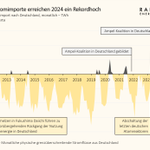
Their response did not address whether the reactors can be restarted, the cost of such a program, nor whether Germany, where energy-intensive industrial production is down more than 15% since early 2022, needs the added electricity.
The response rests on a single observation: the German parliament voted in 2011 to enact an "orderly conclusion" of nuclear power's role in the German energy mix, and nobody has voted to change that law since.
This is undeniably true. It also does not attempt to confront the core issues at hand, and what our report raises: practical feasibility, cost, and energy security.
The 2011 vote to outlaw nuclear energy came in the wake of the Fukushima Daiichi accident from a Bundestag elected in 2009. It was backed by the SPD and the Greens, and passed by a coalition of CDU/CSU and FDP. This coalition does not reflect today’s political reality. The FDP holds zero seats in today's Bundestag. If they did, they would likely no longer pass such a law, having changed their position on nuclear in 2022.
Furthermore, the current Chancellor, Friedrich Merz, who is leader of the other half of the coalition that tabled and passed the original law, has gone on record to state that shuttering the plants was a mistake.
Public opinion, naturally, hasn't held still either. Our own 2025 polling, aligning with the research of others, puts support among Germans for keeping nuclear power at 61%. Support for phasing it out completely: 22%. At almost 3:1, current opinion runs opposite to the policy the 2011 law maintains.
Whatever Germany ultimately decides about nuclear power, an independent technical audit of the work required to rebuild and restart the existing German fleet would establish the cost and feasibility of such a program. Halting decommissioning efforts and conducting such an assessment would allow the continuation to be decided on current evidence and circumstances rather than proceeding by default based on a 15-year-old policy.
"The 2011 world is long gone," said @MadiHilly, Managing Director of Radiant Energy Group. "Electricity in Germany costs more than it does almost anywhere else in Europe, and remains among the most carbon-intensive in Europe. Our report highlights that getting their existing plants back online would be cost-competitive and cheaper than starting from scratch."
Radiant Energy Group retweeted

Official statement from the German government on REG’s latest Germany Restart report:
"The Federal Government is aware of the analyses by the Radiant Energy Group as well as the open letter.
In 2011, the German Bundestag decided to accelerate the nuclear phase-out via the Thirteenth Act to Amend the Atomic Energy Act, supported by a broad, cross-party majority comprising the then-governing parliamentary groups (CDU/CSU and FDP) as well as the SPD and Alliance 90/The Greens parliamentary groups.
The last three German nuclear power plants were shut down in 2023. All German nuclear power plants have already received authorization for decommissioning and dismantling, and the dismantling process is underway; parts of the facilities have already been shut down and dismantled.
There has been no agreement since then to resume the use of nuclear energy via nuclear fission; moreover, doing so would contradict the objective set out in the Atomic Energy Act—namely, to bring the use of nuclear energy for the commercial generation of electricity to an orderly conclusion."
Tl;dr the government decided to make nuclear illegal in 2011, which is why it has to be illegal.
When today's legislators blame yesterday's legislators for a policy they know and admit is wrong, it becomes a question of democracy. Especially given that 3x as many Germans want to keep using nuclear as phase it out.

Radiant Energy Group retweeted
Our German Restart Webinar is underway!
Curious about what's actually possible in Germany, how big the opportunity is, and what's at stake? Tune in and drop your questions 👇

Wie reaktiviert man ein Kernkraftwerk? 📷
Genau das zeigen die Autoren und beteiligten Experten des neuen Berichts der Radiant Energy Group im heutigen Nuklearia-Webinar. Anhand konkreter Reparaturverfahren, technischer Bewertungen, Berechnungen und internationaler Beispiele erläutern sie, warum die Reaktivierung deutscher Kernkraftwerke wirtschaftlich sinnvoll und kerntechnisch vielfach bewährte Praxis ist.
Anschließend beantworten sie Fragen aus dem Publikum. 📷
Die Veranstaltung wird live auf YouTube übertragen und ist anschließend über denselben Link dauerhaft als Aufzeichnung verfügbar.
📷 Wer Fragen stellen, den Chat verfolgen und an der Diskussion teilnehmen möchte, sollte den Zoom-Teilnahmelink in der Antwort nutzen.
📷 YouTube-Livestream / Aufzeichnung: youtube.com/live/o8Ow-UNycTs… #Nuklearia #RadiantEnergy #Energiewende

Radiant Energy Group retweeted

Der neue @RadiantEnergyG Report über die Reaktivierung deutscher Kernkraftwerke, geschrieben von @MadiHilly und mir, ist draußen.
Das Ergebnis von über zwei Jahren Arbeit:
Diesmal gehen wir noch weiter als beim letzten Mal und analysieren die Wirtschaftlichkeit einer Reaktivierung quantitativ.
Wir haben die Zustände der Anlagen erfasst, die Maßnahmen modelliert und die Kosten und Zeiträume für eine Reaktivierung der jeweiligen Anlagen sowie die daraus resultierenden Stromgestehungskosten berechnet.
Die Resultate daraus sind eindeutig:
Die Reaktivierung deutscher Kernkraftwerke ist der beste Weg, mittelfristig große Mengen zusätzlicher Stromerzeugung zu Preisen ähnlich oder unterhalb der inflationsbereinigten Großhandelsstrompreise der 2010er-Jahre an das deutsche Netz zu holen.
Die Reaktivierung ist ein notwendiger Schritt, den wir gehen müssen, um die Deindustrialisierung Deutschlands aufzuhalten.
Subventionierte Industriestrompreise können die Abwanderung energieintensiver Industrie temporär verzögern, erlauben aber keine Investitionen, um diese langfristig zu erhalten.
Unsere derzeitige Energiepolitik ist physikalisch nicht in der Lage, die niedrigen Grundlaststrompreise zu garantieren, die notwendig sind, um langfristige Investitionen in die energieintensive Industrie zu ermöglichen.
Nur eine Rückkehr zur Kernenergie kann dies bewerkstelligen, und dafür stellt die Reaktivierung deutscher Kernkraftwerke die beste Möglichkeit dar.
radiantenergygroup.com/_file…
Besonderen Dank geht an:
Sascha Bechtel
@DBrandNuc
@HarksenNiels
@david_gramatzki
sowie Zahlreiche weiter Mitglieder der @Nuklearia und der deutshen Nuklearindustrie, die diesen Bericht unterstützt und seine Analyse mit Daten versorgt haben.


Radiant Energy Group retweeted

Neuer Report: Es ist technisch machbar und ökonomisch sinnvoll, die stillgelegten deutschen AKWs wieder ans Netz zu bringen. Das würde bis zu 18,7 GW Strom beispielsweise für KI-Rechenzentren bedeuten. Und die Mehrheit der Bevölkerung ist dafür

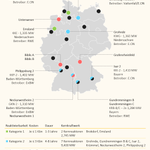
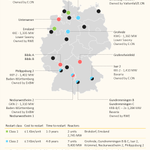
NEW GERMANY RESTART REPORT: Restarting up to 18.7 gigawatts of Germany’s nuclear fleet is technically feasible, cost-effective, and supported by a majority of Germans.
Germany has an untapped energy resource at a scale matched nowhere else in the West. Per capita, the nuclear capacity Germany could add this decade is nearly an order of magnitude greater than what China is planning to.
Despite the nuclear phaseout, German law already allows work to begin on reactor restarts as long as the electricity is not sold before the law is changed.
In @RadiantEnergyG's most in-depth analysis of Germany’s reactor restart opportunity to date, we find that this program would be:
FAST: 5 reactors could be returned to service in less than 5 years, 14 reactors total in under a decade.
COST-EFFECTIVE: Every reactor studied could produce electricity well below current wholesale prices in Germany. With public financing, these plants could significantly undercut the inflation‑adjusted average of the 2010s.
CHEAPER THAN NEWBUILDS: The cost to bring back the 5 easiest-to-restart reactors is cheaper than any single Western nuclear newbuild currently under construction.
SUPPORTED BY THE PUBLIC: 61% of Germans support making use of existing nuclear in Germany, nearly three times the 22% who favor a complete phaseout and ban.
The missing ingredient remains political will.
In our conversations with the German Energy Minister, it was clear that with the right information, including a sober, accurate picture of what's actually possible, there's real interest in saving this energy supply.
Now, German nuclear industry leaders, several of whom informed our analysis, are urging support for restarts. In a letter sent to Chancellor Merz and members of Parliament, the authors wrote that “reactivating German nuclear power is technically a possible and sensible option,” attaching Radiant Energy Group's report for reference.
Germany once had one of the finest nuclear programs in the world. As more countries across the West recommit themselves to expanding nuclear, Germany has a unique chance to rebuild that expertise while directly addressing the energy cost and supply security issues it's facing.


We are pleased to announce our report analyzing the possibility of German restarts has been released this morning and covered in the German press.
We found that up to 18.7 GW of nuclear capacity could be brought online quickly and cost-effectively if swift action is taken.


NEW GERMANY RESTART REPORT: Restarting up to 18.7 gigawatts of Germany’s nuclear fleet is technically feasible, cost-effective, and supported by a majority of Germans.
Germany has an untapped energy resource at a scale matched nowhere else in the West. Per capita, the nuclear capacity Germany could add this decade is nearly an order of magnitude greater than what China is planning to.
Despite the nuclear phaseout, German law already allows work to begin on reactor restarts as long as the electricity is not sold before the law is changed.
In @RadiantEnergyG's most in-depth analysis of Germany’s reactor restart opportunity to date, we find that this program would be:
FAST: 5 reactors could be returned to service in less than 5 years, 14 reactors total in under a decade.
COST-EFFECTIVE: Every reactor studied could produce electricity well below current wholesale prices in Germany. With public financing, these plants could significantly undercut the inflation‑adjusted average of the 2010s.
CHEAPER THAN NEWBUILDS: The cost to bring back the 5 easiest-to-restart reactors is cheaper than any single Western nuclear newbuild currently under construction.
SUPPORTED BY THE PUBLIC: 61% of Germans support making use of existing nuclear in Germany, nearly three times the 22% who favor a complete phaseout and ban.
The missing ingredient remains political will.
In our conversations with the German Energy Minister, it was clear that with the right information, including a sober, accurate picture of what's actually possible, there's real interest in saving this energy supply.
Now, German nuclear industry leaders, several of whom informed our analysis, are urging support for restarts. In a letter sent to Chancellor Merz and members of Parliament, the authors wrote that “reactivating German nuclear power is technically a possible and sensible option,” attaching Radiant Energy Group's report for reference.
Germany once had one of the finest nuclear programs in the world. As more countries across the West recommit themselves to expanding nuclear, Germany has a unique chance to rebuild that expertise while directly addressing the energy cost and supply security issues it's facing.
Read and download the report in English and German here: RadiantEnergyGroup.com


Link to Bild reporting: bild.de/politik/inland/neue-…
Link to Apollo reporting: apollo-news.net/technisch-ma…
Radiant Energy Group retweeted
NEW GERMANY RESTART REPORT: Restarting up to 18.7 gigawatts of Germany’s nuclear fleet is technically feasible, cost-effective, and supported by a majority of Germans.
Germany has an untapped energy resource at a scale matched nowhere else in the West. Per capita, the nuclear capacity Germany could add this decade is nearly an order of magnitude greater than what China is planning to.
Despite the nuclear phaseout, German law already allows work to begin on reactor restarts as long as the electricity is not sold before the law is changed.
In @RadiantEnergyG's most in-depth analysis of Germany’s reactor restart opportunity to date, we find that this program would be:
FAST: 5 reactors could be returned to service in less than 5 years, 14 reactors total in under a decade.
COST-EFFECTIVE: Every reactor studied could produce electricity well below current wholesale prices in Germany. With public financing, these plants could significantly undercut the inflation‑adjusted average of the 2010s.
CHEAPER THAN NEWBUILDS: The cost to bring back the 5 easiest-to-restart reactors is cheaper than any single Western nuclear newbuild currently under construction.
SUPPORTED BY THE PUBLIC: 61% of Germans support making use of existing nuclear in Germany, nearly three times the 22% who favor a complete phaseout and ban.
The missing ingredient remains political will.
In our conversations with the German Energy Minister, it was clear that with the right information, including a sober, accurate picture of what's actually possible, there's real interest in saving this energy supply.
Now, German nuclear industry leaders, several of whom informed our analysis, are urging support for restarts. In a letter sent to Chancellor Merz and members of Parliament, the authors wrote that “reactivating German nuclear power is technically a possible and sensible option,” attaching Radiant Energy Group's report for reference.
Germany once had one of the finest nuclear programs in the world. As more countries across the West recommit themselves to expanding nuclear, Germany has a unique chance to rebuild that expertise while directly addressing the energy cost and supply security issues it's facing.
Radiant Energy Group retweeted
🇩🇪 German Nuclear Industry: "Nuclear Restarts Viable and Sensible"!
We are grateful that German industry leaders cited @RadiantEnergyG's updated analysis on the state of German nuclear in their letter declaring restarts possible.
We gave them a preview of our report to support them in their efforts.
For the rest of the world, the full and detailed report will be dropping Monday morning German time.
Jetzt gibt es keine Ausreden mehr für die deutsche Politik: Ehemalige Leiter von Kernkraftwerken erklären deren Reaktivierung für möglich und sinnvoll!
Wirtschaftlichkeit, Machbarkeit und Zeitplan werden in der Neuauflage des @RadiantEnergyG-Berichts zur Reaktivierbarkeit deutscher Kernkraftwerke detailliert erklärt, der am kommenden Montag veröffentlicht werden wird.

Radiant Energy Group retweeted
We’re releasing the updated report in a few weeks.
Spoiler: restarts in Germany remain technically viable and economically compelling.


Radiant Energy Group retweeted

Belgium Shut Down Nuclear Reactors… Now It Wants Them Back
Read the full report from @RadiantEnergyG here: radiantenergygroup.com/repor…
Today, Radiant Energy Group announces that Managing Director Mark Nelson @energybants will be leaving the firm to pursue an exciting new opportunity with @TheNuclearCo.
“We are incredibly happy for Mark as he focuses his talents on getting new nuclear built” said @MadiHilly and @RichardOllingtn “We are grateful for his years of leadership and look forward to continuing our work with the same rigor and integrity that have always defined our team”
Read our latest report on what Americans think about nuclear energy.
23 US states surveyed
23,795 representative respondents
78 nuclear reactors operational in the states surveyed
radiantenergygroup.com/repor…


