

Learning Specialist- Teacher, educator, leader, lifelong learner
Melbourne, Victoria
Joined June 2019
- Tweets1.9K
- Following1.3K
- Followers464
- Likes6.6K





Pinned Tweet
Empowering Mathematics Education: Insights and Inspirations from MAVCON 2023 linkedin.com/pulse/empowerin…
1
1
335
Day 1 at #ACEL2026 and this image is what I love about this annual gathering of educators and educational leaders. The fact that we span systems and sectors from Australia and overseas. An incredible opportunity to learn, to share and to be.

1
101
Ramya Deepak retweeted

Early specialization is overrated. Generalists excel over time.
Data on >34k stars in sports, music, science, and chess: Focusing on a single field predicts a faster rise, but cross-training foreshadows a higher peak.
The most successful adults start off as well-rounded kids.

Ramya Deepak retweeted

As cognitive science begins to catch on with educators around the world, is something important being overlooked?
Explicit teaching & retrieval practice are crucial, but they're not enough to ensure deep understanding.
More in my new post:
nataliewexler.substack.com/p…

Ramya Deepak retweeted

Another specific idea from Better that reshaped how I think about leadership in schools:
One of the most striking themes in Better is not about doing more.
It is about knowing when to stop.
Gawande describes surgeons who cause harm not through incompetence, but through over-intervention.
Too many tests.
Too many procedures.
Too much action driven by fear, habit, or the appearance of thoroughness.
The hardest professional skill, he argues, is not decisiveness.
It is restraint.
That felt uncomfortably familiar in education.
Because schools rarely fail from inaction.
They fail from accumulation.
We add:
Another initiative
Another data drop
Another meeting
Another intervention layer
All well-intentioned.
All individually defensible.
Collectively overwhelming.
In medicine, Gawande talks about the discipline of asking:
“What problem are we actually trying to solve?”
Not:
“What else could we do?”
That question has become a leadership filter for me.
Before adding anything new, we should be able to answer:
What will this replace?
What will stop?
What cognitive load are we removing to make space for this?
Because complexity does not usually improve outcomes.
It hides responsibility.
In surgery, unnecessary action increases risk.
In schools, it increases noise, workload, and inconsistency.
The most effective leaders I know are not the busiest ones.
They are the ones who:
Kill initiatives early
Simplify systems relentlessly
Protect staff attention as a finite resource
Better makes an uncomfortable point:
Professional maturity is not about doing everything you can.
It is about doing only what matters, exceptionally well.
That lesson is as relevant in a school corridor as it is in an operating theatre.

Ramya Deepak retweeted
Better by Gawande is about surgery.
But it could just as easily be about leadership in schools.
Here are seven ideas from it that changed how I think about improvement:
1. Care is not enough.
Every surgeon cares. Outcomes still vary.
In schools, goodwill does not guarantee consistency.
2. Expertise fails without systems.
If something only works when the right person is present, it is not a system. It is a dependency.
3. Small errors compound.
In surgery, they cost lives.
In education, they cost opportunity.
4. Checklists are not an insult to professionalism.
They protect it.
They free people to focus on judgement, not memory.
5. Feedback must be routine, not heroic.
The best performers are the ones most open to critique.
6. Improvement is uncomfortable by design.
If it feels easy, it is probably cosmetic.
7. Progress comes from discipline, not brilliance.
The myth of the exceptional individual gets in the way of sustainable change.
In surgery, failure is visible and immediate.
In education, it is slower, quieter, and easier to rationalise.
The lesson is the same in both fields:
Care matters.
But systems matter more.

Ramya Deepak retweeted
Most school leaders are not chasing perfection.
They are chasing progress.
Quietly. Relentlessly. Under pressure.
That is why Better by Atul Gawande resonates so deeply with leadership in schools.
It is not about brilliance.
It is about systems, habits and the discipline of improvement.
In surgery, failure costs lives.
In education, it costs opportunity.
The lesson is the same in both fields:
Care is not enough. Systems matter.
That simple truth sits at the heart of Better: A Surgeon’s Notes on Performance by Atul Gawande. Although written through the lens of medicine, it may be one of the most quietly powerful leadership books a leader can read.
Because it strips performance back to its essentials.
Not vision statements. Not slogans.
But habits, systems, humility and the relentless pursuit of improvement.
In schools, as in surgery, we often celebrate individual excellence.
The outstanding teacher. The inspirational leader. The charismatic head.
Gawande dismantles this myth with precision.
He shows that even the most talented professionals fail without:
•Clear systems
•Consistent routines
•Feedback that is acted upon
•A culture that allows challenge and learning
The lesson is uncomfortable but necessary. Performance does not improve because people care more. It improves because systems make the right actions more likely and the wrong ones harder to repeat.
One of Gawande’s central arguments is that improvement rarely comes from dramatic breakthroughs. It comes from marginal gains applied consistently.
This is profoundly relevant to school leadership.
Better attendance rarely comes from one assembly.
Better behaviour rarely comes from one policy rewrite.
Better teaching rarely comes from one INSET day.
It comes from leaders who:
•Clarify expectations
•Remove ambiguity
•Build routines that survive pressure
•Accept that good intentions are not enough
In Gawande’s world, checklists save lives.
In ours, systems save learning time.
Perhaps the most striking section of Better is Gawande’s exploration of coaching. Even elite surgeons, at the top of their profession, actively seek feedback from others who can see what they cannot.
This is where leadership in schools is often tested.
Senior leaders are expected to have answers.
Yet the most effective leaders are those who remain open to scrutiny.
The parallel is clear. Schools improve fastest when leaders:
Invite challenge rather than defend practice
Use evidence to refine decisions
Model learning rather than certainty
Leadership is not diminished by coaching. It is strengthened by it.
What makes Better resonate so strongly with education is its realism.
Gawande does not argue that failure can be eliminated. He argues that it can be reduced. He does not promise excellence overnight. He commits to progress, relentlessly pursued.
This mirrors the reality of schools.
We work in complex systems, serving diverse communities, under constant pressure. Improvement is rarely neat. But it is possible.
The leaders who make the biggest difference are those who ask, repeatedly:
What worked today?
What did not?
What one thing can we do better tomorrow?
That mindset is not glamorous.
It is transformative.
Better is not a book about medicine.
It is a book about responsibility.
Responsibility to design systems that protect people.
Responsibility to reflect honestly on performance.
Responsibility to keep improving even when progress feels slow.
For school leaders, that message could not be more relevant.
Because the work is not about being flawless.
It is about being better.
Every day.

Ramya Deepak retweeted

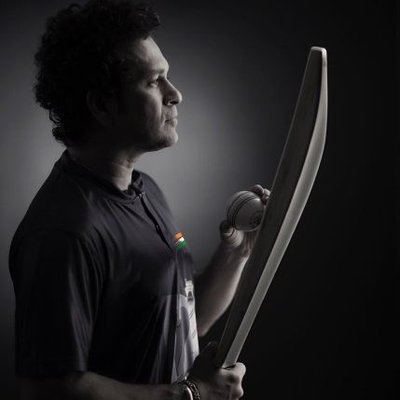
Highest Test score by an Indian captain. Talk about walking the talk. This is how you earn respect - from the dressing room, from the opposition, from the cricket World. Sublime innings. Take a bow skipper @ShubmanGill 🙌🏻 #ENGvIND


Ramya Deepak retweeted

“It’s not the size of the man in the fight, it's the size of the fight in the man.”

Ramya Deepak retweeted
Test cricket continues to weave its magic.
In a final where every session had its own story, @ProteasMenCSA found calm in the storm. Markram’s composure and Bavuma’s grit under pressure stood tall in the fourth innings. A century that will be remembered, a partnership that turned hope into history.
Congratulations to South Africa on becoming World Test Champions!
#WTC25
Ramya Deepak retweeted

Teachers are expected to use evidence-based approaches and strategies- yet no one has ever trained us how to read and interpret research!
Huge thanks to @rastokke who, this past weekend at the @researchEDCan conference, shared this 1-page “red flags for education research” for teachers and, just as importantly, the literacy coaches and consultants who are telling us what to do! Find it here: annastokke.com/_files/ugd/59…

Delighted to share our success journey at @MtWaverleyPS @tiattov #coaching #coagency #coachablemoments

AEL ‘Future Leaders’ is out now! 🎉 With lead articles written by Professor Fenwick W. English, Professor David Gurr, Nada Jarni, Dr Adam Taylor, Professor Tanya Fitzgerald and Dr Wei Zhang.
Learn more at: acel.org.au/ACEL/ACELWEB/Pub…

3
99
Ramya Deepak retweeted

ACEL New Voice Scholarships 2025 – nominations now open! ✨Are you or a colleague an emerging voice in educational leadership? ACEL’s New Voice Scholarships are part of our significant commitment to recognise the emerging voices in educational leadership.
acel.org.au/newvoice

Ramya Deepak retweeted

"Students progress at a much faster rate in phonics when the bulk of instructional time is spent on applying the skills to authentic reading and writing experiences, rather than isolated skill-and-drill work. "
--@wbny
literacyworldwide.org/docs/d…
Ramya Deepak retweeted

Self-assessment has a .75 effect size, which means almost two years of growth in one year's time. Self-assessment gets students independent and reflective.
buff.ly/4i216Xj via Tales from a Very Busy Teacher
#teachertwitter #educoach


Ramya Deepak retweeted

Long-term partnerships mean long-term impact. Watch as Mt Waverley shares their journey with us and the difference it’s made in their learning community. Thanks Campbell and Tania!


An absolute honour to present two sessions at #MAVCON with @MrDixonMath . Grateful for the engaging discussions and connections with passionate educators. We share our journey, hoping a small idea inspires your context. Thank you to all who joined. #mavcon

It’s not everyday you get to listen to stalwarts of Mathematics education like Peter Sullivan connect the What, Why and How so articulately. #MAVCON
