

Formador de entrenadores y fisios en FIDIAS. Complejidad y Ecología aplicadas a la Salud y el Deporte
El Puerto de Santa María
Joined February 2011
- Tweets667
- Following434
- Followers831
- Likes563


1/4
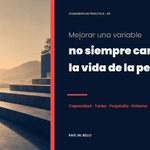
Podemos mejorar una variable sin haber cambiado todavía la vida de la persona.
Alguien puede recuperar fuerza o movilidad después de una lesión y seguir sin confiar en una tarea cotidiana.
¿Qué entendemos entonces por recuperarse?

1
1
156
1/4
Dos personas pueden presentar un dolor parecido, una fuerza semejante o la misma respuesta ante una carga.
Eso no significa que hayan llegado hasta allí de la misma manera.
Evaluar el estado actual también exige intentar comprender su trayectoria.

1
1
105
Células inmunitarias y ejercicio regular.

Scientists mapped what happens inside immune cells when people exercise regularly. The results explain why physically active people resist infection better and show how the body remembers physical activity at the molecular level.
Researchers at BGI Research analyzed blood samples from 86 young adults: 40 who exercised at least 150 minutes per week, and 46 who were completely sedentary. They profiled over 1.3 million immune cells to see how exercise changes them.
The study reveals regular exercise creates three coordinated changes: enhanced energy use, strengthened defenses against cell damage, and immune cells reprogrammed to better detect threats.
Burning fat, building defenses
Exercisers showed clear signs their bodies were burning more fat for fuel. Multiple markers of fat breakdown were elevated, including molecules that transport fats into the cellular power plants where they get converted to energy.
At the same time, exercisers stored less fat as triglycerides. The body shifts from storing fat to using it.
Molecules that protect cells from damage were elevated across the board. Betaine, a compound recently shown to extend lifespan in animals by mimicking exercise effects, was significantly higher in exercisers. Other protective molecules that neutralize harmful byproducts of metabolism were also elevated.
Exercise also changed molecules produced by gut bacteria. One compound that strengthens intestinal barriers and reduces inflammation was elevated in exercisers.
Immune cells remember exercise
The most striking finding: exercise reprograms immune cells by changing which genes are easily accessible.
Your DNA is tightly wound around proteins. Some sections are packed loosely and easy to access, others are wound tight and harder to reach. Think of it like organizing a toolbox: frequently used tools get moved to the top drawer where you can grab them immediately.
In exercisers, immune cells reorganize their DNA so critical defense genes sit in the top drawer, ready to activate the moment a threat appears.
Monocytes, white blood cells that patrol your bloodstream looking for invaders, showed the clearest changes. In exercisers, genes responsible for detecting and displaying foreign molecules became more accessible. These cells were better equipped to sound the alarm when something dangerous shows up.
Key findings by immune cell type:
• Monocytes and dendritic cells: Better at displaying pieces of viruses and bacteria to alert other immune cells
• B cells: Increased ability to present threats and signal other cells, especially in cells that remember past infections
• Killer T cells: More accessible genes for destroying infected cells, with master control proteins showing elevated activity
• Natural killer cells: Enhanced ability to kill abnormal cells, with increased production of molecules that punch holes in infected or cancerous cells
• Helper T cells: Increased activation and enhanced response to viral signals
The immune communication network shifts
Exercise changed how immune cells talk to each other. Productive communication increased while inflammatory chatter decreased.
Signaling between cells that detect threats and cells that destroy threats was significantly enhanced in exercisers. Both types of threat-detection pathways showed increased activity.
Signals that activate antiviral defenses were elevated, with killer cells sending stronger messages to detection cells. This bridges your rapid-response immune system with your adaptive immune system that remembers specific threats.
Inflammatory pathways were suppressed. Resistin, a molecule that promotes inflammation and damages blood vessels, was significantly reduced in exercisers. Other inflammatory signals were also diminished.
Signals that recruit immune cells to where they're needed and maintain healthy tissue increased.
Why this matters
This study provides molecular evidence for why regular exercise protects against infection, improves vaccine responses, and reduces chronic inflammation.
The DNA reorganization means immune cells in exercisers exist in a heightened state of readiness even at rest. They don't need to scramble to turn on defense genes when a threat appears because those genes are already accessible.
The shift toward burning fat paired with enhanced protection against cellular damage shows the body adapts to meet higher energy demands while preventing harm from the increased metabolic activity.
Betaine elevation is particularly notable. Recent research identified this molecule as something your body naturally produces during exercise that mimics many exercise benefits, extending lifespan and reducing inflammation in animals. The significantly higher levels in human exercisers provide real-world validation.
Study limitations: The participants were young and healthy, limiting how well these findings apply to older or clinical populations. Physical activity was self-reported rather than objectively measured. The sedentary group had more females, though statistical adjustments controlled for sex and body composition.
The researchers note that exercise creates a coordinated state: enhanced threat detection, optimized energy use, strengthened defenses against damage, and reduced background inflammation.
Your immune system doesn't just respond to exercise in the moment. It remembers your movement patterns through persistent changes in how DNA is packaged and which genes stay ready for activation.

1
105
“¿Recuperación? Activa” con más ejercicio… l🤔🙄

It is easy to see that "active recovery" is not going to produce a faster rate of post-workout recovery when we have a clearly described physiological model of fatigue. The active recovery workout will only ever add more fatigue on top of the pre-existing fatigue.

1
198
Recuperación de Sprints Repetidos.
Exposición/Atleta/Biomarcador observado…

⚠️ 72 hours may not be enough ⏰
Hamstring recovery after repeated-sprints, football match play and flywheel eccentric loading ⚽️ 🏃♂️
NEW #PhDAcademyAward 🏆
👉 bit.ly/4dSaD3w

3
201
Complejidad y Adaptación al contexto. 😍

Hoy le he preguntado a Luis Enrique por unas declaraciones de Cesc en las que aseguraba que el fútbol requería movimientos constantes por los marcajes individuales rivales y que el juego de posición, el de generar superioridades mediante la ocupación de espacios, estaba desapareciendo.
Su respuesta (en francés):
“Cesc está mostrando en el Como su nivel como entrenador de primer nivel. Lo que está haciendo en el Como es increíble”.
“Estoy de acuerdo. Pienso que cada entrenador tiene su propio esquema para enseñar lo que quiere en el fútbol. Para mí lo más importante es adaptarse todo el tiempo”.
“Hacemos cosas muy diferentes aquí de lo que hacíamos en la Roma o en el Barça B. Luego en el Barça todo se hacía diferente porque debes adaptarte a los jugadores. Y con la selección española también hicimos cosas distintas”.
“En el fútbol actual, en este momento, es increíble el número de aplicaciones que tenemos los entrenadores para ver lo que hacen los rivales. Me acuerdo que el año pasado dije que teníamos que ser imprevisibles para los rivales y previsibles a nosotros. Esto es la clave”.
“Nosotros seguimos buscando dar más información y cambiar las cosas. No importa que seas campeón de la Champions dos veces seguidas. Hay que seguir cambiando porque los rivales se adaptan a lo que hacemos. Es apasionante para mí como entrenador y es mi mayor motivación es esas ganas de mejorar y de ayudar todavía más a los jugadores y comprenderles para que solventen sus dificultades”.
“Estoy en la misma línea de Cesc. El juego de posición tradicional, el que yo conozco de mi etapa en el Barcelona, ha desaparecido. Porque si no eres capaz de tener capacidad de movimiento, no vas a sorprender a ningún equipo”.
“Me gusta esta innovación (movimientos) para encontrar nuevas herramientas para sorprender a los rivales”.
3
290
Algunos de mis últimos post: diferentes formas de evaluar Mecanicista Vs Ecológica
instagram.com/p/DYwwJRQDK1q/…
1
79


La exposición a entornos naturales produce cambios en la estructura de tu cerebro 🧠🌳
instagram.com/p/DcWz9ICtkM3/…

3
93
¿Envejecemos porque “toca” biológicamente o por falta de movimiento? Como siempre, las respuestas no son tan simples. Pero parece que la inflamación (o la ausencia de ella) juega un papel importante…
Most exercise and aging studies can't answer a basic question: is muscle deterioration from aging itself, or just from decades of moving less? A new Nature Aging study solved this by recruiting older adults who moved as much as people in their twenties.
The researchers from Amsterdam UMC and Maastricht University recruited four distinct groups: young adults in their twenties, older adults whose daily step counts and high-intensity activity matched the young group, older adults who had trained consistently for years (three structured hour-long sessions per week for over a year), and older adults with early physical impairment.
They took muscle biopsies before and after a one-hour cycling session, then measured over 24,000 gene transcripts, 135 metabolites, and 1,383 lipid species.
By matching activity levels between young and older groups, any molecular differences couldn't be blamed on the older adults simply moving less. This isolated aging from inactivity for the first time at this molecular depth.
Key findings:
• The defining molecular signature of muscle aging is an energy crisis. Comparing young adults to activity-matched older adults, 1,106 genes were downregulated with age. These genes build the mitochondrial machinery that produces cellular energy: ATP synthase, cytochrome c oxidase, and NADH dehydrogenase subunits. Mitochondria are the power plants of cells, converting nutrients into ATP, the energy currency cells use to function. When these genes decline, cells lose their ability to generate energy efficiently.
• NAD+ levels declined and triglycerides accumulated inside aging muscle. NAD+ is a molecule required for energy production and cellular repair. Lower NAD+ means less capacity to convert fuel into usable energy. Triglycerides are stored fats, their accumulation inside muscle indicates unburned fuel piling up as the tissue loses its ability to process it.
• More than half the molecular signature of muscle aging was absent in trained older adults. Specifically, 57.1% of age-related gene downregulation and 55.9% of upregulation were missing in the trained group. Their muscle resembled young adults far more than their chronological age would predict.
• The changes training preserved were specifically the energy metabolism ones. Genes like NDUFS1 and COX5A, which were depleted in normally active and impaired older adults, sat at youthful levels in the trained group across all five mitochondrial respiratory complexes. The single most prominent feature of muscle aging turned out to be the single most preventable.
• Being generally active was not enough. Structured training was the difference. The normally active older adults walked as much as young adults, and their energy metabolism genes declined anyway. What preserved the youthful molecular profile was structured, sustained training. Filling a step counter and being genuinely trained are not equivalent at the molecular level.
• Roughly half of muscle aging persisted regardless of training. Changes in genes controlling synaptic transmission (how nerves communicate with muscle) and WNT signaling (a pathway regulating tissue maintenance and stem cell function) appeared in all older adults, trained or not. This unavoidable half is where drugs will have to work.
• The fittest muscle mounted the largest inflammatory response to exercise. All groups activated stress and immune genes after exercise, including IL6, IL1B, and TNF. But the magnitude scaled with fitness. Trained older adults most closely resembled young adults in their response, followed by normally active, with impaired older adults showing the most blunted response. The stress response to exercise appears to be the mechanism of adaptation, not damage to be minimized.
This raises a concern about anti-inflammatory longevity strategies. If the inflammatory stress response is how exercise produces its benefits, chronically suppressing inflammation may blunt the adaptation that exercise depends on. It doesn't mean inflammation is beneficial in general, but the timing and context matter.
A separate discovery: the proteasome appears to regulate NAD+. The proteasome is the cellular machinery that breaks down damaged proteins. When researchers inhibited it, NAD+ levels rose in both muscle and liver cells to a degree comparable to NAD+ precursor supplements. This opens a new route to understanding NAD+ decline that operates through protein turnover rather than just supplying more raw material.
The study draws a clear line between what lifestyle can address and what will require therapeutics. The energy metabolism decline, mitochondrial deterioration, and NAD+ depletion that define muscle aging are largely preventable through structured training. The synaptic and signaling changes that persist in all older adults represent the unavoidable half where drugs will need to work.
The decisions made about structured training in midlife determine which molecular trajectory muscle follows in later decades. Half of muscle aging is optional. The other half isn't. Knowing which changes belong to each category is knowing where behavior ends and biology takes over.

3
401
Comienzo una serie de posts: Artículos que me han cambiado la forma de entender el entrenamiento, la rehabilitación… y la vida.
Quizás, uno de los más chulos, aunque ya tenga unos años. Además, de libre acceso! De @RafelPol
pubmed.ncbi.nlm.nih.gov/3266…

Hace unos meses, en FIDIAS, decidimos crear una comunidad gratuita en la plataforma educativa Skool para entrenadores y fisioterapeutas donde pudiéramos mostrar y compartir nuestra manera de entender este mundillo. Ya somos 1200 profesionales. ¿Te unes?
skool.com/entrenadores-fisio…
2
317

Sistemas Complejos Adaptativos aplicados al deporte.
Aumentar la diversidad funcional como objetivo del entrenamiento

Luis Enrique sobre la polivalencia de los jugadores y cual es su sueño:
"Me gustaría tener 20 jugadores que puedan jugar en cualquier posición. Nuno Mendes como lateral, Nuno Mendes como extremo,... Imagina al entrenador rival cuando ve la alineación. (...) Intentaré conseguirlo”
1
173


¿Una sesión de Educación de 15 minutos sobre dolor puede hacernos mejorar de manera significativa? Si quieres más info, visita nuestro blog (bio).
Hazme una visita en Fidias Health & Sport Center y compruébalo. Es… instagram.com/p/B5GsVxho0fZ/… – at El Puerto de Santa María, Spain
2
Playing with Knowledge! 😝Gran fin de semana de formación en el MÓDULO 1 del MTC de Vélez-Málaga. Junto a mi compañero de fatigas @adanmartin . Vamos a disfrutar mucho este año! en Fidias Center Vélez instagram.com/p/B5BSoLbocns/… – at Vélez-Málaga, Spain
Un gran fin de semana de formación en el Modulo 1 del MTC en Vélez-Málaga. Seguro que vamos a disfrutar mucho este año en Fidias Center Vélez instagram.com/p/B5BRp8PoA6_/… – at Vélez-Málaga, Spain