

Ravensbourne Catchment Partnership connecting the wildlife and people of the Ravensbourne River, its tributaries and surrounding habitats. Hosted by Thames21
- Tweets132
- Following117
- Followers147
- Likes123


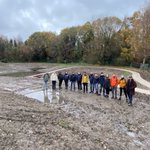


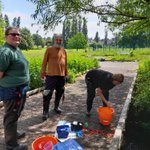


ALT Join us in the #RiverQuaggy this June. We have two events from this year’s #3RiversCleanUp #3RCU We’ll provide the waders, gloves, hand cleaners, rubbish bags for you to help do three things: 1. The first is simply enjoy yourself - being in and learning more about the river. 2. Remove rubbish polluting the river and banks. 3. Clear the river banks of any invasive non-native Himalayan Balsam (HB) which is a problem for our rivers because: - it weakens the river banks making them prone to being eroded and washed away in higher, faster flowing waters - its growth prevents the banks from being home to a more diverse range of native plants that support an array of wildlife - insects, birds etc. HB is easy to spot and is also easy to remove - it’s shallow rooted and the stem is a bit like celery. Removing the plant before it casts its seed on the river banks and downstream contributes to improving the overall natural condition of our local urban rivers.

ALT In the #RiverQuaggy on the stretch near the Dutch House and the confluence - hidden on the right hand side - with the Little Quaggy that flows down from Mottingham parallel to the A20 Sidcup Bypass. This stretch is still very natural and tranquil even though the river is hemmed in by Mottingam Lane on one side and the A20 Sidcup Bypass on the other. The picture shows bridge beneath the A20 Sidcup Bypass after which the river is back I. straight concrete channel all if the way down to Sutcliffe Park where we successful the river restored, leading to the rejuvenation of the park itself.

ALT In the #RiverQuaggy on the stretch near the Dutch House and the confluence with the Little Quaggy that flows down from Mottingham parallel to the A20 Sidcup Bypass. On this stretch, the river flows beside the racetrack that is Mottingham Lane, where a lot of litter tends to be dropped from passing vehicles, as well as being deliberately flytipped. That said, it’s a very natural stretch and being in the river feels like getting away from the nearby hubbub. The picture is taken in front of the bridge the river flows beneath to head under the A20 Sidcup Bypass to head down to Sutcliffe Park.

ALT Lost golf balls washed into the #RiverQuaggy probably upstream at Sundridge Park and removed downstream on the stretch near the Dutch House, Mottingham Lane and A20 Sidcup Bypass.

ALT Picture of the covers of two QWAG newsletters from summer 2003, when the restoration was in progress, and summer 2004, when the restoration had been completed.

ALT Cover of the public consultation document seeking views on the idea of restoring Sutcliffe Park by bringing the river above ground, creating a new wetland habitat to attract wild species, and a large bowl for water to be stored and held back in the landscape instead of hurtling downstream and adding to flood risk.

ALT The lake (flood storage area) working. Yes, the public seating bench is surrounded with water but that is a sign that the storage of high water is working and doing its job.

ALT The lake aka flood storage area is also bringing back and supporting a host of wild species previously lacking in the bland amenity grassed park, especially bats, invertebrates, and a greater range of bird species.


ALT Water voles are on decline. Once large populations have crashed due to loss of habitat and predation by mink.

ALT Some remnant populations of water vole exist in London, but records are not robust. The Water Vole Recovery Project aims to track and eradicate mink, and identify suitable habitats for water voles to be reintroduced.

ALT The water vole recovery programme is a joint project of the People’s Trust for Endangered Species (PTES), Zoological Society of London (ZSL), London Wildlife Trust, Greenspace Information for Greater London (GIGL) - the environmental record centre for Greater London) with support from the Mayor of London.

