





Pinned Tweet
My Renewed Investment Thesis on BlackBerry. 🧵
Last week, I decided to opened a new position in BlackBerry. This isn’t my first time owning the stock. In 2014, I built a sizable position, drawn to the company’s ambitious pivot under then-CEO John Chen from a declining smartphone maker to a secure enterprise software and embedded systems player.
That turnaround proved more challenging than expected. Chen stabilized the business and prevented a collapse, but the full transformation fell short of my expectations. Frustrated by the slow progress, I exited my entire position around 2020.
DAS retweeted
He has more in common with Democrats because he is a Democrat. He just pretended to be a Republican to become president. He likes big government, central government planning, protectionism, labor unions, deficit spending, and easy money to pay for it.


The critical missing piece is the unit definition. Multiple independent analyses note that a Blackwell package contains two dies. @JensenHuang has explicitly framed it as “each GPU die is a GPU.”
The 6 million figure is therefore dies, not packages. That implies roughly 3 million packages—which lines up much more cleanly with the revenue math and with supply-chain estimates of ~3.0–3.2 million packages shipped through the end of 2025.
$NVDA $ARM $QCOM $CBRS

I wrote this analysis 1 YEAR AGO when I proved that Nvidia only shipped half of the GPUs Jensen Huang claimed it did.
The math to me was obvious at that time, as it is today: if you compare data center capacity built vs. the GPUs Nvidia said it sold so far, ONLY A FRACTION OF THOSE HAS BEEN INSTALLED
"Illegal" GPU sales to China are only a small part of the whole Nvidia story; the big question still not being asked is: where are all the GPUs Nvidia claims it sold all this time?
I already know the answer: some are hiding in "off the books" warehouses; others were never really sold, even if those revenues were reported in the earnings

1
1
85
DAS retweeted

JUST IN: U.S. Senate passes bipartisan bill requiring data centers to pay for their own energy costs.

A @BlackBerry acquisition of @gsitechnology would be a classic strategic tuck-in that pairs BB’s QNX real-time operating system with GSIT’s low-power compute-in-memory AI silicon. The fit is unusually strong around physical/edge AI.
BlackBerry’s QNX RTOS is already embedded in 275+ million vehicles and expanding rapidly into robotics, industrial automation, medical devices, and defense. GSIT’s Gemini (and upcoming Plato) Associative Processing Units use a compute-in-memory architecture that delivers GPU-class performance on certain AI workloads at a fraction of the power—typically ~15 W for Gemini-II and targeted under 10 W for Plato.
The benefit is a tighter, more differentiated full-stack offering for the exact markets BB is prioritizing (physical AI, robotics, industrial, defense/edge). It would give BB owned low-power AI silicon that complements its safety-critical software moat and accelerates the shift beyond pure automotive royalties. This is speculative—no public deal talk exists—but the strategic logic is clear from both companies’ stated directions.
$BB $GSIT
DAS retweeted
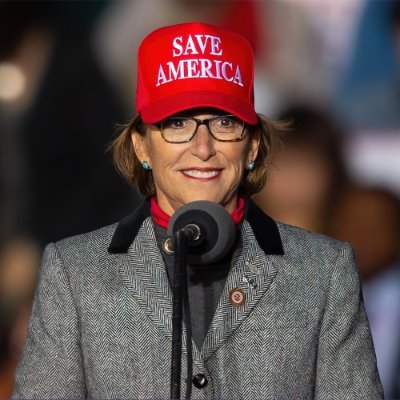
Cash only. No malpractice lawsuits because reputation is everything. Most of the dentists are U.S.-trained, too.
It works.

This tiny Mexican town has about 6,000 people and more than 300 dental clinics. That is not a typo. Americans call it Molar City. Its real name is Los Algodones. It is the northernmost town in Mexico, squeezed into the corner where California, Arizona, and Mexico meet. Yuma, Arizona, is about 15 minutes away.
Here’s how it works. You park in a big lot on the California side, walk across the border, and in less than 10 minutes, you are standing in a few blocks packed with dentists. More than 1 million people make that crossing every year. Why? Price. Crowns, root canals, implants, and dentures can cost up to 80% less than in the United States. A lot of the patients are retirees who spend the winter in the nearby desert.
And it all started with one dentist in 1969. Dr. Bernardo Magaña opened an office right across from the border crossing. For about three years, he was the only dentist in town. Back then, Los Algodones was known for its bars, 48 of them. In 1980, he was elected to run the town. He shut the bars down, opened schools, and recruited more dentists. The bars turned into dental offices.
So, if you have ever looked at a dental bill and wondered if there’s another way, this is where a lot of Americans go. Just check out the clinic before you book, and bring your passport.
@Dentaltown - Why Americans Flock to Mexico’s “Molar City” for Dental Care dentaltown.com/messageboard/…
DAS retweeted

Why is Canada getting poorer than US. Not because it has less, it is because it cannot churn out more.
Credit for the video to Neighbors Apart
Grab a coffee: 9min.
$DOX valuation makes it a compelling acquisition candidate.
At ~$45/share and a ~$4.7B market cap, the stock trades at a steep discount:
• Forward P/E ≈ 8.2–8.3x
• EV/EBITDA ≈ 5.3–5.4x
• P/S ≈ 1.0x on ~$4.7B revenue
• Strong free cash flow (FY2026 ~$560M)
• ~5% dividend yield
This is a sticky, high-recurring-revenue telecom software business (managed services ~65% of sales, multi-billion-dollar backlog) with agentic AI capabilities (aOS platform) and recent expansion into insurance via the $340M EIS deal. It has fallen >50% from its 52-week highs amid a T-Mobile customer dispute and near-term revenue pressure, leaving it priced like a declining mature IT services firm rather than a cash-generative software platform.
Strategic buyers/Private Equity firms can acquire at a low multiple, realize cost synergies, optimize the telco base, and unlock the AI + insurance upside. Cheap relative to software peers (often 20x+ P/E) and to historical levels. Risks remain (customer concentration, FY2027 outlook), but the valuation provides a meaningful margin of safety for an acquirer.
I will probably jump on short term calls this week.
$DOX $T $TMUS $NOK $ERIC $NIPNF
2
2
108
DAS retweeted

Want to hear about Letitia James’ connection to this whole Jensen Huang and NVIDIA scandal? Let’s start from the top.
Jensen Huang is the CEO of NVIDIA, the company that makes the chips powering most of the AI systems in the world. During Trump’s second term, Huang was all over the White House. He met with the president, advised on AI policy, and even flew to China with him.
Then the New York Times reported that Huang admitted to an affair with a Chinese businesswoman named Alice Huang. She’s an executive at Megaspeed, a company that buys NVIDIA chips. Some U.S. intelligence officials told the Times they believed she was a spy for Beijing.
That story is now being walked back hard. CNN reported that the intelligence does not prove she was a spy. Attorney General Todd Blanche said the DOJ and FBI have reached no conclusions. Officials at the Office of the Director of National Intelligence called the spy label overblown. The CIA isn’t convinced she knowingly sent anything back to Beijing. China, of course, denies it.
So what did NVIDIA do? They hired the law firm Wachtell, Lipton, Rosen & Katz to run an “independent” investigation. The lawyer leading it is Joon Kim.
Kim was acting U.S. attorney in Manhattan after Trump fired Preet Bharara. In 2021, Letitia James personally selected him to investigate Andrew Cuomo. That investigation helped force Cuomo out of office. Lawyers at Wachtell also send the overwhelming majority of their political donations to Democrats. Ninety percent or more in recent cycles went to candidates and the party, including Kamala Harris, Amy Klobuchar, Kirsten Gillibrand, and the DNC.
Let me get this straight.
The Trump administration’s own DOJ, FBI, and intelligence officials have said there is no proof Alice Huang was a spy. Yet NVIDIA, whose CEO has been working closely with Trump, just handed its “independent” investigation to a firm whose lead lawyer was handpicked by Letitia James, one of Trump’s most vicious legal enemies. The firm’s lawyers also overwhelmingly fund Democrats.
This is the firm they’re trusting to look into potential Chinese influence around Jensen Huang.
If you think that’s a coincidence, I have a bridge to sell you.


DAS retweeted

📍🚨 SHELTON, WA - School counselor caught in the woods with a 15-year-old wearing booty shorts.
I think the parents need to be questioned as well.
DAS retweeted

For my first post, I’m sharing a letter @NVIDIA signed on why open models matter.
AI will transform every industry, power every company, and be built by every country.
Open models strengthen safety and cybersecurity, accelerate innovation and diffusion, and enable sovereignty.
The world needs both frontier closed models and frontier open models.
images.nvidia.com/pdf/Open-W…


DAS retweeted
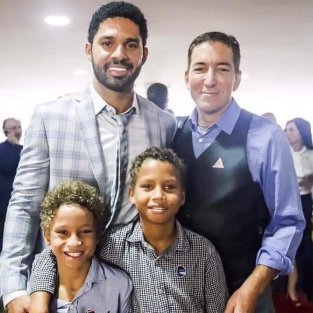
This Jensen Huang/Nvidia scandal is quite bizarre. The most dominant CEOs of the world's most powerful corporations rarely fall, let alone as easily and rapidly as this seems to be happeing. He's on the brink of being ousted with remarkable velocity and vanishingly little evidence.
Over what? If "mere" extramarital affairs were sufficient for ouster, how many top CEOs would be left? Not many. Hence the need for the sinister CCP/spying angle. But is there any tangible evidence at all that Alice Huang is an asset or spy for the Chinese government? Anything beyond anonymous vague US intelligence suspicions being mindlessly, dutifully recited (as always) by US corporate media?
The always smart and insightful @RnaudBertrand is required reading here, at least for the questions he raises:👇

This is the biggest irony of the whole Alice Huang / Nvidia saga: the Chinese government actually doesn't want Nvidia chips and is actively keeping them out of the country.
Last year it even ordered Alibaba and ByteDance to cancel their Nvidia orders (bloomberg.com/news/articles/…) and sent customs teams to the ports to check every advanced chip coming in (ng.investing.com/news/stock-…).
And right now 600,000 Nvidia H200s are stuck in Hong Kong because Beijing won’t let them into the country (reuters.com/world/china/nvid…)👇
Nvidia also explicitly frames this as a threat to its business in its latest annual report to the SEC: "The Chinese government has encouraged customers to purchase from our China-based competitors and discouraged customers from purchasing, importing, or using our data center products" (sec.gov/Archives/edgar/data/…).
Why does China do that? Because every Nvidia chip a Chinese company buys is one that Huawei or Cambricon doesn’t sell, and domestic chips can only catch up if people actually buy them (which means money for R&D, etc.).
Which means that the notion that Chinese intelligence was running honeytraps to get more Nvidia chips into China gets the whole thing exactly backwards.
In fact, it looks like Megaspeed - Alice Huang's company - was a counter-reaction to official Chinese policy: a private sector workaround to these efforts by the Chinese government to curtail Nvidia.
As was widely reported - including by Western media - Megaspeed built data centers in Southeast Asia and rented their computing power to Alibaba, which the New York Times called "a backdoor way of getting access" to Nvidia chips (nytimes.com/2026/11/06/us/po…).
That is a backdoor not only - allegedly - around Washington’s export controls, but also around China's own efforts to wean its companies off Nvidia.
I can’t believe the Chinese government was too thrilled about it: it'd make just about zero sense for it to run countless domestic measures to prevent Alibaba from using Nvidia chips, yet at the same time have its top spy agency help the same Alibaba get Nvidia chips through the back door in Southeast Asia 🤷
At the end of the day, as with all such stories, you always need to look at "cui bono?": who benefits? Who benefitted is pretty clear:
- Nvidia itself: it's in the business of selling chips so a customer willing to spend billions of dollars on chips in Southeast Asia is a godsend. Again, as they themselves state in their SEC filings, not being able to tap into Chinese demand would have "a material and adverse impact on our business" (sec.gov/Archives/edgar/data/…).
- Chinese companies like Alibaba: facts are, 1) Chinese chips haven't yet caught up, 2) Chinese chip companies' production capabilities are still limited and 3) Chinese tech firms' historical tech stack runs on Nvidia’s CUDA ecosystem, and rewriting years of code for Huawei chips is painful. Renting Nvidia chips in Southeast Asia is the easy way to stay competitive and serve customer demand in the meantime.
- The US, according to core members of the Trump administration: back in July last year, US Commerce Secretary Howard Lutnick explained that the point of letting Nvidia sell more chips to China was to get Chinese developers "addicted to the American technology stack" (techradar.com/pro/china-coul…).
Who does NOT benefit, according to official Chinese policy, is the Chinese state, which has made tech self-reliance one of its foremost priorities.
Which means that, to believe the spy story, you have to believe that a person - Alice Huang - was effectively a spy paid by her own government while simultaneously sabotaging its tech self-reliance drive, which it has spent years and trillions of dollars on - pretty senseless.
Stranger things have happened, I guess, but it doesn't pass the smell test.
And there is another absolutely major contradiction in the media story. According to a Financial Times article published yesterday (ft.com/content/3238d92b-4074…), "a person who knows [Alice Huang] said they had been asked by MSS for information about her earlier this year after news emerged that Singapore was investigating the company in relation to chip-smuggling allegations. The agency wanted to find out more information about Huang, including the nature of her business and connections, the person said."
Which raises a damn obvious question: if she were indeed an MSS asset, why on earth would the MSS need to ask the people around her who she was and the nature of her business?
It's a complete contradiction with the spy story - but very much not a contradiction with what I described above: a private businesswoman running a workaround to Beijing’s own policy, which the Chinese security apparatus would naturally want to look into.
Especially since, around about the same time, Shanghai police detained her business partner, reportedly her husband, in a stock manipulation case (caixinglobal.com/2026-11-10/…): also coherent with Chinese authorities looking into her network, and much harder to square with her being a prized MSS asset.
And, to top it all, there is - to this day - not a shred of evidence that's been published that she is, in fact, a Chinese spy: just anonymous intelligence officials, repeated by journalists who never verified it, as I detailed here (nitter.cf/RnaudBertrand/status/2…) and here (nitter.cf/RnaudBertrand/status/2…) with one of the key FT journalists on this story actually admitting that he has no idea what evidence US intelligence actually has.
So the claim went to print without anyone seeing the evidence, without anyone being able to check it, and without anyone knowing whether it even exists.
And given everything above, from Beijing blocking the very chips she was supposedly recruited to help get into China, to the MSS asking around about her, to her partner being detained in Shanghai, my bet is that the evidence doesn’t exist at all. If anything, everything we can check points the other way.

DAS retweeted

Dems will hold power for over a decade if we can just do 3 things
1) never let the border get like that again
2) don’t let crime go unpunished (this was actually regressive as it affects lower-income peoples the most)
3) chill out a little on the trans stuff
DAS retweeted
BREAKING: Leaked audio captures a call between Vivek and his campaign staff discussing the election results
DAS retweeted

This song hits different when you've lost a parent... 😔
Sending a prayer up to the heavens for all our muertos. 🙏🏻
DAS retweeted

In my 20’s, I used to work on Wall Street.
People my age now (45) said they were working 70, 80, 90 hours a week for their families…but all their families actually wanted was their presence.
They didn’t understand why their families resented how much they worked when they lived in a nice house, and their kids went to private schools.
It was just the world we all lived in. We knew nothing else.
I decided early in my startup journey that wasn’t going to be me.
My co-founders and I have always had a policy of quitting at 5 or 5:30.
By that, I mean:
> Shut off my laptop
> No more work talk
> Go home to my family
Frequently I’m out even earlier - 3-5, depending on whether I want to do something with the kids.
I rarely travel for work and don’t entertain for work.
My family life gives me energy for my work.
My work gives me energy for my family life.
I'm trying to stay not burnt out and excited about this for several decades.
Can every founder choose this?
Maybe not everybody, but more people have the choice than realize they do.
There is great reward that comes from designing a business around the life you want.
DAS retweeted
Under pressure from Israeli prime minister Benjamin Netanyahu, the Trump administration may be within days of launching a nuclear strike on Iran. The target would be Pickax Mountain in central Iran, where Israeli intelligence claims the Iranian government has restarted its nuclear enrichment program. No conventional weapon in the American arsenal can penetrate 300 feet of solid granite to destroy the tunnels where enrichment is supposedly taking place. The only military option is a nuclear strike. Netanyahu has been pushing hard for one. “Bibi calls Trump about it every day,” says an informed observer.
Netanyahu is cornered and desperate. After last week’s election results, he can’t form a government unless Trump intervenes directly in Israeli politics and brokers a deal with other parties that gives Netanyahu 61 seats in the Knesset. Otherwise, he is out as prime minister and on his way to ignominy, investigations and possibly jail. Netanyahu must stay close to Trump. He needs this war.
To that end, he’s applied maximum pressure to his closest allies in the administration, including Secretary of Defense Pete Hegseth and CENTCOM commander Brad Cooper. Both oppose a negotiated settlement to the war they’ve so grievously mismanaged; both are pushing to restart major combat operations. Secretary of State Marco Rubio and CIA director John Ratcliffe are also following Netanyahu’s lead, as are leaders of the Democratic Party. In a recent meeting on the subject, former president Barack Obama said he opposes the current Iran peace deal being drafted in Doha.
The rest of America’s longtime allies in the Middle East are terrified by the prospect of more war. On September 27th, Netanyahu flew secretly to Abu Dhabi to enlist the UAE in his lobbying effort for a final attack on Iran. The Emiratis refused. After eight months of conflict, Gulf economies are teetering. So are global energy and fertilizer markets. They won’t recover soon. Globally, there are a total of about 850 supertankers used to transport oil from producers to the rest of the world. In October alone, 11 of them were badly damaged in Hormuz. At this pace, a global depression is imminent. A nuclear strike would radically accelerate the destruction. Fallout from a ground explosion at Pickax Mountain would contaminate the Persian Gulf, poisoning the water supply for 100 million people.
And those are just some of the immediate consequences for the region. The rest of the world is every bit as exposed. No country other than the United States has ever used a nuclear weapon in war. Some would like to. An American nuclear attack on Iran would set a new precedent. The Russians have already told at least two other governments that an American nuclear strike on Iran would free them to use nuclear weapons against Ukraine. Pakistan and India would be tempted to do the same against each other, as would North Korea against Seoul. After the first nuclear strike, World War Three is inevitable. That war would be short and final.
We’ve been sleepwalking toward this moment for months. Since February, the administration has quietly rewritten America’s nuclear doctrine to make first use of so-called “battlefield nukes” easier and therefore more likely. No one in Washington in either party seems bothered by this. Now we’re on the brink of it.
Close observers say Trump is likely to decide by next weekend whether or not to use nuclear weapons. That would be November 7, six days from now. To his credit, he’s hesitating. At the moment, Trump is listening to his vice president, JD Vance, and to his envoy and friend Steve Witkoff, both of whom argue a deal with Iran can be made.
They’re right, though it won’t be simple. The Iranians are famously frustrating to negotiate with under any circumstances, and elements of that government have become more radical since Ayatollah Ali Khamenei and his family were killed in February. After decades of isolation, even relatively moderate Iranian leaders seem confused by how decisions are made in the West. (There is a widespread belief in Tehran, for example, that the United States government controls Israel.) But overall, people who have spoken to decision-makers in Iran say there is consensus there that more war is bad for everyone and a deal is worth making.
One group that hasn’t been consulted so far is the global population — the hundreds of millions of people who will be killed along with their children if Trump is pushed by Netanyahu into launching a nuclear strike next week. Now would be the time for them to speak up.
