

Just a red panda that likes his stocks. AI + Crypto focused, but value matters. Just my opinions. No financial advice.
Joined September 2022
- Tweets1.6K
- Following770
- Followers145
- Likes6.3K
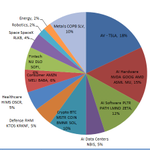



As a growth investor the market now feels worse to me than April 25 or anytime since 2022. I wasn't as invested in stocks in 2022, so how does it compare to back then for those that held growth stocks?
22
$VIVO. I was hugely bullish, but now my thesis is broken. I bought in because financing for Mo I Rana was all sorted. Now new dilution has been given out to pay down long term outstanding debt from CEO Kevin Chin. They need to pay this debt, so they can take on more bigger debts.
Demand for intelligence is near infinite, the scale of growth, including monetization is beyond anything ever seen. Reducing the cost per AI token 100x has meant that 10000x more AI tokens are used. Our whole world will be built on this - it already is.

Inference got a hundred times cheaper this year. The compute bill went up anyway.
If you understand why those two sentences are both true at the same time, you understand the most important thing happening in AI right now.
I work on inference for a living, at @nebiustf, where we run open-source managed inference at scale. Most of what follows is what I'm seeing from inside the bill.
12 months ago, the cost of 1M tokens of frontier-class reasoning was somewhere on the order of $60.
Today, an equivalent quality of output costs roughly $0.50.
Price /token of o1-level intelligence has dropped about a 128x in a year.
Price of GPT-4-level output has dropped roughly 100x since the original GPT-4 shipped.
By any normal reading of a technology cost curve, this should be deflationary. It should be saving customers money.
The opposite has happened. The total compute bill at every hyperscaler is going up, not down. Anthropic just signed multi-year capacity deals with both XAI and Amazon. Microsoft's Azure capex guide for 2026 starts with an eight. OpenAI is reportedly spending more on compute every quarter than it did in all of 2023. Nvidia paid roughly twenty billion dollars to acquire Groq, an inference-specialist company that did not exist as a serious commercial entity three years ago.
The cost curve and the demand curve crossed, and then the demand curve lapped the cost curve.
Here is what happened underneath.
A reasoning model burns roughly 10x the output tokens of a non-reasoning model on the same task, because it spends most of its tokens thinking out loud before answering. An agentic workflow chains roughly twenty times the requests of a single-shot completion, because it loops, calls tools, plans, retries, and synthesizes. A modern deep-research query (the kind a research analyst can fire off in fifteen seconds and then walk away from for ten minutes) costs more compute than 10 original GPT-4 queries combined. We made every individual token a hundred times cheaper, and then we built a generation of products that consume ten thousand times more tokens.
This is the Jevons paradox playing out at trillion-dollar scale, in compressed time, in front of everyone. Jevons noticed in 1865 that making coal-burning more efficient did not reduce coal consumption. It increased it, because efficiency unlocked uses that were previously uneconomic. Steam engines became more practical at smaller scales. Whole industries that could not afford coal at the old price suddenly could. Britain's coal consumption rose sharply, not despite the efficiency gains, but because of them.
The same thing is happening to AI compute right now and it is happening faster than any analogous historical cycle. Falling token prices did not contract demand. They unlocked agents, deep research, code-writing systems, multi-step reasoning, persistent memory, the entire next layer of AI products. Every product in that next layer consumes orders of magnitude more compute than the chat interfaces it is replacing.
The math at the aggregate level is brutal: 100x cheaper tokens times 10 000 more tokens equals a 100x larger total bill.
The implications stack quickly.
If you are running a hyperscaler, your 2026 capex guide is not a peak. It is a step on a curve. Inference is structurally always-on, twenty-four hours a day, in a way that training never was. Training is bursty. You spin up a cluster, run for weeks or months, and stop. Inference runs continuously, scales with usage, and the usage curve is exponential. Your power bill, your cooling bill, your transceiver count, your storage footprint, all of these were sized for a workload mix that no longer exists.
If you are running an AI software company built on top of someone else's closed API, you have a problem that did not exist a year ago. Your gross margins get worse as your customers get more value out of your product, because the more they use it, the more compute you pay for. The companies that win this are the ones that figured out vertical integration before the math caught them.
If you are watching this from a distance and trying to understand where the next bottlenecks form, the answer is everywhere downstream of "more inference compute, always-on, with massive memory state per session." The KV cache, the running memory state of a long conversation or an agent loop, is the silent monster of the inference era. It does not scale linearly with parameters. It scales linearly with context length and number of agent steps. A long agent session can hold tens of gigabytes of state per user, per session.
Multiply that by every concurrent user of every product, and you understand why $MU, $SNDK, $TOWCF, and the entire memory and packaging layer have re-rated the way they have.
The CPU-to-GPU ratio is evolving. Training is 1:8. Basic chat inference is 1:4. Agentic inference is 1:1, sometimes CPU-heavy. Google has split its TPU line in two, with a dedicated inference chip carrying tripled SRAM for KV cache. $INTC and $AMD just spent two earnings calls explaining that this shift is structural, not cyclical. The hardware map is redrawing in real time and the financial press is mostly still writing about training clusters.
The right framing of where we are right now is not that AI is hitting a wall. The framing a year ago that scaling was hitting a wall was the most expensive bad take of the cycle. The right framing is that AI got dramatically cheaper, dramatically more capable, and dramatically more useful, and the cost of running it at the new equilibrium of demand is much higher than the cost at the old equilibrium of demand, because the new equilibrium is enormous.
A meaningful share of what we actually do at Token Factory, day to day, is help customers stop their bills from running away from them. KV-cache management. Speculative decoding. Quantization. Routing. The kind of vertical integration that, eighteen months ago, every product team was happy to leave abstracted away behind a closed API. The reason this stack matters now is the same reason this whole essay matters: at the new equilibrium of inference demand, the cost of treating compute as a commodity is no longer survivable. The companies that figure out the layer beneath the API are the ones who keep their margins.
Cheaper tokens. More tokens.
Same coal as 1865.

164
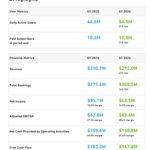
$DUOL down after posting 21% YoY DAU and Paid Subs growth. 50%+ FCF Margins. Beat on EBITDA and raised EBITDA Guidance. My thesis is absolutely intact. Buying more. It's becoming a big position!


125
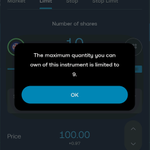
@Trading212 limiting $STRC to 9 units per user now. This is unacceptable. Live chat are unable to provide any suitable reason nor are they going to amend it. Please RT if you agree they need to remove the limit.

84
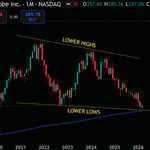
The real issue with the $ADBE chart since 2021. A huge double top, with lower highs and now lower lows.

3
200
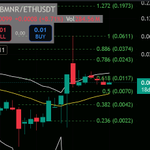
COIN/MSTR weekly chart - RSI dropping from 80+. Price stuck at 1.5 VRVP spike, with both assets price action flattening/bottoming. So a move back down towards 1:1 makes sense here.

2
108
@MayorofLondon Apex Corner A41/A1 Junction in North London needs your attention - TFL have altered light sequencing causing huge tailbacks every day, even emergency vehicles can't get down major roads.
31
Having just done my $DUOL learning for the day, I'm happy to have added to my stock holdings last night. On the short term its definitely dropped outside of normal trading ranges to the downside, so I do think a relief bounce is likely in the coming weeks.
1
201
SoFi weekly, went above 2021 all time highs, but didn’t hold. Now testing linear .886 fib and ichimoku tenken. Will it hold?

1
85
This month could not be more key for $CLSK stock. We are testing a multi-year descending trend line that goes back to 2018 and has been firm resistance ever since. (I know it’s not perfectly drawn). Let’s see if it goes up and closes above. I think it has a good chance.

1
154
$MSTR is still my biggest holding, and I'm holding. The price action this year has been frustrating, but long term its still an incredible opportunity.
1
119