Financial Market Fundamental & Technical Analysis Closely Monitoring Central Banks Monetary Policies
- Tweets1.6K
- Following2.7K
- Followers192
- Likes20.2K






ALT US Military Industrial Complex Stocks Performance since December 2025 to Date (23 April 2026)



ALT Coconut cooking oil is designed for high-heat, stable cooking. Its fatty-acid structure makes it resistant to oxidation, so it breaks down less during frying. That means cleaner oil, fewer harmful by-products, and better reuse in the kitchen. From a nutrition lens, it is trans-fat free, cholesterol-free, and largely neutral in flavor, so it doesn’t hijack the taste of food. In practical terms, it delivers crisper textures, consistent frying performance, and longer shelf life without chemical preservatives. From a metabolic perspective, especially in low-carb or OMAD contexts, it provides heat-stable energy without spiking insulin, making it functionally compatible with fat-adapted cooking.

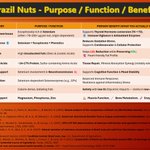
ALT Think of this table as a precision tool. Brazil nuts are there for one standout job: Selenium delivery. Selenium drives thyroid hormone activation, antioxidant enzymes, and immune balance. Add the fats—mostly unsaturated—and you get satiety with minimal insulin response. That’s why the table emphasizes dose control: one or two nuts give the benefit; more just adds risk. In a low-carb contexts, it’s micronutrient efficiency, not snacking. Strip away the nutrition labels and it’s a systems diagram. A tiny object delivers a disproportionately large effect. Selenium acts like a catalyst—it isn’t fuel, it changes how the engine runs. The fats are the delivery vehicle, the proteins help with absorption, and the antioxidants reduce background (oxidative) noise. The table is basically saying: small cause, big consequence—handle carefully.

ALT The table shows that pumpkin seeds are a compact, multi-system tool—not a snack, a function. Pumpkin seeds deliver high protein, healthy fats, magnesium, and zinc with minimal glycemic impact, making them ideal for low-carb, OMAD, and post-training recovery. They support muscle repair, insulin sensitivity, satiety, and hormone balance without spiking blood sugar. Think of pumpkin seeds as a well-designed biochemical package. The fats slow absorption, the fiber smooths glucose entry, the minerals act as enzyme switches, and the phytochemicals reduce noise (oxidative stress) in the system. Fewer spikes, fewer crashes, better signal-to-noise for the body. Bottom Line: Pumpkin seeds work because their parts cooperate—energy regulation, muscle support, cardiovascular protection, inflammation control, and even sleep chemistry—all in one small, mechanically sensible unit.