

In sterquiliniis invenitur // catholic
Joined December 2018
- Tweets7.8K
- Following247
- Followers162
- Likes4.7K








Ace of ♠️ retweeted
NIGERIANS, GO AND VERIFY (7)
LIFTING THE VULNERABLE : ANAMBRA’S BLUEPRINT FOR POVERTY ALLEVIATION AND SUSTAINABLE EMPOWERMENT (2006–2014)
Economic growth that does not translate into improved living conditions for ordinary citizens is incomplete. This is one of our fundamental concerns with President Bola Ahmed Tinubu's government. Development must ultimately be measured by its impact on human lives, particularly those of the poor and vulnerable. This was underpinned by the Anambra Integrated Development Strategy (ANIDS). We believed that infrastructure, education, healthcare, agriculture, and social protection must reinforce one another. Poverty was not merely a shortage of money; it was also a lack of access to opportunities, productive resources, and the basic conditions necessary for a decent life.
Our poverty alleviation strategy, therefore, went beyond temporary handouts. It focused on restoring dignity, creating economic opportunities, and equipping vulnerable citizens with the means to become self-reliant.
Our approach attracted recognition beyond Anambra. In May 2010, Magnus Kpakol, then National Coordinator of the National Poverty Eradication Programme (NAPEP), commended our commitment to poverty reduction, declaring: “We are prepared to support you in the excellent work you are doing in Anambra State.”
1. POVERTY MAPPING: KNOWING WHERE POVERTY LIVES
We recognised that poverty could not be effectively addressed without knowing where it was concentrated and what caused it. We, therefore, undertook a poverty-mapping exercise to identify the most deprived local government areas and communities.
The exercise revealed that some of our poorest communities were also important food-producing areas. Their challenges included poor access to markets, agricultural inputs, electricity, water, and other economic opportunities.
Areas including Anambra West, Orumba South, Awka North, and Ogbaru required particular attention. The findings informed our development priorities, enabling us to direct roads, agricultural support, and social interventions toward neglected communities.
2. EMPOWERING WOMEN, WIDOWS, AND COOPERATIVES
We recognised that rural women, widows, and indigent households bore a disproportionate burden of poverty. Across the 21 local government areas, we provided financial assistance and productive support to thousands of beneficiaries.
Our administration provided financial assistance to support the establishment and expansion of small businesses and farming activities. We also introduced revolving loan schemes to promote enterprise development, economic self-reliance, and improved livelihoods.
We distributed productive equipment, including sewing machines, generators, ovens, cookers, hair dryers, shoe-making machines, and welding equipment. The objective was to help beneficiaries establish sustainable livelihoods rather than remain dependent on government assistance.
We also promoted access to microcredit and cooperative financing to enable small entrepreneurs to expand their businesses, improve their incomes, and create employment.
Our philosophy was simple: rather than merely giving people money to survive today, the government should help them acquire the means to earn a living tomorrow.
3. AGRICULTURE AND FADAMA: MAKING RURAL COMMUNITIES PRODUCTIVE
Agriculture was central to our poverty-reduction strategy because many rural households depended on farming.
Through partnerships with the Federal Government, the World Bank, and other development partners, particularly under the FADAMA programme, we supported farmers with finance and productive assets.
In November 2009, our administration disbursed millions to FADAMA Community Associations across the state. By October 2010, the National FADAMA office was commending Anambra’s commitment. Its National Project Coordinator, Buka Tijjani, represented by Charles Ugwuona, described Anambra as the leading state in the programme.

Ace of ♠️ retweeted
CHRIST THE KING COLLEGE, ONITSHA: CELEBRATING MY HERITAGE AND ENCOURAGING THE NEXT GENERATION
Each year, my alma mater, Christ the King College (CKC), Onitsha, invites me to its celebration of the Feast of Christ the King, scheduled for this Sunday, November 22. Although my demanding campaign schedule will prevent me from attending this year's ceremony, I made a brief visit to the school today while on my way to engage with traders and residents of Onitsha.
It was a warm and memorable visit, and I was graciously received by the School Administrator and Senior Prefect. In my interaction with the students, I emphasised the importance of education, urged them to remain focused and dedicated, and reminded them that Nigeria's future President could emerge from among them.
I also inspected the newly constructed Teachers' House, a project I facilitated with the support of friends to strengthen the school's teaching and learning environment.
CKC remains an enduring part of my life's journey, having shaped my values, discipline and sense of responsibility. I remain grateful for this lasting bond.
Wherever life takes us, the values of our alma mater remain with us. CKC will forever be home. -PO


Ace of ♠️ retweeted
In Awka, our urban renewal programme included the dualisation and lighting of Zik’s Avenue. We understood that modern urban infrastructure required not only good roads but also proper lighting, drainage, and facilities that made movement safer and supported commercial activities. We also improved internal roads and connecting routes to support its development as the State Capital, while in Nnewi we strengthened road connections serving industrial and commercial communities.
These investments formed part of a broader economic strategy. We wanted businesses to find it easier to move raw materials, transport finished products, and distribute goods.
The emergence of major industrial investments, including SABMiller’s brewery in Onitsha, reinforced our belief in the importance of an enabling environment for business. Infrastructure, security, institutional stability, and a predictable business environment must work together to attract investment.
V. Establishing a Road Maintenance Culture
One mistake governments make is to concentrate on constructing new roads while neglecting those already built. We understood that road construction without maintenance eventually becomes wasteful.
That was why, in August 2008, we established the Anambra State Road Maintenance Agency (ARMA) through an enabling law passed by the State House of Assembly. ARMA was created to provide a permanent institutional framework for maintaining State roads, repairing failed pavements, clearing drains, and responding to road deterioration.
We equipped the agency with road maintenance machinery, including graders, rollers, heavy-duty trucks, and other equipment. We also established a dedicated office complex to strengthen its administrative and operational capacity.
Our intention was to replace the practice of waiting until a road had completely failed before awarding another expensive reconstruction contract. We wanted maintenance to become a continuous government responsibility.
VI. Quality Control and the Materials Testing Laboratory
We recognised that constructing roads was not enough; the quality of materials and workmanship also mattered, especially when some contractors are in the habit of doing sub-standard work as a result of poor-quality materials, inadequate compaction, and weak engineering supervision, which often result in premature road failure and the waste of public resources.
Consequently, we initiated the establishment of the Anambra State Materials Testing Laboratory to provide scientific testing of construction materials and improve quality assurance in public infrastructure projects. The laboratory was designed to test soil, aggregates, sand, cement, water, chemical materials, and steel reinforcement, among others.
VII. Taking the Anambra Experience to Nigeria
Our road programme in Anambra State was not a collection of isolated construction projects. It was part of a broader development strategy linking agriculture, industry, education, healthcare, commerce, and rural development. Good roads reduce transportation costs, improve access to markets, encourage investment, increase the value of agricultural produce, and make public services more accessible.
As President, I will bring the same philosophy of deliberate planning, prudent resource management, and accountability to national infrastructure development.
Nigeria requires an integrated transportation network that connects agricultural communities to markets, industrial centres to distribution networks, ports to production areas, and rural populations to essential services. We must prioritise the repair of existing roads and the construction of roads that unlock economic opportunities rather than merely count the kilometres constructed. We must also establish effective maintenance systems so that public investments are not allowed to deteriorate through neglect.
Ace of ♠️ retweeted
Our Federal, State, and Local Governments must work together. Where roads fall under different levels of government, there should be proper coordination, clear responsibilities, and accountability for delivery.
Above all, every road project must be properly designed, transparently procured, adequately funded, professionally supervised, and subjected to independent quality control.
The experience we acquired in Anambra State provides practical evidence of how these principles can be applied. We connected communities, opened up rural areas, constructed bridges, improved urban transportation, and established an institutional framework for road maintenance.
What we did in Anambra was at the State level. As President, the responsibility will be national, but the principles of planning, prudent management, accountability, and measurable results will remain the same. -PO
Ace of ♠️ retweeted
NIGERIANS, GO AND VERIFY (5)
CONNECTING COMMUNITIES, UNLOCKING PROSPERITY: OUR ROAD INFRASTRUCTURE RECORD
Peter Obi
Another critical foundation of development is infrastructure, particularly road construction and maintenance.
Infrastructure is not just about constructing roads, bridges, and buildings. It is about connecting people, opening up economic opportunities, reducing poverty, and enhancing the well-being of ordinary citizens. A road that connects a farmer to a market, a patient to a hospital, a child to a school, or a manufacturer to a distribution centre is an investment in economic and human development.
This thinking informed our approach under the Anambra Integrated Development Strategy (ANIDS). We set out to connect all 177 communities in the State with motorable roads, paying particular attention to rural communities that had suffered years of neglect. Our objective was to build an interconnected road network that served the entire State, rather than concentrate projects in major cities or politically important locations.
I. The Road Revolution: Over 900 Kilometres of Road Projects
Between March 2006 and March 2014, during my two-term tenure in office, my administration asphalted over 900 kilometers of roads. These projects were deliberately distributed across the three senatorial zones of Anambra State to connect communities, facilitate commerce, and enhance transportation.
I acknowledge that Dr. Chris Ngige started the road revolution in Anambra State, and I commend the efforts his administration made in initiating several road projects. When we assumed office in 2006, we recognised the importance of continuing worthwhile projects rather than abandoning them simply because they had been initiated by a previous administration.
Among the roads we inherited from Ngige and completed were the Owerri–Ezukala–Umunze–Umuchu–Amesi–Uga–Igboukwu Road, where his administration stopped around Umuchu and we continued through Amesi, Uga, and onward to Igboukwu; the Iseke–Orsumoghu–Ukpor–Utu–Nnewi–Awka-Etiti Road, where his administration stopped at Ukpor and we continued towards Awka-Etiti; and the Ideani-Otuocha where work stopped around Awkuzu before our administration continued the project from Nteje to Otuocha.
There were also roads, such as Mmili John and Nkwelle Ezunaka bypass, which had been awarded before we took over, but on which no payment had been made by the time we assumed office. We took over these projects, assessed their status, and proceeded with the work. This was our approach to continuity in governance: acknowledging what had been started, distinguishing between projects merely awarded and those on which work and payment had actually commenced, and ensuring that important infrastructure projects were carried forward.
Some of the major roads and corridors included Amansea–Ebenebe Road; Aguleri–Umueze Anam–Mmiata Road; Nnewi–Ozubulu–Okija Road; and the Old Onitsha–Awka Road.
Other important projects included:
Awka and its Environs: Zik’s Avenue, Awka; Adazi-Nnukwu–Obeledu–Neni Road; 33 Junction–Nwafor Orizu College of Education Road; roads within the Awka Government Reserved Area (GRA); and the Old Nkpor–Amawbia Road.
Nnewi and Surrounding Communities: Nnobi–Nnewi Road; roads within Nnewi town; Akwaeze–Oraeri–Igboukwu Road; and Ekwulobia–Nkpologwu–Akpo–Achina–Umuchu Road.
Onitsha and its Environs: Bridge Head–Umunya Road; over 30 roads in other parts of Onitsha; more than 25 roads within the Onitsha GRA; over 20 stone-based roads within Harbour Industrial Estate, Onitsha; and the Nkwele Ezunaka Bypass.
Other Communities and Strategic Corridors: Awgbu–Amaokpala Road, with the Odor Bridge; Aguluezechukwu–Ogboji–Ajalli Road; Awkuzu–Igbariam Road, passing through the university; Owerri–Ezukala–Umuchukwu Road; Ugwuoba–Obosi Road; and Lilu Road.
Ace of ♠️ retweeted

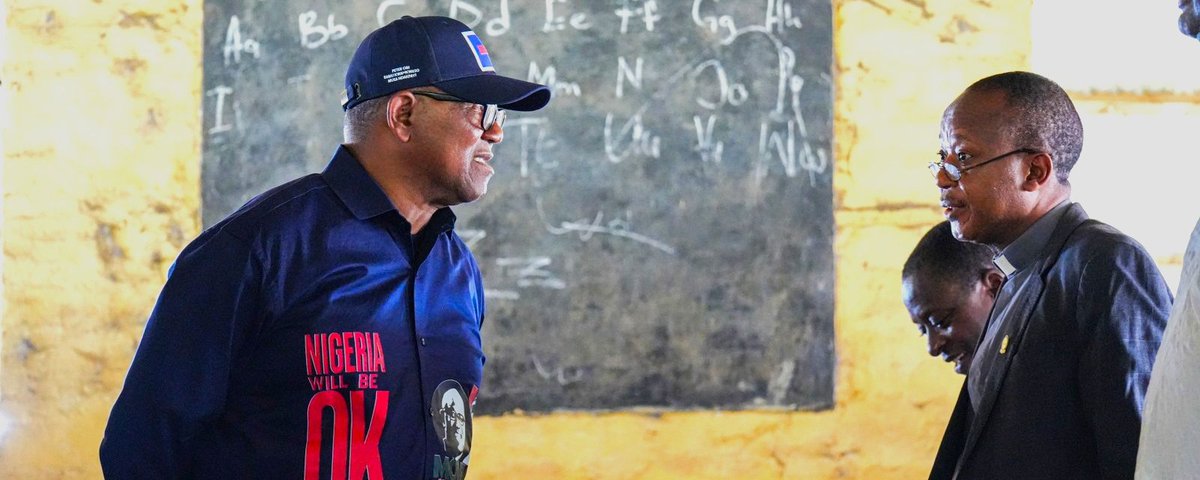
A day before I rejoin Peter Obi's team for the campaigns of the 2027 Nigerian presidential election, I recount what my last 72hours with him was like.
Ace of ♠️ retweeted

Hey @grok let's have a little dance, shall we? Can you make a list of which hospitals benefitted from this grant?


Ace of ♠️ retweeted
At Nwafor Orizu College of Education, Nsugbe, we constructed classrooms and lecture halls, provided staff office complexes, renovated the library, constructed an auditorium, and improved instructional facilities. We also provided boreholes, generators, and security facilities, facilitated programme accreditation, and employed additional academic and non-academic staff.
The College of Agriculture, Mgbakwu, received considerable attention, with approximately 15 buildings constructed during our administration.
We also built the Chukwuemeka Odumegwu Ojukwu Teaching Hospital from scratch, constructing over 25 buildings. In addition, we supported major nursing and health institutions across the state. St Charles Borromeo Hospital and Iyi-Enu Hospital, for instance, have since become teaching hospitals.
Supporting Institutions Beyond Government Ownership
We did not restrict our interventions to government-owned institutions. We believed that every institution educating our people deserved encouragement, irrespective of ownership.
Our administration, therefore, extended financial assistance to Madonna University, Paul University, Tansian University, and Peter University. These institutions received grants of about ₦100 million each at the time, in addition to vehicle support.
We also introduced a policy of rewarding academic excellence by giving every Anambra indigene who graduated with a First Class degree ₦1 million. Over 500 persons benefited. I am delighted by the text messages and posts in which some of the beneficiaries still recall how the money helped them become what they are today. My friend, Dr Uchenna Nze, would always tell me how the money facilitated his further education. He is now the Head of Department of Mass Communication at Tansian University. We wanted our young people to understand that intellectual achievement mattered and deserved recognition.
The Results and Our National Commitment
By the time we left office in 2014, the results of these investments were becoming evident. Anambra had moved from the lower positions in external and national examinations, including WASCE, GCE, NECO, and JAMB, to the topmost positions. Till today, various schools in Anambra State have continued to win awards both locally and internationally. This was the outcome of sustained investments in infrastructure, teachers, technology, and effective supervision.
Such awards and recognitions are encouraging indications of what sustained investment in education, strong institutions, and a culture of academic excellence can produce over time. When we invested in schools, teachers, technology, and learning facilities, our intention was not to produce temporary achievements that would disappear with a change of government. We wanted to establish a foundation upon which successive administrations could build. Seeing Anambra schools continue to excel gives me great satisfaction and reinforces my conviction that investments in education are among the most enduring legacies any government can leave behind.
My commitment to education did not end when I left office. I have continued to support schools and educational institutions across Nigeria as a private citizen through donations, classroom construction, learning materials, and other interventions.
As President, I will bring the same energy, commitment, and political will to bear on education nationally. All agencies responsible for education must function effectively and be held accountable. Taxes and other revenues collected specifically for educational purposes must be properly accounted for. Nigerians must know how much is collected, where the money goes, and what it is used for.
Ace of ♠️ retweeted
We did not stop at computers and digital learning. Mr Gerald Ilukwe, Chief Executive Officer of Galaxy Backbone Plc, commended our rollout of VSAT internet access to over 500 secondary schools, describing it as incomparable to what had been achieved in any other state in the country. He particularly recognised that ours was the first state government to treat mass broadband connectivity in public schools as essential infrastructure rather than a token pilot project.
These endorsements are important because they came from people and institutions with direct knowledge of the technology industry and its deployment across Africa. They demonstrate that our investments in education were not merely about constructing buildings; we were preparing Anambra’s children for a world increasingly driven by knowledge, science, and technology.
Public secondary schools received buses, some even received two, primarily for school runs, the transportation of essential supplies, and emergencies. We also released ₦525 million directly to schools for the construction of sick bays and dispensaries and provided principals with intervention funds to address erosion and other urgent infrastructural challenges.
I took a personal interest in the condition of our schools. I personally visited every secondary school in the state, often unannounced. I ate with the students in boarding schools and quietly inspected their dormitories, classrooms, and other facilities to ascertain their actual condition. I did not want to depend entirely on official reports. In fact, all the senior prefects had my telephone numbers and could call me whenever they wished. I believed in listening directly to those who used the facilities every day.
Teachers and Academic Standards
We understood that no educational system could rise above the quality and commitment of its teachers and administrators. We recruited 2,000 teachers for primary schools and 5,000 teachers, alongside another 2,000 special-subject teachers, for secondary schools. We also made financial provisions to cover their salaries for two years so that our successor would not inherit an immediate financial burden.
We ensured prompt payment of teachers’ salaries and allowances, cleared outstanding pension and gratuity arrears, restored teacher promotions, and removed the ceiling that had prevented some teachers from progressing beyond Grade Level 16. Outstanding principals and teachers were also regularly recognised and rewarded.
Technical, Vocational and Adult Education
Our educational vision went beyond conventional academic institutions. We fully renovated and re-equipped the Government Technical Colleges at Onitsha, Nkpor, and Umuchu, secured accreditation for several technical programmes, strengthened Adult Education Centres and Market Schools, and supported vocational education and youth empowerment initiatives.
We also equipped 53 nomadic and migrant schools and sustained campaigns against school dropout. Our objective was simple: every child deserved an opportunity to learn, irrespective of background or location.
Higher Education
At Chukwuemeka Odumegwu Ojukwu University, we constructed or completed over 40 projects. These included the Faculties of Law, Engineering, Agriculture, Management Sciences, Arts, and Social Sciences, as well as the Mass Communication Complex and studios.
Other projects included the Administrative Complex, engineering workshops and laboratories, departmental buildings, hostels, an E-learning and Research Centre, internal roads, water supply infrastructure, electricity-generating facilities, and campus landscaping.
We released ₦5 billion to the university for infrastructural development and facilitated the construction of two 250-bed hostels through the Central Bank of Nigeria under the leadership of Dr Kingsley Moghalu, then Deputy Governor of the apex bank.
Ace of ♠️ retweeted
NIGERIANS, GO AND VERIFY (3)
Building the Future Through Education
Peter Obi
In the first two instalments of this series, I explained how we approached the task of building strong institutions and laying a solid foundation for the development of Anambra State. One of the most important institutions we invested in was education.
For me, education was not a political game or a convenient political promise. Even before I ventured into politics, I had always regarded it as the foundation of meaningful development and the most enduring investment any government can make in its people. I believe that the future of any society depends largely on the quality of its educational institutions, teachers, learning environment, and opportunities available to its young people.
This conviction informed our decision to invest across the entire educational spectrum, from primary schools to universities, technical institutions, and adult education.
Basic and Secondary Education
One of our first major decisions was to return mission and privately owned primary and secondary schools to their original proprietors while retaining government support. We also provided billions of naira to assist in rehabilitating the returned schools, restoring the partnership between government and religious institutions that had historically contributed to educational excellence.
This policy attracted international attention. Professor Paul Collier, the Oxford economist and World Bank consultant, led a World Bank-commissioned study of Anambra’s educational transformation. His team examined our decision to return schools to their original missionary owners while retaining government responsibility for funding teachers’ salaries and supporting infrastructure. The team described the partnership model as a revolution in public service delivery and recommended it as a model that could be replicated by other Nigerian states and developing countries. We believed then, as we do now, that government does not necessarily have to own every institution to discharge its responsibility effectively. What matters is ensuring that every child has access to quality education.
For those who claim that we built no schools, I invite them to verify our records. We constructed five-classroom blocks in virtually all of the 177 communities in Anambra State, one of the most extensive community-based school infrastructure programmes undertaken by any state government. The town union chairmen and community leaders of that period can attest to this.
We also renovated hundreds of dilapidated schools, including some where trees had literally grown through abandoned buildings. Comprehensive Secondary School, Onitsha, and Oraukwu Grammar School are examples.
Beyond infrastructure, we distributed approximately 40,000 computers to schools, including more than 22,500 HP laptops. We equipped secondary schools with Microsoft Academies and connected schools across the state to the internet. We supplied generators, established and stocked libraries, revived school sporting activities, and installed boreholes in over 300 schools, including all girls’ schools. We also provided funding to support sporting activities in all our secondary schools.
These technology investments attracted remarkable international recognition. Mr Fabrice Campoy, Managing Director of the Personal Systems Group at HP Inc., described our procurement and distribution of over 22,500 HP laptops as the biggest project of its kind in the Middle East and Africa. Similarly, Mr Ken Spann, then Country Manager and Head of Microsoft Nigeria, described the establishment of Microsoft Academies in more than 500 Anambra secondary schools as the most extensive deployment of its kind in Africa at the time.
Ace of ♠️ retweeted

Who PRADO no reach, go collect BLUE TICK.
APC, PROGRESS!!!

The City Boy Movement is supporting active members of our movement who are yet to obtain verification on X.
If you are a genuine and active member of the movement and have consistently contributed to amplifying the Renewed Hope Agenda across the platform, we want to support you by covering your X Premium subscription.
Though the slots are limited but a number of committed and active members will be selected.
Interested?
Ace of ♠️ retweeted
We also provided vehicles to permanent secretaries and directors for the first time in the history of the state, recognising the importance of mobility in the effective discharge of their administrative responsibilities.
Towards laying the foundation for stronger institutional collaboration between the state and federal governments, we also facilitated the establishment of the Federal Secretariat Complex in Awka.
Strengthening Governance at the Grassroots
We believed that government must not exist only in the state capital. Local governments constitute the tier of government closest to the people and must therefore have the institutional capacity and infrastructure to discharge their responsibilities.
Our administration undertook a comprehensive programme of constructing new local government secretariat complexes, equipping existing ones, and renovating those that required rehabilitation. Examples of the new secretariat complexes included those in Onitsha North, Onitsha South, and Dunukofia, among others. We also renovated the Awka South headquarters and constructed new facilities in Anaocha, with its headquarters at Neni.
Beyond the main secretariat buildings, we provided various local government headquarters with essential administrative and service infrastructure, including administrative and finance blocks, traditional rulers’ council buildings, tax offices, education and health blocks, sports clubs, amusement parks, and works buildings.
Our objective was to restore the functionality of local government administration and bring government closer to the people, where its impact could be directly felt.
Cutting the Cost of Governance: Making Public Resources Work
Institutional rebuilding required more than physical infrastructure. It demanded a fundamental change in the way public resources were managed. A government that spends excessively on itself cannot adequately serve its people.
One of the defining principles of our administration was therefore the reduction of the cost of governance. We cut waste, discouraged ostentatious expenditure, and redirected resources towards public infrastructure and human development. We demonstrated that prudent management was not simply about accumulating savings but about ensuring that every kobo entrusted to government delivered value to the people.
We believed that public office was a responsibility, not an opportunity for personal enrichment or patronage. The resources of the state belonged to its people, and those entrusted with managing them had a duty to ensure that they were deployed for the common good.
From Anambra to Nigeria: Scaling Up What Works
What we demonstrated in Anambra State was that purposeful leadership, strong institutions, financial discipline, and clearly defined priorities could produce tangible results, even with limited resources.
Nigeria’s challenge is not simply a shortage of resources. It is also the failure to manage available resources effectively, the weakening of public institutions, wasteful expenditure, and misplaced priorities. We must therefore begin by making government work: rebuilding institutions, eliminating waste, restoring accountability, and directing public resources towards the common good.
What we achieved in Anambra was not an accident, nor was it an experiment that cannot be replicated. It was the outcome of a deliberate philosophy of governance and a disciplined approach to public administration. I assure Nigerians that the same principles and commitment that guided us in Anambra State will guide our approach at the national level. We can build a country where institutions work, public resources serve the people, and government delivers measurable improvements in their lives.
Ace of ♠️ retweeted
NIGERIANS, GO AND VERIFY (2)
Building the Institutions of the State
Peter Obi
In Series 1, I explained the philosophy that guided our administration in Anambra State: governance as a public trust, anchored on character, competence, capacity, and compassion. I also introduced the Anambra Integrated Development Strategy (ANIDS), our comprehensive framework for achieving balanced and sustainable development across all sectors.
But a development vision, however noble, cannot succeed without strong institutions to drive it. Before the government could effectively deliver on its promises in education, healthcare, infrastructure, security, and other sectors, we had to first restore the machinery of government itself. We could not build a prosperous state on a cracked and unstable foundation.
This was why one of our foremost priorities under ANIDS was to rebuild, strengthen, and reposition the institutions of government. When I assumed office, the physical and administrative architecture of governance was in a deplorable condition. Our task was not simply to construct buildings but to restore the institutions, systems, and structures through which government could function effectively.
We therefore began systematically rebuilding the infrastructure of governance across the executive, legislature, judiciary, civil service, and local government system.
Restoring the Seat of Government
The Government House in Awka, the state capital, had been vandalised and burnt by reactionary forces in 2004. We therefore had to rebuild, re-equip, and furnish it, restoring its dignity and functionality as the seat of executive government.
In the same vein, we rehabilitated the Governor’s Lodge in Amawbia and constructed a new Governor’s Lodge in Onitsha. These investments were intended not merely to provide accommodation but to strengthen executive presence and facilitate effective governance across the state’s major administrative and commercial centres.
Strengthening the Legislature and Judiciary
We rehabilitated the Anambra State House of Assembly Complex in Awka, providing our lawmakers with a more conducive and decorous environment in which to discharge their constitutional responsibilities. We also provided legislators with vehicles to facilitate the effective performance of their legislative duties.
We recognised that a functioning democracy requires strong institutions, including an effective legislature and an independent judiciary, each operating within its constitutional mandate.
In strengthening the judiciary, we provided brand-new vehicles to High Court judges. This was the first time such provision had been made for them in the history of the state. We also provided vehicles to magistrates for the first time since the creation of Anambra State.
These interventions were intended to strengthen the administration of justice, improve mobility, and enable judicial officers to discharge their responsibilities more effectively.
Rebuilding the Civil Service: The Chief Jerome Udoji State Secretariat Complex
Before our administration, many Ministries, Departments, and Agencies (MDAs) operated from scattered rented apartments, while civil servants lacked a centralised and decent working environment. This untidy arrangement undermined coordination, efficiency, and the dignity of public service.
We addressed this situation by constructing the two-phase, ultra-modern Chief Jerome Udoji State Secretariat Complex, comprising Blocks 1 and 2. The project brought the MDAs together under one roof, improved administrative coordination, and provided civil servants with a more suitable environment in which to serve the people.
The complex was named after Chief Jerome Udoji, the first indigenous Chief Secretary (the equivalent of today’s Secretary to the State Government) of the Eastern Region during the First Republic. This was also a recognition of his contribution to public administration and the civil service tradition.


Ace of ♠️ retweeted
Our aim was to create a state where public resources produced tangible public benefits, institutions existed to serve the people and development was assessed by the lives transformed rather than by the promises made. We therefore began by strengthening the institutions of government, rebuilding their ability to operate effectively and ensuring that they remained accountable to the public interest. Building on these foundations, we advanced development across multiple sectors through careful planning, responsible resource management and leadership grounded in accountability.
In Series 2, we will first consider the measures we took to restore and reinforce the institutions of the state and ensure that government served the people effectively. We will then review our initiatives and accomplishments in education and other essential sectors.
I assure Nigerians that the progress demonstrated in Anambra State was neither a one-time occurrence nor an experiment that cannot be repeated. It reflected a proven model of governance that we are ready to extend to the national level. What we accomplished in Anambra can also be accomplished in Nigeria. With capable leadership, effective planning, responsible management and accountable institutions, Nigeria, too, can work for all its citizens.
Go and verify. -PO
Ace of ♠️ retweeted
NIGERIANS, GO AND VERIFY (1)
Introduction: Governance as a Public Trust
Peter Obi
When I took office as Governor of Anambra State, our beloved state was at a critical juncture. Leadership had become increasingly disconnected from the people, and many of the essential institutions needed to support a modern society were weak, ineffective, or absent altogether. We understood that governance could not continue according to established habits. It needed to be reconceived as a solemn public trust founded on transparency, prudence, accountability, and demonstrable results.
Our governing philosophy rested on four principles: character, competence, capacity, and compassion. We understood that leadership was not a platform for self-promotion, political slogans, or the pursuit of personal acclaim. Its purpose was to improve the circumstances of ordinary citizens. It meant converting public resources into concrete benefits and ensuring that government’s foremost responsibility was to serve the people. Achieving this demanded more than good intentions; it required a clear vision, careful planning, and disciplined execution.
Among our earliest findings was that the state lacked a unified development plan to direct its priorities and determine how resources should be allocated. We therefore promptly created the Ministry of Economic Planning to establish the institutional foundation for deliberate, coordinated, and sustainable development. After completing the necessary groundwork and consultations, we launched the Anambra Integrated Development Strategy (ANIDS).
At that time, the Millennium Development Goals (MDGs) were being pursued worldwide across eight clearly defined priorities: eliminating extreme poverty and hunger; achieving universal primary education; advancing gender equality and empowering women; reducing child mortality; improving maternal health; combating HIV/AIDS, malaria and other diseases; promoting environmental sustainability; and fostering a global partnership for development.
We adopted ANIDS as our overarching development philosophy and strategic framework for advancing these objectives, tailoring them to the distinctive circumstances, needs and development priorities of Anambra State. Instead of viewing the MDGs as remote international benchmarks, we worked to convert their aims into practical policies, programs and measurable results that would produce tangible improvements in the lives of our people.
We also undertook a deliberate effort to redefine the state’s identity, changing its public image from ‘Home for All’ to ‘The Light of the Nation’. This was not merely a change in slogan; it reflected our resolve to restore public confidence in government, renew civic pride and show that Anambra could serve as a model of purposeful leadership and development.
The ANIDS Blueprint: A Comprehensive Framework for Development
ANIDS served as the foundation for our commitment to broad-based and balanced development. We did not accept the idea that government could focus on a single sector while leaving others behind. We recognized that education, healthcare, infrastructure, security, agriculture and capable public institutions were mutually dependent. Advancement in one area could not be sustained without commensurate progress elsewhere. Accordingly, we pursued development across every sector, guided by defined priorities, disciplined planning and prudent stewardship of public resources.
Central to this vision was the restoration of the dignity of the Anambra person. We understood that dignity could not be restored through rhetoric alone. It was evident in the condition of roads and other infrastructure, the availability of healthcare, the quality of education, the performance of public institutions and the way government treated its workers, pensioners and traditional institutions.
Ace of ♠️ retweeted
LET MY RECORD SPEAK
I just arrived United States this evening to honour an important invitation and participate in a series of engagements beginning at 9am tomorrow morning in Washington DC.
Throughout my election campaigns, I have sought to emphasise policies, ideas, and practical solutions that can deliver the change Nigeria urgently requires and help our nation overcome its current challenges.
Nevertheless, because certain individuals have repeatedly scrutinised my past, even as they appear uneasy about their own records, I have chosen to allow the facts to speak for themselves. Starting today and running for ten days, I will present some of the accomplishments recorded during my tenure as Governor of Anambra State. This series will outline my interventions, achievements and the responsibilities entrusted to me. I have titled it my Record of Service.
In every position I have held, I have consistently given my utmost effort in fulfilling my responsibilities. Although no one can always attain every intended result, I have never been found lacking in dedication or effort. I have always given the task my full commitment.
As campaign activities gather momentum, I will also continue to keep you updated on my daily engagements and other significant developments.
In particular, in light of allegations that I abandoned Anambra State during the erosion crisis, among other assertions, I consider it necessary to present the facts to the public. I have never evaded any responsibility entrusted to me, and I will certainly not shirk my responsibility to help address Nigeria’s challenges.
I am confident that, ultimately, facts outlast allegations, while records carry greater weight than rhetoric.
Let my record speak for itself! -PO
Ace of ♠️ retweeted

Make nobody mention CCI, Harvesters, The Elevation Church, House on the Rock, This Present House, Elevation Church, Daniel Lawal’s church and the likes oh. 😂
What exactly are some of these new generation churches preaching these days? Every Sunday is prosperity, breakthrough, financial elevation, marriage and motivational speeches. Hardly any emphasis on the Holy Spirit, repentance, holiness, sound doctrine or genuine spiritual growth.