

The fastest way to fund science. $1.8M+ funded, powered by $RSC. Post an RFP. Discover high quality preregistered proposals. Paid peer review in 10 days.
Earth 🌍🌎🌏
Joined January 2019
- Tweets3.1K
- Following1
- Followers43.2K
- Likes6.9K





ResearchHub retweeted

Update: Peer review on the revision in!
Reviewers are positive on our changes. Just a few minor clarification edits to make and then will turn this around for publication.
Will provide a full summary breakdown on our findings here and on @ResearchHub once the paper is published.

Project update:
A few months ago, we submitted a research paper based on this project to a journal (will reveal which journal once accepted) for peer review.
In this study, we imposed delays between motor actions and self-motion while participants steered a vehicle to track an unpredictably moving target. We used a control theory approach to estimate how manual tracking behavior is adapted in the presence of novel feedback delays in the control loop.
We received positive and constructive feedback from the peer reviewers. After considering their comments, we performed a new modelling analyses to estimate the sensorimotor controller. Specifically, we developed a computational model to estimate how the dynamics of the sensorimotor controller were adjusted in response to the increased delays.
Our revised manuscript was submitted a few weeks ago, and we are looking forward to read reviewer feedback on our revised paper.
We will provide updates when the review comes in. Stay tuned.
Follow updates here:
researchhub.com/proposal/158…
ResearchHub retweeted

One of the biggest untapped opportunities for AI in biology may be locked inside lab notebooks.
Making them openly accessible, including failed experiments and details papers leave out, could so greatly improve AI models, deepen our understanding of biology, and make science more reproducible.
ResearchHub retweeted
Watch our interview about how we came up with the idea to study how microplastics may affect brain cells in Alzheimer’s disease.
Led by Gavin in our lab, the project was made possible by crowdfunding through @ResearchHub @ResearchHubF in less than a day.

They got their research idea fully funded in less than a day.
Meet @rust_ruslan and Gavin, investigating how microplastics affect brain cells involved in Alzheimer's.
Hear how ResearchHub helped them secure funding and start experimenting while the idea was still fresh.
ResearchHub retweeted

Psilocybin extends the life of human cells by 50%? A headline that big deserves more research.
The paper used one cell line at 100 µM. @rust_ruslan of @KeckSchool_USC asked @ResearchHub to try 100 to 1,000x less.
A protocol was generated in 2 hours and we both donated to it!


ResearchHub retweeted
Fibroblasts help build their own neuronal niche: human cells compact collagen microgels while converting into neurons. Imaging and bulk RNA-seq track the transition. Early rat graft feasibility, not evidence of functional recovery.
biorxiv.org/content/10.64898…

ResearchHub retweeted

Big news from the NIH Director on women's health research. Excited to hear Jay speak at @ResearchHub SciCon in SF on Dec 10. A lot is moving in science right now

The new NIH Division on Women’s Health Research will lead the way in translating gold-standard research into impactful treatments for conditions like infertility and certain cancers that impact countless women every day.
The division will respond to President Trump's Executive Order “Advancing Women’s Health to Improve Outcomes in All Phases of Life,” which seeks to strengthen scientific research, accelerate medical breakthroughs, and improve health outcomes for American women and girls.

ALT NIH Director Jay Bhattacharya and First Lady Melania Trump stand beside President Trump who is seated at a desk.
ResearchHub retweeted
Project update:
A few months ago, we submitted a research paper based on this project to a journal (will reveal which journal once accepted) for peer review.
In this study, we imposed delays between motor actions and self-motion while participants steered a vehicle to track an unpredictably moving target. We used a control theory approach to estimate how manual tracking behavior is adapted in the presence of novel feedback delays in the control loop.
We received positive and constructive feedback from the peer reviewers. After considering their comments, we performed a new modelling analyses to estimate the sensorimotor controller. Specifically, we developed a computational model to estimate how the dynamics of the sensorimotor controller were adjusted in response to the increased delays.
Our revised manuscript was submitted a few weeks ago, and we are looking forward to read reviewer feedback on our revised paper.
We will provide updates when the review comes in. Stay tuned.
Follow updates here:
researchhub.com/proposal/158…
When you turn the steering wheel, your brain expects the car to move a certain way. But what happens when it doesn't?
This study, led by Brandon Rasman, @NeuroRazz, at Radboud University, explores how we detect and adapt to expected vs. unexpected vehicle motion. 🧵
1/12

ResearchHub retweeted

The American scientific funding model is on the verge of structural reforms.
As this @TheEconomist article highlights, researchers spend an estimated 44% of their time on administrative tasks, at a time when legacy agency funding is heavily cut and increasingly risk-averse.
At the same time, funding is aggressively shifting to private entities which bet on breakthrough science outside of traditional academia.
This paradigm shift gives rise to demands for platforms and tools like @ResearchHub to set priorities and ensure scientific rigor and accountability in an open and transparent manner.
$RSC
economist.com/science-and-te…

ResearchHub retweeted

How much does the world actually spend on science?
1. US government research funding: ~$99 billion
In FY2024, federal agencies obligated about $47.5B for basic research and $51B for applied research. That's the pool most scientists mean when they say "grants": NIH, NSF, DOE, NASA and others.
2. Add philanthropy: ~$126 billion
Foundations and donors add about $27B on top of federal grants, supporting research at US universities and nonprofit institutes in 2024. That's roughly a fifth of all support for that work.
3. All US R&D: ~$1 trillion
Total US R&D hit $937B in 2023 and an estimated $993B in 2024. Most of it is industry funding product development. Government research and philanthropy together make up only about one-eighth of the total.
4. Global R&D: ~$3.8 trillion
The world spent an estimated $3.8T on R&D in 2024. The US and China each crossed $1T
What this means
The money that funds open, curiosity-driven science is a fraction of total R&D, and it flows through slow, centralized channels. Even modest improvements in how that ~$126B is allocated would compound across every field.
That $126B is the segment ResearchHub is currently starting with. Moving just 1% of it, about $1.3B a year, through preregistered proposals with incentivized peer review would change how a meaningful share of American science gets funded, reviewed, and shared.
ResearchHub retweeted
ResearchHub's target annual R&D market: $126B
1% of that target segment: $1.3B
ResearchHub's current market cap: $10M
An incredible discrepancy between the current valuation and the actual addressable scale.

How much does the world actually spend on science?
1. US government research funding: ~$99 billion
In FY2024, federal agencies obligated about $47.5B for basic research and $51B for applied research. That's the pool most scientists mean when they say "grants": NIH, NSF, DOE, NASA and others.
2. Add philanthropy: ~$126 billion
Foundations and donors add about $27B on top of federal grants, supporting research at US universities and nonprofit institutes in 2024. That's roughly a fifth of all support for that work.
3. All US R&D: ~$1 trillion
Total US R&D hit $937B in 2023 and an estimated $993B in 2024. Most of it is industry funding product development. Government research and philanthropy together make up only about one-eighth of the total.
4. Global R&D: ~$3.8 trillion
The world spent an estimated $3.8T on R&D in 2024. The US and China each crossed $1T
What this means
The money that funds open, curiosity-driven science is a fraction of total R&D, and it flows through slow, centralized channels. Even modest improvements in how that ~$126B is allocated would compound across every field.
That $126B is the segment ResearchHub is currently starting with. Moving just 1% of it, about $1.3B a year, through preregistered proposals with incentivized peer review would change how a meaningful share of American science gets funded, reviewed, and shared.
ResearchHub retweeted

Lots of scientific funding needing upgraded rails!
How much does the world actually spend on science?
1. US government research funding: ~$99 billion
In FY2024, federal agencies obligated about $47.5B for basic research and $51B for applied research. That's the pool most scientists mean when they say "grants": NIH, NSF, DOE, NASA and others.
2. Add philanthropy: ~$126 billion
Foundations and donors add about $27B on top of federal grants, supporting research at US universities and nonprofit institutes in 2024. That's roughly a fifth of all support for that work.
3. All US R&D: ~$1 trillion
Total US R&D hit $937B in 2023 and an estimated $993B in 2024. Most of it is industry funding product development. Government research and philanthropy together make up only about one-eighth of the total.
4. Global R&D: ~$3.8 trillion
The world spent an estimated $3.8T on R&D in 2024. The US and China each crossed $1T
What this means
The money that funds open, curiosity-driven science is a fraction of total R&D, and it flows through slow, centralized channels. Even modest improvements in how that ~$126B is allocated would compound across every field.
That $126B is the segment ResearchHub is currently starting with. Moving just 1% of it, about $1.3B a year, through preregistered proposals with incentivized peer review would change how a meaningful share of American science gets funded, reviewed, and shared.
ResearchHub retweeted

A golden age of science is coming
AI can do things humans researchers can’t, even in groups.
noahpinion.blog/p/a-golden-a…

ResearchHub retweeted
Platform fees collected by ResearchHub Foundation are burned weekly. 🔥
More platform activity = More RSC burned
Every burn is permanent and verifiable on @base.
Track $RSC burns ↓
researchhub.foundation/burns
ResearchHub retweeted

Large language models detect methodological errors that human peer review misses in clinical trials
Happy to be a part of this exciting study led by @rust_ruslan 🤠
I am far from a true expert on LLMs, but I have to admit that LLMs are way more adept at reviewing the methodological details😎
medRxiv 2026
medrxiv.org/content/10.64898…

ResearchHub retweeted
Science organizations are either embracing AI or keeping it out of their workflows.
@ResearchHub is leaning into AI for writing and reviewing funding proposals, as a complement to human experts, not a replacement.

Lots of debate this week on whether journals should ban AI in peer review.
We actually tested this in our new preprint, and the results were pretty clear to me.
For context, I've reviewed for most of the big journals and evaluated 1,000 human reviews as an editor. I love to read and evaluate science.
TLDR: From now on I won't do any peer review without AI. For clinical trials, I'd even call human-only review dangerous 🧵

ResearchHub retweeted
Lots of debate this week on whether journals should ban AI in peer review.
We actually tested this in our new preprint, and the results were pretty clear to me.
For context, I've reviewed for most of the big journals and evaluated 1,000 human reviews as an editor. I love to read and evaluate science.
TLDR: From now on I won't do any peer review without AI. For clinical trials, I'd even call human-only review dangerous 🧵
ResearchHub retweeted
Agree. Coding is getting solved fast, discovery is the hard part 🔬
That's why I like what @ResearchHub is doing, funding real research questions like the airborne disease RFP that's open right now

ResearchHub retweeted
Stop 👏 using 👏 AI 👏 detectors
If something is good, it’s good. If it’s bad, it’s bad. Whether AI helped write it doesn’t change that.
Nobody asks today if you used a calculator when you got the right result.
Judge the quality. Plus, AI detectors don’t even work (or the Declaration Of Independence was written by AI)


ResearchHub retweeted
Editorial decisions for the @RHubJournal are made by the market, not an editorial board
If patrons of science believe a preregistration on @ResearchHub is worth funding, then it is automatically accepted for publication as a registered report!
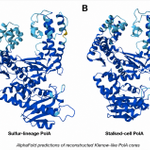
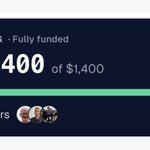
12 people put up $1,400 for four synthetic genes. Two of them encode DNA polymerases reconstructed from bacterial ancestors ~133 million years back from anything alive today.
That proposal is now a published Stage 1 Registered Report. No editor approved it. Funding did.

ALT ResearchHub funding panel showing $1,400 of $1,400 raised, 12 funders, 100 percent, marked Fully funded.

ALT Circular phylogenetic tree of Family A DNA polymerase sequences. Two clades are highlighted: Stalked-cell PolA in red and Sulfur-lineage PolA in blue, both labelled as fossil polymerases selected for synthesis.
ResearchHub retweeted

SciCon shooter is a fun game to play and this is a great way to help accelerate science

To kick off the upcoming SciCon, we're running a massive event in SciCon Shooter 🏆
Top high score by Nov 29 wins 25,000 $RSC in funding credits for the @ResearchHub proposal or RFP they pick 🔬
Plus a new NIH ship 👀 Upgrade your ship in Campaign first, then go for it