

⚔️📈Geopolitics | Critical minerals | Energy battles | Investing alpha Follow for raw insights & edge.
Joined April 2022
- Tweets7.7K
- Following497
- Followers4.6K
- Likes28.1K






ResourceWars.com retweeted

GOLD TELEGRAPH CONVERSATION 24:
JON ROTH
“There’s nothing more important than resources, nothing.”
What if the greatest struggles of the 21st century aren’t really about ideology, but about who controls the resources that make modern civilization possible?
In this wide-ranging conversation, Jon Roth, a seasoned journalist, documentary filmmaker, and producer of the Gold Telegraph Show, shares extraordinary stories from his career interviewing world leaders, central bankers, billionaires, and some of the most controversial figures in modern politics.
Jon takes us behind the headlines to explore how natural resources influence global power, why the world’s largest economies are competing for control of critical supply chains, and how the financial system has become an increasingly powerful instrument of geopolitical influence.
He also recounts a remarkable private conversation with one of the world’s largest hedge fund managers, who alleged that major financial institutions were involved in suppressing the price of gold, but refused to discuss it publicly for fear of jeopardizing his career.
From his encounters with former Zimbabwean President Robert Mugabe and witnessing the devastating consequences of hyperinflation, to China’s growing economic influence and the struggle for control over the world’s natural resources, this conversation examines the forces shaping our increasingly volatile world.
Jon Roth is an experienced journalist and documentary producer whose career has taken him around the world.
He is the creator of @ResourceWars_ and a good friend of mine (the producer of the Gold Telegraph Show), bringing decades of experience in political journalism, financial media, and international affairs.
Thank you for joining me, Jon.
TIMESTAMPS
00:00 – Introduction: Gold Suppression, Resource Wars & Political Power
01:15 – How Jon Roth Came to Understand the Real Sources of Global Power
02:40 – From Mainstream Television to International Journalism
05:56 – How the Media Has Changed Over the Last Two Decades
08:05 – The Rise of Influencers & the Power of Independent Media
09:11 – What Questions Were Off-Limits in Mainstream Television?
10:33 – Behind the Scenes With Don Cherry & Ron MacLean
13:38 – The Roméo Dallaire Interview & Lessons From the Rwandan Genocide
18:04 – Why Natural Resources Are the Foundation of National Wealth
20:24 – Has the Western World Neglected Its Greatest Strategic Advantage?
21:52 – Wall Street, Financial Publishing & the Growing Importance of Gold
23:41 – The 2008 Financial Crisis & Why Gold Telegraph Was Founded
26:40 – What Jon Learned From Conversations With Central Bankers
29:52 – Ron Paul, Money Printing & the Morality of Monetary Policy
33:05 – The Consequences of Money Printing & the 2008 Bailouts
36:20 – What World Leaders Understand About Resources That the Public Doesn’t
39:38 – Argentina & the Geopolitics of Oil
41:07 – A Hedge Fund Giant’s Private Revelation About Gold Suppression
42:58 – Interviewing Robert Mugabe & Understanding Political Power
47:04 – Witnessing Hyperinflation in Zimbabwe Firsthand
50:39 – The Making of China on Top & China’s Global Ambitions
53:24 – How China Is Challenging America’s Economic Model
54:39 – China’s Gold Strategy & Its Expanding Influence in Africa
59:43 – Resource Wars: Why Empires Rise and Fall Over Natural Resources
01:02:19 – Why Western Institutions Have Lost Sight of Resource Security
01:05:22 – The Resource Conflicts That Could Define the Next Decade
01:07:57 – What a Resource War Looks Like Without Military Conflict
01:10:15 – The Biggest Lesson From a Career Interviewing Powerful People
01:12:58 – The Future of Gold Telegraph & Independent Journalism
ResourceWars.com retweeted
United States full nationwide ground stop for all flights due to extraordinary circumstances and safety…
Wow.
ResourceWars.com retweeted
🚨THE EPIC REASON THE ROMAN EMPIRE WAS SO DOMINANT
1/ When Rome didn’t have a resource it needed it declared war to get it. One of the best examples is when Rome took over Egypt to secure its food supply.
This is the epic story of Octavian, Mark Antony & Cleopatra…🧵

ResourceWars.com retweeted

Some are saying this is like Brady replacing Bledsoe

Stop worrying that Jensen Huang is out at Nvidia $NVDA.
Meet Colette Kress, the woman taking over as interim CEO.
A few things worth knowing:
1/ She's been Nvidia's CFO since September 2013. That's 13 years inside the company.
2/ Before Nvidia, she spent 13 years at Microsoft, including as CFO of its Server and Tools division.
3/ She also held senior finance roles at Cisco and Texas Instruments. Nearly 25 years in tech before taking the Nvidia job.
4/ She helped oversee Nvidia's transformation from a $4.1 billion-revenue company to one generating $215.9 billion in fiscal 2026.
5/ She knows the customers, the operations, the finances, and the strategy. She's not walking in cold.
Jensen built an extraordinary company. The question now is whether the company can keep executing without him at the helm.
I'm not counting Nvidia out just yet.

ResourceWars.com retweeted

The fallout from the Iran war led to the Democratic victory in the midterm elections. This is not the first time a president has been deeply weakened by a war not fundamental to the national interest. Lyndon Johnson experienced a similar fate in the Vietnam War, as did Joe Biden with his clumsy retreat from Afghanistan and Jimmy Carter with his failed attempt to rescue U.S. diplomats held hostage in Iran.
Military failures tend to weaken American presidents, but the weakening of the Trump presidency was perhaps the most powerful of all.
My full analysis is available to GPF subscribers: geopoliticalfutures.com/the-…

ResourceWars.com retweeted
Honeypot operations are widespread & happen every day.
Once told by top 🇺🇸 intel officer I should assume all 1st class flight attendants of certain Middle Eastern airline were honeypots. 1st class area specifically setup so high-profile business leaders could be targeted.
🤖 Made with AI

ResourceWars.com retweeted

Trump plan on the war in Iran backfired because this particular war (like Russia’s war on Ukraine) turned to be a systemic risk (4th in a row after GFC, Covid and the war in Ukraine) with a global multiplicative cascade that mutually strengthens the effects from the other war in Ukraine and eventually hit back US & global economy (like already anticipated in March).
The ultimate impact is the Blue Tsunami in the US, the next will be the more rapid rise of populism in Europe, and more and more political revolts around the globe. This is the stuff revolutions are made of.

As I am on the road in a very different time zone, I haven’t said a great deal about the stunning US midterm elections from a ‘grand macro strategy’ perspective yet - but here are a few quick thoughts (without being party political/analytical or normative):
🌍💭 Grand Macro Strategies are not foolproof and can clearly be both foolish and fooled around with; but that doesn’t mean they don’t exist and/or can’t adapt to new circumstances.
🌍🔥 Is the US anti-war or anti *losing* wars? If Iran had worked out like Venezuela, would it have been the same issue? That is an important distinction.
🌍🔥 Regardless, the clear anti-war message from the US elections has massive geopolitical implications.
🌍🔥 Sadly, they don’t suggest world peace though.
First, it’s still likely Trump still opts to escalate vs Iran to try to achieve what he hasn’t been able to so far.
Second, if there is now a genuinely higher chance that Trump does an Iran TACO, to think that would end all Middle East hostilities —or leave the US in a better geostrategic position overall— is arguably wrong.
🌍🔥 If we assume the US retreats from the Middle East, regional stability is going to be very hard to sustain without the security role it now doesn’t want to play. New structures being set up are rivals as much as pillars. That suggests higher energy prices as a backdrop, just without the US playing a role.
🌍🔥 On the other hand, can the US leave the region to Iran to squeeze, as it surely will? That’s a vast loss of global position to China and Russia if so.
If the US now must do that, maybe regional instability to keep all sides there tied down is the better realpolitik option, ugly as it sounds(?) However, that also won’t mean lower energy prices.
One can argue this current backdrop, if sustained, *relatively* strengthens the US geostrategic hand as an energy exporter vs others. Yet it also hurts domestically, as we just saw in the midterms.
However, is there a way to get oil prices down without surrendering geostrategic position? If not, are we back to the logic of escalating again before the new Congress sits?
And will the new Congress not face the same old geopolitical problems?
🌍🔥 Elsewhere, Moscow has even less reason to negotiate with Kyiv now it smells US weakness, which surely won’t fight for Ukraine whatever EU countries choose to do with their own force deployments in that country ahead.
Therefore, the Russia-Ukraine war is also likely to escalate - and again hit energy markets as a result given Ukraine knows that’s a key weapon it possesses.
🌍🔥 US allies in Asia are (to quote Mel Brooks) in the Psycho-Neurotic Institute for the Very, Very Nervous.
🌍🔥 Very sadly, being anti-war doesn’t stop wars and the opposite of war is not necessarily “peace”.
🌍⛴️ On tariffs, there is also a geostrategic / national security logic. That’s not just a US issue. Europe is pushing for new tariff instruments vs China, for one key example. Note Biden followed Trump 1 with China tariffs, which are now more global.
🌍⛴️ One could argue any US policy pivot here is most likely to be an opportunity for western economies to *align on common external tariff structures vs China* - which is an end position long argued as geostrategically logical.
🌍🔥 That only accelerates geopolitical tensions; but unfortunately so does removing tariffs if over time that also means weakening the US military-industrial base even further.
ResourceWars.com retweeted
Before the midterm elections, I had several GPF subscribers asking if the Republicans lose control of the House or Senate, whether it will make much difference to the U.S.’s geopolitical actions globally.
My field is geopolitics, and this is in a way a political question. However, in my work I have encountered an oddity in the United States, a demonstrable, consistent set of cycles. One is socio-economic, with a crisis occurring every 50 years, with the last one taking place in the 1970s. I also found a consistent cycle of institutional crises every 80 years, with the last one climaxing about 80 years ago, in 1945.
I wrote a book on this, “The Next 100 Years,” forecasting that the 2020s would be the first time both cycles shifted at roughly the same time. It would therefore be a more disrupted cycle, with the disruption and restructuring of American society, economy and institutions creating massive tension. That was published in 2009. In a later book, “The Storm Before the Calm,” I forecast that the election of 2028 would signal the beginning of the end of both cycles and a radically new, increasingly stable and significantly different socio-economic and institutional system. Since then I have developed some thoughts on why the United States reinvents itself with such regularity, but I have not fully thought them out yet.
In my view politics is the outcome of these cycles and not the cause of them. I think we are nearing the end of the instability that emerged during the first part of the decade, and will stabilize toward the end of the decade, beginning after 2028. So I do not look at the political tension we are experiencing as the cause of the current crisis, but as an outcome of the cyclical crisis. The U.S. has spent this decade reinventing itself, a disruptive and at times unpleasant experience, but one that is nearing its end, that will not be fully in place until nearer the end of the decade.
As I have said, I am still working through the foundations of these cycles, but the political unrest is in my mind the product of the cycle and in that sense a clearing of the table in preparation for the beginning of a new and significantly different cycle. The political instability, along with the social, economic and institutional instability, is the effect, not the driver of this cyclical process.
ResourceWars.com retweeted
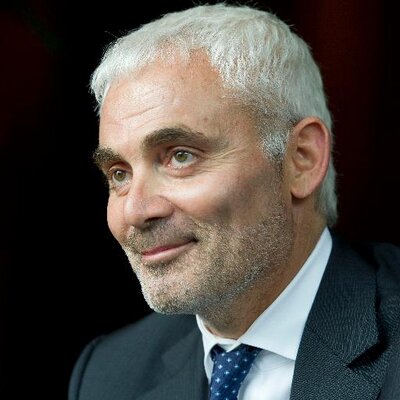
This interview deals mostly with my new book, “The Money Dilemma.” Which is out today

Frank Giustra: We’re Walking into WW3, U.S. Politics a “Viper’s Nest”
Don’t miss Part 2 of this exclusive interview: youtu.be/RYnEzmI1gxQ
#economy #gold #finance #debt @DanielaCambone @Frank_Giustra

ResourceWars.com retweeted
Congratulations to my friend @Frank_Giustra on the release of his new book, The Money Dilemma.
Frank and I have shared many laughs over the years, often about just how absurd our monetary system has become.
But behind those laughs are some very serious conversations about money, history, and where the world is heading.
I am excited to see him share his perspective with the world.
Congrats, Frank.

ResourceWars.com retweeted

Frank Giustra was a beatnik with no formal education.
As a rookie stock broker, he literally fell into a gold mine. Then he built a global mining finance empire, retiring at 39.
Next, he founded Lionsgate Films. Then built a dozen significant resource companies.
His absurd path gave me permission to go for it.
The stories are legendary. His new book is out today!
amazon.ca/Money-Dilemma-Unli… @Frank_Giustra @kevinolearytv

ResourceWars.com retweeted

Just to remind everyone, Kaliningrad = Russia. If @donaldtusk @Poland attacks Russia, we’ll be in a very different world. Whatever peace deal is currently underway over Ukraine will collapse. The implications are huge. All centers on the Suwalki Gap. The lights are already out in Kaliningrad.


ResourceWars.com retweeted

Exclusive:
Three of Britain’s four nuclear deterrent submarines are out at sea in an "unusual" situation, @thetimes has been told
It has been at least five years since this happened, according to former naval source
thetimes.com/article/17663c5…

ResourceWars.com retweeted
Recently a subscriber pointed out China's vast refining capacity, and that they use their oil reserves as a tool, drawing them down and waiting things out. They asked if I felt that with the U.S. midterm elections coming up, wouldn't hobbling the Trump administration be in their long-term interest.
China has the world’s second largest economy. The World Bank says that 21 percent of China’s gross domestic product comes from exports, and the International Monetary Fund says that 11 percent of those exports go directly to the U.S. (This excludes indirect exports.) If there were a global recession based on the economic crisis triggered by the Iran war and oil prices, China would have a major domestic economic problem. The danger to China of losing up to 21 percent of its income far outweighs any short- or long-term impact it could have on the U.S. midterms.
ResourceWars.com retweeted

There is currently widespread concern that rapid technological change will fundamentally change the nature of work. In this paper we show that, despite 140 years of technological change, more than 70 percent of employment today is located in occupations whose core economic functions already existed in the late nineteenth century.
lup.lub.lu.se/search/files/2…
ResourceWars.com retweeted
GOLD TELEGRAPH CONVERSATION 21:
DOUG CASEY
"The world is going to go back to gold. And the only question is at what price?"
In this wide-ranging conversation, Doug Casey explores why he believes the international monetary system is approaching a historic turning point, why central banks are accumulating gold, and how America's growing debt burden could reshape the global financial order.
We discuss the consequences of abandoning the gold standard in 1971, the weaponization of the U.S. dollar, China's monetary ambitions, and why Doug believes a return to gold-backed system could require a dramatically higher gold price.
Beyond monetary policy, Doug reflects on his remarkable career as an investor, his experiences traveling to more than 150 countries, the future of individual freedom, and why he sees extraordinary opportunities in energy and mining stocks.
Doug Casey is a legendary contrarian investor, author of Crisis Investing, and founder of Casey Research.
Thank you for joining me, Doug.
TIMESTAMPS:
(00:29) – Doug Casey's Early Life & Becoming a Contrarian
(03:29) – Discovering Gold, Economics & the Investment World
(06:23) – Buying Gold at $35 & Lessons From Five Decades of Investing
(10:53) – Crisis Investing, Global Travel & Lessons From Around the World
(14:33) – Human Nature, Loyalty & the Importance of Personal Character
(16:54) – Nixon's 1971 Decision to Close the Gold Window
(19:29) – Why Governments Abandoned Gold as Money
(23:18) – Why Gold Is Not Viewed Well by Power
(26:32) – Central Banks, Gold Accumulation & the Future of the U.S. Dollar
(29:11) – Russia's Frozen Reserves & the Weaponization of the Dollar
(37:10) – The Future of Digital Money
(39:52) – Is the International Monetary System Approaching a Historic Reset?
(43:13) – America's Debt Crisis: Default or Inflation?
(45:56) – The IMF, World Bank & Global Financial Institutions
(48:00) – The Decline of Empires
(50:24) – China's Economic Strategy & the Changing World Order
(53:08) – BRICS & the Return to Gold
(57:50) – Doug Casey's Warning...
(59:52) – Artificial Intelligence, Technology & the Future of Civilization
(1:02:09) – Doug Casey's Investment Strategy: Energy & Mining Stocks
(1:06:38) – Unforgettable Experiences Visiting Mining Projects Around the World
(1:09:32) – The Most Important Lessons From a Lifetime of Investing & Travel

ResourceWars.com retweeted
It’s still meaningless small amounts. The merging of neutron stars—a kilonova—is the only place where the pressure is high enough and the neutron flow fast enough to build such a heavy element. The collision must produce heat up to an insanely high 10 billion degrees C to allow the “rapid neutron capture” required to produce gold. As a reference, our sun’s core is only 15 million degrees C. frankgiustra.com/posts/the-f…


Last month, we demonstrated high-rate alchemy: turning mercury into real, stable gold, beating CERN’s record by a factor of 10.
Last week, we enriched isotopes in the world’s most powerful plasma centrifuge, beating the Soviet record that stood for 40 years.
Now, we’re building a fusion reactor in San Francisco to achieve record power density.
ResourceWars.com retweeted
It’s still meaningless small amounts. The merging of neutron stars—a kilonova—is the only place where the pressure is high enough and the neutron flow fast enough to build such a heavy element. The collision must produce heat up to an insanely high 10 billion degrees C to allow the “rapid neutron capture” required to produce gold. As a reference, our sun’s core is only 15 million degrees C. frankgiustra.com/posts/the-f……
ResourceWars.com retweeted

Following up on the two previous pieces I poster here over the weekend on the French crisis, here is a third piece, published today…
research.gavekal.com/article…
I also discussed the crisis with friend @ErikSTownsend in a soon to be released @MacroVoices podcast episode…