

NY Times & WSJ bestselling author of 8 books on strategic thinking including "STRATEGIC"; facilitating strategic thinking & planning workshops for leaders.
Barrington, IL
Joined January 2010
- Tweets658
- Following91
- Followers760
- Likes35




There are two kinds of decisions: revolving doors (reversible: delegate them) and one-way doors (irreversible: own them).
Most leaders spend their time on the wrong one.
22
Agreeing to every request isn't leadership; it's tactical order-taking. But people hate hearing 'no.' So borrow from improv: 'Yes, and…'
EXAMPLE: 'The boss needs your report tomorrow instead of Monday.' Reply: 'Yes, and I'll need someone from your team to work on tomorrow's client deck. Who should I pull?' That shows the trade-off without the 'no.'
How would you use the 'Yes, and..." method?

1
36
Companies that regularly reallocate resources are worth 40% more after 15 years (McKinsey).
You have to prune to grow.
26
Prescription without diagnosis = malpractice.
Before you set 2027 strategy, scan 4 areas: market, customers, competitors, company.

13
We live in a very action-oriented world. Full calendars. Fuller inboxes. A fire drill every hour on the hour.
But your success in business doesn't begin with action. It begins in your mind.
So as leaders, we have to give it to our teams, and to ourselves: permission, time, and tools to step back and ask three questions:
1. What are we doing?
2. Why are we doing it?
3. How could we do it differently, or better?
Ask them often enough and the answers become insights: learnings that lead to new value for the people we serve. Insights build on each other. Over time, that's what makes you invaluable.
As 2027 planning kicks off this month, which of those three questions does your team skip most?
Two Words that Guarantee a Great Plan
How many times have you seen a plan presented that’s not really a plan? A list of customers, fancy graphics on the market, and a SWOT Analysis is not a plan. A great plan answers two questions clearly and concisely. In this video, the villain Ignormous tries to destroy TechnoBody’s plan by confusing the key business planning terms. Watch as StrategyMan sets him straight and ask yourself: Does my plan clearly answer the two key words: what and how?
#strategicthinking #strategy #GOSTFramework
1
27
"Strategic" might be one of the most overused words in business.
Strategic priorities. Strategic initiatives. Strategic objectives. Strategic imperatives.
Put the word "strategic" in front of something and suddenly it sounds more important.
But are all of those things actually strategic?
Research with 60,000 leaders found that the #1 leadership competency is the ability to set strategic direction. That makes understanding what it means to be strategic more important than ever.
My definition is simple:
Strategic = possessing insight that leads to advantage.
That means a plan can be strategic. A person can be strategic. But simply labeling something "strategic" doesn't make it so.
The next time the word comes up in a meeting, ask: What's the insight—and how does it lead to advantage?
If there isn't a clear answer, it might be time to drop the label.
#Strategy #StrategicThinking #StrategicBook #BusinessStrategy #ExecutiveLeadership #StrategicPlanning #Insight
1
1
45
What’s one of the worst pieces of advice in business today?
“Fail fast.”
There’s value in learning from failure, but that doesn’t mean leaders should rush into every new project, activity, or tactic just to see what happens.
Before you act, take the time to ask three questions:
What are we doing?
Why are we doing it?
How could we do it differently or better?
Strategic leaders don’t simply move fast. They create clarity before committing time, people, and resources.
Let’s replace “fail fast” with “think first.”
Question: Where could your team benefit from thinking first before taking action?
#StrategicThinking #ThinkFirst #Strategy
58
Strategic thinking and strategic planning are not the same thing.
Strategic thinking generates the insights that lead to advantage. Strategic planning channels those insights into action.
Think of it like a funnel:
At the top, strategic thinking generates new ideas, observations, and insights. As those insights move through the funnel, strategic planning determines how to allocate resources to bring the best ones to life.
The problem? Too many organizations skip the top of the funnel.
They jump straight into planning—and then wonder why their strategic plan looks nearly identical year after year.
If you want new growth, you need new insights.
Don’t just plan differently. Think differently first.
#StrategicThinking #StrategicPlanning #Strategy #Leadership #BusinessStrategy #Growth
1
45
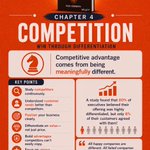
What can we do for customers that competitors can’t or won’t?
That’s where differentiation begins. And sustainable advantage requires continually strengthening what makes you unique.
Don’t compete to be the same, but slightly better. Compete to be different.
Strategic-Book.com
#Strategy #StrategicThinking #CompetitiveAdvantage #Differentiation #Leadership #BusinessStrategy

4
82
In Chapter 3 of STRATEGIC, I share practical approaches to improve decision quality: separate facts from assumptions, clarify decision ownership, and delegate authority to the appropriate level.
Question: Are all of your team members crystal clear on who owns which decisions?
#StrategicThinking #DecisionMaking #STRATEGIC

2
74
Strategic leadership isn't about failing faster—it's about thinking better.
The strongest executives don't rely on trial and error. They sharpen their Acumen, make disciplined Allocation decisions, and drive focused Action. These three disciplines separate leaders who react from those who create lasting results.
Which of the 3 A's would make the biggest difference for your team today: Acumen, Allocation, or Action?
hashtag#StrategicThinking hashtag#Leadership hashtag#Strategy hashtag#ExecutiveLeadership hashtag#StrategicPlanning
linkedin.com/pulse/your-exec…

3
61
“Strategy, it turns out, is not what I say. It’s what they do.” Jensen Huang, CEO, Nvidia
Every resource allocation is a choice. Every "yes" comes with a "no." Strategic leaders continually redirect time, talent, money, and attention toward what creates the greatest value.
Would your resource allocation tell the same strategy story that you do?
#Strategy #Leadership #StrategicThinking #STRATEGIC #CompetitiveAdvantage

1
44
Most leaders confuse activity with achievement.
A full calendar isn't a strategy. A longer to-do list doesn't create competitive advantage.
Strategy begins with one question:
How will we achieve our goal?
Strategic thinking is the ability to generate insights that lead to advantage.
The challenge isn't knowing strategy matters—it's making time to think before you act.
Question: What's one part of your business that deserves more strategic thought before taking action?
#StrategicThinking #Strategy #BusinessStrategy #CompetitiveAdvantage #STRATEGIC

1
1
56
Success isn't just about working hard—it's about bringing your best effort to the moments that matter.
In this video I share how we can apply legendary boxer Jack Dempsey’s approach to our work.
Too often, we go through the motions in meetings, conversations, and daily tasks without realizing our effort has slipped from excelling to mediocrity.
Strategic leaders don't just manage their calendars—they manage the quality of their energy and attention.
Small improvements in how you show up each day compound into extraordinary results over time.
What techniques do you use to bring a consistently high level of energy and focus to the key moments in your day?
#Leadership #StrategicThinking #Execution #StrategicPlanning #Meetings #Strategy
31
A plan isn’t valuable because it’s complex—it’s valuable because it’s clear.
The strongest strategic plans answer three questions:
1️⃣ Where are we going?
2️⃣ How will we win?
3️⃣ What will we do differently than everyone else?
If your team can’t explain the plan in a few sentences, it’s probably too complex to execute effectively.
Simplicity creates focus, and focus drives results.
What’s the one priority your organization needs to rally around right now?
Take the 1-minute quiz to discover how your team’s plan scores: strategyskills.com/plan-asse…
#StrategicThinking #Strategy #Leadership #Planning #BusinessAcumen #BusinessStrategy
16
One of the biggest challenges I see in organizations and their plans is distinguishing between strategy and tactics.
More than 2,500 years ago, Sun Tzu wrote:
"All the men can see the tactics whereby I conquer, but what none can see is the strategy out of which victory is evolved."
A simple rule: if you can point to it, touch it, or check it off a list, it's likely a tactic.
Strategy is the general approach to achieving your goal.. Tactics are the specific actions that bring that approach to life.
Too often, teams focus on tactics before clarifying strategy. The result? Aimless activity without advantage.
Do your leaders struggle with the difference between strategy and tactics?
#Strategy #StrategicThinking #Leadership #BusinessStrategy #StrategicPlanning
1
17
How do elite executives avoid decision fatigue?
Based on 25 years of coaching leadership teams, here is the 7-step decision-making playbook to eliminate bottlenecks, reclaim valuable time, and improve decision quality.
Most leadership teams treat all decisions the same.
That's a mistake.
"Two-way door" decisions can be reversed with minimal cost and should be delegated quickly.
"One-way door" decisions are difficult to undo and require greater expertise, analysis, and accountability.
When leaders fail to distinguish between the two, they become trapped in the status quo, execution slows, and opportunities are missed.
One of the most valuable exercises executive teams can undertake is to inventory their decisions and establish clear decision rights.
In this article, I share:
✔ The 5 questions every leadership team should ask about decision making
✔ A 7-step framework to improve decision quality and accountability
✔ How to identify which decisions should be delegated
✔ Why decision rights are one of the most overlooked drivers of strategic execution
Strategy isn't just about deciding what to do.
It's about deciding who decides.
Read the article and let me know:
What strategy-related decision-making challenges is your team facing?
strategyskills.com/better-st…

23
Are Your Meetings Strategic?
Meeting (mee-ting) noun 1. the act of people coming together to rehash topics they’ve been talking about for five months, check their mobile phones every 6 ½ minutes for anything more interesting than the meeting they’re in, and agree to things which they have no intention of following up on.
While this definition isn’t the one in Merriam-Webster’s dictionary, it’s likely a more accurate description of what’s happening in your organization than the book version. Let’s face it, most meetings are wasting people’s time and the company’s money. Who says? The research.
Today, managers spend an average of 23 hours per week involved in meetings, which equates to more than 1,150 hours per year. Unfortunately, managers rated more than half the meetings they were involved in as “ineffective,” and 71 percent of senior leaders are dissatisfied with their meetings. At one multi-billion organization, a weekly review meeting involving a group of managers cost more than $15 million per year.
In my work helping companies develop enterprise-wide capabilities in strategic thinking and planning, one of the areas we work on together is developing a more strategic approach to meetings. What makes a meeting “strategic?” A meeting is strategic if people walk away with insights—learnings that lead to new value. Are you gaining insights from your meetings?
The Strategic Meeting Framework includes dozens of checklists, guidelines and tools, but the overarching framework involves three core elements: Intent—Decision—Insights.
1️⃣ Intent. The intent or purpose of the meeting should clearly answer why people are investing their time in this interaction. For the meetings you have on your calendar this week, has the intent for each one been clearly identified and will you add value if you attend?
2️⃣ Decision. It’s important that the people involved in the meeting are all clear on who owns decision rights for key topics. Once everyone has shared their input on a key topic, make a decision and move on instead of revisiting it month after month. For your next meeting, what decisions have been identified for the group to make?
3️⃣ Insights. In the final five minutes of the meeting, have the team identify their learnings or take-aways from the interaction. What were the top three insights from your most recent meeting?
You wouldn’t continually allow people to steal your laptop, mobile phone or desk chair so why do we allow people to steal our time through badly run meetings with no agenda and no action steps? Start treating meetings with the precision and discipline of the financial budget and you’ll see a huge jump in morale and productivity. Meeting adjourned.

6