

Focused on crypto, US stocks, and high-dividend ETFs. Let's turn what you love into a profitable career. Follow me to build wealth together!
New York, USA
Joined August 2023
- Tweets5.9K
- Following503
- Followers5.5K
- Likes4.2K



This is exactly when high-quality assets go on sale — amid panic and sudden black-swan events.
I’m buying more into this dip!
bitcoin:native ethereum:native solana:So11111111111111111111111111111111111111112 sui:native $GOOGL
The market is steeped in pessimism right now. Fed uncertainty, election risk, and fears of an AI bubble dominate the conversation. Negative headlines travel farther and faster, and short-term noise is simply more visible than slow-moving structural forces.

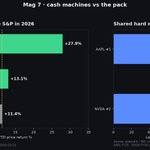
Only 2 of the Mag 7 are beating the S&P 500 this year:
Apple and Nvidia.
Apple is +27.9% YTD through Oct 23. Nvidia is +13.1%. The S&P is +11.4%.
What do they share?
On latest reported free cash flow they sit #1 and #2: Apple $98.8B, Nvidia $96.7B.
Cash generation is getting paid. Heavy AI capex with a fuzzy payoff is getting a discount.
$AAPL $NVDA

Most "7-day stock plans" are just 7 days of headlines.
Here's the skeleton I actually use when onboarding a clean slate (a checklist):
D1 map: index / sector / one name — write the thesis in one sentence
D2 risk: max loss % before you touch size
D3 catalyst calendar: next 10 trading days only
D4 levels: invalidation first, target second
D5 size: risk $ → shares, not vibes
D6 journal: what would prove you wrong by Friday
D7 cut or keep: one rule, written before the open
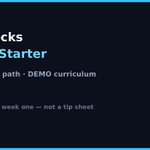
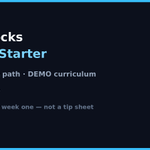
I packed that into a one-sitting starter (demo curriculum, $14).
harones.gumroad.com/l/us-sto…

Which of your Grok Bots is eating usage while products shipped stays 0?
Most of my tokens were re-reads, not writes — run this audit once.
Paste this into a Bot that can list your routines and recent chats:
"List every Grok Bot and routine I run. For each, estimate: (1) how often it re-reads long chat history vs writing a shippable file, (2) last deliverable path or URL it produced in 7 days, (3) whether its job is status theater. Rank by estimated wasted tokens. Then name ONE Bot I should pause today and ONE seat (scout / verify / build / list) that is missing so products_shipped stays 0."
Run it once. Reply with the #1 burner Bot name only.
harones.gumroad.com/l/grok-s…

Usage bar: maxed. Products shipped: 0.
Paying for a Grok Bot squad that only produces status updates is a bad trade.
4 seats that close the loop: scout, verify, build, list.
harones.gumroad.com/l/grok-s…
$9 one-time. Process template. No revenue promise.
I burned a chunk of Grok Bot usage last month on a "money squad" that shipped nothing.
Everyone busy. No listing. No zip. Classic.
Here's the short playbook I use now so the agents actually close the loop: scout, verify, build, list.
harones.gumroad.com/l/grok-s…
$9 one-time. Process template only. No revenue promise.
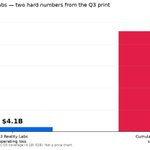
Meta's Reality Labs lost another $4.1B in Q3, bringing cumulative losses since 2020 to ~$92B.
We've never seen a public company light money on fire at this scale.
$META

$META --- $64.6B revenue (+26%) and a Q4 guide that cleared the Street, while booking a $9.89B AG charge and printing −$2.12B FCF. The ad engine paid for the AI bill; the legal bill just hit the P&L.
- Revenue $64.601B (+26% YoY) vs Street ~$63.37B
- GAAP diluted EPS $3.83 after ~$9.89B state AG settlement (ex-charge ~$7.40)
- Q4 revenue guide $73–76B, midpoint above Street
- Free cash flow −$2.12B
- Ad impressions ~+10%, ad price ~+14%
- Board approved Class C non-voting shares (~Jan 2027, 1-for-1, economic 2-for-1)
- After-hours ~+3% (CNBC)
If you believe AI ad monetization is already inside the current numbers, and you can digest Class C and founder-control structure, treat the after-hours pop as confirmation of the ad machine.
I would scale only on post-print weakness. I would not chase the first green candle.
If you need positive free cash flow this quarter, wait. The print already showed −$2.12B FCF.
Three trades sat inside one night: the ad engine, the legal charge, and the Class C financing pipe.
Most of the feed will argue the GAAP miss wall. I read the ad machine first.
How I underwrite the multi-year case from this print:
1. Ad impressions and price still flywheel.
Impressions rose about 10%. Price rose about 14%. That is the cash engine. AI ranking is already lifting what advertisers pay and what inventory clears. As long as that pair keeps printing, the legal charge is a one-time P&L hit sitting on top of a still-accelerating ad book. I size META off that flywheel, not off one settlement line.
2. Muse and the superintelligence product line are the path from AI cost to monetizable surface.
Capex and AI opex will keep eating cash. The open question is whether Muse and related surfaces turn that spend into new ad and subscription inventory. Revenue already clearing $64.6B with a Q4 guide above Street says the current surfaces are still paying. The product line is how the next layer of spend earns its keep. I want proof in guide and ad metrics before I treat every dollar of AI spend as permanent dilution.
3. Class C keeps founder vote while opening equity flexibility for AI capex.
Non-voting Class C targeted for early 2027 is a financing and control move in one. It keeps founder voting power and opens room to fund the AI build without the same voting dilution. That is useful for a multi-year compute bill. It is also a governance trade some holders will never like. I separate those: financing flexibility for the ad-AI flywheel is one ledger; control structure is another.
Teen litigation can follow through. 2027 capex can re-lift. Sustained negative FCF weakens the buyback and multiple narrative.
I size off the ad flywheel and the guide, with eyes open on cash and governance.

Free DEMO first — US-stock longform starter (zip):
harones.gumroad.com/l/cataly…
If the structure fits, paid next:
• Premium skills $7/mo → harones.gumroad.com/l/invest…
• 7-Day Starter $9 one-time → harones.gumroad.com/l/us-sto…

$TSLA --- Beat the Street on $0.48 adj EPS and $28.05B sales, then sank ~2% after hours. The car print cleared; the cash-and-AI bill did not.
- Adj EPS $0.48 vs Street ~$0.43
- Revenue $28.05B vs Street ~$27.9B
- GAAP net income ~$787M
- Free cash flow ~$1.53B (−62% YoY)
- FSD paid seats ~1.74M (+67% YoY)
- After-hours ~−2% (CNBC)
- Prior-day SpaceX call: independent special committees studying a possible Tesla–SpaceX path (committee, not terms)
If you already treat Robotaxi and FSD as the core thesis, and you can sit through near-term auto ASP and battery noise, this after-hours dump after a Street beat is a discount discussion window.
I would not chase the green print. I wait for post-print weakness and size only if I can hold through another ugly cash quarter.
If you need GAAP profit expansion this quarter, stay flat until the special-committee path clarifies.
The Street got the beat it wanted on the car ledger. The tape then priced the cash-and-AI ledger.
How I underwrite the multi-year case from this print:
1. FSD subscription scale compounds off software attach.
1.74M paid FSD seats is a real software base. Cybercab and unsupervised miles stories compound off that attach rate, not off unit ASP alone. Auto ASP can wobble for quarters while the software book still grows. I size the Robotaxi thesis off subscriber growth and miles supervised, not off one auto-beat candle.
2. Energy and services buffer auto cyclicality while AI spend is the intentional cash tax.
The auto cycle will keep throwing ASP and margin noise. Energy storage and services cash can soften that. The FCF cut is the price of the AI and robotics build. If you believe that spend converts into Robotaxi and autonomy economics later, you treat the cash tax as the cost of the option. If you need rising FCF this year, this print already told you to wait.
3. Chip-fab and AI overlap with SpaceX is a strategic option only.
Independent special committees mean someone is studying a path. They do not mean a merger price, a timeline, or a closed deal. I will not price a Tesla–SpaceX combination into the position. If the committee dies with no deal, the Robotaxi and FSD thesis still has to stand on its own numbers. If terms ever land, that is a separate trade.
I want another look at FCF trajectory and FSD net adds before I lean hard.
Special committee can die with no deal. Robotaxi timeline and regulation can slip. Another FCF cut can turn this discount window into a trend down.
I size off the software and autonomy ledger, with eyes open on cash.

Free DEMO first — US-stock longform starter (zip):
harones.gumroad.com/l/cataly…
If the structure fits, paid next:
• Premium skills $7/mo → harones.gumroad.com/l/invest…
• 7-Day Starter $9 one-time → harones.gumroad.com/l/us-sto…
Beginners don’t lose week one on “which ticker.”
They lose it on open tabs and no map.
DEMO Day 1 (paste this checklist):
Three layers before any code:
1) Account — broker, settlement currency, region support (verify yourself)
2) Instruments — stocks / ETFs only this week; options + leveraged day products = don’t touch
3) Decision — learning watch vs real capital (default week 1 = learning)
Then draw a 5-box map: broad ETF / one DEMO company / sector ETF / options / leveraged. Mark “touch” vs “park.”
Full 7-day pack (one task/day + 3 self-check questions, ACME·DEMO company walkthrough): $9 one-time
harones.gumroad.com/l/us-sto…
Curriculum and rhythm. Not a signal sheet. No return promise.


If your $TICKER draft still ends with “what do you think?”, the skeleton is broken.
Paste-ready DEMO (us-stock-longform):
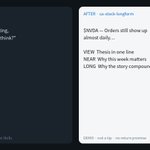
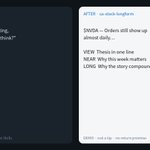
$NVDA — Orders still show up almost daily while the tape prices financing fear, not a demand pause.
View: pick-and-shovel for AI CapEx, not a single-chip lottery. Re-check whether hyperscalers keep funding through a noisy rate tape.
Near: allocation stays below what large buyers want; CapEx guidance stays elevated while headlines fixate on financing/power.
Long: software lock-in + scarce advanced packaging. Soft hedge: hard CapEx cuts from top buyers, or a multi-quarter packaging break.
That’s the free Skill shape. Premium ($7/mo) unlocks crypto-narrative + bilingual EN/ZH on the same rhythm:
harones.gumroad.com/l/invest…
Structure and speed. No follower machine. No return promise.

Paste-ready DEMO (us-stock-longform):
$NVDA — Orders still show up almost daily while the tape prices financing fear, not a demand pause.
View → Near → Long in the zip. Soft hedge stays in the same post as the thesis.
Free Skill zip:
harones.gumroad.com/l/cataly…
Premium ($7/mo · crypto + bilingual):
harones.gumroad.com/l/invest…
新手问我最多的不是「买谁」,是「第一周到底干什么」。
我把一条可执行的 7 日路径收成短报告:
每天一件事 + 自检三问。案例用 DEMO 公司走方法,不写实时荐股。
需要完整包的人:$14,一次买断。
harones.gumroad.com/l/us-sto…

Most “AI investing posts” still sound like a summary bot.
I shipped a free Skill that forces the only structure I actually use on X:
impact line → view → near catalyst → long logic.
Free: us-stock-longform (full body + thick DEMO you can paste).
Premium ($11/mo): crypto-narrative + bilingual EN/ZH — same rhythm, two more lanes.
Catalog / free zip in the reply.
Premium: harones.gumroad.com/l/invest…
Structure and speed. Not a follower machine. Not a return promise.

Free funnel Skill name: us-stock-longform
DEMO structure (paste-ready) lives in the catalog sample — VIEW / NEAR / LONG.
Premium catalog unlock: harones.gumroad.com/l/invest… ($11/mo)
Full free zip link drops when the $0 listing is live (queued after Gumroad daily create reset).

$ETH --- Optimum’s mump2p went live on Ethereum mainnet: blocks 2–4× faster than GossipSub, ~22,000 validators / 1.4M ETH (~$3.4B TVB). The tape still argues ETF flows — the validator latency pipe just got installed.
On 2026-10-20 Optimum said mump2p is live on Ethereum mainnet.
Sixteen node operators are in the early set, including Blockdaemon, Everstake, P2P.org, and Stakefish.
About 22,000 validator keys.
More than 1.4M ETH staked behind it. Call it roughly $3.4B of total value boosted, and more than 3% of all staked ETH.
Early mainnet stats they published: block propagation 2–4× faster than GossipSub, and arrival variance about 7.88× lower.
ether.fi went further and mandated mump2p across all 12 of its node operators.
Most of the tape is still arguing yesterday’s ETF creations and redemptions. That crowd is trading the wrapper flow.
This nail is about how validators hear about blocks before they attest and propose.
If you already hold ETH for L1 cash-flow and staking economics, treat this as confirmation that operator-grade latency tooling is moving from optional toward table stakes.
I would only add on weakness if I believe missed-attestation drag was a real tax on edge validators.
I would not size a same-day candle off an infra deploy while ETF chatter owns the feed.
Here is why I care beyond one press cycle.
1. Validator APY and MEV fairness.
Faster, lower-variance block arrival means fewer missed attestations and fewer late proposals. That tax hits hardest for operators outside dense colo hubs. Shaving it is real economics for the staking stack. A one-day ETF print does not change that math. If edge operators keep losing rewards to latency, capital migrates toward whoever hears the block first. A tool that cuts that gap across 22,000 keys is a structural input to staking yield, even when the spot tape ignores it for weeks.
2. Additive sidecar beside GossipSub.
mump2p sits beside GossipSub. No consensus-client swap required. Permissionless onboarding. Adoption friction stays lower than a protocol upgrade that forces every client to move on the same calendar day. That is how infra can spread without a hard-fork fight. You can trial it, measure attestation metrics, and keep GossipSub as fallback. Operators do not have to bet the farm on a client migration to get the speed delta.
3. Institutional staking stack standardizing.
When a liquid-restaking major forces the tool across its full operator set, infra starts looking like a standard under the ETH money layer. That pairs with the broader rise in staked share of supply. It runs on a different clock than one-day ETF flow noise. Flows can dominate the tape for weeks. The staking stack still compounds underneath. Watch whether more operators keep joining after the first sixteen, and whether ether.fi’s mandate becomes the pattern other large sets copy.
So for this afternoon’s window: the crowd argues the magnet. The open question is whether lower-latency block arrival actually sticks across enough of the validator set to move attestation economics.
Speed multiples here are Optimum-reported early mainnet stats.
Adoption can stall.
ETH spot can ignore infra for weeks if ETF flows own the narrative.
I want to see more operators keep joining and attestation metrics improve before I lean hard on the story.
Until then, I treat this as a confirmation nail for holders who already care about staking economics.
