

Fulltime web3. Research & Moderator
Đà Nẵng
Joined January 2022
- Tweets4.3K
- Following3.8K
- Followers3K
- Likes4.7K





Bitcoin Has a Dollar Problem. And Stablecoins Could Be Part of the Answer
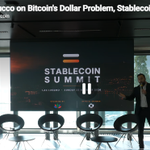
At the Stablecoin Summit 2026, Giacomo Zucco delivered an interesting keynote titled Bitcoin’s Dollar Problem
It raises an important question:
If Bitcoin is designed to become a global monetary network, how can it serve people who need price stability in their everyday financial activities?
Bitcoin offers decentralization, monetary scarcity, and a strong settlement foundation. But its price volatility makes it difficult for many people and businesses to use BTC as their primary unit of account for payments, savings, and international transactions
That's where stablecoins enter the picture
People don't always want to move away from Bitcoin. Sometimes, they simply need access to stable dollar-denominated value while benefiting from Bitcoin's infrastructure
And this is where RGB and Lightning become particularly interesting
RGB enables digital assets to exist natively within the Bitcoin ecosystem, while Lightning opens possibilities for fast payment channels and transfers
Together, they create a foundation for bringing stablecoins closer to Bitcoin without forcing users to choose between stability and Bitcoin-native infrastructure
For Utexo, this direction represents an important opportunity
The goal isn't simply to move USDT onto another network. It's to help build the infrastructure that makes native USDT on Bitcoin practical for payments, remittances, businesses, and potentially new financial applications
I believe the future of Bitcoin shouldn't be limited to holding BTC
It should also be about what people can build and do with Bitcoin
Bitcoin can provide the foundation. Stablecoins can bring everyday monetary utility. And infrastructure connects the two
That's a conversation worth paying attention to
Read more: rgbprotocol.org/rgb-protocol…
@utexocom
#Utexo #Bitcoin #USDT #RGB #Lightning

3
6
57

What stands out to me about DECA Rewards is that every meaningful contribution across its app ecosystem is recognized in one place
My first mission? Testing new features and creating content based on my hands on experience
Finding bugs, sharing honest feedback, and helping others understand the products are contributions that can genuinely improve the ecosystem
It's not just about completing missions. It's about becoming part of DECA's continuous learning and growth loop
Explore DECA Rewards: app.decalabs.ai/rewards


Introducing DECA Rewards: a cross-app rewards layer.
Use our apps, make content, report bugs, test new features and bring friends along. It all adds up in one place.
app.decalabs.ai/rewards
6
12
96
Short Recap (The DECA Show – Episode 01 | Key Takeaways)
Building software has never been easier with AI. The real challenge is knowing what people actually want and are willing to pay for
Here's what we learned from the first DECA Show
1. How DECA works?
DECA is an agent led software commercialization network powered by 50,000+ market signals
Its engine operates through four stages:
• Discover: Generate data driven ideas
• Validate: Test demand with real consumers
• Build: Develop validated products in 2–3 days
• Distribute: Bring products to market
Every stage feeds insights back into the engine
2. Real traction
According to the team:
• 100,000+ monthly active users
• 11 active applications
• Users across 106 countries
• Approximately $1.5M in app revenue
• Around 1,500 participants testing ideas on Base testnet
3. DECA's competitive advantage
DECA has an AI agent specifically designed to challenge bad ideas, evaluate competition, and identify weak market demand
The engine learns from both successful and failed experiments, focusing not only on signups but also retention and paying customers
Its real moat is the continuous feedback loop between demand, development, distribution, and real user behavior
4. Why Base?
• Onchain idea registration and timestamps
• USDC payments for AI agents
• Agent to agent interactions
• Fast, low cost transactions
• Verifiable test commitments without exposing private user data
5. Business model and token
DECA generates revenue through consumer applications, demand testing fees, and revenue sharing agreements with founders
A potential network token is being explored to support contributors and creators, but nothing has been officially announced
6. What's coming next?
• Opening the engine to more founders and developers
• Public access to ideas and validation results
• A potential database of failed ideas
• AI generated UI/UX flows
• New consumer applications
• Decathlon community events
• DECA Rewards and creator campaigns
7. The role of the community
AI agents handle execution, while humans provide direction, feedback, and key decisions
Testing applications, reporting bugs, and providing honest feedback directly contribute to improving the engine
My takeaway
DECA isn't simply making software easier to build. It's making the decision of what to build more intelligent
As AI makes software development cheaper, validated demand, proprietary data, and effective distribution could become the most valuable advantages
Validate first. Build second. Learn continuously.
@deca_labs
#DECA #AI #Base
DECA Show Ep. 1 with @deniz_zgur is on replay.
How the engine decides what's worth building, what 100,000+ monthly users taught it, why we build on @base, and your questions from X and Discord.
nitter.cf/i/spaces/1JQenRmJEJqRn…
Over 1,600 of you tuned in. Thanks for joining!
5
11
215
A closer look at Whisk's $WSK Tokenomics
As Whisk prepares to expand beyond Retium into a multichain exchange, its token distribution structure is worth exploring.
$WSK at a glance:
• Total fixed supply: 1 trillion WSK
• Team allocation: 0%
• Staking reward streams: 3
• Launch liquidity: permanently locked, according to Whisk
Token allocation breakdown:
•Community incentives: 20%
•Treasury: 19.56%
•Public rounds: 18.44%
•Ecosystem grants: 10%
•Liquidity: 8%
•Market making: 6%
•Staking rewards: 5%
•Early users: 5%
•Security reserve: 4%
•Whales: 4%
What caught my attention is that 300B $WSK, representing 30% of the total supply, is allocated to community incentives, staking rewards, and early users
Meanwhile, another 10% is reserved for ecosystem grants to support partners and builders
The token sale is structured across five stages: Whales, Whitelist, Round 1, Round 2, and Round 3
The Whale phase is currently open, with a listed price of $0.0000015 per WSK
However, tokenomics is only one part of the bigger picture. Actual token utility, circulating supply, unlock schedules, liquidity, and sustainable user activity will ultimately matter more
I'm particularly interested in seeing how WSK will support Whisk's multichain ecosystem and its eventual integration into Retium Mainnet
🔗 whisk.exchange/
@RetiumChain
#Whisk #WSK #Retium


Whisk Contributors Program is officially LIVE
If you're a content creator interested in DeFi and the growing Whisk ecosystem, here's a new opportunity to contribute
🏆 2 BILLION $WSK allocated for contributors (approx. $10K at Round 3 presale price)
No selected winners. Everyone with approved points receives a share based on their contribution
🔹X Post: 5 pts
🔹X Thread: 7 pts
🔹X Video: 15 pts
🔹YouTube Short: 20 pts
🔹YouTube Video: 40 pts
🔹Article/Tutorial: 12 pts
🔹X Spaces Guest: 10 pts
📅 Starts November 23, 2026
How to join:
1️⃣ Visit the Whisk Discord contribution channel
2️⃣ Read the rules and eligibility requirements
3️⃣ Create original content about Whisk
4️⃣ Submit your work and track your points
Quality matters, Original content only, with no fake engagement or AI generated voices
Rewards are planned to be distributed in $WSK after TGE, based on approved points
Let's explore Whisk, share useful insights, and help more people understand what the ecosystem is building
@RetiumChain
#Whisk #Retium #WSK #DeFi

3
9
147
Exploring MMIX - Connecting Real World Assets with Blockchain @MMIX_io
As blockchain technology evolves, one of the biggest opportunities lies in bringing traditional businesses and realworld assets into the onchain economy
MMIX is an emerging Layer 1 blockchain project focused on building infrastructure for enterprise adoption and realworld asset (RWA) tokenization
What caught my attention is its approach to combining blockchain technology with the practical requirements of traditional businesses:
🔹 Real-world asset tokenization
🔹 Enterprise focused blockchain infrastructure
🔹 Permissioned network with verified validators
🔹 Bridging traditional finance and the onchain economy
Rather than focusing solely on speculative activity, MMIX aims to explore practical blockchain applications that could support real economic activity
The project is still in its early stages, and I'm particularly interested in seeing how its infrastructure, ecosystem, and realworld use cases develop over time
I'll be following its progress and sharing more insights as new information becomes available
🌐 mmix.io/
#MMIX #RWA

9
11
126
Governance is getting real on @buzzchain_io
What caught my attention isn't just the voting activity, but how validators are already stress testing governance through real participation
The leaderboard rollback, rebalance pool testing, and pause on new proposals show why testnets matter: finding weaknesses before real economic value is involved
Mainnet is next, and validator participation will matter more than ever
Stay loud. Keep buzzing

Testnet keeps delivering.
In a few days, validators proposed, voted and pushed governance harder than any simulation could. That is the participation mainnet is being built for.
Where things stand:
- The leaderboard has been rolled back. Every account can keep being loud.
- A passed ban on testnet is a test of the rebalance pool only. The loudness the account has earned goes to the pool, which later blocks hold back from their emission. The account stays on the leaderboard and keeps earning loudness.
- New voting proposals are paused.
On mainnet, every vote will have real economic value behind it. The validators who showed up this week are the ones who will shape it.
Stay loud. Mainnet is next.
3
6
120
How to Complete the API Sandbox Task (+30 points)?
I recently completed DECA Labs: Launch a test through the API task using Node.js and the x402 payment protocol
Here is a step by step guide based on my experience
Step 1: prepare your environment
You will need:
- Node.js and npm
- VS Code or another code editor
- A DECA Labs account and API key
- A wallet with Base Sepolia testnet USDC
- A small amount of testnet ETH if you need to perform wallet transactions
Create a new project folder and install the required packages:
```bash
mkdir deca-x402
cd deca-x402
npm init -y
npm install @x402/core @x402/evm viem dotenv
```
Step 2: get your DECA API Key
1. Visit app.decalabs.ai/
2. Open the MCP & API section
3. Generate or retrieve your API key (enable the Read, Quote, and Test features)
4. Store it securely in a local .env file
Never share your API key or wallet private key
Step 3: prepare your testnet wallet (should create new wallet)
Use Base Sepolia:
- Chain ID: 84532
- Network: Base Sepolia
- USDC contract: 0x036CbD53842c5426634e7929541eC2318f3dCF7e
Faucet USDC base sepolia here: faucet.circle.com/
The sandbox payment requirement was 1$USDC
Make sure you are use testnet assets, not real USDC
Step 4: request a quote
Send an authenticated POST request to:
app.decalabs.ai/api/agent/qu…
Provide your product idea and target markets
For my test, I submitted an idea for a mobile app that helps families reduce food waste
DECA returned a quote with available testing options
I selected the signal option
Save the returned quote_id for the next step
Step 5: create a sandbox test request
Send a POST request to:
app.decalabs.ai/api/agent/te…
Include:
```json
{
"quote_id": "YOUR_QUOTE_ID",
"option": "signal",
"sandbox": true,
"idempotency_key": "YOUR_UNIQUE_UUID"
}
```
Use your DECA API key as a bearer token
A new sandbox request should return:
HTTP 402 — Payment Required
This is expected. It means DECA is requesting an x402 payment
Step 6: verify the x402 payment requirements
Before signing anything, verify:
- Payment scheme: exact
- Network: eip155:84532
- Asset: Base Sepolia USDC
- Amount: 1000000 (1 USDC with 6 decimals)
- Recipient: the official address returned in the payment requirements
In my successful test, the recipient was:
0x7FB30eD8D7a7B45EE7b98903d94D87D1B9C3DaD2
Always validate the payment requirements returned by the API. Do not blindly sign arbitrary payment requests
Step 7: sign the payment using x402
Use the official x402 JavaScript packages:
@x402/core/client
@x402/core/http
@x402/evm/exact/client
@x402/evm
The process is:
-Create a wallet signer
-Configure the x402 client for base sepolia
-Apply a maximum payment limit
-Generate the EIP-712 payment authorization
-Encode the PAYMENT-SIGNATURE header
For extra safety, I verified the authorization signature, expiration time, nonce, and USDC balance
I also simulated transferWithAuthorization onchain before submitting the payment
Step 8: submit the signed request
Resend the same sandbox request with the generated PAYMENT-SIGNATURE header
Keep the same idempotency_key when retrying the same request
If successful, DECA returns: HTTP 201 — Created
My successful response was:
```text
HTTP status: 201
Sandbox test created!
State: in_review
```
This confirmed that DECA had accepted the API request and created my sandbox test
Step 9: verify task completion
Return to your DECA Labs dashboard and check the task:
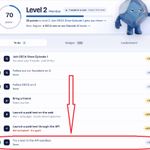
Launch a test through the API (+30 Points)
Make sure the task is marked as completed
Troubleshooting tips
-HTTP 402: expected before payment. It is not necessarily an error
-Invalid payment signature: check the wallet, EIP-712 domain, chain ID, and USDC contract
-Authorization expired: generate a fresh signature. In my case, the authorization lasted 300 seconds
-Settlement failed: verify your test USDC balance, nonce, authorization validity, and contract execution, a valid signature alone does not guarantee successful settlement
-HTTP 200 with repeated: true: the API may be returning an existing request rather than creating a new one. Check the previous test status before generating a new request
-HTTP 201: your sandbox test was successfully created
Final Thoughts
The most interesting part of this task was learning how x402 enables an API to request and verify blockchain payments directly
My successful flow was:
DECA Quote → Sandbox Request → HTTP 402 → EIP-712 Signature → On-chain Simulation → Payment Submission → HTTP 201
No real USDC was needed for my sandbox test
If you're exploring DECA Labs, this is a useful hands on introduction to agent APIs and x402 payments
Official documentation:
app.decalabs.ai/docs/guides/…
Github guide: github.com/Richardxx1202/dec…
@deca_labs
#DECA

Whisk Contributors Program is officially LIVE
If you're a content creator interested in DeFi and the growing Whisk ecosystem, here's a new opportunity to contribute
🏆 2 BILLION $WSK allocated for contributors (approx. $10K at Round 3 presale price)
No selected winners. Everyone with approved points receives a share based on their contribution
🔹X Post: 5 pts
🔹X Thread: 7 pts
🔹X Video: 15 pts
🔹YouTube Short: 20 pts
🔹YouTube Video: 40 pts
🔹Article/Tutorial: 12 pts
🔹X Spaces Guest: 10 pts
📅 Starts November 23, 2026
How to join:
1️⃣ Visit the Whisk Discord contribution channel
2️⃣ Read the rules and eligibility requirements
3️⃣ Create original content about Whisk
4️⃣ Submit your work and track your points
Quality matters, Original content only, with no fake engagement or AI generated voices
Rewards are planned to be distributed in $WSK after TGE, based on approved points
Let's explore Whisk, share useful insights, and help more people understand what the ecosystem is building
@RetiumChain
#Whisk #Retium #WSK #DeFi
The BUZZ keeps growing
Just checked the @buzzchain_io testnet dashboard, and the network is showing some interesting progress
Latest stats 👇
🔸 420 blocks produced
🔸 1.91K unique accounts
🔸 7.07K posts counted
🔸 549.2K $BUZZ testnet supply
Compared to my previous check, that's 162 more blocks and over 3.8K additional posts
What I find interesting is that Buzzchain isn't following a traditional fixed block schedule. Its Proof of Engagement model lets social activity help drive block creation
More conversations, more activity, more blocks.
Still early, but it's fascinating to watch this experiment grow in real time
Explore: testnet.buzzchain.xyz/
Keep buzzing
#buzz

1
63
Richard122 retweeted

DECA Show Ep. 1: co-founder @deniz_zgur takes your questions live.
How the engine picks what to build, what 100,000+ monthly active users taught us, why we build on @base and what's next.
Monday, Nov 23, 3 PM UTC on X.
Drop your questions below 👇
nitter.cf/i/spaces/1JQenRmJEJqRn…

Blockchain Needs More Than Storage. It Needs Faster Access to Data
The next infrastructure challenge may be how applications interact with data in real time
Blockchains have made tremendous progress in decentralized storage, execution, and data availability
But there's another question worth asking:
What happens when an application needs to access information immediately, not just store it securely?
Consider a few real world examples
A trading application needs to retrieve market related information quickly to evaluate changing conditions
A blockchain game needs to access player states and game data without introducing unnecessary delays
An AI powered Web3 application may need to interact with continuously changing information while responding to user requests
In these scenarios, having data available is only part of the equation
How efficiently applications can access and work with that data also matters
Introducing a Different Infrastructure Perspective
This is where DeRAM (Decentralized RAM) becomes an interesting part of Optimum's broader vision
Traditional RAM provides fast access to information that applications actively use
DeRAM explores the idea of bringing a similar memory oriented approach into decentralized infrastructure
Rather than treating blockchain data interaction purely as a storage problem, the concept focuses on enabling more efficient access to data for applications that need responsive interactions
Why Could This Matter?
Imagine a decentralized trading application
Every moment, market conditions change. The application needs to work with relevant information continuously
If accessing the required data introduces unnecessary delays, the overall user experience can suffer even when transaction execution itself is efficient
Now consider a blockchain game with thousands of active players
Player states, application data, and interactions may need to be accessed repeatedly
A more efficient data access layer could become valuable as these applications grow in complexity
The same broader challenge applies to AI applications that depend on timely information
How Does This Fit Into Optimum's Vision?
Optimum is exploring multiple infrastructure directions that address different parts of the data problem:
mump2p: Improving how blockchain data propagates across distributed nodes
RLNC: Enabling more efficient data distribution through coded information
Flexnodes: Exploring a distributed network of data accelerators
DeRAM: Exploring a decentralized memory layer for more efficient data access
These are different approaches to a broader infrastructure challenge: making data more useful and accessible across decentralized systems
The Bigger Picture
The next generation of Web3 applications will likely demand more than decentralized execution and storage
They will need infrastructure capable of supporting continuous data interaction, responsive applications, and increasingly complex workloads
That's why the idea behind DeRAM is worth following
Storing data makes it available. Accessing data efficiently makes it useful
And as blockchain applications evolve, the infrastructure connecting these two capabilities could become increasingly important
Optimum is exploring what that future could look like
@get_optimum
#Optimum

5
9
147
The interesting part about @deca_labs isn't just AI generating ideas. It's connecting those ideas to real market demand
Now AI agents can discover opportunities, estimate validation costs, and pay for demand tests in USDC on @base
From idea generation to market validation, all within an agent driven workflow
Curious to see how this changes the way new software gets built
Your agents can now use DECA.
→ Ask what people want right now
→ Get an idea worth building
→ Price a real demand test
→ Pay for it in USDC on @base
app.decalabs.ai/docs
6
12
165
WSK Whitelist sign up is now open
Members with the qualifying roles can now put their wallet on the WSK whitelist
Whitelist round: $0.000002 per WSK, Only 25B WSK in the round
How to join?
1. Go to whisk.exchange/whitelist
2. Connect MetaMask (on a phone, open the page in the MetaMask app's browser)
3. Enter your whitelist code: PS112026
4. Press Join the whitelist and sign the message
Signing is free. It costs no gas and moves no money; it only proves the wallet is yours
When it's done you'll see "You are on the whitelist". Buy with that same wallet when the Whitelist round opens
Signup closes on 30/11/2026. After that, the list is final
Only use whisk.exchange.
We'll never DM you a code or a link
@RetiumChain

2
1
81
My journey with @buzzchain_io testnet has officially started
I've connected my X account, claimed my free Validator NFT, and staked it on Ethereum Sepolia
My Validator NFT #17762 is now active, with 5.38 $BUZZ in pending testnet rewards
Meanwhile, the network is already showing some interesting activity:
🔸 258 blocks produced
🔸 1.42K unique accounts
🔸 3.25K posts counted
🔸 30K+ validator seats staked
What interests me most is how Buzzchain connects social engagement with block production through Proof of Engagement
Instead of just posting for points, our activity on X contributes to a network experimenting with a completely different approach to block creation
Still early, but I'm enjoying exploring how it works
🐝 Join testnet: testnet.buzzchain.xyz/
Let's make some BUZZ


4
7
106
The Best Infrastructure Is the Infrastructure Users Don't Notice
Great technology doesn't ask users to understand what's happening underneath. It simply works
Think about the applications we use every day
When you send a message, you expect it to arrive
When you check a market price, you expect the information to be current
When you interact with a financial application, you expect the system to respond without unnecessary delays
You rarely think about the infrastructure making those experiences possible
And that's exactly how good infrastructure should feel
Blockchain Has an Invisible Infrastructure Challenge
Behind every decentralized application is a network of components working together
Validators exchange blocks and attestations
Nodes distribute information
Applications depend on data arriving when it is needed
But when communication between these components becomes inefficient, users may eventually experience the consequences:
Applications responding more slowly
Information becoming outdated before users can act
Less predictable experiences during periods of network activity
These problems aren't always caused by smart contracts or execution performance
Sometimes, the challenge begins much deeper in the way information moves across the network
Where Optimum Comes In
Optimum is building infrastructure focused on improving data movement across decentralized networks
Its approach combines technologies such as Random Linear Network Coding (RLNC) and mump2p to make data propagation more efficient
Instead of focusing exclusively on how quickly individual transactions execute, Optimum addresses how useful information travels between distributed nodes
This is particularly important for applications that depend on timely information, including onchain trading, financial infrastructure, and other latency sensitive services
A Simple Way to Think About It
Imagine two trading applications
Both use the same blockchain and offer similar functionality
But one receives relevant network information more efficiently than the other
Even if their smart contracts execute under identical conditions, the quality and timing of the information available to each application can influence the overall experience
Infrastructure doesn't need to be visible to create value
Its impact can be reflected in everything users experience
The Bigger Vision
Blockchain adoption won't be driven by new applications alone
It will also depend on whether the infrastructure underneath those applications can support reliable, responsive, and increasingly complex experiences
That's why data propagation deserves more attention
Users shouldn't have to think about network infrastructure. They should simply benefit from it
And that's the kind of invisible performance layer Optimum is working to build
Explore:
getoptimum.xyz/
getoptimum.xyz/mump2p
#Optimum

5
10
102
Buzzchain Testnet is LIVE
What if social engagement could actually drive a blockchain?
That's the idea behind @buzzchain_io a project introducing Proof of Engagement (PoE), where activity on X helps determine when new blocks are created
The testnet is now live on Ethereum Sepolia, and the community can start exploring:
🔸 Connect your X account
🔸 Participate in social engagement
🔸 Track blocks and activity on the dashboard
🔸 Explore the leaderboard
🔸 Test the Validator NFT and staking features
Instead of traditional mining, Buzzchain is experimenting with turning social activity into on chain data
I'm excited to see how this concept develops and how the community shapes the network
Explore the testnet: testnet.buzzchain.xyz/
Your engagement. Your blocks. Your Buzz.

9
18
242
What if sending RGB assets didn't require holding BTC? 👀
One of the biggest barriers to a better user experience is unnecessary complexity
With the fee sponsorship PoC built by Utexo developer Diego (@DCT_cpp), rgb-lib explores a new approach:
-A third party covers the Bitcoin transaction fees
-The user sends the RGB asset
-The fee sponsor receives payment in the transferred asset
This could remove one more friction point for users who want to interact with RGB assets without first acquiring BTC just to cover transaction fees
It's a small change in how fees are handled, but it opens up an interesting possibility for asset transfers on Bitcoin
Better UX isn't always about adding more features
Sometimes, it's about removing the things users shouldn't have to worry about in the first place
Great work by Diego and the Utexo team
#Utexo #Bitcoin #RGB #USDT

What if you could send RGB assets without holding BTC?
Our developer Diego (@DCT_cpp) built a fee sponsorship PoC for rgb-lib: a third party covers BTC fees and gets paid in the transferred asset.
Better UX starts with fewer constraints.
github.com/RGB-Tools/rgb-lib…

2
8
93
Whisk is thinking beyond a single blockchain👀
What started as a native DEX on Retium now has a much bigger roadmap
Ethereum comes next, followed by BNB Chain, Base, Solana, and more
But what caught my attention is the rollout strategy:
🔹Start with swaps on new chains
🔹Expand toward full exchange functionality
🔹Introduce the WSK token
🔹Build a launchpad for partner projects
🔹Provide developer tools
I like the idea of expanding functionality step by step rather than launching everything at once
The interesting question now is how Whisk will connect liquidity and user experiences across different ecosystems
Retium remains its starting point, but Whisk's ambitions are becoming multichain
Looking forward to seeing how much of this roadmap turns into working products
#Retium #Whisk


The Whisk roadmap is out.
Whisk began on Retium. Next it goes to Ethereum, then BNB Chain, Base, Solana and more, with swaps first and the full exchange after.
Also on the way, the WSK token, a launchpad for partner projects, developer tools, and WSK coming home at Retium mainnet.
whisk.exchange/roadmap
#Whisk

2
7
107
Richard122 retweeted

The Whisk roadmap is out.
Whisk began on Retium. Next it goes to Ethereum, then BNB Chain, Base, Solana and more, with swaps first and the full exchange after.
Also on the way, the WSK token, a launchpad for partner projects, developer tools, and WSK coming home at Retium mainnet.
whisk.exchange/roadmap
#Whisk