

#EnglishNationalist - campaigning for #England & #EnglishIndependence - @EnglishDemocrat Chairman. https://nitter.cf/t.co/hd1FyAFJPA
Ongar, Essex, England
Joined October 2009
- Tweets12.8K
- Following1.5K
- Followers11.5K
- Likes19.2K






Pinned Tweet
Who else supports flying our flags? I challenge the BBC narrative of it being "Racist"
drive.google.com/file/d/1zPE…

Robin Tilbrook retweeted

🗣️ Can you exercise Article 10 free speech in your workplace? On UK LIVE, Stephen Morris breaks down your statutory rights and why speaking up shouldn't cost you your livelihood.
Know your legal protections and stand up for your voice on the job.
#tradeunion #workplacerights #article10 #freespeech #employmentlaw #ukworkers #union #uklive #freedomofexpression #representation
MY RECENT SPEECH TO BRENTWOOD'S ROTARY CLUB
ENGLAND’S 1,100TH ANNIVERSARY 12TH JULY 2027
I am the Chairman of the English Democrats and a veteran campaigner for England and on behalf of the English Nation’s interests, I have been asked to do a speech to you about England’s unification date, 12th July 927AD and our 1,100th anniversary on the 12th July 2027.
We are used to anti-English jibes by England’s many enemies. Once upon a time you might have expected those enemies to be perhaps French, quoting De Gaulle’s claims of “Perfidious Albion”, or Napoleon’s “England is a nation of shop-keepers”, or to be Germans with their “Hymn of Hate against England” “We will never forego our hate, We have all but a single hate, We love as one, we hate as one, We have one foe and one alone – ENGLAND!”
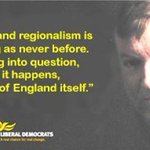
However nowadays many of the most determined haters of England are Establishment figures, like the Scottish Liberal Democrat’s Leader, Charles Kennedy, a Europhile, who praised the idea of breaking England up into “Regions”, saying that he supported Regionalisation in England because “It is calling into question the idea of England itself”!; Or the Welsh born, former Labour Deputy Prime Minister, John Prescott, who officially denied “that there is any such nationality as English”!; Or the pro-British former Leader of the Conservative Party, William Hague, who said that “English nationalism is the worst form of all nationalisms”!
The current unelected Prime Minister is a particularly strong England hater and wants to break us up into bogus Regions.
As these quotations suggest domestic opponents of England are opposed to our people identifying themselves as English. All of them are Internationalist or Globalist or Multi-Nationalist in their thinking. They probably lament with Karl Marx, that “All the revolutions of Europe are wrecked on the rock of England”!
We have also recently seen a spate of politicians like Rishi Sunak and Kemi Badenoch claiming to be English. Refreshingly Suella Braverman said that she is British but not English. Jacob Rees-Mogg has even gone so far as to claim that there is no such thing as the English and that we are “Mongrels”!
Englishness has also not been exclusively about ethnicity for a very long time. Arguably the English have been considering what it means to have a relationship with the state not based solely on tribal or ethnic ties for longer than any other nation. We must go as far back as Alfred and Athelstan to begin to understand what a complex mix of faith, custom, geography, monarchy, language, law and – yes – ethnicity, Englishness really is.
Finally, politicians and/commentators must desist from the patronising lie that ‘Englishness’ is unique in never having had any relationship to ethnic identity, that we alone have always been a ‘melting pot’. It’s not borne out by history, it does not help our present reality, and if anything will drive dissatisfied voters into the arms of the genuinely extreme and racist, it is this lie.
It is therefore worth considering what is special about England that makes England a unique target of those that want to break up England, to deny the English their Nation State? Let’s start with history.
2. History
The first point to make about England is that England is uniquely old. Indeed one historian poetically described England as “God’s first born among the Nations of the earth”!
The first proto-English settlers and invaders seem to have been coming into the Roman province of Britain, which included what is now England up to Hadrian’s Wall and also what is now Wales. The Romans built defensive forts along the eastern shoreline of Britain on what they called the Saxon Shore.
But the first individually named English are the Chiefs of a force that came over in three ships after the Roman legions had permanently left Britain at, we are told, the invitation of the Romano British King, Vortigan, probably in 449AD. Their names were Hengist and Horsa. They were invited over to fight against the Pictish invaders from Scotland and, having done so, found they were not paid what had been agreed. Then, as mercenaries have often done in such situations, they turned against their employers. They soon found that after centuries of being protected and controlled by the Roman legions the Romano/British were unable to organise any coherent or effective military resistance.
These early English were pagans. The Saxon Seaxe is the emblem of Essex.
______ ________ Tuesday, Wednesday, Thursday = Tiwisday, Wodinsday and Thorsday.
England’s history suggests that many other Saxons, Jutes and Angles followed those first three ships and gradually drove the Romano/British to the West and eventually into what is now Wales.
It is in this period of history that the legend of King Arthur arises, as he is said to have been a Romano/British General or King who had success in fighting and pushing the Saxons back.
The archaeological records seems to suggest that in fact many of the Romano/Britains adopted the Anglo Saxon ways.
The Roman Catholic’s church’s missionary effort was led by St Augustine in 595AD on the orders of Pope Gregory the Great (who had seen English children for sale in the slave market in Rome and after being told that they were Angles said that they were so beautiful that they were “Not Angles but Angels”!)
St Augustine succeeded in converting the Kentish King, Aethelberht to Christianity in 598AD and set up a pattern for the church of focusing on converting the Kings of the Kingdoms of England, which was in contrast to the pattern that the missionaries in the Irish church had followed in trying to convert the People.
Whether England should be Roman or Irish Catholic was settled by the Council of Whitby in 663AD which led to the religious unification of England.
By 731AD the first great English historian, the Venerable Bede, claimed a united English Nation in which the Saxons, Angles, Jutes and Romano/British in England had united into a single English Nation.
At the time of his writing that was very much a hope rather than a fact, as England was then divided into the Heptarchy of seven separate Kingdoms.
The political unification of England might never have been achieved if England had not been attacked by the Vikings, which started with the sacking of Lindisfarne Abbey in 793AD.
The Vikings brought terror to the now Christian English as they were pagans who revelled in war. The Vikings were prolific slavers, but also they used terror tactics to frighten the English people and especially their Kings into submission.
St Edmund, King and Martyr was captured and then shot to death with arrows and decapitated in 869AD (NB the wooden church at Greensted outside Ongar); Aella, the last English King of Northumbria, was blood eagled outside of York. He was pegged on the ground and the “eagle’s wings” of his rib cage opened for Odin’s sacred birds, the ravens, were invited to feast upon his still living and conscious flesh.
Perhaps not surprisingly the next English King whom the Vikings turned their attention to, the King of Mercia fled with the royal treasury, to live out the rest of his days in luxury in Rome!
Eventually the Vikings had largely conquered all of England except for the last English Kingdom, the Kingdom of Wessex, which is when they came up against King Alfred the Great.
878 – King Alfred is attacked in Chippenham and retreats to Athelney; from there he fights a guerilla war against Danes and then gathers an army to defeat them at Edington. A later treaty divides England in half, Danelaw in east.
Alfred is the Great because he set up the mission of reconquest and of English nationhood Christian, Education, Burg, Law, language manorial system. The army and of putting the English on a permanent war footing (Basileus!).
899 – Alfred the Great dies after defeating several other Danish invasions, Edward is chosen as his successor.
917 – King Edward the Elder and Æthelflæd the Lady of the Mercians combine to defeat the Danish armies in Mercia and East Anglia at Tempsford.
927 – King Æthelstan takes the submission of the Northern Earlsat Eamont and so the Venerable Bede’s vision was completed. Rex totius Anglorum.
937 – Æthelstan defeats combined army of Welsh, Scots and Irish Norse at Brunanburh, England is saved!
As for the 12th July 2027 we should celebrate England’s unification with a Bank Holiday.
Robin Tilbrook

Robin Tilbrook retweeted

🇬🇧 "The UK should still welcome people who come here for safety."
@WillColeshill debates MIGRANTS who are campaigning against the UK government "earned settlement" proposal - a plan that extends the ILR from 5 to 10 years, fast-tracking high earners, while penalising people with debt or overstaying.

🇬🇧 "F*CK OFF."
Labour supporter tells @WillColeshill to F*CK OFF when he asks MP @stellacreasy if she's concerned about DEMOGRAPHIC REPLACEMENT.
Robin Tilbrook retweeted

On this day in 899, Alfred the Great died in Winchester.
Alfred was a scholar-king who believed that literacy was essential to the strength and freedom of his people. He personally translated (or closely supervised the translation of) major Latin works into Old English so that ordinary free men could read them.
He is the only English monarch in history to be given the epithet "the Great".
“I desired to live worthily as long as I lived, and to leave after my life, to the men who should come after me, the memory of me in good works.”

Robin Tilbrook retweeted

When the British sought to end the slave-trade in the 19th century, African rulers resisted.
The Asante Kingdom, in what is now Ghana, was a major participant in the West African slave trade, including the transatlantic trade.
The ancestors of the President of Ghana, John Dramani Mahama, who is LEADING the campaign for reparations from Britain, were probably slave-owners. I am not saying this facetiously; it is what the history suggests (thank you @NigelBiggar)
Robin Tilbrook retweeted

I go to many Churches across the country
Came out of a Church service today where the vicar was sounding like was running a student Union society talking about “lived experience” & then said “please pray for the protesters in France”
The Church of England not funding local parishes while promoting ‘reparations’ - it’s almost as though it’s been taken over by an enemy hell bent on destroying it

The Commonwealth is an organisation which the English pay for but which is opposed to our national interests.


Robin Tilbrook retweeted

It's been months that I keep saying Hitler was far left. Every time, thousands of clowns show up in my replies to give me history lessons.
So I made a video to answer all these low IQ takes at once.
Topic closed. Next.
Robin Tilbrook retweeted

Yes, the monarchy was deeply implicated in the slave trade. But not the British monarchy.
The biggest African slavers were not pirates or bandits. They were kings. In the 1750s, King Tegbesu of Dahomey, in present-day Benin, was reported to be making £250,000 a year from selling slaves. That astronomical sum, equivalent to perhaps £45 million today, was vastly more than any British aristocrat
While Tegbesu was trafficking human beings, the future George III, who had recently become Prince of Wales, was becoming a convinced abolitionist. He wrote a monograph arguing that “slavery is equaly [sic] repugnant to the Civil Law as to the Law of Nature”. He went on, as King, to sign the abolition of the slave trade into law in 1807.
That act prompted incredulous rage among West African chiefs.
In the 1840s, King Ghezo of Dahomey, played by John Boyega in the 2022 film, The Woman King, fiercely resisted such pressure.
“The slave trade is the ruling principle of my people. It is the source and the glory of their wealth,” he complained.
Contrast his attitude with that of his British fellow-monarchs. Although Victoria, as Queen, was expected to refrain from expressing political opinions, her husband was under less constraint. Albert made his very first speech as Prince Consort to the Society for the Extinction of the Slave Trade and for the Civilization of Africa. His words are a reminder of how determined Britain was to ensure that ending the Atlantic slave trade did not simply push the commerce eastwards.
“I deeply regret that the benevolent and persevering exertions of England to abolish that atrocious traffic in human beings (at once the desolation of Africa and the blackest stain upon civilized Europe) have not as yet led to any satisfactory conclusion. But I sincerely trust that this great country will not relax in its efforts until it has finally, and for ever, put an end to a state of things so repugnant.”
The difference between the British Crown and contemporary African monarchies can be glimpsed in the story of Aina, a young Yoruba girl owned by King Ghezo of Dahomey.
In 1850, a naval captain called Frederick Forbes came to Dahomey to try to convince Ghezo to stop selling slaves. He was unsuccessful but, during his visit, he was offered Aina as a gift.
Forbes knew that such slaves were generally destined for human sacrifice, so he accepted the child, naming her Sara Forbes Bonetta. When Sara arrived in Britain, Queen Victoria became her godmother, paid for her education and arranged for her to marry a wealthy Yoruba businessman. Are the British really the baddies here?
Critics talk of telling our nation’s story “warts and all”; but they rarely get around to the “and all”. The “and all” surely includes the vast sums devoted to stamping out slavery, calculated by Chaim Kaufmann and Robert Pape as 1.8 per cent annually of GDP between 1808 and 1867, the most expensive moral foreign policy in human history. Even if there were a case for reparations in principle (which there is not) that sum alone – not counting the billions given in aid – would surely have covered any debt.
What we are seeing is not a debate about history, but an argument about contemporary politics. Critics want to convince us that Britain became rich through exploitation rather than, as was actually the case, through private property, free contracts and independent courts.
The easiest way to demonstrate the negative correlation between capitalism and slavery is to look at the places where human bondage is most prevalent today – in order, North Korea, Eritrea, Burundi, the Central African Republic and Mauritania. If William III owning shares in the Royal African Company bothers you more than the continuing abomination of slavery in those places, you need to ask yourself some hard questions about your motives.
Robin Tilbrook retweeted

"I would suggest that gobbledygook is far more effective in propagating left-wing and progressive opinions than reasoned argument, for the simple reason that progressive opinions, once explicitly stated, expose themselves to the threat of refutation, something that they do not always survive. The purpose of the jargon is not to find novel reasons for the posture of cultural opposition, but to render that posture impregnable, by putting it beyond rational debate.
The many 'methods' of the postmodernist curriculum have one thing in common, which is that they do not argue for their political posture, but assume it, and at the same time conceal that assumption deep within a protective carapace of nonsense. In this respect they are theological, rather than scientific, theories: theories designed not to establish some belief, but to protect that belief from rational criticism".
Robin Tilbrook retweeted

This week a self-described "influential think tank", the IPPR, advised that the "UK must seek EU membership”. Charlotte Gill was not surprised to find it was funded by George Soros and the European Climate Foundation. dailysceptic.org/2026/10/24/…

Robin Tilbrook retweeted

If the OBR won’t correct its assumptions about the fiscal impact of immigration, then as Chancellor I will publish forecasts that do.
I argue the economic case for mass migration has been annihilated👇
telegraph.co.uk/news/2026/10…

Robin Tilbrook retweeted

The people who now populate our mainstream media pass-off secret filming at Reform as the pinnacle of investigative journalism, even though it comes with no danger, only the applause of people who all think the same.
My latest monologue about ITV’s hatchet-job on Reform.
youtu.be/IBsp8ZE-Fac?is=Raxi…

Robin Tilbrook retweeted
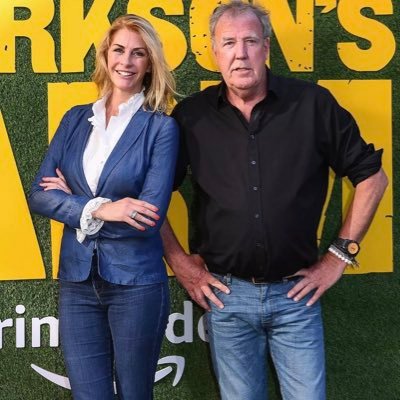
The UK government has spent years heaping costs, regulation and tax uncertainty onto British food producers, Farmers, and Small businesses - then turns around and tells the public to stockpile three days of tinned food and bottled water because "unexpected events seem to be becoming more common."
Official figures show a net loss of more than 3,000 agriculture, forestry and fishing businesses in 2025 alone, the highest on record, with thousands more closures in the years before that. Inheritance tax changes on family farms (even after partial U-turns), soaring energy and inspection costs, labour shortages, post-Brexit trade deals that opened the door to cheaper imports, and chaotic subsidy schemes that left most applicants empty-handed have all piled on the pressure.
Local abattoirs have collapsed from roughly 2,500 in the 1970s to around 200 today; surveys of farmers show large numbers warning they may have to stop producing meat locally or exit entirely if the next one closes.
This week the government launched its "Be Ready" campaign, advising households to keep non-perishable food, litres of bottled water per person, cash, torches and radios in case of cyber attacks, extreme weather or other disruptions. That is sensible basic preparedness.
What is absurd is watching the same state systematically weaken the domestic producers who actually grow and process the food that would make the country more resilient in the first place, while imports fill the gap and rural businesses fold.
You cannot talk seriously about national resilience and food security while watching the infrastructure that produces British food shrink year after year. The contradiction is obvious.
Robin Tilbrook retweeted

The UK government has, since April, spent no less than £61 billion - that’s £61,000,000,000 - on debt interest payments.
That’s equivalent to our entire annual defence budget - on just half a year’s worth of debt service costs, not paying back a penny of our national debt.
For £61bn you could build 40 state-of-the-art hospitals.
Or employ 100,000 nurses for a decade
Or fund free-at-the-point-of-use social care, across the entire UK, for three years.
Watch this short “When The Facts Change” video for more on the UK’s soaring debt interest bill - the biggest national scandal our mainstream media continues to ignore.
Robin Tilbrook retweeted

It's been revealed that the left-wing extremist suspected of burning down Limoges city hall lives with his parents in "an alternative community" of anarchist activists. Now imagine this was some mad right-wing village. Where's the debate about left-wing extremism in Europe?
Robin Tilbrook retweeted

EXCLUSIVE: Leaked Home Office counter-terrorism documents link “nostalgia for traditionalism” and fears over immigration, liberalism and multiculturalism to “Christian extremism”.
Officials propose working with churches to promote “theological resilience” against the use of Christian teachings to justify hatred or violence.
I obtained dozens of pages from RICU’s report on “Christian extremism”. Among the findings:
• Images of happy families in wartime, peaceful countryside and classical statues are described as a “hook” towards an extremist worldview.
• Tommy Robinson’s rallies and a Christmas carol concert come under scrutiny, alongside Christian fitness groups.
• “Bob from Speakers’ Corner” features, despite RICU identifying no extremist content from him.
Yet the report acknowledges that the threat of violence from Christian extremists remains “low”.
Jeremiah Igunnubole, UK legal counsel for ADF, says the report “suggests an institutional anti-Christian bias has taken hold in the Home Office”.
stevenedginton.substack.com/…

Robin Tilbrook retweeted

Prescriptions in Scotland, Wales and N Ireland are not "free". They're paid for by the English. We pay for ours and we pay for theirs.
Robin Tilbrook retweeted

England has an incredibly raw deal in the Union. We get the vast majority of mass migration, legal and illegal. We subsidise prescriptions, university, dentistry for the rest, without it being free for us. Our people have no representation, whilst being told we don’t even exist as a people! Independence now!

