

Thinker, author, strategist, advisor, & author of Playing to Win
Fort Lauderdale, FL
Joined October 2012
- Tweets6.2K
- Following5.7K
- Followers34.1K
- Likes8.7K


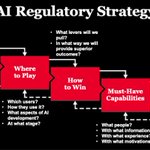


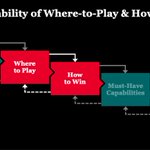


I haven't tried that. If you do, let us all know what you learned.

@RogerLMartin Hi, Have you ever used game design as a design thinking -like toolbox to draft a Playing to win strategy? I’m fascinated with the thought of taking Play and Win quite literally and building a game design document as the blueprint for a product business.
How about that. A McKinsey chart that I like. It does comport with my observations. Thx.
Hi @RogerLMartin, I recently attended a McKinsey webinar where they presented this exhibit
It reminded me one of your post "What has Changed the Most for Strategy" where you said that:
- strategy is more important than ever
- Winners are winning bigger than they have ever before.

It is a pretty good description. Two exceptions.
Second:
"The team needs to understand the industry before it can choose. Run industry and customer analysis first, then use the cascade to make the choice."
I disagree. First thing to do is frame a problem to be solved. That will help you figure out what about the industry and customer is of interest and note. Otherwise it will be just another completely useless SWOT analysis. See: rogerlmartin.substack.com/p/…

Damn!
I will need to add Strategy Choice Cascade but I do have "Playing to Win" by @RogerLMartin in there.
Would love a review by the legendary Roger to see if he likes the synopsis!
Will he read this message?
👇
usefulconsultingframeworks.c…

It is a pretty good description. Two exceptions.
First:
"The organization has no real freedom to choose where it plays, as in a regulated utility or a single-contract supplier. The cascade will produce a description of constraints."
There are always WTP choices - offering, customer segment(s), geography, distribution channel and value system stage.
Even a regulated utility has real choices along some of those dimensions. It is a self-fulfilling prophecy when you think you don't have a choice.
Damn!
I will need to add Strategy Choice Cascade but I do have "Playing to Win" by @RogerLMartin in there.
Would love a review by the legendary Roger to see if he likes the synopsis!
Will he read this message?
👇
usefulconsultingframeworks.c…
This week features Chapter Twenty-Five of the Playing to Win/Practitioner Insights All-Stars Book Club: Strategy is what you DO, not what you SAY!
rogerlmartin.substack.com/p/…
This piece points out that every company has a strategy – regardless of whether it thinks it does. A company’s strategy is the result of all the choices it has made, whether it made those choices during an explicit strategy process or not. Understanding that ‘Strategy-in-Use’ is a critical starting point in the development of a useful strategy.
I hope you find the piece helpful!

I don't. But I will take a look. Thanks for the insight.
@RogerLMartin I don't know if you follow Whitney Zimmermann on LinkedIn or elsewhere but his latest post about Frank Keil's book "The Disappearance of Insight: When Technology Undermines How and Why" should interest you as it echoes lots of what you've been advocating for years
Thanks so much @mitchellcohen. I so appreciate when folks cite the source of what they use. Respectful. And see @Riggs_martin, it can happen!!!

Every time I'm stuck, I ask one question:
"What would have to be true?"
It almost always shows me the path I was missing.
I got it from @RogerLMartin, who co-wrote Playing to Win with A.G. Lafley, the former CEO of Procter & Gamble.
Most of us plan forward. We start with what's true today and argue about it...
But Martin starts at the end.
Pick where you want to end up, then ask what would have to be true to get there.
I can't tell you how many times I've used this to highlight a new path that I otherwise wasn't seeing.
I can't do it. But I have a guess.
@RogerLMartin little quizz for you Roger: who said (in her newsletter I received today): "The key lesson here? Think through what absolutely has to be true for your plans to work out, before you've spent a lot of money and time. Then, test the most critical of these assumptions."
This week features Chapter Twenty-Four of the Playing to Win/Practitioner Insights All-Stars Book Club: Distinguishing How-to-Win from Capabilities in Your Strategy Choice.
rogerlmartin.substack.com/p/…
This piece answers a question I frequently get about what a How-to-Win is versus a Must-have Capability. HTW is a theory of advantage. MHC contributes to bringing that theory of advantage to light.
I hope you find the piece helpful!

Ahh yes. I don't think I have anything additional to say over and above that piece.

In your words they’re the demand Ones
Or CEPs - Category entry points via the Ehrenberg Bass Institute/ How Brands Grow
You touched upon their work a little while ago
rogermartin.medium.com/how-b…

Joan - who is a lovely human being - did a great job on that book, I think.

Don't know CEP? Personas to me is a tool for categorizing and segmenting customers which helps in thinking about WTP. And I have previously written about JTBD rogerlmartin.substack.com/p/…
This week features Chapter Twenty-Three of the Playing to Win/Practitioner Insights All-Stars Book Club: Good Strategy/Bad Strategy & Playing to Win.
rogerlmartin.substack.com/p/…
This piece was one of the two All-Stars of the ten other management books about which I wrote PTW/PI pieces. I found Good Strategy/Bad Strategy to be quite compatible with Playing to Win. However, it didn’t have much insight to add. But I can see why many find it a helpful and useful book on strategy.
I hope you find the piece helpful!

Thanks a lot @mitri_drake. And I agree that those four fit together nicely. And this is the Substack link: rogerlmartin.substack.com

This set is an essential author fundamental to strategy.
I'd advice also reading @RogerLMartin substack.

This week features Chapter Twenty-Two of the Playing to Win/Practitioner Insights All-Stars Book Club: The Best Strategy Icebreaker: Reverse-Engineering the Strategy of Your Competitors
rogerlmartin.substack.com/p/…
I have found a great icebreaker for starting any initial strategy discussion with a management team – and that is to reverse-engineer the strategy of its most respected competitor. It is a fun, concrete and playful exercise with lots of learning for the organization’s own strategy. And it isn’t as contentious as starting with the organization’s own strategy.
I hope you find the piece helpful!

Thx. Yes, try my free Substack at rogerlmartin.substack.com

This week features an original Playing to Win/Practitioner Insights piece. This one is entitled
AI Regulatory Strategy: Thinking Before Enacting.
rogerlmartin.substack.com/p/…
The world is in a tizzy about regulating Artificial Intelligence. But regulating anything is not a simple task. Nobel economist James Buchanan provides useful advice on that front. I apply his thinking to the question of regulatory strategy for AI
I hope you find it helpful!

Honestly, very little. It is all still happening.

Just finished this.
I took a bunch of notes. The thing I’m curious about is if @RogerLMartin wrote or re-wrote the book today, how would it change?
