

I make simulations of countries, maps, space and what-ifs, built from real data and real physics, showing things no camera could ever film.
Joined April 2009
- Tweets688
- Following717
- Followers416K
- Likes4.6K




Run The Sim retweeted
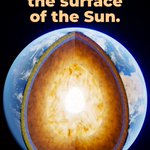
The centre of the Earth is hotter than the surface of the Sun.
It's a ball of solid iron at about 6,000 °C (10,800 °F), crushed by more than three and a half million times the pressure we feel, and the deepest hole anyone has ever drilled, 12 km (7.6 miles), barely scratches the skin of the planet above it.
Run The Sim retweeted
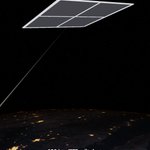
A company is planning to sell sunlight after dark, beamed down from mirrors in space. Would you buy sunlight at night?
Run The Sim retweeted
What do you think would happen if Earth suddenly stopped spinning for a week and then started again?
Run The Sim retweeted
What if every person on Earth moved into one spot in the Sahara?
Standing shoulder to shoulder, all 8.3 billion of us fit in a patch a little bigger than Greater London, and with as much room as people have in New York, we'd all fit inside Egypt.
Run The Sim retweeted
If the asteroid that ended the dinosaurs hit today, how long would you have before it reached your city?
I simulated it on today's Earth. Find yours at 1:30 👇

Run The Sim retweeted
Yellowstone is one of the few supervolcanoes on Earth. If it erupted today, its ash would cover almost the whole United States within a day, and the sulphur would cool the entire planet by almost 4 °C for years. How far from Yellowstone do you live?
Run The Sim retweeted
Would your city be under water if all the ice on Earth melted?
The sea would rise about 66 metres. Bangkok and Miami go at about 2 metres, Shanghai at 3, Dhaka at 5, long before the ice is gone. Watch which cities go first.
Run The Sim retweeted
In 1883 a volcano in Indonesia called Krakatoa exploded so loudly that its pressure wave went around the world for five days. Barometers everywhere felt it, and wherever you live, it passed over you about seven times.
Run The Sim retweeted
The biggest city on Earth over 5,000 years:
The crown starts in Uruk, spends most of history in the Middle East and China, and today the UN gives it to Jakarta.
Run The Sim retweeted
What if the Moon came too close to Earth?
Once it crossed an invisible line about 18,400 km from Earth, called the Roche limit, Earth's gravity would stretch the Moon like dough and tear it apart. About a third of it would crash into Earth, enough to boil the oceans and melt the ground. About a quarter would spread into a ring around our planet, like Saturn's, and what's left would survive as a smaller, battered moon. Would you rather have the Moon or the ring?
Run The Sim retweeted
What Earth looks like if you drain the oceans
What if we pulled the plug on the oceans?
This simulation lowers the sea metre by metre on a real map of the ocean floor from NOAA, and a computer finds the exact moment each piece of land touches the next. Long before the water is gone, you could walk from India to Sri Lanka and from Asia to America. Where would you walk to from your country?
Run The Sim retweeted
Which city has the most people in the world, now and in 2100? Most people say Tokyo, but the UN's new 2025 figures tell a different story. Every lit window is half a million people, from 1950 to 2100.
Run The Sim retweeted
The map you grew up with is lying to you. Slide countries to a new place at their true size and Greenland is the size of the DR Congo, Kenya is bigger than France, and the USA, China, India and the EU all fit inside Africa.
Run The Sim retweeted
Do you understand what a light-year is? Here's a simple explanation.
Light is the fastest thing there is. It goes 300,000 km every second, and in one year it covers about 9.46 trillion km. We call that distance a light-year. So a light-year is not an amount of time. It's a way of measuring distances that are too big for kilometres.
Sirius, the brightest star you can see at night, is 8.6 light-years away. That means its light needs 8.6 years to reach you. Any time you look at Sirius, the light hitting your eyes left the star 8.6 years ago. You're not seeing the star as it is now. You're seeing it as it was back then.
Run The Sim retweeted
How many days of oil has your country stockpiled? Each lamp burns one country's stored oil at its real rate of use.
Run The Sim retweeted
Do you know which country will have the most people in the year 2100?
Ten rockets race from 1950 to 2100, each one climbing as its population grows. Watch for the moment the two giants swap places, and for the countries that come from far behind to fly past the United States.
Where is your country when the music ends?
Run The Sim retweeted
You can't fold an ordinary sheet of paper in half more than about 7 or 8 times, however hard you try. Every fold doubles its thickness and halves its size, so after a few folds you're trying to bend a tiny block that's thicker than it is wide.
But what if you could keep going? If you could fold that same sheet 42 times, how thick do you think it would be? Make your guess, then watch to the end.
Run The Sim retweeted
A sheet of paper is about 0.1 mm thick, and each fold doubles it. After 7 folds it's 1.3 cm. After 20 folds it would be 105 m tall, higher than the Statue of Liberty. After 27 it would be higher than Everest, and after 42 it would be 439,805 km thick, further away than the Moon.
The real record is 13 folds, set by students in Massachusetts in 2011 using 16 km of toilet paper. To fold a single sheet 42 times, it would have to be about 100,000 light-years long, as long as our galaxy is wide.
Music: Grieg's "In the Hall of the Mountain King" (public domain), played on the Salamander Grand Piano by Alexander Holm (CC BY 3.0). Earth and Moon images: NASA. Milky Way: ESO/S. Brunier (CC BY 4.0).