Couldn't find a bio to describe this sinner.
Joined November 2022
- Tweets5.7K
- Following216
- Followers1.4K
- Likes8.3K

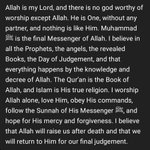




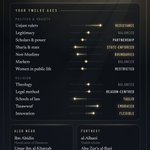


He is basically denying that no Ikhtilaaf exists.
But what about this? Salafism has 100× times more Ikhtilaaf among themselves than it is among any 4 Madhhab within themselves.


The 4 schools of thought had different opinions and verdicts.
Were all these contradicting opinions following the sunnah??
Of course not as the sunnah is one and not many!
This means that they did their best but failed and only one was in accordance to the sunnah.
This is why Allah ordered us in the Quran to refer to Allah and His Messenger if ever there was a dispute over a ruling, which is the Quran and sunnah, and this is what the 4 great Imams of these schools of thought had ordered their followers. They clearly said that whenever what I say goes against the sunnah, disregard what I say and follow the sunnah.
Unfortunately ignorant people and blind followers don’t know this but they are very good in showing the world how ignorant they are!
Allah has said this clearly in the Quran and that would have been sufficient for anyone claiming to be Muslim: “And if you disagree over anything, refer it to Allāh and the Messenger, if you should believe in Allāh and the Last Day. That is the best [way] and best in result”. 4:59

عبد الواجد چشتی retweeted

Eu depois de descobrir que da para tirar um print do post direto da opção de copiar link:
عبد الواجد چشتی retweeted
Ottoman Sultans and the Sufi Tariqa (Spiritual Path) they followed: 🧵
Osman I: Wafa'i

عبد الواجد چشتی retweeted
Islam is Fiqh, Iman is Aqidah and Ihsan is Tasawwuf.
Just as Fiqh have Hanafi, Shafii, Maliki, Hanbali,
& Aqidah have Ashari, Maturidi, Athari,
similarly Tasawwuf have Qadiri, Naqshbandi, Chisti, Shadhili, Suharwardi, Tijani etc.
The path are different but destination is one!
The Qur’an specifically mentions Zakariyya’s prayer at the place where divine blessings descended upon Maryam.
This serves as a basis for supplicating in places where blessings & mercy are descended, among which can be examples like Cave of Hira or Grave of Shuhada and Saliheen.

Bid'ah!
It is an innovation to visit the Cave of Hira purposely to seek blessings or perform a prayer or believing that supplications there have a special virtue.
This does not contradict the basic principle of Salah being permissible on any surface of earth. There is a BIG DIFFERENCE between praying when the time for prayer reaches while one happens to be in or near the Cave of Hira, and deliberately going to the cave for the purpose of performing prayer there.
There is no problem in visiting it for historical or educational reasons.
Allah knows best.
عبد الواجد چشتی retweeted

“...You will regard your Ṣalāh inferior to their Ṣalāh; your fasts compared to theirs and your deeds to their deeds as inferior. They will recite al-Qurʾān, but it will not pass their throats (it will have no effect on their hearts).”
[Ṣaḥīḥ al-Bukhārī, vol. 6 p. 197, Ḥadīth 5058]
“They will apparently speak good things...”
[Ṣaḥīḥ al-Bukhārī, vol. 6 p. 197, Ḥadīth 5057]
“They will constantly quote Aḥādīth...”
[Sunan Abī Dāwūd, vol. 4, p. 244]
“Their lower garb (Izār-pants) will be lifted high...”
[Ṣaḥīḥ Muslim, vol. 2 p. 742, Ḥadīth 144]
“𝗧𝗵𝗲𝘆 𝘄𝗶𝗹𝗹 𝗲𝘅𝗶𝘁 𝗜𝘀𝗹𝗮̄𝗺 𝗮𝘀 𝗮𝗻 𝗮𝗿𝗿𝗼𝘄 𝘄𝗵𝗲𝗻 𝗶𝘁 𝗹𝗲𝗮𝘃𝗲𝘀 𝘁𝗵𝗲 𝗯𝗼𝘄 𝗳𝗼𝗿 𝗶𝘁𝘀 𝘁𝗮𝗿𝗴𝗲𝘁 𝗻𝗲𝘃𝗲𝗿 𝘁𝗼 𝗿𝗲𝘁𝘂𝗿𝗻 𝗮𝗴𝗮𝗶𝗻.”
[Sunan Abī Dāwūd, vol. 4 p. 244]

عبد الواجد چشتی retweeted

Objection 2️⃣
Shabib ibn Sa'id is the sole narrator of this story [Historical athar], including the hadith portion, and he had a weak memory
His narrations are considered authentic only under two conditions:
1. He Must narrates from Yunus
2. His son Ahmad Must narrates from him

عبد الواجد چشتی retweeted
• Ibn Khalafun
• Al-Dhuhli
Ibn Khalafun transmitted al-Dhuhli's declaration that he was trustworthy
• Al-Tabarani :
Trustworthy
📚 Tahdhib al-Tahdhib 3/135
• Al-Hakim
Trustworthy and reliable
📚 al-Mustadrak 1929


عبد الواجد چشتی retweeted
• Ibn al-Madini :
Trustworthy. He used to travel to Egypt for trade, and his book is a sound book
• Abu Zurah :
There is no harm in him
• Al-Nasai :
There is no harm in him
• Ibn Hibban :
Mentioned him in al-Thiqat [Trustworthy]
• Al-Daraqutni :
Trustworthy
عبد الواجد چشتی retweeted
Hence, his narration is weak
Response —
The first person in Islamic history to impose these conditions on Shabib was none other than al-Albani, in an attempt to weaken this narration, followed by those who blindly followed him
This was result of his poor understanding of text

عبد الواجد چشتی retweeted
This Dua was taught by Uthman bin Hunaif (ra) to a man after the passing of Prophet ﷺ.


عبد الواجد چشتی retweeted
This hadith clearly shows both tawassul and istighātha: the first part is tawassul (seeking Allah through the Prophet ﷺ), the second is istighātha (addressing the Prophet ﷺ for one’s need).
Note: This duʿāʾ was also taught by ʿUthmān ibn Ḥunayf after the Prophet’s ﷺ passing.


Monogamy was never designed for men. Cinema romanticised it, governments legalised it, and society shamed men into believing it was nature’s law.
عبد الواجد چشتی retweeted

invoke blessings upon him ﷺ
in every passing moment.
through him ﷺ you shall be saved,
for the matter lies in his ﷺ hands.
and think not
—o sinful one—
that besides him ﷺ
exists a means of salvation.
— ibn al-subkī (d. 771)


عبد الواجد چشتی retweeted
The early ḥadīth master Ibn Abī ʿArūbah said:
“Whoever is unaware of the points of scholarly disagreement (ikhtilāf), do not consider him a scholar.”

ALT جامع بيان العلم وفضله
عبد الواجد چشتی retweeted
Some hypocrites, when they argue on a certain topic they'll only mention and target scholars of Barelvi, Deobandi, Wahhabi etc. Meanwhile the same beliefs are found among the classical scholars whom they also follow, but they do not dare to target them. Why so Munafiqeen?