
Complexicist working on minimal modeling and mesoscopic interpretation of biological systems. A research affiliate working with Michael Levin at Tufts.
Boston, MA
Joined April 2018
- Tweets757
- Following357
- Followers463
- Likes1.4K




We think that 'topoieisis' (short for topological poiesis), the idea that the shape of a collective could shape the behavior of its members, might explain how stressed embryos survive better in larger groups.

New #preprint! @SantoshManicka
biorxiv.org/content/10.64898…
A topoietic model of collective morphogenesis and compartmentalization
"Xenopus laevis embryos survive teratogenic stress at significantly higher rates in larger groups, a phenomenon termed cross-embryo morphogenetic assistance (CEMA) (Tung, Sperry et al. 2024). We introduce topoiesis, a proposed mechanism by which a constitutively secreted stress signal (extracellular ATP or adenosine) diffuses and decays across the group, accumulating more in larger groups where interior volume outpaces absorbing surface. We find that this rising field carries more embryos to survival and demarcates the collective more sharply from its surroundings as collective screening strength grows with size. At intermediate sizes the outcome is spatially organized (a rescued interior enclosed by a failing periphery) and reconstitutes after shuffling. In larger groups the field restructures: its peak concentration keeps rising while its interior gradient flattens into a near-uniform bulk bounded by a sharp rim, sharpening demarcation while blurring distinctions among interior members. This pre-pattern stabilizes well before individual fate commitment, opening a window in which collective geometry can act on survival outcome. A biophysically calibrated minimal model capturing these principles recapitulates CEMA rescue rates across all six observed group sizes (N=1-306; 0%-92%) and the size-dependent craniofacial defect rate among survivors. It predicts that sealing a group's boundary against loss, rather than changing its size or biochemical regulation, moves mean rescue from 0% to 100% and reorganizes the rescue structure, tracking the predicted field geometry. These results reveal a hidden simplicity behind apparent complexity: diffusion and geometry alone may suffice to make a collective both spatially organized and controllable through macroscale intervention rather than microscale engineering of its members."
Some background for the collective hyperembryo effect:
thoughtforms.life/what-group…

6
225
One of this year's Fields medals recognizes the work deriving macroscopic laws from microscopic dynamics by looking at deterministic behavior through the lens of probability

And the Fields medal goes to a mathematical physicist! Yu Deng gets it for rigorously showing how the Boltzmann equation (probabilistic dynamics) emerges from Newton's equations of motion for the particles of a gas: mathunion.org/fileadmin/docu…
1
221
A unified bifurcation switching theory of a class of disparate molluscan shell patterns: journals.aps.org/prresearch/…
4
307
Embodiment not only shapes the present but also the past: scientificamerican.com/artic…

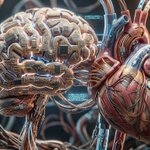
A few iterations with Gemini on an attempt to deep-meld computer science with biology gave me this. Not bad!

2
125
A model of toy models

The key to "physics of AI" is defining appropriate toy models. Here's the methodology of toy models:
kindxiaoming.github.io/blog/…

2
177
Santosh Manicka retweeted

Applications open for our six-week computational oncology summer training 2026 (May 18 - June 26; due: Feb 15, 2026). tinyurl.com/bdhth4em
Plz RT @biopatrika @BE_IISc @iiscbangalore @rakeshthejoy @karthikraman @abandopa @DynamicsLiving @mathoncbro @DeepakNModi @r_sabarinathan


Physical information theory: santafe.edu/news-center/news…

3
86
How does one represent visual intuition without the intricacy of "microscopic" symbols? How to device "macroscopic" symbols when the devil is in the details? Perhaps thinking in terms of "symbols" is not the way forward?

One of the reasons I am very much looking forward to new architectures is that problems in algebraic topology fundamentally require intuitions that go far beyond simple symbolic manipulations. It is often much easier to present a visual sketch of an isotopy/homotopy-based argument than to design precise formulas and make it fully formal.
I hope that a combination of world models, symbolic manipulation, and representations of object dynamics is a path toward completely new architectures. We need them if we want to solve hard mathematical problems that go beyond mere text.
In the picture (based on arXiv: 2107.01664) you can see how easy it is to intuit the handcuff paradox but how hard it would be to write it formally with formulas.

1
302
Non-invasive manipulation of an LLM's internal belief may be equivalent to invasive (surgical) control?

New research: are prompting and activation steering just two sides of the same coin?
@EricBigelow @danielwurgaft @EkdeepL and coauthors argue they are: ICL and steering have formally equivalent effects. (1/4)

133
Autocompletion in semantic space or just syntactic space?
You’re unable to view this Post because this account owner limits who can view their Posts. Learn more
1
100
Have you wondered why repeating a word in your head by focusing on its syllables makes you strangely detach from it and lose its meaning? Does focusing on the "syntax" make one lose their grip on the semantics? Could this be a strange case of syntax-semantics complementarity?
"pairwise communication alone can cause decision deadlock, but adding group interactions allows the system to overcome stalemates and reach consensus"

Symmetry breaking in collective decision-making through higher-order interactions arxiv.org/abs/2510.00853

2
213
We leverage the unique properties of the electrostatic field -- instant, long-range, and "effusive" -- to pattern the bulk of a minimal bioelectric network by stimulating only its boundary. The field also catalyzes voltage patterns via a synergetics (à la Haken) based mechanism.
Final version is out: @SantoshManicka
cell.com/cell-reports-physic…
"Field-mediated bioelectric basis of morphogenetic prepatterning"
#morphogenesis #bioelectricity #fields
"Intercellular bioelectric communication plays an important role in morphogenesis, often modeled using localized non-neural networks generating spatial patterns of membrane potential (Vmem). Here, we find that the electrostatic field contributes to this process, via a synergetics (à la Haken)-based mechanism, by enhancing the complexity of Vmem patterns through a coarse-grained projection. We leverage this property of the field to automatically optimize transient signals from a symmetry-breaking organizer region in the boundary of the tissue to mold Vmem patterns in the bulk. Two models optimized in this way exhibit contrasting “mosaic” and “stigmergic” pattern-coding strategies, depending on their field sensitivity strengths. Interestingly, the stigmergic model recapitulates the qualitative developmental sequence of the bioelectric craniofacial prepattern observed in frog embryos. These results highlight the potential of the electric field both as a facilitator of collective patterning and as a macroscale interventional target for applications in regenerative medicine and bioengineering."
1
5
252
Some nice patterning videos in the SI; also here: youtube.com/@maniackaa/video…

143
Dynamics of decomposed information flow

New paper! Toward a unified taxonomy of information dynamics via Integrated Information Decomposition, out now in @pnas - led by Fernando Rosas,@PedroMediano , & Adam Barrett, w/ Andrea Luppi, @RCarhartHarris, me, & Dan Bor. pnas.org/doi/epdf/10.1073/pn…

2
280
A review of criticality in the brain, as characterized by its hallmark features, namely, scale invariance, marginal stability, tunability, and generative capacity, and its implications.

Is criticality a unified setpoint of brain function?: cell.com/neuron/fulltext/S08…
"We perform a meta-analysis of 140 datasets published between 2003 and 2024. We find that a long-standing controversy is the product of a methodological choice with no bearing on underlying dynamics."

ALT Criticality: A high point in the computational fitness landscape
So far, there was only one way to define a prime number (textbook defn). Now there are infinite ways to do it. It's as if every (finite) prime number has an infinite set of dimensions, each casting its own unique shadow. How mind-boggling is that! scientificamerican.com/artic…

3
256
Simplicity may be sufficient to generate complexity (e.g., cellular automata), but complexity may sometimes require underlying complexity (e.g., complex disease traits)

"AI identifies key gene sets that cause complex disease" news.northwestern.edu/storie…
Nice news article on our new approach to identify gene sets involved in polygenic traits
&
how it can serve as a tool to for the development of new multi-target treatments for complex diseases.

4
192
"Across a range of classic sequence modeling tasks and a real-world stimulus selection task, minimal nonlinearity is not only sufficient but often optimal, yielding models that are simpler, more robust, and more interpretable than their fully nonlinear or linear counterparts"

Uncovering the Functional Roles of Nonlinearity in Memory. arxiv.org/abs/2506.07919
1
2
245
Could biological systems (evolution) have exploited this principle? nature.com/articles/s41540-0…

1
2
60