

🌌 Exploring the mysteries of the universe | 🚀 Space • Science • Galaxies • Black Holes | ✨ Discover the extraordinary.
United States
Joined September 2021
- Tweets790
- Following1.9K
- Followers2.8K
- Likes56
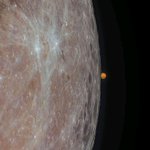

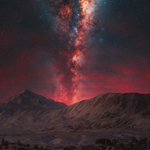


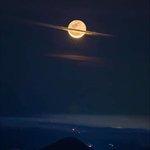

This beautiful spiral galaxy is Messier 88. It is one of the brightest in the Virgo Cluster of galaxies, 50 million light-years from the Milky Way. It measures about 100,000 light-years across, roughly the same as our galaxy. Credit: A. Block et al. #FelizSabado

“I'm sure the universe is full of intelligent life. It's just been too intelligent to come here.”
― Arthur C. Clarke

Orion Nebula (M42), De Mairan's Nebula (M43) & Running Man Nebula (NGC1977). Captured on 6 November 2026 at Rawalpindi, Pakistan (Bortle 9). Seestar S50. 521x20s stacked in Seestar App (Integration time 2 hours 54 mins) & processed in Graxpert, Affinity & ACDSee.
@smartphone_astr


🚨: Earth has officially completed 'HALF' of its lifespan: it will end with the Sun swallowing us in the future.
Earth is approximately 4.5 billion years old and its total estimated lifespan of 9 to 10 billion years.
The Sun has only left 5 billion years!


NGC 457
Newtonian telescope: Celestron 8-inch
Astronomy camera: QHY8L-C at -10°C
Mount: Sky-Watcher NEQ6 Pro
Guiding cameras: ZWO ASI662MC
Lights: 12 x 300s
Darks: 20
Biases: 50
Flats: 50
Software: Siril, Photoshop, N.I.N.A
flic.kr/p/2sLeScd


This landscape is in the direction of the constellation Pegasus and contains different celestial objects such as the star-forming region NGC 1333, on the right, or the dark clouds Barnard 3 and 4 in the upper left. NGC 1333 is part of the Perseus molecular cloud and is about 850

light-years away. At the estimated distance, the region seen here measures about 90 light-years. Credit: J. Groves #FelizMiercoles
2
48
This landscape is in the direction of the constellation Pegasus and contains different celestial objects such as the star-forming region NGC 1333, on the right, or the dark clouds Barnard 3 and 4 in the upper left. NGC 1333 is part of the Perseus molecular cloud and is about 850

