

Activist short selling focused on frauds and promotes. Presume all tweets reflect short positions and biased opinion. Verify independently. Not inv advice.
Joined December 2020
- Tweets418
- Following209
- Followers83.1K
- Likes389






$TMDX TransMedics Q3 results are lipstick on a pig - the business is becoming increasingly bizarre. 72% of the already-tiny sequential increase in revenue came from a newly-consolidated German business-jet charter operator -- not organ transplants or medical devices. The core business already appears to be ex-growth without it. TMDX looks like an aviation/logistics business masquerading as a medical device company.
This was the new CFO’s first earnings call. He’s 6 weeks into the gig. Third CFO in two years. His predecessor didn’t last long.
The unusual CFO turnover is typical of scams, as is the bizarre accounting: TMDX acquired a minority equity stake in PAD Aviation, yet consolidates the German operator's revenue under variable interest entity (VIE) accounting. The result: $9.4 million of unrelated private aviation revenue included in TMDX's Q3 results, accounting for nearly three-quarters of its sequential revenue growth.
Excluding PAD, total revenue grew just 2% QoQ, while services revenue was also essentially flat. Gross margin deteriorated, as well.
The stock bounced after-hours on a revenue "beat" and raised 2026 guidance. But the bulk of the increase in the guidance midpoint came from PAD Aviation, the German private aviation operator.
Details:
1. Almost three-quarters of Q3's sequential revenue increase came from German private jet charters unrelated to transplantation
Q3 revenue was $203 million versus $190 million in Q2, an increase of just $13 million. However, $9.4 million - or 72% - came from PAD Aviation. Excluding PAD, revenue increased only $3.7 million, or -2%, sequentially.
2. The core U.S. medical device business appears to have hit a wall
U.S. product revenue has barely budged in three quarters: approximately $102 million in Q1, $106 in Q2, and $107 in Q3. Sequential growth was barely 1% in Q3.
Total product revenue increased only 2% sequentially, from $111 to $113 million.
3. TMDX's services "growth" was almost entirely German jet-charter revenue
Services revenue increased $10.8 million sequentially, from $79 to $90 million. But $9.4 million — or 87% of that increase — came from PAD's unrelated charter operations.
Excluding PAD, services grew just $1.4 million or approximately 2%.
Meanwhile, services have grown to 44% of total revenue -- the revenue mix is shifting away from high-margin medical devices toward lower-margin services, including private jet charters unrelated to transplantation.
4. The guidance "raise" is largely a German charter-jet business dressed up as growth.
TMDX raised the midpoint of 2026 revenue guidance from $747 to $769 million, or $22 million. But $14 million — nearly two-thirds of the increase — is attributable to PAD Aviation.
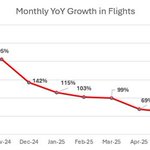
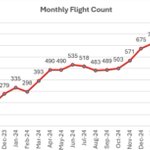
5. Our analysis of publicly available third-party flight tracking also raises concerns about Q4 revenue. Based on the current run rate, we see risk of a massive miss unless transplant flight activity rebounds sharply in November and December.
Disclosure: We remain short $TMDX. Please refer to the disclosures on p. 2 of our January 10, 2025 report on TransMedics, which this post incorporates fully by reference.
Bear Cave at @hntrbrkmedia - Problems At Twist Bioscience $TWST
thebearcave.substack.com/p/p…
Disclosure: we are short TWST. For the avoidance of doubt, we had no interaction with Hunterbrook or prior awareness of their report.
“That’s complete BS,” said Jeff Leiden, executive chairman of Vertex Pharmaceuticals , recalling a recent conversation with a tech leader who claimed AI would cure 90% of human disease in the next seven years.
Vertex has used roughly 50 AI companies to comb through its data set of 10,000 drug compounds, Leiden said. Not one managed to generate a working drug.
wsj.com/tech/ai/silicon-vall…

AI driven drug discovery - AIDD in the meme-sphere - is just as immaterial. Wouldn’t be surprising if 4 is roughly the number of AIDD orders $TWST Twist Biosience booked as well. Hence their materials are vague (“Triple-digit % growth for AI-enabled Drug Discivery”) without disclosing $ amount or the base/denominator. Could be growth from 2 orders to 4 for all of w know. $ILMN last week was coy about committing to even 1-2% revenue bump in 2027 from AIDD.

Uber recorded ~320 million rides and Uber Eats orders during Halloween week. How many rides came from AI agents? Just FOUR. Yes, 4.
$UBER CFO also says AI agents generated just 500 Uber Eats orders.
Looks like the agentic commerce revolution still has a long way to go.

Sudden reality check from $ILMN Illumina. Tanking after hours and taking "AI drug discovery" meme stocks with it, like $TWST. Evasive, weak answer from management when asked about potential contribution/visibility from their AI offering in 2027. Wouldn't even commit to a mere 1-2% revenue increase:
“I think our view right now is somewhere in 2027, there should be some sort of color we should be able to begin to add...but we anticipate that somewhere in 2027, it does become more visible. And the whole point around the new products and BioInsight adding 1 to 2 points of growth for 2027 would certainly be an area."
Hype vs. reality per their earnings call transcript:
The hype - prepared comments, excerpt:
"On the analysis side, we launched the BioInsight platform, which brings our analysis application, AI models and curated biological data together in one place, reducing the need for customers to assemble and manage separate software tools. Through the platform, customers can also access SpliceAI2, our new AI model that predicts how genetic changes affect RNA splicing. In rare disease research data sets, it identified 17% more disease-relevant splice variants than other splicing models."
"I'm proud of the innovation our teams continue to deliver. Our view is that the next era of life sciences innovation will be powered not only by sequencing, but also by the software, AI and differentiated data that unlock the power of the genome. Through BioInsight, Illumina is building the base for AI biology, enabling more powerful foundational models and virtual cell models with the potential to improve our ability to understand and predict biology. As we move nearer to predicting biology, we see a path to using those insights to move health care toward a more proactive future, identifying risks sooner, preventing disease where possible and intervening earlier."
The reality, per Q&A:
Operator
Our next question is from Dan Leonard from RBC.
Daniel Louis Leonard
A bunch. Jacob and Ankur, you talked a bunch about BioInsight. When would BioInsight become more visible in the P&L? Would that be as soon as next year? Or is that a further-out event?
Jacob Thaysen
Yes. So I think, first of all, we are -- we actually established BioInsight approximately a year ago, which was the combination of our software part, which is actually doing extremely well also. And I think for those of you who visited our booth and at our symposiums at ASHG, we really presented how important software is for the ecosystem. So very excited about that. But we combine that with the data because there's a lot of synergies between the two. You have to generate data, but you also have to develop models on top of that.
So we are -- so as we mentioned in 2024 also is that the data and, of course, the multi-omics business would start to generate 1% to 2% in the latter part. So here in '27 of our strategic period when we look to 2024, and that is playing out very well. But I think you will -- depending on how that AI opportunity plays out, which we actually looks very, very promising, this could be substantially bigger. But maybe, Ankur, you have comments on that also.
Ankur Dhingra
Yes. I think our view right now is somewhere in 2027, there should be some sort of color we should be able to begin to add the Billion Cell Atlas and then the second gen, we've talked about it expanding to 5 billion cells certainly would be one of the first drivers within that. Jacob mentioned, we actually have a very broad spectrum of customers in discussion about the Cell Atlas and several other new bio AI-based applications that they are working on. But we anticipate that somewhere in 2027, it does become more visible. And the whole point around the new products and BioInsight adding 1 to 2 points of growth for 2027 would certainly be an area.
Source: CapitalIQ earnings call transcript
No mention of $TWST in Anthropic's list of six AI drug discovery partners announced yesterday, highlighting that legacy shitcos like Twist Bioscience, Genscript (HK 1548), and frothy ARKG names have no seat at this table vs. emerging AI-native, VC-backed players. We infer that Twist was sidelined in favor of BigHat Biosciences, a private company that's raised $223 million for AI-native protein/antibody lead optimization.
Full-stack platforms like BigHat that combine a high-throughput, automated wet lab + AI computational models with proprietary data are clearly poised to win this race -- versus old-school manual, labor-intensive, commodity CRO's like TWST and Genscript, which compete with each other via Google keyword ads in a race to the bottom on pricing and discounts. Details of the BigHat partnership and its work with Anthropic - nitter.cf/BigHatBio/status/21151….
Recent Anthropic papers include minor mention of TWST as a mere CRO - we are of the impression that the total spend for that project was immaterial, perhaps low six-figures, between TWST and a small private company (Adaptyv Bio), but this is unverified speculation. In contrast, the Anthropic announcement yesterday clearly refers to BigHat and others as partnerships.
In its earlier experiments, Anthropic used Twist as a CRO to validate AI-designed protein binders. With BigHat, Claude was integrated directly into an automated antibody-discovery platform, iteratively designing and optimizing drug leads using proprietary experimental data. Twist provided commodity laboratory services, while BigHat participated in the AI-driven drug-discovery process itself - totally different positions in the value chain.
Moreover, TWST is barely a player in antibodies/proteins, which makes the idea of any AI-related oppty a head-scratcher - antibody discovery is an immaterial part of their business. The company is a provider of commodity DNA synthesis, oligos and NGS products -- totally different than antibodies. It tried getting into antibody discovery with its acquisition of Abveris in 2021 -- the acquisition was a failure.
Twist now folds its small antibody-discovery business into a broader "DNA synthesis and protein solutions" revenue category, eliminating separate disclosure of its performance. Previous to Nov 2025, it reported antibody revenue separately as its "Biopharma" category. In Q4 FY2025 and for the full fiscal year 2025, Biopharma/antibody discovery revenue represented approximately 6.5% and 6.2% of Twist's total sales, respectively.
In other words, antibody revenue is de minimis - but TWST's disclosure change now obscure this fact, else the market would see it has no real play in AI drug discovery (ie, antibodies).
Hence, Twist’s press release this morning announcing the launch of “Express Screening Antibodies” - a weak attempt to stay relevant amidst the AI drug discovery chatter.
Disclosure - we remain short $TWST.

Over the past few months, Anthropic scientists have engaged in deep research partnerships with six organizations developing new medicines. We've also begun drug discovery efforts of our own.
In doing so, we’ve learned much more about how Claude can support the many stages of drug development.
In this blog post, we share some early results from these efforts, and describe how this work fits in with our wider ambitions in the life sciences.
anthropic.com/research/early…

Founder of Mithril Medicine, one-person drug company acquired by Anthropic, is not a scientist or academic as we assumed but a Harvard MBA (2025) + ex-Goldman Sachs banking analyst + ex-hedge fund guy tweeting as @Prof_Oak_ . Drug he made with Claude is indicated to potentially enter human trials in 2028.
Obviously a talented founder with a great background, but Anthropic calling this acquisition the beginning “of our drug discovery efforts” is quite the gimmick days before an IPO roadshow.
The hedge-fund-analyst-turned-biotech-wizard path was blazed by Vivek Ramaswamy. We still recall the Forbes cover for his Axovant IPO in 2015 marking the top of that biotech bubble - took about 5 yrs for the index to recover to that level. For those unfamiliar with that saga, it went from the largest biotech IPO in history at that time to delisiting/penny stock/liquidation.


The best way to identify and work through the bottlenecks of drug development is to get deeply involved in real drug programs, across many different therapeutic areas and stages of development. Over the past several months, our scientists have engaged in deep research partnerships with six organizations developing new medicines: The Column Group, Generate Biomedicines, BigHat Biosciences, Divergence Labs, Enveda, and Bristol Myers Squibb. We’ve also begun our own drug discovery efforts through the acquisition of Mithril Medicine, a single-person biotech company co-founded by @atlasventure.
Today we’re sharing early progress in accelerating drug discovery from these research collaborations. With Claude, we are streamlining operations and working to derisk novel targets with TCG, redesigning lab protocols with BigHat, designing CAR-T cell therapies with Generate, and multi-specific therapeutic antibodies with Divergence, drafting regulatory filings with Enveda, and supporting portfolio-level decision making with BMS. Our early collaborations span pre-clinical and clinical work on potential treatments for cancer, allergies, rare genetic diseases including forms of childhood muscular dystrophy, and more.
My team has been working with @Prof_Oak_ , founder of Mithril Medicine, for the past year. Jason Rhodes, General Partner @atlasventure and Chairman of the Mithril Board said this about Mithril: “We prioritized LAMA2-Related Congenital Muscular Dystrophy (LAMA2-RD) as the lead indication, in part, because of the enormous unmet need. These patients present with the disease at birth, spend their lives in wheelchairs and on ventilators, and rarely live past their mid-twenties; yet no therapy is available, and few are in active development. We believed Mithril would be the company to change that.” Anthropic acquired Mithril and we are pushing the frontier of how a single skilled operator, with Claude, can run an entire pipeline of drugs.
We’re working with these teams to show how AI can assist drug developers at many stages of the process already, and to prioritize improvements to our models based on the benchmarks we’re building with collaborators. Our blog includes links to technical reports written with our partners: anthropic.com/research/early…
Superb investigative reporting by @adamfeuerstein on Soleno's drug VYKAT XR, now owned by Neurocrine $NBIX (no position). Detailed article that's a must read. The circumstances surrounding the kids who died after starting the drug are devastating - excerpts below. Highlights from the article:
-Case narratives of 7 fatalities obtained via FDA FOIA, plus ~100 hospitalizations
-Article extensively quotes an ex-FDA official with a PWS child who is pushing the agency to withdraw the drug from market, the same remedy requested in our pending Citizen Petition. The official is a pediatric endocrinologist, as well.
-FDA website states that as of Sep 4, 2026, the "FDA is evaluating the need for regulatory action"
Some excerpts:
"In my opinion, all of these deaths are related to Vykat,” said Karen Vogt, a pediatric endocrinologist and former medical officer at the Food and Drug Administration whose teenage son has Prader-Willi: "Six of the seven patients died from heart or respiratory failure, the seventh died from a severe brain injury. All of the deaths were precipitated by significant fluid retention or hyperglycemia that are known and concerning side effects of Vykat,” she added."
"Vogt, the former FDA medical officer, has emerged as a vocal critic of Vykat. In recent weeks, she has written a letter to the scientific investigative branch of the agency, urging it to re-evaluate its decision to approve Vykat. She has shared her views of the drug on a listserv read by endocrinologists, in Facebook groups for Prader-Willi families, and with the drug’s maker, Neurocrine.”
“Vykat is a dangerous and not-very-effective drug that should have never made it to the U.S. market,” Vogt told STAT, citing her own independent review of the drug’s post-marketing safety reports and publicly available FDA documents."
The details of individual fatalties are disturbing:
"In one case, a 9-year-old girl taking Vykat for one month was rushed to the hospital suffering from severe complications of diabetes, despite never having been diagnosed with diabetes previously. She went into cardiac arrest and died from swelling in the brain."
"In another, a boy, 16, experienced severe edema, an abnormal buildup of fluid in the body, including around his lungs and heart, after starting Vykat. He eventually gained 100 pounds from fluid retention and died due to a blood clot that could not be cleared because fluid blocked it."
"A third case involved a 48-year-old man with a post-Vykat edema so severe it caused a wound to open on his leg. He was hospitalized and died spitting up blood from a gastrointestinal hemorrhage."

New story from me:
Concerns grow on safety issues tied to Neurocrine $NBIX rare disease drug, Vykat.
18 months after its approval to treat patients with Prader-Willi syndrome, Vykat has been tied to seven deaths and 100 hospitalizations.
I obtained case reports on the seven deaths via the Freedom of Information Act. The reports do not prove causality, but some experts say the evidence is sufficient to conclude Vykat is causing unacceptable harm.
“In my opinion, all of these deaths are related to Vykat,” said Karen Vogt, a pediatric endocrinologist and former medical officer at the Food and Drug Administration whose teenage son has Prader-Willi.
“Six of the seven patients died from heart or respiratory failure, the seventh died from a severe brain injury. All of the deaths were precipitated by significant fluid retention or hyperglycemia that are known and concerning side effects of Vykat,” she added.
Vogt believes the FDA should withdraw Vykat from the market. It should never have been approved, she told me.
Story here:
statnews.com/2026/10/13/neur…

$TWST The negative KOL check on the AI drug discovery hype is directionally correct but barely scratches the surface on what a fraudy, bottom-of-the-barrel, commodity business it is, with no realistic tailwind from AI. We’ll have a lot more to say in the coming days.

Some takeaways from Evercore ISI AI Drug Discovery discussion w/ KOL who worked for 20 years in molecular biology/ clinical space.
- AI is not diverting funding away from traditional wt lab experiments
- Their AI spend could be $100M w/ future ceiling of 1Bn
- Oligos --> dont usually request 1000s of copies.. goal is to limit # of attempts
- 70% of cases are specific oligo orders w/ 30% having variability of tens to max 100 oligos ordered
- $TWST doesn't have significant timing/ speed advantage
- $TWST good but not exceptional or highly differentiated
- $TMO is preferred vendor; biggest & most innovative
- CROs & CDMOs --> $TMO is now a one-stop-shop; gives them a huge advantage as big pharma prefers to consolidate with one vendor
- Billion Cell Atlas --> valuable & useful in early stages, but not majorly impactful due to complex multifactorial nature of human system.. very difficult to answer question of how a disease/ problem is developed
- Reagents --> no changes over last 6 years in preference or mkt share of vendors
Overall seems like big winner of this whole theme is $TMO. Also $TWST has no edge.

$TWST Twist Bioscience CEO Emily Leproust dumped $56 million of stock on Thurs 5/17, the most aggressive sale of her career. The plan blew out all 356,546 shares with its inaugural trades, $158 avg, per Form 4. ~11% of the day's volume.
Source: sec.gov/Archives/edgar/data/…
Disclosure: We are short TWST
$TWST Twist Bioscience CEO Emily Leproust filed a Form 144 yesterday that provides notice of her intent to sell 356,546 shares — a highly aggressive amount that represents 40% of her currently saleable stock and options holdings. We expect to know shortly whether she just executed the largest sale of her career.
Caveat emptor.
This would be the first selling under her new Rule 10b5-1 trading plan, which can sell up to 624,134 shares over the next 12 months.
It remains unclear whether all 356,546 shares were sold yesterday or whether the shares will be dribbled out over the coming days. Either way, the amount is aggressive.
Our analysis is awaiting the corresponding Form 4 filing for confirmation and is therefore preliminary and subject to change. That said, we expect the Form 4 to confirm that Leproust just executed the largest sale of her career, based on a review of her pattern of prior Form 144 filings.
Disclosure: we remain short TWST.
$TWST Twist Biosciences AI drug-discovery story is a speculative delusion with no disclosure of an Anthropic partnership. If the results reported in Anthropic's paper generalize, it would be highly deflationary for Twist and crush their revenue. In fact, Anthropic's note explicity diminishes Twist as merely an "independent contract research organization (CRO)” - not an AI drug-discovery technology partner.
TWST issued what looks like a reactive 8-K confirming the Anthropic post - not even worthy of a press release - which was filed under Item 7.01 Reg FD, not 1.01 Entry Into A Material Definitive Agreement.
Anthropic's post stated that 22%-35% of Claude-designed proteins successfully bound their targets versus a stated 10%-15% hit rate for typical protein-design campaigns. That means scientists would need to order only about half as many physical constructs per successful binder - bearish and deflationary.
1. Late yesterday, TD Cowen analyst Brendan Smith hyped an Anthropic blog post about a protein-design project and named Anthropic as a Twist customer, saying this supports the “quality and durability” of AI-driven demand for Twist. This appears to have triggered a broader meltup across AI/biology names like $TEM and $TXG. We suspect Smith's exuberance caught everyone off guard, including Twist, given the immaterial nature of the Anthropic post.
2. Piper Sandler's David Westenberg fanned the flames with a note pushing it even further, calling it a partnership - a word missing in both Twist and Anthropic's 8-K/post -- "We believe the partnership between Anthropic and TWST marks a significant milestone..."
3. Anthropic's blog post/paper never refer to Twist as a partner, merely as an "external evaluator," whatever that means. The technical details in the note portray Twist as a commodity CRO (contract research organization) that provided outsourced wet-lab production and testing services -- not an AI drug-discovery technology partner. Twist operates in a low-end cesspool, competing against Chinese vendors like Genscript using Google search ads in a race to the bottom on price.
(Anthropic paper summarized in the post referring to Twist as a CRO - www-cdn.anthropic.com/30bf50…).
4. Cowen's characterization of the relationship as significant is highly misleading: "While Twist management has not disclosed which quarter revenues from this specific project will fall into, the identification of Anthropic as a customer directly supports the quality and durability of the underlying AI demand." If any economics were involved, we suspect they are trivial given the technical details in the post, and certainly not material enough to merit a quarterly revenue disclosure.
Disclosure - We are short $TWST Twist Biosciences.
Great reporting by @adamfeuerstein on Soleno’s drug VYKAT XR, recently acquired by $NBIX Neurocrine Biosciences. Open letter to patients and physicians after 7 fatalities, by three key PWS associations. Unprecedented in several ways, aside from this many deaths (kids) this quickly on a tiny base we estimate is/was ~800 patients. Our Citizen Petition requesting FDA market withdrawal remains active.
1. PWS associations who helped play a key role in getting the drug to market now raising the alarm <18 mos after FDA approval. One of them even feted Soleno’s CEO Anish Bhatnagar with its 2025 Champion of Hope Award just last Aug, illustrating the harmful incentives and conflicts when rare disease cos shower these lobbies with cash.
2. The letters are signed by physicians who were trial investigators and co-authors on key publications. We don’t recall investigators rebuking a drug this quickly and publicly. The disclosure says the authors were also consultants to Soleno/Neurocrine and/or received speaking payments. Remarkable and refreshing pivot.
3. We still have an active FDA Citizen Petition requesting that the drug be withdrawn from market. For reasons laid out in our Petition and short report of Aug 2025, we don’t think a label change will prevent further fatalities.
4. Based on Neurocrine’s recent earnings call, Vykat sales were down sequentially and essentially flat for the last 3 quarters. Didn’t take long to hit the wall. SLNO acquisition already looks like quite the blunder. We’ll be surprised if they don’t write off the entire $3B by next year. If they just waited a few mos they may have been able to pick it off for $20/share.
A few words about my $NBIX Vykat XR story:
What's new? A group of Prader Willi physicians and experts have written an open letter to clinicians, warning about 7 patient deaths and more than 100 severe cases of side effects possibly linked to Vykat XR.
It's not Neurocrine or the FDA warning about Vykat, it's a group of doctors who treat patients. That's unusual.
As I report, these experts came together to draft the statement this summer, alarmed by the rising numbers of deaths and serious adverse event cases reported in the FDA’s safety database. The group was also concerned that the broader PWS patient and physician community was not being adequately informed by Neurocrine or the FDA about Vykat’s potential safety risks.
“The intention of this statement is to increase awareness of the risks for people with PWS when starting Vykat XR,” the physicians and experts wrote.
Neither the deaths nor the severe side effects have been definitively linked to the drug, the group added.
I obtained an FDA case report detailing one of the deaths involving a 22-yr-old man under the care of his mother. Details about the side effects he experienced and the cause of death are in my story.
The FDA is aware of the letter.
I spoke to Neurocrine CEO Kyle Gano. He reiterated the company's confidence in the positive benefit-risk of Vykat but also said label changes or other new treatment guidance are being contemplated. More details in my story.
You can read my story here:
statnews.com/2026/08/12/neur…

$SLNO Soleno Therapeutics. A second death now shown on FAERS database, Case ID 26462947 with the following info: female. 10 years old, 117 kg, event data Dec 12, 2025, FDA received date Mar 4, 2026. Submitted to FDA by a "healthcare professional." Given the event date, we are curious if Soleno was aware of this as of the last earnings call, when the CFO abruptly announced his resignation which seemed to be effective almost immediately.
"Cardiac Arrest;Respiratory Acidosis;Nervous System Disorder;Pulmonary Artery Dilatation;Pulmonary Hypertension;Hyperglycaemia;Brain Death;Viral Infection"
FAERS currently shows 300 total cases, of which 64 are serious with 2 deaths, on a small base of 859 active patients on drug as of Dec 31. Many of the serious cases indicate hospitalization + symptoms which are often associated with risk of fatal outcome. We are thus curious if any other of these 64 serious cases resulted in fatalities, and whether Soleno management is aware of additional undisclosed fatalities of patients who were on VYKAT XR.
Disclosure - We remain short Soleno Therapeutics. Please refer to the disclosures in our Aug 15, 2025 report which this post incorporates fully by reference and may be downloaded at scorpioncapital.com.

$SLNO Soleno Therapeutics. The abrupt CFO "retirement" doesn't add up. Only 61 per the age listed on the last proxy. In the past, we've seen named executive officers suddenly resign ahead of quarters that impair the stock, to dump their entire position without filing Form 4 as an insider. This comes two months into the current quarter when he would know the Q1 trend.
We recall no mention of the departure in the earnings release yesterday or even in the CEO's prepared remarks. The company buried it with a line at the end of the CFO's own commentary.
We previously highlighted the unusual stock dumping by mgmt in the days immediately following FDA approval last year, re-tweeted below, which was prescient in light of the significant stock decline since. This CFO seemed quite adept at 10b5-1 games preceding those sales.
Disclosure - We remain short Soleno Therapeutics. Please refer to the disclosures in our Aug 15, 2025 report which this post incorporates fully by reference and may be downloaded at scorpioncapital.com.

1/2 $SLNO Soleno Therapeutics - Mgmt stock sales exhibit serious red flags. The speed and magnitude of stock dumping within days of FDA approval strikes us as rare and unusual, like many things w this company. Insiders appear a lot less bullish about their drug’s prospects than investors, based on our analysis of their trading behavior. Several elements signal, to us, an extreme haste to sell upon approval vs. waiting around for drug launch.
We suspect that investors who bought into the equity offering in July at $85/share were unaware of the nature of these sales, and were thus played like fools.
1. Over two consecutive trading days starting on 03/27/25 (FDA approval was 3/26) we calculate that seven insiders collectively sold 859,163 shares for total net proceeds of $47.9 million. Please see disclosures at end.
2. After initially placing 300,000 shares into his 10b5-1 plan last September, CEO Bhatnagar *increased* his sell-down to 523,809 shares which reduced his holdings by 40%. $29mm proceeds. The regulatory and commercial heads reduced their holdings by ~65%. The commercial head had been at SLNO for only ~14 mos, so she strikes us as downright nervous about the near-term.
3. The lead independent director (Pauls) sold 90% of his holdings. He’s CEO of a rare disease company focused on respiratory diseases, so we presume he recognizes the gravity of pulmonary edema as an adverse effect.
4. The stock awards smack of self-serving behavior as the officers were loaded up with equity right before the NDA submission date and then cashed in $58 million worth of stock (gross) as soon as the process was completed just eight months later. The awards suggest to us a board/investor group fixed on incentivizing FDA approval vs. launch.
In July 2024, the board awarded the six executive officers with a one-time performance stock award. The officers were issued a total of 1,195,000 shares with a combined market value of $58.1 million, with the CEO receiving 850,000 of them.
For most officers, these shares would vest 25% *just two weeks later* on 08/01/24, which was weeks before the FDA accepted the Company’s NDA and granted priority review. Another 25% were to vest on the acceptance date, and 50% on the date the FDA approves the drug. It is remarkable that these awards were granted so late in the submission process, and that a quarter of these so-called performance shares vested almost immediately without any performance requirement.
5. The trading appears to have played fast and loose with the company’s own insider trading policy.
The Company announced the FDA granted priority review of DCCR in late August 2024, and over the next two weeks Rule 10b5-1 plans were set up by CEO Bhatnagar, CFO Mackaness, SVP of Regulatory Hirano, and SVP of Clinical Operations Yen. These four plans covered a total of 579,115 shares which was almost 50% of the entire 12-persons insider group’s combined ownership at the time. Given that 10b5- 1 plans are required to “cool” for 90 days before they can start selling, the SLNO officers’ plans were timed to become effective just in advance of the 12/27/24 PDUFA date.
But then the FDA announced an extension of the review period, and it set a new PDUFA date of 03/27/25. The CEO and CFO responded by terminating their Rule 10b5-1 plans in 1Q25 and they did not initiate new ones. They essentially removed the 10b5-1 shackles after presumably having further discussions with the FDA, and they appeared to have been ready and eager to sell as soon as VYKAT XR received the FDA’s blessing.
$SLNO Soleno Therapeutics. The FDA recently notified us that it "has not yet resolved the issues raised in your citizen petition received on August 21, 2025...FDA has been unable to reach a decision on your petition because it raises complex issues requiring extensive review and analysis by Agency officials...."
We hope the FDA expeditiously addresses the post-marketing safety debacle unfolding with regards to VYKAT XR, as is plainly evident in its own FAERS data. SLNO disclosed "764 active patients on drug as of September 30, 2025" in its 11/04/25 press release.
As of today, a search in the FAERS database for VYKAT XR/diazoxide choline indicates 282 total cases, 57 serious cases, and 1 death. The number of entries strikes us as unprecedented given the small denominator. It's unclear to us how many of these may be duplicates or reporting errors.
The entries mention edema/swelling/fluid retention of various types ("swelling face, swelling of eyelid"); cardiomegaly (enlarged heart); "acute kidney injury" under "hospitalized, other outcomes"; "pulmonary hypertension," hospitalized, including an entry listing a patient age of 8; "seizure," hospitalized; "respiratory failure," hospitalized, other outcomes; "cardiac failure", 24 yr old; "pancreatitis, swelling", hospitalized.
One of the most alarming entries is Case ID #26191621, concerning a 5 year old - "Hyperosmolar Nonketotic Syndrome" - under "life threatening, hospitalized" with an event date of Nov 2025. Our report discussed diabetic ketoacidosis, which can present similarly.
Disclosure - We remain short Soleno Therapeutics. Please refer to the disclosures in our Aug 15, 2025 report which this post incorporates fully by reference and may be downloaded at scorpioncapital.com.
