

SeekingVindication/Truth: My personal journey of seeking truth, correcting wrongs, & advocating for one's own narrative against false accusations & perceptions.
Indianapolis, IN
Joined May 2024
- Tweets648
- Following103
- Followers30
- Likes2.2K






Pinned Tweet
🧵To whom it may concern,
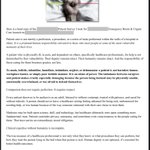
Right to Dignity (UDHR, Preamble; Article 1) un.org/en/about-us/universal… Patients must be treated w/respect, compassion, & recognition of their inherent worth. This includes maintaining privacy, obtaining informed consent, & avoiding degrading treatment.

1
3
1,169


Human dignity is treated as sacred because it marks the point where a society refuses to let death, power, or #indifference have the final word.

23
My biggest beef with Christianity and the so-called #MorallyUpright
Source of my cynicism — The hypocrisy of Christians, specifically Catholics.
Never have I ever have I heard a more concise description on how I feel about Catholicism and the maddening #hypocrisy within the Bible. The interpretations of text within the Bible are awash with hearsay reliant on a thousands-of-years long game of telephone. ☎️
1
21
.
Calling a woman “crazy” is sometimes less about describing her state of mind than about controlling how others perceive her credibility. When a woman's allegations are met with attacks on her sanity instead of examination of the evidence, the insult becomes a tool of silencing rather than a legitimate rebuttal.
The practice of dismissing a woman as “crazy,” “hysterical,” “unstable,” or “overly emotional” when she speaks out about mistreatment is a well-documented form of gender-based discrediting.
It is particularly troubling when directed at women who report abuse, harassment, discrimination, intimidation, or other misconduct.
The underlying tactic is simple but potentially devastating:
Rather than confront the woman’s allegations, the person attacks her psychological credibility. The focus shifts from what allegedly happened to whether the woman making the accusation can be believed.
Several psychological and sociological concepts help explain this phenomenon.
1. The historical weaponization of female “hysteria”
For centuries, women’s legitimate anger, distress, independence, and resistance to authority were sometimes characterized as symptoms of psychological dysfunction.
The term hysteria itself has a long medical history rooted in misconceptions about women’s bodies and emotions.
This history contributed to a persistent stereotype: an emotional woman is irrational, whereas an emotional man may be perceived as passionate, forceful, or assertive.
The implication can become particularly damaging when a woman challenges someone with greater social, political, professional, or institutional power.
Her emotional response becomes the alleged problem, rather than the conduct that prompted it.
2. Ad hominem attacks: Destroying credibility instead of addressing evidence
Calling a woman “crazy” can be an ad hominem attack—an attempt to undermine the person rather than evaluate her claims.
For example:
A woman reports harassment by a powerful man.
Instead of addressing the incident, the man responds, “She’s crazy. Everyone knows she’s unstable.”
Suddenly, the public conversation is no longer about the alleged harassment. It is about the woman’s personality, reputation, and emotional stability.
This tactic can serve three purposes:
Discredit the accuser: Encourage others to dismiss her account before considering evidence.
Divert scrutiny: Shift attention away from the accused person’s conduct.
Discourage other victims: Signal that speaking publicly may result in humiliation, ridicule, or reputational damage.
Importantly, the presence of emotional distress does not establish that someone’s allegations are false.
3. Gaslighting and testimonial injustice
Two related concepts are particularly relevant.
Gaslighting involves a pattern of manipulation that leads someone to doubt their memory, perceptions, or judgment. Repeatedly insisting that a woman is imagining events, overreacting, or mentally unstable can form part of that pattern.
However, a single insult is not necessarily gaslighting.
Testimonial injustice is a philosophical concept describing situations in which someone’s credibility is unfairly discounted because of prejudice associated with their identity.
When someone assumes a woman’s testimony is unreliable simply because she is angry, distressed, or female, that can be an example of testimonial injustice.
In both situations, the damaging assumption is that the woman’s emotional presentation somehow invalidates her factual account.
4. DARVO: When the accused turns himself into the victim
Perhaps the most relevant psychological framework is DARVO, identified by psychologist Jennifer Freyd.
DARVO stands for:
Deny: Deny the alleged misconduct.
Attack: Attack the accuser’s credibility, character, or mental stability.
Reverse Victim and Offender: Portray the accused as the real victim of a malicious or unstable woman.
This reversal can be remarkably effective.
ChatGPT 🔗 chatgpt.com/share/6adf8a2a-6…

22
#ParentalWarning ‼️
This is serious and needs to be investigated.
If your child uses @InShot_App, please check their 🎵 audio libraries.
This quoted post is unavailable.
19


#DeliberateIndifference is dangerous.
#DeliberateIndifference becomes potentially lethal when a known danger is allowed to continue untreated until the opportunity to prevent serious injury or death is lost.

1
3
77
It’s difficult not to sound like a victim when you’re actively being victimized. Speaking honestly about mistreatment in healthcare isn’t self-pity—it’s advocacy. Patients should not have to soften the truth to make their suffering more comfortable for others to hear. #healthcare
12
#Healthcare Maleficence can cover harm that is not purely spite-driven (negligence, systemic failure, etc.) In medical ethics, writers sometimes distinguish intentional maleficence from unintentional maleficence. Malicious is more tightly focused on motive (desire to injure).

1
27
Deliberate indifference is the conscious disregard of a known or obvious risk of serious harm. It means a person or institution is aware of facts showing that someone faces a substantial risk, yet fails to take reasonable action to address it. #Healthcare

1
22


The Healthcare Professional’s ‘How-To’ Guide for Effective Patient Degradation, Dehumanization, and Belittlement. Turning Care into Cruelty.
More ℹ️: drive.google.com/file/d/1VnI…
Diminishment 101 — Mastering the Art of Baby Talk 👶

1
34

The Healthcare Professional’s ‘How-To’ Guide for Effective Patient Degradation, Dehumanization, and Belittlement.
More ℹ️: drive.google.com/file/d/1VnI…
Tips on how to turn compassionate care into cruelty.

29

SeekingVindication retweeted

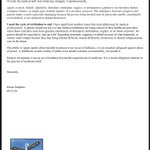
#Vulnerability Medical Ethics & Moral Responsibility.
Clinical expertise without humanity is incomplete.
The true measure of a healthcare professional is not only what they know or what procedures they can perform, but how they treat the person lying in the bed when that person is sick and vulnerable.
Dignity is not an optional part of healthcare.
It is part of the treatment.

Medical Ethics & Moral Responsibility.
The true measure of a healthcare professional is not only what they know or what procedures they can perform, but how they treat the person lying in the bed when that person is vulnerable.
Check out ‘Mean Girl Medicine’ on Facebook
#Vulnerability Medical Ethics & Moral Responsibility.
Clinical expertise without humanity is incomplete.
The true measure of a healthcare professional is not only what they know or what procedures they can perform, but how they treat the person lying in the bed when that person is sick and vulnerable.
Dignity is not an optional part of healthcare.
It is part of the treatment.
64