

Delusional Optimist🐦🔥
Better days📍
Joined June 2024
- Tweets9.6K
- Following678
- Followers678
- Likes91.7K










Allowed. retweeted

My question is: What the FUCK are you going to do about it? Nothing. Absolutely nothing.
You spend your time obsessing over atrocities committed hundreds of years ago against people who probably have no connection to you, yet you have nothing meaningful to show for your own life. You haven't built anything substantial, you aren't contributing to your community in any meaningful way, and you have somehow convinced yourself that being permanently angry about history is an accomplishment.
This is how many of you find purpose in life. Day in, day out, it's the same whining about how your ancestors were enslaved. You have turned historical suffering into a personal identity. You know everything about what was done to your ancestors but seem completely uninterested in what you can do to change the circumstances of your descendants.
Worse, this is the mentality you are passing down to younger generations. Instead of teaching them to build, compete, innovate and acquire power, you are teaching them to inherit grievances. You are preparing children to become professional victims rather than capable people who can shape their own future.
If slavery returned today, many of us would find ourselves in chains just like our ancestors because we are doing absolutely nothing to build the strength, institutions and economic power needed to prevent such atrocities from happening again. We are so busy discussing historical oppression that we have neglected the very things that would make future oppression difficult.
Look at India. It is unlikely to be colonised again. Why? Because it has built considerable military and economic power, including nuclear weapons. It understands that sovereignty requires more than historical grievances. It requires the ability to defend itself.
But you, as an African, what do you have apart from daily whining online? What are we building? What institutions are we strengthening? What economic or military power are we creating? What are we doing to ensure that future generations never find themselves in the same position?
Nothing. And that's precisely the problem. We have become very good at explaining our historical disadvantages but remarkably poor at doing the work required to overcome them.
You cannot change what happened to your ancestors. But you are responsible for what happens to your descendants.

This is how European slave traders transported Africans they had captured across Africa and shipped them across the Atlantic.
Human beings were packed into ships like worthless cargo, chained together, with barely enough room to breathe, move or lie down.
These people were being transported into a lifetime of forced labour, brutality and exploitation.
Many died during the crossing, denied even the dignity of a human burial.
The cruelty inflicted on African people was beyond imagination.
Millions were torn from their homes, families, cultures and homelands to build wealth for others.
And the consequences did not disappear when slavery was abolished.
Some crimes are too deeply rooted in history to be erased by the passage of time.
Time does not cancel history.
And silence is not forgiveness.


Allowed. retweeted
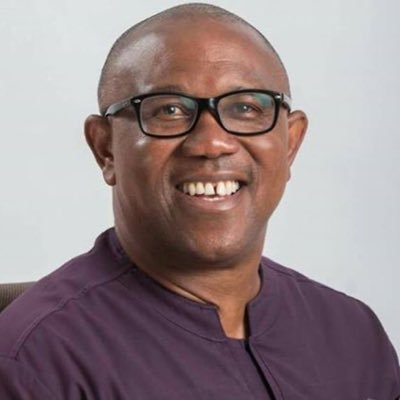
NIGERIANS, GO AND VERIFY (3)
Building the Future Through Education
Peter Obi
In the first two instalments of this series, I explained how we approached the task of building strong institutions and laying a solid foundation for the development of Anambra State. One of the most important institutions we invested in was education.
For me, education was not a political game or a convenient political promise. Even before I ventured into politics, I had always regarded it as the foundation of meaningful development and the most enduring investment any government can make in its people. I believe that the future of any society depends largely on the quality of its educational institutions, teachers, learning environment, and opportunities available to its young people.
This conviction informed our decision to invest across the entire educational spectrum, from primary schools to universities, technical institutions, and adult education.
Basic and Secondary Education
One of our first major decisions was to return mission and privately owned primary and secondary schools to their original proprietors while retaining government support. We also provided billions of naira to assist in rehabilitating the returned schools, restoring the partnership between government and religious institutions that had historically contributed to educational excellence.
This policy attracted international attention. Professor Paul Collier, the Oxford economist and World Bank consultant, led a World Bank-commissioned study of Anambra’s educational transformation. His team examined our decision to return schools to their original missionary owners while retaining government responsibility for funding teachers’ salaries and supporting infrastructure. The team described the partnership model as a revolution in public service delivery and recommended it as a model that could be replicated by other Nigerian states and developing countries. We believed then, as we do now, that government does not necessarily have to own every institution to discharge its responsibility effectively. What matters is ensuring that every child has access to quality education.
For those who claim that we built no schools, I invite them to verify our records. We constructed five-classroom blocks in virtually all of the 177 communities in Anambra State, one of the most extensive community-based school infrastructure programmes undertaken by any state government. The town union chairmen and community leaders of that period can attest to this.
We also renovated hundreds of dilapidated schools, including some where trees had literally grown through abandoned buildings. Comprehensive Secondary School, Onitsha, and Oraukwu Grammar School are examples.
Beyond infrastructure, we distributed approximately 40,000 computers to schools, including more than 22,500 HP laptops. We equipped secondary schools with Microsoft Academies and connected schools across the state to the internet. We supplied generators, established and stocked libraries, revived school sporting activities, and installed boreholes in over 300 schools, including all girls’ schools. We also provided funding to support sporting activities in all our secondary schools.
These technology investments attracted remarkable international recognition. Mr Fabrice Campoy, Managing Director of the Personal Systems Group at HP Inc., described our procurement and distribution of over 22,500 HP laptops as the biggest project of its kind in the Middle East and Africa. Similarly, Mr Ken Spann, then Country Manager and Head of Microsoft Nigeria, described the establishment of Microsoft Academies in more than 500 Anambra secondary schools as the most extensive deployment of its kind in Africa at the time.
Allowed. retweeted

"If you can't beat them you join them"
We can beat them hands down.
Nigeria must be OK
Vote NDC✌🏾

Allowed. retweeted

You will never get the desired outcome if you spend your time telling or selling a woman the idea that you want something stable with her and for her.
Women do not understand words enough to paint mental pictures with them. Often, their utilisation of words begins and ends with escaping responsibility or causing emotional instability.
That is, you can write a three-paragraph message highlighting the things you want with her and for her, and she will completely disregard the responsibility to give that idea a mental frame. And because the message was long, regardless of its content, she will respond with the attitude of someone who feels suffocated.
As a man, you should not pursue stability in a woman. The reverse is more efficient: a woman should pursue stability in you.
It doesn't matter if she's 21 or 50, if she's the most beautiful girl or not, if she's a good girl or not, or if you love her and want a future with her or not. You should never be the one to propose stability to a woman.
Women across borders are chaotic in nature. And as such, the pursuit of stability is the woman's to make. If you keep preaching stability and the future to her, it means you love her chaos more than is necessary for her to pursue stability. She will remain chaotic.
If you want something stable with a woman, especially a young and good one, the best approach is to manifest as both chaos and stability. More of the former. You want to subtly cause her a good deal of instability, which consequently makes her chase the relief (stability) in you, the very source of that instability.
Don't take my words for it; ask yourself why good women fall inlove with bad men. Okay?
Regardless, this is why good women fall in love with bad guys:
The bad guy, through his disposition and his often demeaning, non-pedestalising approach to interacting with women, constantly builds tension and instability in her. Thus, putting the woman in a constant pursuit of relief (stability) in the very man who produced that instability in her. It is that pursuit that she remains attracted to him.
But, You're not a bad guy, however with young, good women you intend to have something stable with, you should borrow a page from the bad guy's book. Otherwise, you suffer ruin.
It's not ethical. Neither, apparently, is women's psychology.
Good luck or congratulations.


Allowed. retweeted

Once you are declared winner, I'll create a coupon code with your name so any customer who uses "PETER OBI" during check out on neostore.ng gets a huge discount.
You need to win this election sir. I will drop misogyny and make peace with my enemies for you.🤲🙏

WASHINGTON, DC : PRESENTING NIGERIA’S DEVELOPMENT AND DEMOCRATIC FUTURE ON THE GLOBAL STAGE.
Yesterday, Monday, November 16, I arrived in Washington, DC, for a series of significant meetings and engagements with congressional leaders from both the U.S. House of Representatives and the Senate, as well as other influential American figures. These discussions focused on vital matters affecting Nigeria’s development, the well-being of our people, and the future of our democracy.
I began the day with a substantive interview with renowned American television commentator Glenn Beck. Our conversation addressed Nigeria’s challenges, the pressing need for accountable leadership, the responsible management of our vast human and natural resources, and the opportunities to establish Nigeria among the world’s leading nations.
I also met with prominent American leaders, including Congressman Marlin Stutzman, Congresswoman Beth Van Duyne, Congressman Todd Tiahrt, Suzanne Bock Grisham, retired U.S. Army Colonel Albert V. Short, and other esteemed stakeholders.
One of the day’s principal highlights was my address on Capitol Hill, during which I underscored the urgent importance of international cooperation and support for Nigeria’s advancement, particularly in the areas of national unity, security, economic prosperity, and the welfare of our citizens.
Our conversations also addressed the protection of Nigeria’s emerging democracy and the strengthening of democratic institutions to ensure elections are free, fair, transparent, and credible, accurately reflecting the will of the Nigerian people.
Nigeria has immense potential to emerge as a leading nation within the global community. What is urgently required is accountable leadership, responsible stewardship of our resources, resilient institutions, and an authentic commitment to the security, unity, and well-being of every Nigerian.
Throughout these engagements, my message remained unequivocal: Nigerians must determine Nigeria’s future. Every vote must be counted, the rights of every citizen must be safeguarded, and the people’s will must consistently prevail.
I remain encouraged by these engagements and firmly committed to working with Nigerians at home and in the diaspora, alongside our international partners, to build a peaceful, secure, united, and prosperous Nigeria.
Our journey continues. Our determination remains steadfast.
A New Nigeria is POssible! -PO


Allowed. retweeted

Simps will start making good money and buy wigs for every girl they're talking to because "e no go far".
Women will start making good money and open numerous savings accounts.
"Before you curse a whore, stone a simp"
~ @taiwo_junzi


Allowed. retweeted

You are a person due for equal respect.
Dont bow to another nigga over Results you’re capable of attaining .
But give respect when due .
Allowed. retweeted
NIGERIANS, GO AND VERIFY (2)
Building the Institutions of the State
Peter Obi
In Series 1, I explained the philosophy that guided our administration in Anambra State: governance as a public trust, anchored on character, competence, capacity, and compassion. I also introduced the Anambra Integrated Development Strategy (ANIDS), our comprehensive framework for achieving balanced and sustainable development across all sectors.
But a development vision, however noble, cannot succeed without strong institutions to drive it. Before the government could effectively deliver on its promises in education, healthcare, infrastructure, security, and other sectors, we had to first restore the machinery of government itself. We could not build a prosperous state on a cracked and unstable foundation.
This was why one of our foremost priorities under ANIDS was to rebuild, strengthen, and reposition the institutions of government. When I assumed office, the physical and administrative architecture of governance was in a deplorable condition. Our task was not simply to construct buildings but to restore the institutions, systems, and structures through which government could function effectively.
We therefore began systematically rebuilding the infrastructure of governance across the executive, legislature, judiciary, civil service, and local government system.
Restoring the Seat of Government
The Government House in Awka, the state capital, had been vandalised and burnt by reactionary forces in 2004. We therefore had to rebuild, re-equip, and furnish it, restoring its dignity and functionality as the seat of executive government.
In the same vein, we rehabilitated the Governor’s Lodge in Amawbia and constructed a new Governor’s Lodge in Onitsha. These investments were intended not merely to provide accommodation but to strengthen executive presence and facilitate effective governance across the state’s major administrative and commercial centres.
Strengthening the Legislature and Judiciary
We rehabilitated the Anambra State House of Assembly Complex in Awka, providing our lawmakers with a more conducive and decorous environment in which to discharge their constitutional responsibilities. We also provided legislators with vehicles to facilitate the effective performance of their legislative duties.
We recognised that a functioning democracy requires strong institutions, including an effective legislature and an independent judiciary, each operating within its constitutional mandate.
In strengthening the judiciary, we provided brand-new vehicles to High Court judges. This was the first time such provision had been made for them in the history of the state. We also provided vehicles to magistrates for the first time since the creation of Anambra State.
These interventions were intended to strengthen the administration of justice, improve mobility, and enable judicial officers to discharge their responsibilities more effectively.
Rebuilding the Civil Service: The Chief Jerome Udoji State Secretariat Complex
Before our administration, many Ministries, Departments, and Agencies (MDAs) operated from scattered rented apartments, while civil servants lacked a centralised and decent working environment. This untidy arrangement undermined coordination, efficiency, and the dignity of public service.
We addressed this situation by constructing the two-phase, ultra-modern Chief Jerome Udoji State Secretariat Complex, comprising Blocks 1 and 2. The project brought the MDAs together under one roof, improved administrative coordination, and provided civil servants with a more suitable environment in which to serve the people.
The complex was named after Chief Jerome Udoji, the first indigenous Chief Secretary (the equivalent of today’s Secretary to the State Government) of the Eastern Region during the First Republic. This was also a recognition of his contribution to public administration and the civil service tradition.

Allowed. retweeted

This was Chinua Achebe by the way.
I've never been able to understand why our antediluvian President will bring back an anthem handed down to us at independence just because he reminisced singing it as a kid.
Who changes a national identity that casually???
Omo Tinubu must go.


Allowed. retweeted

This series Obi is doing to highlight his achievements from over a decade ago should be a lesson to those of us who are doing excellent work. It’s not enough to do it. You need to be loud about it. Because the children of perdition will use your silence for their good.
