

Barrister. Writer. Time traveller.
Various dimensions
Joined November 2020
- Tweets2.8K
- Following2K
- Followers5.8K
- Likes10.4K
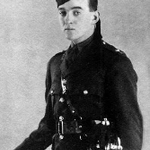





David Niven was a Hollywood star, war hero and SOE officer: a celebrity soldier.
He served with the British Army in WW2 across Europe, including the D-Day landings in Normandy, the Falaise Gap, Operation Market Garden, and the Battle of the Bulge.
And rose in the ranks to Lieutenant Colonel.

BARNABY JAMESON retweeted
Good morning all.
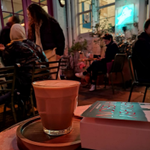
Spotted in Notting Hill many years ago: a reader enjoying CODENAME: MADELEINE over a latte.
Nowadays, the coffee would cost more than the book.
At least the story lasts longer than the caffeine hit!

BARNABY JAMESON retweeted

🇫🇷 🇬🇧The V1 was heading toward a hospital. The Free French pilot chasing it was eight days away from his wedding.
On August 3, 1944, Jean Maridor intercepted a German flying bomb threatening Benenden Hospital in Kent.
The 23-year-old Free French ace flew Spitfires with No. 91 Squadron of the RAF. Credited with five aerial victories, he had also become a skilled V1 hunter. His final interception would bring his tally to seven flying bombs destroyed individually.
Four years earlier, he had escaped France to keep fighting.
Shooting down a V1 carried a deadly risk: get too close, and its exploding warhead could destroy the fighter pursuing it.
There was another way. A pilot could slide his wingtip beneath the V1’s wing, disturbing the airflow and tipping the flying bomb off balance, without necessarily touching it.
According to the Le Havre municipal archives, Maridor tried to tip the "doodlebug" but could not bring it down.
With the hospital threatened, he turned to his cannons. He closed to less than 50 meters and fired.
The V1 exploded. The blast destroyed his Spitfire. France’s Order of Liberation records his final attack as a deliberate sacrifice to save the hospital.
Before the war, Maridor worked as a barber while learning to fly and studying to qualify for military pilot training. He earned his first pilot’s certificate at sixteen.
Eight days after his final mission, he was due to marry his fiancée, Jean Lambourn, a serving officer in the Women’s Auxiliary Air Force.
He was twenty-three. They never had their wedding.
Remember Jean Maridor.
Follow @Vanguard_WW2 for more stories worth remembering.


BARNABY JAMESON retweeted
The final draft of my second novel is ready:
CODENAME: GOD-GIVEN.
The extraordinary story of Denis Rake, the pre-war entertainer who became an SOE wireless operator in the secret war against Nazi Germany.
Vanguard Press, early 2027.


Good morning all.
Spotted in Notting Hill many years ago: a reader enjoying CODENAME: MADELEINE over a latte.
Nowadays, the coffee would cost more than the book.
At least the story lasts longer than the caffeine hit!
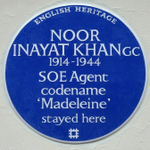
4 Taviton Street, Bloomsbury, London.
A tribute to a remarkable SOE agent awarded the George Cross for her extraordinary courage.
Her codename was MADELEINE:


Through the character of Leo Marks in CODENAME: MADELEINE, readers will plunge into the fascinating worlds of antiquarian books, chess and Jewish numerology, before venturing deep into the shadowy, ultra-secret world of Second World War cryptography...


The Special Operations Executive (SOE) undertook some of the most perilous missions of the Second World War.
An estimated 28% of SOE agents deployed on operations lost their lives.
Their courage came at an extraordinary cost.
Their sacrifice must never be forgotten.

Would you have dared to step into the shadows?
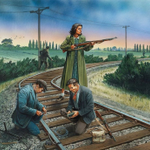
Imagine parachuting into Nazi-occupied Europe to sabotage enemy communications and transport links, never knowing whether those who offered help might betray you to the Gestapo.
Capture could mean brutal interrogation, torture and execution. Every mission carried the risk of discovery, betrayal and death.
Yet SOE agents accepted these dangers, operating behind enemy lines in the cause of freedom.
Let us never forget the extraordinary courage, sacrifice and resilience of the men and women who fought the secret war.

BARNABY JAMESON retweeted
After Étienne Szabo was killed in North Africa in October 1942, Violette joined SOE.
Leo Marks gave her 'The Life That I Have' as her code poem.
He called her “A dark-haired slip of mischief….She had a Cockney accent which added to her impishness.”

My debut novel CODENAME: MADELEINE is available to order via the following link: amzn.to/49hJySA

On the night of 8/9 April 1944, SOE agent Muriel Byck parachuted into occupied France alongside three fellow operatives: Captain Stanisław Makowski, Captain C. S. Hudson and Captain G. D. Jones.
Operating under the codenames VIOLETTE and MICHELE, she served as a wireless operator with the Ventriloquist Circuit.
Tragically, less than two months after her arrival, Byck died of meningitis in Romorantin, France; a life cut short in the service of the secret war.

BARNABY JAMESON retweeted
As an SOE agent in the Spindle circuit, Odette Sansom Hallowes endured brutal Gestapo interrogation and torture before being imprisoned in Ravensbrück concentration camp.
After the war, she gave evidence against prison guards accused of war crimes at the 1946 Hamburg Ravensbrück trials, helping bring them to justice.
Her courage and service were later commemorated by Royal Mail, which featured her on a postage stamp in its Britons of Distinction series in 2012:

BARNABY JAMESON retweeted
Sir Michael Caine, then Fusilier Maurice Micklewhite, served with the Royal Fusiliers during the Korean War from 1952 to 1954.
After his initial service in Germany, he was deployed to the front line near the 38th Parallel, where he endured the harsh realities of trench warfare against Chinese forces.

RAF Tempsford was the secret wartime airfield from which SOE agents, including 'Tommy' Yeo-Thomas, embarked on their perilous missions into occupied Europe.


Sir Michael Caine, then Fusilier Maurice Micklewhite, served with the Royal Fusiliers during the Korean War from 1952 to 1954.
After his initial service in Germany, he was deployed to the front line near the 38th Parallel, where he endured the harsh realities of trench warfare against Chinese forces.
As an SOE agent in the Spindle circuit, Odette Sansom Hallowes endured brutal Gestapo interrogation and torture before being imprisoned in Ravensbrück concentration camp.
After the war, she gave evidence against prison guards accused of war crimes at the 1946 Hamburg Ravensbrück trials, helping bring them to justice.
Her courage and service were later commemorated by Royal Mail, which featured her on a postage stamp in its Britons of Distinction series in 2012:

