

The world's leading venue for collaborative research in theoretical computer science. Follow us at https://nitter.cf/t.co/KvcuGI7WM0.
Berkeley, CA
Joined January 2018
- Tweets1.5K
- Following356
- Followers10.3K
- Likes834




Simons Institute for the Theory of Computing retweeted

Just gave a talk at @SimonsInstitute: “Can We Win?” AI and cybersecurity are playing multidimensional chess. Why don’t safety and security self-improve the same way? To win, I argue, we need solutions that are deep, cheap, and continuous. @Cisco Shirudo is part of the deep technology defenders need.
Video: youtu.be/BT2cB9QPsHc


We’re introducing Shirudo, an open-source Linux runtime allowing agents to defend systems without downtime. It lets agents write dynamic eBPF controls to shield systems from exploits, giving defenders more time to test and roll out patches. Built by @cisco together with OpenAI.
Shirudo is a first step toward self-defending infrastructure that can adapt to new threats while keeping services running. Our goal is for defenders to work with AI agents to find affected systems, test and share shields, and deploy them without disrupting workloads.
openai.com/index/introducing…

Simons Institute for the Theory of Computing retweeted

VP is different from VNP (!!)
Algebraic complexity and Mobius pseudo-randmomness;
The Riemann hypothesis (!!)
Test your intuition - a question about half the primes;
The history of human interest in the primes.
gilkalai.wordpress.com/2026/…

Simons Institute for the Theory of Computing retweeted
My blog post on VP ≠ VNP
blog.computationalcomplexity…
Simons Institute for the Theory of Computing retweeted
1/2 “The entirety of the current AI boom is driven by this observation that many properties in AI scale in really surprisingly lawful & predictable ways,” said @jaschasd of @AnthropicAI, at the Simons Institute. Video: simons.berkeley.edu/talks/ja…

Simons Institute for the Theory of Computing retweeted
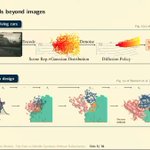
"Diffusion models are used way beyond generating images. They are used to generate diffusion policies for self-driving cars, even protein design. The application area for diffusion models is ever expanding," said @Grigoris_c of @UWMadison during his talk at the Simons Institute.

Simons Institute for the Theory of Computing retweeted
2/2 Their task: to discuss the immediate future of theoretical computer science in light of the challenges posed by AI. Read a report of that closed-door meeting, in the Polynomial Times (see Theoretical Computer Science Meets Its AI Moment, page 3): simons.berkeley.edu/PolyTime…


Simons Institute for the Theory of Computing retweeted
1/2 The day after OpenAI dropped a bombshell about "a solution to the Navier–Stokes existence and smoothness problem," 32 theoretical computer scientists met for a closed door meeting (that had been planned for months) at the Simons Institute for the Theory of Computing.

Simons Institute for the Theory of Computing retweeted

Theoretical Computer Science Meets Its AI Moment
The day after OpenAI dropped a bombshell about "a solution to the Navier–Stokes existence and
smoothness problem," 32 theoretical computer scientists met for a 2-day closed door meeting (that had been planned for months) at the Simons Institute for the Theory of Computing, to discuss and debate their field's response to AI. In this issue of the @SimonsInstitute's annual magazine, Polynomial Times, is my report of that meeting. Read the article and the entire issue here: simons.berkeley.edu/PolyTime…


Simons Institute for the Theory of Computing retweeted

Here's my latest on the increasing gaps between open-weight and frontier #AI models revealed in the #1stproof third batch results, announced earlier this week: scieye.wordpress.com/2026/10…

Simons Institute for the Theory of Computing retweeted

Thanks to all speakers, the audience for the sharp questions, my co-chairs @SharonYixuanLi , Dawn and Santosh, and the @SimonsInstitute team.
All talks: youtube.com/playlist?list=PL… Workshop: simons.berkeley.edu/workshop…

Simons Institute for the Theory of Computing retweeted

How can the math community forge the best path forward in the AI age? We're committing $15M to workshops and initiatives — plus free AI computing resources for foundation-supported researchers — through new partnerships with @AnthropicAI and @OpenAI: bit.ly/4zpfIbW
#math #science #AI

Simons Institute for the Theory of Computing retweeted
Moni Naor wins the 2026 Knuth Prize, the highest career award in theoretical computer science.
sigact.org/Prizes/knuth/cita…
Simons Institute for the Theory of Computing retweeted

first proof third batch results are out! full report here: hexagonmath.org/2610.00244

Simons Institute for the Theory of Computing retweeted

We all know that AI is a highly divisive issue. A working group convened at the Simons Institute earlier this month, to formulate concrete action items for TCS academia to take in response to AI. Remarkably, despite the wide range of opinions, participants were able to arrive at broad consensus on the list of recommendations here: simons.berkeley.edu/AITCSrep…. Many apply more broadly to mathematics, and beyond.
This document is NOT a declaration or essay. It is a list of concrete proposals, fleshed out all the way from motivation to implementation. Its purpose is to provide a common reference point and shared baseline for the community to discuss and enact change.
The actions are intentionally designated to be taken in the short term (specifically, this academic year); they are not meant to represent a stable vision of the future. You do not have to like them; you just have to like them MORE than what will happen if nobody takes action. Not everybody at the workshop agreed with every action, but they ultimately came together through discussion and compromise.
For transparency, I was involved in this event in a purely organizational capacity. I did not come up with any of these actions, but I recognize their importance and I will support them however I can. I hope you do too.

In September, we hosted a working group to think about how the TCS community should respond to AI progress. Their report, released yesterday, highlights 12 near-term actions that received broad support among the participants.
simons.berkeley.edu/news-pub…

Simons Institute for the Theory of Computing retweeted
Here are some of my main takeaways from the exciting #Cryptography reunion workshop I attended as a Science Communicator in Residence @SimonsInstitute this summer -
scieye.wordpress.com/2026/09…
Many thanks to the organizers, Elette Boyle, Yuval Ishai, Abhishek Jain & Daniel Wichs!

Simons Institute for the Theory of Computing retweeted
1/5 The case for diffusion language models: "A lot of the [early] gains in language modeling performance have come from scaling pre-training...[the training algorithm] was designed to be very parallelizable across GPUs," said @volokuleshov of @Cornell at the Simons Institute

Simons Institute for the Theory of Computing retweeted
1/5 Imagine taking an fMRI scan of the brain of a person viewing an image, and reconstructing what the person saw from the fMRI alone. That's Brain-IT. "This is state-of-the-art image decoding from fMRI," said Michal Irani (@WeizmannScience), at the Simons Institute.

Simons Institute for the Theory of Computing retweeted
1/3 For AIs to be socially intelligent, they'll have to learn internal "social world models" of people & social interactions, not just physical world models, said Paul Liang (@MITEECS) at the Simons Institute workshop on Topics in Intelligence: World Models and Social Reasoning

Simons Institute for the Theory of Computing retweeted
The @FlatironInst's Nour Al Hassanieh develops accurate and efficient algorithms for solving wave equation problems, which has many potential applications across acoustic engineering and medical imaging. Read our interview with her: bit.ly/3SpqVJN
#math #science #FlatironCCM

Simons Institute for the Theory of Computing retweeted
Isik Ulusan, a U Mass student, created Complexle, like Wordle but you guess complexity classes. For each guess you get hints (set-theoretic inclusion, the type of model it is defined on, uniformity, etc.) for a total of 6 guesses. Give it a try.
iulusan.github.io/complexle/…