

Entrepreneur @ https://nitter.cf/t.co/1lykRLNxl4 - Business Intelligence Console and Prediction Algorithms Discord: https://nitter.cf/t.co/FBjWnBVQcq
Constanta, Romania
Joined May 2019
- Tweets1.9K
- Following2.3K
- Followers389
- Likes1.4K






Pinned Tweet
Gnosly.com - is now open for users.
The service aggregates real-time data from news feeds, email accounts, X, weather, satellite imagery, and uploaded reports into thematic streams.
The information is curated using top AI models
Note: Accounts require approval.

ALT Gnosly aggregates real-time data from news feeds, email accounts, X (formerly Twitter), weather, satellite imagery, and uploaded files or images into thematic streams. The information is analyzed using the latest AI models from OpenAI, Anthropic, Google, and DeepSeek.
GNOSLY WIRE | Charles-Henry Monchau (LinkedIn)
Gold hits an 11-month low of $3,940. Gold is now down 25% since the US–Iran war began in Mar and 29% from the top
👉 LIVE Feed: gnosly.com/feed/gold/
#gold #trading


GNOSLY WIRE | HolgerZ (X), Bloomberg, Reuters
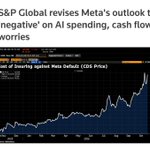
S&P cuts Meta’s outlook to NEGATIVE, warning that heavy capex and delayed AI monetization could keep free operating cash flow negative longer than expected.
The sting: S&P sees Meta’s ability to monetize AI as more limited than peers’.
Meanwhile, 5y default insurance costs have climbed to ~125bps from ~50bps a year ago.
👉 LIVE Feed: gnosly.com/feed/meta/
#meta #capex #cds

GNOSLY WIRE | Adam Shapiro (LinkedIn)
We are in a new era of labor productivity growth.
Output per hour grew at 1.3% per year between 2012 and 2019, but at 2.1% between 2019 and 2026.
Capital deepening, AI, and more business dynamism mean that workers are producing more and more revenue with the same hours of work.
👉 More on gnosly.com/ (trending tags listed on homepage)
#ai #productivity #conomy

GNOSLY WIRE | Ruth Carson (LinkedIn), quoting Bloomberg
JPMorgan Asset Sees Yuan Gaining 10% as Global Push Deepens - China’s push to internationalize the yuan has entered a “steady, slow, but nonstop” phase that is likely to support further gains in the currency, according to JPMorgan Asset Management.
👉 More on Gnosly: gnosly.com/
#us #china #yuan #dollar #forex

GNOSLY WIRE | Jason Saltzman (LinkedIn)
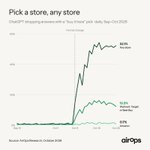
Buy *thing* from* store*. ChatGPT will now tell you where to buy things, in addition to what to buy.
Before a mid-October format change, almost none of ChatGPT's shopping answers pointed you to a store.
Now about half do, with a “Shop at,” “View at,” or “available at” line baked into the answer.
Amazon gets them less than 1%.
👉 gnosly.com/
#openai #ai #ChatGPT

Sm0ke retweeted

Zadziwia mnie ta bezkrytyczna fascynacja Koreą Południową 🇰🇷 jako wzorem. Błyszczące półprzewodniki zasłoniły nam niewygodne fakty o źródłach koreańskiego sukcesu.
Korea zbudowała czebole, które dziś ciągną jej gospodarkę, w czasach dyktatury. Były zamordyzm, gigantyczna korupcja i represja płacowa: 12-godzinne zmiany, zakaz niezależnych związków i strajków, a w szwalniach lat 60. i 70. pracowały nawet 13–16-latki. Do tego represja finansowa i kredyt sterowany przez państwo, z którego subsydiowano wybrane firmy. Dziesiątki miliardów dolarów przepadły w tych, którym się nie udało: samo Daewoo upadło w 1999 r. z długiem rzędu 80 mld USD.
Dziś Korea ma taką samą wydajność pracy jak Polska: 52 USD PKB na godzinę (OECD, ceny stałe, PPP). Wskaźniki społeczne ma jednak dużo gorsze, poza długością życia: dzietność ok. 0,7, najwyższy w OECD wskaźnik samobójstw, bieda wśród ok. 40% seniorów i największa w OECD luka płacowa kobiet. 👇
Polska doszła do tego samego poziomu w demokracji, bez zamordyzmu i bez tak ogromnych kosztów społecznych.
Czy od Korei warto się uczyć? Oczywiście: wydatki na badania i rozwój, własne technologie, edukacja. Czy warto mieć Samsungi? Też tak.
Ale czy naprawdę chcemy iść koreańską drogą?

Sm0ke retweeted

In this new paper, we make a strong point:
Human imitation is a misplaced goal for AI.
Too much of AI development is based on human imitation, as exemplified by the Turing test: the more a machine resembles us, the more successful it is.
But there are two major problems.
The first is conceptual. Imitating human outputs does not tell us much about the capacities behind them:
The same answer can emerge from different processes. A plausible response does not tell us whether a system can reason reliably, generalize to unfamiliar situations, or recognize when it should say “I don’t know”.
The second is ethical. Why should we want AI that imitates humans?
Humans are biased. Our attention is limited. Our judgment is fallible. Reproducing these limitations is hardly an ambitious vision for AI.
Even worse:
A system that impersonates a person can exploit human trust.
And an industry focused on replicating humans can fall in the “Turing’s trap”: favour human replacement over augmentation.
Instead, we argue that AI should aim to improve human welfare.
To this end, we propose three coordinated changes:
For developers: Build systems that strengthen human capabilities and independent judgment.
For funders: Require projects to assess benefits, costs, and who receives or bears them.
For institutions: Base procurement and renewal on demonstrated benefits.
The goal should be to help people know more, suffer less, and exercise greater control over their lives.
*
Full paper in the first reply.
With @GaryMarcus & @Walter4C

Sm0ke retweeted

Important piece in the NY Times comparing the current AI investment boom to the run-up to the 2008 financial crisis.
The risk here could dwarf the mortgage crisis.
The nine largest tech firms have reportedly piled up roughly $3 trillion in debt off their balance sheets. Nvidia alone disclosed more than $530 billion.
One analysis counted 176 circular deals worth $3.6 trillion, with companies lending each other money to buy each other's products. Private credit firms are tapping insurers that hold retirees' annuities to help fund it. The companies most tied to the AI build-out now make up about a third of the S&P 500.
We all want a growing economy and secure retirements. That's exactly why we can't let hidden debt and tangled financing put workers, pensioners and taxpayers on the hook again.
Meanwhile the administration wants to let retirement savings flow into risky schemes, the opposite of what this moment demands.
This deserves bipartisan attention now, before a correction becomes a crisis.
nytimes.com/2026/10/25/opini…

GNOSLY WIRE | Blog Article
TTF Natural Gas Hits 103, Gaining Nearly 5% on Tight Supply
The European gas benchmark extends its rally into critical pre-winter delivery periods as structural storage deficits materialize.
The situation in Germany, the continent's largest industrial consumer:
- German Storage Fill Level: 61%
- One-Year Annual Consumption Coverage: ~17%
👉 Blog Article (with more technical data): gnosly.com/blog/trading-ttf-…
Gnosly.com curates real-time data for business analysis.

Sm0ke retweeted

Saksan suuret autojätit (Volkswagen, BMW ja Mercedez Benz) ovat maan suurimmat teollisuusyritykset. Niiden liikevaihdosta tuli perinteisesti 30+% Kiinasta ja voitosta jopa 50%. Sähköautojen nousun myötä tämä on historiaa on edessä rajut leikkaukset.
VW aikoo irtisanoa 100 000 työntekijää ja sulkea 4 autotehdasta Saksassa. Samaan konserniin kuuluva Audi rakentaa samalla $4 miljardin hintaista autotehdasta Yhdysvaltoihin, koska Yhdysvaltain Euroopalle langettamat tullit ovat syöneet myös Euroopan autoviennin sinne suuntaan. Ts. se uudet työpaikat syntyvät Yhdysvaltoihin, eikä Eurooppaan. Aivan kuten Trumpin hallinto halusi.
EU on suojannut oman autoteollisuutensa langettamalla kiinalaisilla sähköautoille rangaistustullit ja sai nyt rajoitettu, että Kiina ei myy enempää kuin 350000 hybridiä vuodessa Eurooppaan.
Autoteollisuus on Euroopan suurin teollisuudenala ja se työllistää suoraan tai välillisesti jopa 17 miljoonaa ihmistä.
En usko, että sitä pelastaa enää mikään. Kun tehokkuus on kerran menetetty, niin globaalit markkinat menetetään vääjämättä. Omat kotimarkkinat voidaan toki suojata tulleilla, mutta sen seurauksena EU:hun jää korkea hintataso ja globaalisti täysin kilpailukyvytön teollisuus.
Kuvaavaa on se, että Audi haluaa pysäyttää sen omien autojen tuonnin Kiinasta. Kiinalainen versio Audista on muuten sama auto (ja siis paikallisen Audin valmistama), mutta siinä lukee isolla AUDI ja 4 rengasta puuttuvat. AUDI E5 Sportback Flagship quattro auton hinta Eurooppaan tuotuna n. 60000 euroa, joka on tuntuvasti edullisempi kuin auton hinta Saksassa n. 90000 euroa.
Ja jotta koko kuvio olisi älytön: Volkkarilla on 38 autotehdasta Kiinasta. Mutta jos mikä tahansa saksalainen jätti valmistaa Kiinassa täyssähköauton, ja tuo sen EU:hun sitä koskaa suuremmat rangaistustullut kuin BYD:iä, joka on kokonaan kiinalainen merkki. Ts. EUrostoliitto rankaisee omia autotehtaitaan siitä että valmistavat Kiinassa.

GNOSLY WIRE | Chamath Palihapitiya (Substack)
Worldwide spending on AI is projected to reach ~$2.7T this year. Yet, only ~1% of it is expected to go to the models themselves.
The Six Layers of the AI Stack:
The stack we drew has six layers, from the bottom up: infrastructure, chips, data, models, execution, and application. Each layer has its own fulcrum assets, single points every unit of value above them has to cross.
The Foundation Is Concentrated
Starting from the bottom, the foundation is power, cooling, and critical minerals. Infrastructure is the most concentrated layer in the stack, and the concentration is global.
👉 Substack Article: research.socialcapital.com/p…
Gnosly.com curates real-time data for business analysis.


Sm0ke retweeted

Things that aren’t there can now see and hear you.
Reality-Aware Rendering is now live in Simulon. Place anything in the real world, act out the scene, and it responds to you.
We made this short in an afternoon. Watch to the end to see what was really there.
Available now on iPhone. How it works 👇
GNOSLY WIRE | Ivana Delevska, Spear (LinkedIn)
AI companies' performance in numbers.
👉 LIVE Feed: gnosly.com/feed/ai/
Gnosly.com curates real-time data for business analysis.

Sm0ke retweeted
Bloomberg: "A new anxiety is gripping Wall Street as it bankrolls the vast network of data centers and chips behind the artificial intelligence boom: Early signs suggest that the credit market is approaching the limits of how much more debt it can absorb.
One after another, yields are soaring into the double digits on bonds and loans funding the AI infrastructure buildout. Bankers are finding it more difficult to offload risk to insurers and other investors."
#economy #markets #debt #ai #ArtificialIntelligence #bonds


Sm0ke retweeted

Forget about NATO expansion, Russian imperialism and all that nonsense.
Putin started the war for one reason: To stay in power.
He will likely need another war in 2-3 years.

Sm0ke retweeted

This is one of the most remarkable businesses in the history of capitalism?
Model commoditization is a risk. You know what else is a commodity? Crude tankers. Construction. Cloud computing. Energy. Lots of multibaggers.
$ANT is asking for your bid, not your hand in marriage.

GNOSLY WIRE | Stephanie Aliaga, JPMorgan
This chart takes a look at how each of the AI segments in the S&P 500 has performed over the course of 2026.
In Q1, as Claude Code took off, fears of AI disruption triggered a “SaaSpocalyse” in software stocks, while hyperscalers came under pressure from ballooning capex budgets and mounting concerns about free cash flow.
Then Q2 brought booming expectations for agentic AI compute demand, sending semiconductors soaring 50% and hardware nearly 30%. By Q3, software was back in favor (+29%) as earnings held up and disruption fears eased, while the increasingly acute power bottleneck helped power stocks rally.
👉 LIVE Feed: gnosly.com/feed/economy/
Gnosly.com curates real-time data for business analysis.


