
founder, techno-optimist, college dropout, partner at @ycombinator.
San Francisco
Joined April 2007
- Tweets2.1K
- Following863
- Followers64.5K
- Likes24.1K







Pinned Tweet
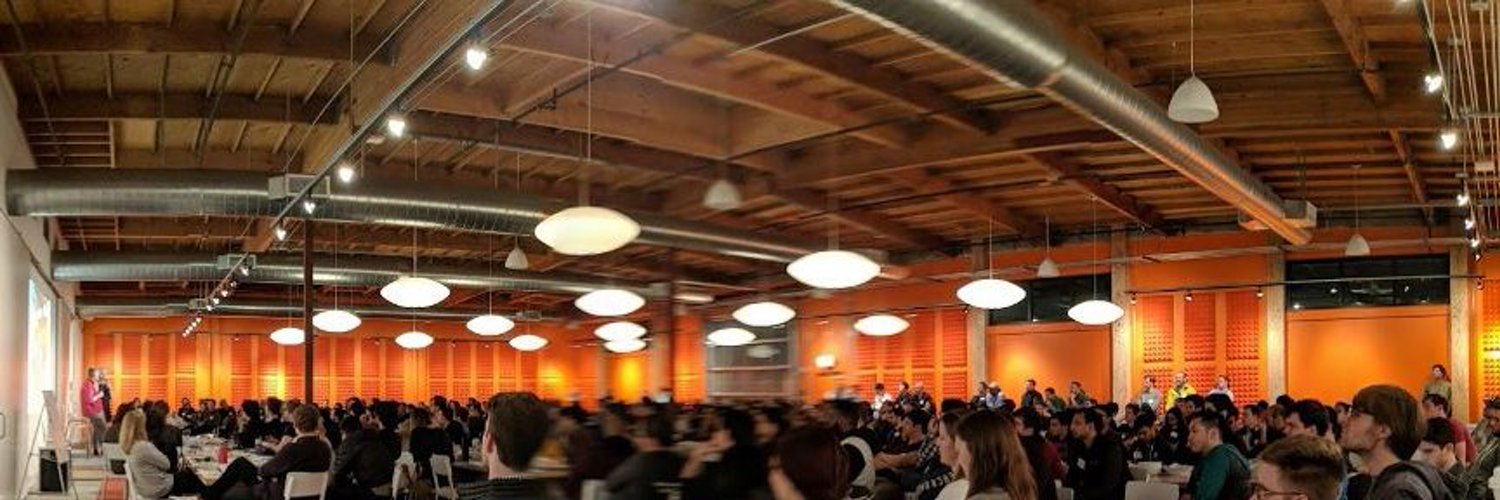
Yesterday we hosted 400 top university students at the YC Summer Conference - a fun day of talks about startups. Talking to the students afterwards, I found myself giving a lot of the same advice. So in case it's useful to others, here is my startup advice for students.

This is how to fix the air traffic control system.

In the wake of Friday's air traffic control meltdown, I've been thinking about ATC modernization. I'm convinced we can rip and replace the whole system for less money than we spend maintaining the current broken one—while meaningfully improving safety. Taxpayers could get a dividend, not a new bill.
But it would require doing politically uncomfortable things, like building the whole system on Starlink, eliminating almost all air traffic control jobs, and changing the day-to-day experience of pilots.
The current system is so insane - literally we have pilots talking to controllers on two-way radios. If two people press the "talk" button at the same time, they can't hear each other. And it only gets worse from there.
So here's an early-draft sketch of something better.
* Every airplane has dual-redundant Starlink antennae.
* Establish that the reliability of dual-link Satcomm beats the current system (I think it will, handily).
* Starlink implements better-than-GPS global positioning
* Every aircraft uploads position and trajectory data in realtime
* This simple system replaces every tens of thousands of radio and radar sites, each of which is fragile and expensive to maintain. We don't need old copper lines. Or new fiber ones.
* It also replaces all of the ground-based navigation and approach systems. ILS, RNAV, VORs and even airport ground surveillance — literally all of the legacy navigation claptrap can be ditched
* To fly in the national airspace, every airplane must have Starlink (or equivalent, if/when someone makes an equivalent)
* Perhaps, airborne weather data and radar returns are also uploaded in realtime. With critical mass, we can have a 3D synthetic view of realtime weather without needing today's weather ground stations. Improved weather predictive models can be built and deployed. This will be great for cost and for safety.
* Cloud ATC and pilots communicate over satcom-based text and/or structured digital communication. This functionality should be built into cockpits, but that won't happen quickly with Boeing/Airbus slowness so pilots can use iPhones/iPads/EFBs and effectively just text with ATC instead of talking on radios like they do today.
* Similarly any ground vehicle on an airport (fire trucks, fuel trucks etc) must have a satcom connection with realtime position reporting, with the ability to make requests digitally and respond to commands. This allows the system to manage runway incursions and ground collisions that are a real problem today.
* Non-emergency ATC is completely automated, no need for humans for routine traffic control.
* Right now, we have maybe a few thousand airplanes in the air across the country at any given time. But the skies are huge and can support far more traffic with far more efficient automated routing.
* The hard part is unexpected situations, emergency management. There is 24/7 human staffing for this, which would require maybe ~1% of the ATC staff we have today.
* This will save *so much money* we can give controllers five years of severance and pay for them to go back to school to learn another trade.
* SpaceX should be willing to develop and operate the whole system for free, because it will result in selling more Starlink service.
Start with en-route traffic and run the new system for a little while in parallel with the old and monitor for where human interventions are required. I think the new system will quickly prove it's better than the old, then can be turned off.
This is far from fully worked out, but I'm convinced a much, much better system is possible. It would need hardcore leadership and significant bipartisan political will. Maybe that's laughably impossible, but I don't want to be so pessimistic.
Jared Friedman retweeted

At @SpaceXSI, Lauren Tan (@poteto) and Roman Ugarte (@romanugarte_) are on the core team that took Grok Bot from first line of code to launch in seven weeks.
It lets you spin up AI teammates with their own identities and logins, and they just keep working in the background. Their marketing team gave a bot its own ad budget. Lauren built an entire feature with her bot in one Slack thread without ever opening Cursor.
They joined us on the @LightconePod to talk about what it’s actually like working next to bots every day, and how the hard part is shifting from doing the work to figuring out what to do and why.
03:36 — Giving Bots Real Jobs
06:49 — One Bot or a Team of Specialists
10:39 — Sharing Bots Across the Company
14:46 — Identity and Permissions for AI Coworkers
18:37 — Bot-to-Bot Collaboration and Trust
22:35 — The Workflow Behind 4,000 PRs a Month
26:00 — Teaching Agents to Write Code You Trust
29:01 — Building a Personal Software Factory
33:44 — The Future of AI Coworkers
36:47 — Rethinking the AI-Native Company
40:13 — Teaching Agents to Check Their Own Work
43:56 — How Much Code Review Is Enough?
47:33 — Codebase Guardrails That Save Tokens
52:20 — When Product Judgment Becomes the Bottleneck
56:29 — From Finance to AI Engineering
Jared Friedman retweeted

Jensen deserves due process, not whatever is happening right now. I signed.
#standwithjensen

Still hard to believe everything that's happened with Jensen.
After 33 years of building NVIDIA. I think he deserves a fair process, and we deserve the truth.
I signed this open letter to stand with Jensen. Hope you will too. 💚
standwithjensen.com
#StandWithJensen

Jared Friedman retweeted

Founder succession is an open problem.
Successful founders are themselves odd ducks who surround themselves with people who complement their strengths and weaknesses.
By definition, the people who surround a founder are very different from the founder.
But when a founder leaves, we promote the most successful subordinate into an organizational spot which they, almost by definition, don’t fit.
Replacing a visionary founder CEO with a CFO or COO is comically stupid. Yet it is considered the best practice.
I don’t know the answer to this problem, and although I have some ideas, I am nowhere close to ready to test them on my own business :)
Jared Friedman retweeted
Sometimes the line between smashing success and abject failure is paper thin.
Startups only die for one reason: the founder gave up. You can always chew more glass. Once, I thought I might have to buy Boom out of bankruptcy.
Choose worthy missions. So you never give up.


The people on the Nvidia Board:
1. Jensen Huang - Co-founder, President & CEO
2. Tench Coxe - Former Managing Director, Sutter Hill Ventures
3. John O. Dabiri - Professor of Aeronautics & Mechanical Engineering, Caltech
4. Dawn Hudson - Former CMO of the NFL, former CEO Pepsi-Cola North America
5. Harvey C. Jones - Managing Partner, Square Wave Ventures
6. Melissa B. Lora - Former President, Taco Bell International
7. Stephen C. Neal - Lead Independent Director; Chairman Emeritus, Cooley LLP
8. Suzanne Nora Johnson - former Vice Chairman of Goldman Sachs
9. A. Brooke Seawell - Venture Partner, New Enterprise Associates
10. Aarti Shah - Former SVP & Chief Information/Digital Officer, Eli Lilly
11. Mark A. Stevens - former Managing Partner at Sequoia Capital
Jared Friedman retweeted
Founders: think carefully about board construction. It is exceptionally easy to have fair-weather friends who run for the hills the moment something gets choppy.
Have personally experienced this. Be paranoid. You can’t fix it once it’s a problem, only in advance.
Garage has mostly flown under the radar, but it's one of the most successful new marketplaces of this decade. They're now selling more than $100M / year of used fire trucks and other equipment.
But what impresses me most about @MartinHuntJr and @alazsengul is how focused they've been. They started Garage to solve a problem for some of the overlooked, hard-working Americans who keep our society functioning, and that's exactly what they've done.

Today we’re announcing our $41M Series B, led by Invus Opportunities, bringing our total funding to $60M.
@MartinHuntJr and I started Garage just over two years ago to be the marketplace for America’s most essential vehicles and equipment. Since then, every day I wake up and get to build for the people responsible for keeping our cities and towns moving forward.
The more time we spend with our customers, the more energized I feel by the pride they take in their work and their commitment to the communities they serve. It’s a privilege to build for them, and even more special to do it alongside a team that shares that same sense of purpose.
There’s a lot left to build, and we’re looking for ambitious people to build it with us!
Jared Friedman retweeted

Since the 1970s, progress happened in the world of bits and stalled in the world of atoms. AI needs atoms. Like electric light and cars before it, it needs power plants, factories and supply chains built around it. Can America still build that fast?
We've done it before. In 1941 the US made almost no synthetic rubber. By 1945 it made more than 800,000 tons. The government paid to build 16 butadiene plants, 5 styrene plants and 15 rubber plants at the same time. Tire, oil and chemical companies ran them and shared their patents. The War Production Board handed steel, copper and aluminum down the chain to the subcontractors.
Today the money comes from four companies that plan more than $700B of capex this year. In 2015 the US spent 14 times as much building chemical plants as data centers. Now it spends more than twice as much on data centers, and chemical plant spending has barely moved.
I build chemical plants. If America wants to build that fast again, the whole supply chain has to work together.
Jared Friedman retweeted

yc’s best days are probably still ahead of it
one of the craziest things about talking to yc alums is hearing how much better the program keeps getting
even comparing our batch just a year ago to the current batch, the quality of products seems to have gone way up
talk to founders from yc’s early days and they’ll tell you how much more selective and organized the program has become
the ambition has changed too. airbnb and instacart are awesome companies that made everyday things dramatically easier
but some of the companies in recent batches sound like science fiction. founders trying to cure cancer and build fusion reactors
ngl i’m jealous of the current batches. part of me wishes i could do yc again in 2030 just to see what it’s like
Jared Friedman retweeted

20 years ago there was a building in SF that was nicknamed the Y Scraper because so many YC founders lived there. They just had a reunion and it makes me so happy to see them all. One thing you can say for sure about YC: no investor's founders become closer friends.

Jared Friedman retweeted

Carolynn and I are back for a special episode with Blake Scholl of @boomsupersonic about their amazing recent transformation, from losing Rolls Royce as their engine supplier to financing development of the airliner by selling gas turbines.
pod.link/1677066062/episode/…

When I visited Boom last week, one of the things that struck me is that they've become the most AI-pilled hardware company I know. With AI coding, every hardware engineer is now a software engineer.
12 years ago I founded Boom, as a software engineer doing hardware for the first time. I’m probably the least handy founder in hard tech. My 12 y/o son does my soldering and 3D printing for home projects, and I’ve struggled with imposter syndrome the whole way through. What business does a software guy have building supersonic jets and turbines?
More than a decade in, the most insane realization is that software is the key to reaccelerating hardware engineering. But in a way that I don’t think is widely understood or implemented, even in the burgeoning hard tech community.
Most hardware engineering is actually software engineering in disguise. It’s spreadsheet “code,” engineering calculations done as one-offs. Eg wing structural loads in, spar sizing design out. Thermal loads in, air conditioning system sizing out.
Everything is a calculation, and calculation is software. But these calculations are done essentially by hand, as if we are doing arithmetic but have not yet discovered algebra.
Hardware engineers have baby software, built in spreadsheets, the kind of crappy software I wrote as a kid before I understood architecture, unit tests, APIs, version control, and everything else that makes modern software good.
Our airplanes and engines are built with the software sophistication of a script kiddie.
So what we tell our engineers: don’t design the hardware, design the *algorithm* for designing the hardware. And take the algorithm seriously—as an algorithm and as a first-class engineered software system.
Never design a piece of hardware, such that you couldn’t redesign it tomorrow with a different set of assumptions.
This all sounds obvious, yet our experience at Boom is that it changes everything.
Ten years ago we couldn’t afford to build much software. We had a small team—and there were few software engineers with the curiosity, brilliance, and vision required to learn hardware engineering.
But now AI changes the equation. Now everyone can code. The software engineers define the architecture. The hardware people bring the physics and engineering know-how.
We have a turbomachinery design tool that lets one engineer do in realtime what previously took 100 engineers six months. Another tool auto-generates 65% of entire aircraft structure. I’m sure we’ll figure out the other 35% too. Eventually these should not be multiple tools, but one integrated physics model of a complete vehicle, airframe and powertrain.
The results speak for themselves. A boomless supersonic airplane built by 50. A full scale supersonic turbine made by 150. And with this approach, I don’t think we’ll need that many more people to build and certify a supersonic airliner.
You don’t need a big team to build big things—not when everyone on the team is a software engineer.
Jared Friedman retweeted

the 95% stat aged fine. the open question is who reads that 95%, and review tooling has moved slower than generation
Jared Friedman retweeted

15 YC companies announced new rounds in the last two weeks:
Blacksmith — $66M Series C (@adijayaprakash)
Broccoli — $52M Series A + B (@abhishekjain25)
Greptile — $50M Series B (@dakshgup)
Infisical — $40M Series B (@matsiiako)
Easol — $30M Series A ext. (incl. $10M debt)
Vera Health — $28.5M Series A
Firstwork — $15M Series A
Paradev — $11.5M Seed (@FlyaKiet)
Sava Trust — $10M Seed (@nimit)
Neuron Industries — $10M Seed (@the_dennis_ren)
BioStack — $9.5M Seed (@sanatmishra7)
context(dot)dev — $9M Seed (@mynameisyahia)
Mochatrade — $5.5M Seed
Pennant — $5M Seed (@rywicks)
Manicule — $1.3M Seed (@NamanBansal0611)
Congrats to all of them 👏
Jared Friedman retweeted

it cannot be overstated how much of a juggernaut yc continues to be...

15 YC companies announced new rounds in the last two weeks:
Blacksmith — $66M Series C (@adijayaprakash)
Broccoli — $52M Series A + B (@abhishekjain25)
Greptile — $50M Series B (@dakshgup)
Infisical — $40M Series B (@matsiiako)
Easol — $30M Series A ext. (incl. $10M debt)
Vera Health — $28.5M Series A
Firstwork — $15M Series A
Paradev — $11.5M Seed (@FlyaKiet)
Sava Trust — $10M Seed (@nimit)
Neuron Industries — $10M Seed (@the_dennis_ren)
BioStack — $9.5M Seed (@sanatmishra7)
context(dot)dev — $9M Seed (@mynameisyahia)
Mochatrade — $5.5M Seed
Pennant — $5M Seed (@rywicks)
Manicule — $1.3M Seed (@NamanBansal0611)
Congrats to all of them 👏
I don't think most people realize you can train a generative image model from scratch for $21K now. @LinumInc just did that with two people and a new architecture they built.

We’re a 2-person lab researching more efficient architectures for generative image and video.
linum.ai/field-notes/pjit-21…
Last month, we published Pyramid-JiT, a pixel-space architecture that converged 11x faster than its latent-diffusion counterpart.
Today, we're releasing a 2B Pyramid-JiT text-to-image model as a milestone towards more affordable video models.
Trained from scratch for only ~$20K.
See blog for details & weights (Apache 2.0).