

Uncensored culture & history
Joined November 2024
- Tweets2.7K
- Following147
- Followers409
- Likes8.3K




Pinned Tweet
The apocalyptic novels of Paul Christensen:
HIDE THE DECLINE
amazon.com/Hide-Decline-Paul…
The period from the September 11 attacks to the Covid-19 lockdowns and beyond, as seen through the eyes of a right-wing filmmaker and an anarchist musician.
THE THRESHER
amazon.com/Thresher-Paul-Chr…
A portrait of the underground music scene of the 1990s, ‘The Thresher’ explores the conflict between individualism, nationalism and globalism, and the role of art in an increasingly sterile and conformist modern world.
THE WOLVES TRILOGY (single volume edition)
amazon.com/Wolves-Trilogy-Pa…
Part satire, part tragedy, Paul Christensen’s tale of an anti-globalist revolt and its aftermath anticipated many political developments of the past decade.
"The best work of dystopian fiction that I have read for many years."
- Black Front Press
‘Christensen’s ability to put his finger on the pulse of everything that is wrong with humanity is a force to be reckoned with.’
- Counter-Currents
‘This is the first book I would lend to anyone who is questioning the system’s narratives. Anyone on the brink of awakening…’
- Juleigh Howard-Hobson, author of ‘I Do Not Belong To The Baader-Meinhof Group & Other Poems’

Fucking hell, talk about a tear-jerker.
GRAVE OF THE FIREFLIES (1988) must be the saddest movie ever made.
Even a soulless cockroach would have to be moved by it.

Tom Wolfe’s satirical novel THE BONFIRE OF THE VANITIES (1987) is a racially-charged portrait of New York City in the Reaganite yuppie era.
Wall Street trader Sherman McCoy is living the high life until he takes a wrong turn and ends up in the South Bronx, then accidentally runs over a black man when he tries to flee in panic.
He becomes a media villain, ostracised by white society, and is financially ruined.
Aiming to do for New York what Dickens had done for London, Wolfe’s portrait encompasses the entire city, from the underworld to the halls of power.
More importantly it shows the vulnerability of a ‘justice system’ that is made to bend before public (i.e. media) opinion.

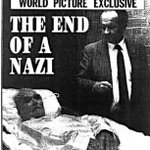
It’s surreal to think that a leading member of the Hitler regime survived into 1987, and could have given an opinion on Slayer’s ‘Angel of Death’ or Death In June’s ‘Brown Book’.
But Rudolf Hess’s ‘suicide’ was likely at the hands of the German state security service.
Besides the implausibility of a 93 y.o. topping himself on the eve of release, Hess’s son and others argued that the frail, nearly blind Hess couldn’t have managed the act alone.
As noted in my post on Ulrike Meinhof, democratic governments are certainly not above ‘removing’ figures who embarrass them, and Hess’ release would certainly have been an embarrassment, drawing attention to his 1941 peace mission and its rejection.


Left-wing terrorist Ulrike Meinhof allegedly committed suicide in her Stuttgart prison cell in 1976, but many believe she was murdered by West German security services.
Her sister Wienke Zitzlaff said Meinhof told her shortly before dying that if the authorities ever claimed suicide then it was murder.
There were also indications she had been raped.
The Red Army Faction had become an embarrassment to West Germany, and ‘democratic’ governments are certainly not above engaging in a little covert assassination from time to time.
Even tranquil New Zealand has a government kill squad (according to David Hatcher Childress, an ‘alternative archaeologist’ who almost fell afoul of them).

NEXUS magazine was founded in Australia in 1987 as a forum for alternative health and science.
In 1990 it was purchased by Duncan Roads, who turned it into a more geopolitical/conspiracy-focused publication.
Roads had visited Gaddafi in Libya a year earlier, and was an associate of Robert Pash, a former National Socialist who converted to Islam and promoted Gaddafi’s Green Book, with its anti-capitalist/anti-imperialist themes.
Nexus continues today, appearing in newsagents in Australia, New Zealand and other countries.
Along with New Dawn and similar publications, it represents the less ‘fluff bunny’ and more realpolitik end of the New Age spectrum.

The ending of BLUE VELVET (1986), with its fake robin, was long believed by hipster types to be some kind of ‘postmodern irony’ statement and parody of small town America.
To anyone truly familiar with Lynch’s work this is a shallow reading, which was further confirmed in 2025 by Guillermo del Toro, who said that Mark Frost told him that:
‘David is unironic…people think David is ironic, but he isn’t. He actually loves that little bluebird singing at the end of Blue Velvet. And he really believes in the goodness of pie and coffee. And he’s not being meta. He really has the two things, the weirdest mind and the most wholesome mind.’
Lynch grew up in a small town, and the dark side of his work largely comes from having lived in inner city Philadelphia while a film student.
It is the contrast between the two that made him the perfect surrealist commentator on American decline.

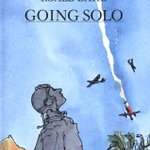
Roald Dahl’s autobiographical work GOING SOLO (1986) is a vivid and entertaining book in its own right, but is perhaps most notable for its insights into the machinations behind Zionism.
During a plane trip to Palestine during WW2, Dahl encountered a family of Jewish refugees from the war.
A Palestinian farmer had given them permission to live there and use some fields.
Dahl asks if they will go back to Germany if Hitler is defeated, and they say no, they need a homeland of their own, which they don’t currently have, ‘not yet…’
Dahl points out that Palestine is an Arab land, and the Jew says in a casual yet somewhat sinister tone: ‘If you want something badly enough, you can get it.’

FERRIS BUELLER’S DAY OFF (1986) has been the subject of revisionism in recent years.
Ferris himself is now apparently a ‘villain’, a manipulative gaslighter and privileged liar, while his nemesis Rooney (the Dean of Students) is a misunderstood victim.
The problem with this interpretation is that, as with Malvolio in Shakespeare’s TWELFTH NIGHT (himself the subject of similar revisionism), Rooney is actually a bona fide arsehole who brings his misfortunes on himself.
It’s a guilt-free experience to laugh at his travails, because he eminently deserves them.
All Ferris wants to do is a take a day off school…is that such a crime?
As for reinforcing a Reaganite money-oriented view of the world, that’s pure bullshit, as the Ferrari, symbol of such a worldview, ends up trashed and destroyed in the name of higher values such as friendship.
Besides being John Hughes’ funniest film, Ferris represents a more innocent America, one with communal values, yet not narrow-minded or impervious to higher culture (the posters on Ferris’ wall are all of British alternative bands such as Cabaret Voltaire and Killing Joke).
Such an America can never exist again.

Two followers of Lyndon LaRouche (a former Marxist who became a right-wing conspiracy theorist) managed to win nominations for lieutenant governor and secretary of state in the 1986 Illinois Democratic primaries.
Among their policies were mandatory AIDS testing, a return to the gold standard, and a fervent belief that Queen Elizabeth II was an international drug baron.
After a predictable media outcry, both lost badly in the general election.
While some of LaRouche’s views were no doubt flaky, at least he didn’t fit so easily into the robotic left-right paradigm.

Those whose memories stretch back to the ‘80s may have memories of an eerie ball of disembodied light called CHOCKY (1984).
This extraterrestrial intelligence came to Earth to tell a boy called Matthew the secret of limitless energy, but dark forces intervened in the shape of government psychiatrists, who kidnapped Matthew so that Chocky went away.
Based on a story by John Wyndham (who wrote the classic ‘Day of the Triffids’), a British children’s show of this kind, with quality script and acting and conspiratorial themes, would be unthinkable today.

Christopher Koch’s THE DOUBLEMAN (1985) is a well-structured novel dealing with Tasmania, occultism, and the electric folk scene of the ‘60s.
Its fictional band ‘The Rhymers’ are like a cross between Fairport Convention, The Seekers, and the Manson Family.
The characters are very vivid and you get a strong sense of what they look and talk like.
The weak point of the book is the sinister Darcy Burr, who is clearly modelled on Koch’s perception of Charles Manson (one of his disciples is even called Pipsqueak…an obvious reference to Lynette ’Squeaky’ Fromme).
But it is never clear what Burr’s real motives are.
Is he interested in ‘piercing the veil’ of the sensory world, like his master Clive Broderick?
Or is he merely desperate for the shallow pleasures of celebrity, to the point where he will water his music down to please record company execs?
Part of this confusion is due to Koch’s evident distrust of esotericism, which he seems to regard as little more than a search for personal power.

Werner Herzog’s WHERE THE GREEN ANTS DREAM (1984) was almost completely ignored in Australia, where it is set.
Herzog presents a fight between tribal Aborigines and a mining company in a very even-handed way, showing both sides of the conflict.
It’s not very flattering to Aborigines (at one point a mine worker complains that he can’t drive his truck because ‘them bloody boongers’ve been sniffing the transmission fluid again!’), yet it shows sympathy for their traditions.
One pompous reviewer referred to ‘Herzog’s increasingly offensive noble savage theme’, which isn’t even accurate as his main concern is the harsh yet dreamlike nature of the Australian landscape, which seems above and beyond the concerns of either race.

How accurate was William Gibson’s famous cyberpunk novel NEUROMANCER (1984) in its prognostics?
A lot of the hardware predictions were awry, for instance a cyberspace entered via cranial jacks, and the complete absence of mobile phones.
Japanese dominance of the planet didn’t eventuate as many thought it would in the ‘80s.
But he foresaw the erosion of the middle class, and the rise of tech corporations with power rivalling that of nation-states, which seems more significant than the things he got wrong.

In 1984, followers of Indian guru Bhagwan Shree Rajneesh contaminated food at ten restaurants in an Oregon town with salmonella bacteria.
Their aim was to incapacitate enough voters so their own candidates could win control of the county planning commission and their commune could expand, spreading its doctrine of free love and food poisoning.
The incident is regarded as the first bioterrorist attack in US history.
The poisoning was believed to be accidental until Rajneesh ratted on his own henchmen during an internal power struggle (of the kind that most communes experience).

Zola Budd had already smashed the women’s 5000m record while running barefoot.
South Africa was barred from the 1984 Olympics, but being eligible for UK citizenship she got onto the British team.
Despite being non-political she faced a storm of hatred from anti-apartheid protestors.
An athlete called Mary Decker (who Budd idolised) jostled her as she ran, but ended up falling over herself.
The crowd held Budd responsible and booed her relentlessly for the rest of the race.
Budd slowed down on the last lap, later saying that this was done deliberately because she didn’t want to face the boos at a hostile medal ceremony.
The US media cast her as a villain who had ruined Mary Decker’s gold-medal dream, and death threats accompanied her return to Britain where she had to be escorted through Heathrow under armed guard.

When Indira Gandhi was assassinated by her Sikh bodyguards in 1984, somewhere between 8000 and 17,000 Sikhs were killed by Hindus in reprisal.
It’s interesting to to contrast this with the incident in 2026 when a young British man was murdered by a Sikh in his hometown, and somewhere between 0 and 0 Sikhs were killed in reprisal.
This is what is known as ‘British politeness’.

SONGS OF THE WOLF (1984) was recorded after Tony Wakeford was kicked out of Death In June for being too ‘right-wing.’
The song ‘Progress’ ruthlessly mocks the idea of enforced egalitarianism.
‘Hundred Flags’ is a plea for regional identity and cultural heritage as a defence against both Soviet socialism and US capitalism.
‘Roses’, the standout track, is an anti-war song melding violence and beauty, with its haunting evocation of ‘crosses that have no one underneath.’
After this recording Wakeford worked as a drug dealer, before founding Sol Invictus in 1987.

The NSK (Neue Slowenische Kunst) was founded in 1984 by the band Laibach and other artists.
The German name (very controversial in Communist-run Yugoslavia) was intended ‘to surface uncomfortable historical and national questions’.
Their manifesto held that all art is subject to political manipulation, ‘except that which speaks the language of the same manipulation.’
This ensured that Laibach’s actual views, if any, have always been near impossible to glean.
There was also an emphasis on timelessness (Zeitlosigkeit), which is very un-Communist.
In the ‘90s NSK was declared a non-territorial ‘state’, issuing passports and operating embassies.

THE HUNGER (1983) is one of the best vampire movies, because it captures the sordid horror of this kind of parasitism, without the romantic notions prevalent in other films of this kind.
An ancient sorceress achieves immortality through blood drinking (Catherine Deneuve is well cast in this role, as she looks a bit like a vampire anyway).
She promises her lovers eternal life, but in fact they start to decay after a couple of centuries, remaining conscious but trapped in a kind of living death.
She keeps all of these previous lovers in a collection of coffins in the attic.
That is, until one of her victims is forced to use her own techniques against her.
The lighting and sets in this film are like one long ‘80s goth or synthpop video clip.
The soundtrack itself is good, ranging from Bauhaus to Allegri’s haunting 17th century masterpiece ‘Miserere.’
