

Professor at New York University
New York, NY
Joined October 2019
- Tweets1.5K
- Following1.6K
- Followers1.5K
- Likes8.2K





Pinned Tweet
🚨 We introduce a new attack capable of efficiently extracting training data from diffusion models. 🚨
The attack is completely unsupervised. It does not rely on the text paired with the training images, prompt engineering, training-set lookup, gradients, or access to the model weights. If you have access to the model input you can audit it. All on a single GPU.
🔁 All you need is the ability to run the diffusion process in cycles. Take an image. Add noise partway through the diffusion process. Denoise it. Feed the result back in. Repeat.
At first, the trajectory wanders through generic samples. The images change from cycle to cycle, and they look like ordinary outputs from the model rather than memorized training examples.
Then something striking happens: the trajectory gets trapped. 🪤
It enters a memorized state and stays there for hundreds of cycles. After each noise–denoise cycle, the image comes back essentially unchanged. Those long plateaus in similarity are the signal. 💡
We call these *ultrastable memories.* Many correspond to memorized training content: stock-photo templates, product images, logos, watermarks, web-crawl artifacts, and repeated e-commerce scenes.
Cyclic denoising gives us a new way to audit diffusion models for privacy, copyright, and trademark leakage. If a model can be driven into protected images, brand marks, watermarked assets, or commercial templates without the training caption, the usual story about “just learning the distribution” becomes harder to maintain.
The punchline: memorization in diffusion models is not confined to a few lucky prompts or isolated examples. It is extensive. And with the right cyclic drive, it becomes directly observable. 🔁 👀
👨🔬 Work led by Rishab Sharma @ssh_rishabh at NYU
📖 Paper: R. Sharma, S. Martiniani, "Cyclic Denoising Reveals Ultrastable Memories in Diffusion Models", lnkd.in/gfEYezGu
Stefano Martiniani retweeted

Shared principles and mechanisms connect findings scattered across chemistry papers. We built AskChem to make these connections easier to explore.
I’ll be presenting AskChem at #EMNLP2026, Demo Session B, on Oct 25. Come chat!

AskChem makes findings inside chemistry papers searchable, with links to source evidence.
Led by Courant CS PhD Bing Yan (@bingyan4science).
nyudatascience.medium.com/as…
Stefano Martiniani retweeted
Thanks to @NYUDataScience for the feature! Joint work with Gregory Wolfe, @SteMartiniani, and @kchonyc.
Try AskChem: askchem.org
Paper: huggingface.co/papers/2607.2…

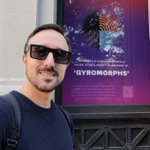
Look what I found walking by Washington Square Park this morning, a highlight of “the discovery of Gyromorphs, a material that combines the seemingly incompatible properties of liquids and crystals, and that performs better than any other known structure in blocking light from all incoming angles”. Thanks NYU @ArtsandScience for the nice surprise!

Stefano Martiniani retweeted

Big news! I’m heading west to SF with @PrimaryVC. And we're hiring three new roles for our compute team to work alongside @BSchech and me.
I believe compute is the most compelling, and challenging, market opportunity in my lifetime. Visionary founders are building toward a future they believe is inevitable, larger than we can imagine, and ripe for reinvention at every layer. I will echo Brian’s sentiment: something special is happening and a new generation is answering the call. It is our goal, and privilege, to support them on the path to doing so.
We are scaling our team to meet the moment. This is a fast-paced, high-agency, “take an idea and make it a reality” type of job. We have deep empathy for founders and understand the risks they are taking. We are humble about what we do not know, while being incredibly eager to learn from experts, founders, and teachers we meet along the way. We are students of the industry.
I started in venture just over three years ago. I was a data scientist who cold-applied to the job via LinkedIn. I absorbed “Venture Deals” before my first call with the Primary team just well enough to know what a SAFE was. I knew very little of the venture world. But, I felt I couldn’t sit idly by in one of the biggest technology transformations of our time, and believed that early-stage investing gives you a unique seat to watch the future unfold.
Our goal is to build something consequential here and we are just getting started. Come join us!


Stefano Martiniani retweeted

In a special seminar September 10 @MIT, Stefano Martiniani of @nyuniversity explored how AI and the study of disordered materials could help accelerate the discovery of new materials.


Stefano Martiniani retweeted
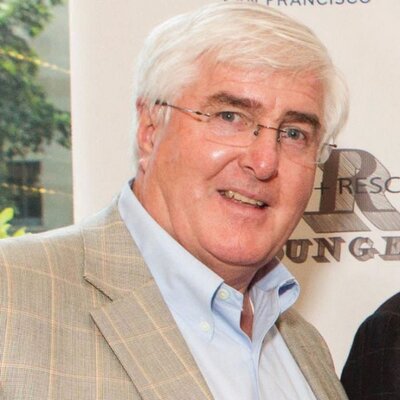
After such a consequential week for AI, with the leading labs demonstrating real progress, today's news feels especially timely: @SVAngel is launching Project Blueprint, a comprehensive effort to forge consensus among industry leaders and lawmakers around durable solutions to the hardest AI policy challenges so that all Americans can benefit from AI's opportunities. And we've brought on @JayCarney to run it. svangel.com/blueprint
We are encouraged by the reaction of Sam Altman, Dario Amodei and Demis Hassabis to the launch of Project Blueprint:
Sam Altman, co-founder and CEO of OpenAI: "We have before us a technology of immense and still-unfolding wonder. I believe AI has the power to heal people, to discover cures and to deliver abundance on a scale the world has never known before. But we need a way for the world to build trust in the technology so that we can all get to share these benefits. National safety requirements for the most capable systems are a great first step, ideally building towards a global framework for advanced AI models. I’m glad Ron is bringing the people building AI and policymakers together to help move that work forward.”
Dario Amodei, CEO and co-founder, Anthropic: "AI is advancing faster than our institutions can adapt, and the most important decisions about how it is developed and deployed will be made in the next few years. If those decisions are to serve the public, they can't rest with AI companies alone. Industry and policymakers need to work through them together, with an honest, shared understanding of what these systems can do. We're glad to support Project Blueprint's effort to make that possible."
Demis Hassabis, chairman and co-founder of Google DeepMind and the chief scientist of Alphabet: "We have long said that AI development needs to be both bold and responsible. We support bringing industry and lawmakers together around public policies that promote both innovation and safety."

Stefano Martiniani retweeted
Working on chemistry?🧪
What if you could search scientific findings instead of papers?
We turned 147K chemistry papers into 2.4M searchable claims, so you can find results, compare evidence, and see contradictions.
@kchonyc @SteMartiniani @GregoryWolfe
Stefano Martiniani retweeted
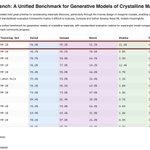
💎 OMatG just became the #1 generative model for materials discovery.
Independent results on LeMat-GenBench ⚛️🤗, the most comprehensive benchmark for crystal generation, just dropped. A huge thanks to the incredible team that put this leader board together.
Here is how we compare to Microsoft's MatterGen:
SUN (stable + unique + novel): 1% vs. 0.2%, a 5x improvement
MSUN (metastable): 18% vs. 15.0%
RMSD (structural precision): 0.076 vs. 0.39 Å, a 5x improvement
Effort led by @PhilippHoellmer, @MMartirossyan, Thomas Egg at @nyuniversity. Model trained on Empire AI. OMatG is open source and open weights.
If you want to learn more about OMatG and the broader OMatG family of models, reach out.

See the leader board at huggingface.co/spaces/LeMate…

💎 OMatG just became the #1 generative model for materials discovery.
Independent results on LeMat-GenBench ⚛️🤗, the most comprehensive benchmark for crystal generation, just dropped. A huge thanks to the incredible team that put this leader board together.
Here is how we compare to Microsoft's MatterGen:
SUN (stable + unique + novel): 1% vs. 0.2%, a 5x improvement
MSUN (metastable): 18% vs. 15.0%
RMSD (structural precision): 0.076 vs. 0.39 Å, a 5x improvement
Effort led by @PhilippHoellmer, @MMartirossyan, Thomas Egg at @nyuniversity. Model trained on Empire AI. OMatG is open source and open weights.
If you want to learn more about OMatG and the broader OMatG family of models, reach out.
One more thing worth noting: #4 on the leaderboard is PLaID++, built by undergraduates at Harvey Mudd College. A reminder that the best ideas in ML often don't come from the biggest budgets. Kudos to their team.
What if a world model could imagine the future from a completely different perspective? Introducing XVWM: given a view and an action, predict the future from a different perspective. A building block for theory of mind. Collaboration with @aimlab
📄arxiv.org/abs/2602.07277
Stefano Martiniani retweeted

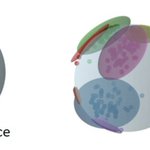
Gyromorphs are a new class of functional correlated disordered materials with high rotational order that exhibit deeper isotropic bandgaps
go.aps.org/4olK8H2

ALT colored square divided into quadrants, each quadrant contains an arc which connects to suggest a circle though each quadrant has a different color and pattern.
Now out as an Editor's Suggestion in Physical Review Letters journals.aps.org/prl/abstrac…


First came the crystals, then the quasicrystals, and then the *gyromorphs*, the ideal isotropic bandgap material
Learn about correlated disorder with delta peaks in our new preprint "Gyromorphs: a new class of functional disordered materials". arxiv.org/abs/2410.09023