




Stephen Casey MSc retweeted

Seeing the reaction to @DeclanBogue's piece and my own tweets, there is alot of annoyance/anger at the currrent developemt squad system. More than I'd thought.
I will ask one question. If the goal of these squads is to produce more senior players, how effective have they been?

Stephen Casey MSc retweeted

Alex Inglethorpe, Liverpool’s Academy Director, is blunt about early ranking in youth football:
"It can tell you very little about what a player may eventually become."
He discussed this on the High Performance Podcast, using examples from players he had seen develop across academy football.
• Trent Alexander-Arnold wasn’t number one in his group.
• Conor Bradley wasn’t number one in his group.
• Jarell Quansah wasn’t number one in his group at that stage.
You could keep going, every now and again, you get the obvious one.
• Jude Bellingham at Birmingham.
• Wayne Rooney at Everton.
Players who stood out early and continued to stand out, but they are not the only route to the top.
Harry Kane is another useful example.
⤷ At Tottenham around 13, Inglethorpe described him as being somewhere around the middle of the group rather than one of the obvious leading players.
Then Brad Friedel watched him and made a simple observation: “He finishes like Robbie Fowler.”
→ "No big backlift"
→ "Hits the ball hard"
→ "Finds the corners"
That comment changed how Kane was being viewed and that is the wider point. Young players do not develop in a straight line. Physically, technically, psychologically and socially everything can fluctuate.
So judging a player too heavily on where they sit in the group at 9, 11, 12 or 13 risks confusing their current level with their future potential.
The player at the top may stay there and the player in the middle may have far more development ahead of them. The player struggling today may simply be dealing with a physical, technical or experiential gap that looks very different several years later.
The danger is when adults become obsessed with the podium rather than the trajectory.
• Who is currently best?
• Starts all the time?
• Scores most?
• Looks physically dominant?
• Appears furthest ahead?
Those things can be useful information, but they just should not become a verdict.
Inglethorpe’s message is a useful reminder:
"Stop treating a child’s current position in the group as a prediction of where they will finish."
Look at the direction they are moving in.
Rather than focusing too heavily on where a young player is at that moment, look at the direction they are heading, their behaviours, the habits they are developing, how they learn, how they respond to challenge, and how much development may still be ahead of them
This came from Alex Inglethorpe’s appearance on the High Performance Podcast - @mrjakehumphrey :
thehighperformancepodcast.co…
We originally shared this post last year, but with more than 10,000 new followers since then, many of you may not have seen it.

Stephen Casey MSc retweeted

As we age, muscle power declines more rapidly than muscle strength, potentially increasing the risk of debilitating falls. This raises an important question: Should older adults prioritize power training in addition to traditional strength training?
Our systematic review and meta-analysis, led by @ExerciseBiology, compared power training—performing the lifting phase of an exercise as fast as possible while controlling the lowering phase—with traditional, slower-velocity strength training. The analysis included 20 randomized controlled trials involving 566 older men and women (mean of ~70 years of age).
Results showed that power training produced a statistically significant advantage across multiple measures of physical function. Although the overall magnitude of the effect was relatively modest (SMD = 0.30), these improvements could conceivably be practically meaningful and potentially help reduce the risk of falls in older adults.
Importantly, power training does not require specialized or unconventional exercises. In most studies, participants performed traditional resistance exercises, with the key distinction being an instruction to lift the weight as fast as possible during the concentric phase while maintaining control during the lowering phase.
Take-home: Traditional resistance training remains highly beneficial for older adults, but performing the lifting phase with maximal intended velocity may provide an additional benefit for muscle power and physical function without compromising strength or muscle development. This doesn’t mean that power training needs to be performed across all sets all the time; simply devoting a portion of training to
I’d the that the certainty of the evidence was relatively low, with most studies involving small samples and relatively short (~12-week) interventions. Thus, the findings should be considered promising rather than definitive.
jamanetwork.com/journals/jam…

Stephen Casey MSc retweeted

Athletic development for a 5-year-old shouldn’t look like athletic development for an adult.
At 5–11, the focus should be much simpler:
Run. Jump. Hop. Stop. Crawl.
Do lots of it, in lots of different ways, and make sure they enjoy doing it. 🧵

Stephen Casey MSc retweeted

Traditional coaching:
“I know the solution → I teach the solution → players reproduce it.”
Complex-systems coaching:
“I know the principle → I create the problem → players explore → solutions emerge → I adjust the environment → the team becomes more adaptable.”
Stephen Casey MSc retweeted

I think it’s time for pro and college coaches who design and implement these activities to step forward and explain why.
What we are all interested in is the rationale behind the activity.
I feel a lot of football coaching is just conditioning and not game related.

Stephen Casey MSc retweeted

I have an article in the Irish Examiner today nitter.cf/ExaminerSport/status/2…


What can Ireland learn from Bodø/Glimt and Norway's sporting model? irishexaminer.com/sport/socc…

Stephen Casey MSc retweeted

A workshop on Shoulder Injuries in Youth Contact Sports will be held at Lansdowne next Friday, March 6th.
You can secure your spot here: platform.payzone.ie/customer…


Stephen Casey MSc retweeted
Absolutely pumped for this to come out! Thanks to @ContextIsKing9 for asking me to present on the value of opposed and unopposed practice based on our recent paper.
fifatrainingcentre.com/en/en…

Stephen Casey MSc retweeted

Introducing Conor Kennelly, in his first year of the Academy 🙌
Find out more about his rugby journey in the full interview on our website 📽️
munsterrugby.ie/2026/02/11/i…
#SUAF 🔴

Stephen Casey MSc retweeted

Physiology Meets Decision-Making — Matching Stress with the Intervention
A “one-size-fits-all” recovery plan? Illogical.
Each stress type demands a different recovery approach.
Can we “Determine the stress from the symptom”

Stephen Casey MSc retweeted
How do we balance physical preparation with technical skills in GAA?
Too often these are planned separately, with the hope they will connect on match day.
Podcast with @StephenKC explores why integration matters and how coaches can approach it more deliberately 🧵
Stephen Casey MSc retweeted

Happy to share the first publication from my PhD, "Relationship Between GPS-Derived Match-Play Running Demands and Years of Experience in Elite Hurling" has been published in Applied Sciences.
Read here: mdpi.com/2076-3417/16/1/228
@DKieranCollins @DamienYoung01 @ShaneMalonePhD

Stephen Casey MSc retweeted

Corn Darragh Mhic Cárthaigh named in honour of late Midleton hurler echolive.ie/corksport/arid-4…

Stephen Casey MSc retweeted

I'm absolutely delighted that we are able to announce the launch of this accredited MSc in Skill Acquisition for Sport.. A lot of work over the last two years to get this set up... Looking forward to a Sept. 2025 launch.
#MScSkillAcq @DrSkillAcq @samjermyn

🚨 NEW PROGRAMME ALERT 🚨
Introducing our MSc in Skill Acquisition for Sport
✅100% online delivery
✅1-year completion
Applications Link Coming Soon....
mtu.ie/courses/crbsafs9/

Stephen Casey MSc retweeted
Thanks to @m_brosnan for the chat about our research over the past few years; from crossed laterality and skill-dependent dominance, to left-sided players, influence on tactics, and parental influence.
@kearney_phil
@ian_sherwin
@SportHumanPerf

'What we are finding in our research, a lot of players are two-sided because of their parents' irishexaminer.com/sport/gaa/…

Stephen Casey MSc retweeted

Stop Programming Endurance Training for Team Sport Athletes
Team sport athletes aren’t endurance runners—and @NE_Heaney explains why your conditioning methods need to reflect that. In this clip from his Sportsmith Premium presentation, he breaks down the key difference in how “tempo” is defined and applied across sporting contexts.
For endurance athletes, tempo means long, continuous efforts at race pace. But for team sports, it’s about shorter, submaximal runs (100–200m) that build aerobic capacity without driving residual fatigue. Same term—completely different physiology and outcome.
Click here to access the full presentation 👉sportsmith.co/videos/develop…
Stephen Casey MSc retweeted

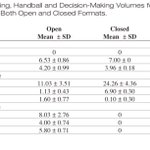
A recent study suggests grassroots coaches are still lagging behind the curve when it comes to session structure.
Research showed coaches devoting a significant amount of session time (41%) to non-decision making activities compared to active decision-making practices (42%).
In fact, there has only been a modest shift in time spent on the non-active (e.g. fitness, isolated technical, and skills-based drills), and active decision-making practices (e.g. small-sided and conditioned games) in the last 15 years!!🤔
Researchers looked at U9-U11 sessions at several London clubs. Coaches were Level 1 to UEFA B qualified. There was a classic 'up the steps' approach to sessions, i.e. unopposed then opposed. The justification for this approach was that non-opposed practices are essential for the initial acquisition of ‘technique’.
However, these findings are contrary to academy clubs, who devote significantly more time to active decision-making practices. Is grassroots playing catch-up?
Source: 'Exploring decision-making practices during coaching sessions in grassroots youth soccer: a mixed-methods study'; Roca et al (2024).
#grassrootsfootball @TheS_Resource #FootballFriday

