

Private financial infrastructure for the on-chain economy.. Encrypted custody with threshold-authorised disclosure.
Joined November 2025
- Tweets304
- Following298
- Followers44
- Likes159





One important milestone for Sunima.
The v23 validator-based court disclosure mechanism has successfully completed its first end-to-end test.
• 16/17 validators voted YES
• 12-of-16 threshold reached
• All 12 required key shares published
• Status: DECRYPTED
The entire process was recorded on-chain.
This is a testnet E2E result, not a real-world court case — but it demonstrates that the validator-based threshold disclosure flow is working end to end.
A meaningful step toward transparent, verifiable privacy infrastructure.
No single party holds the complete key. The network enforces the process.

Who actually needs private payments? Not criminals. Normal people.
- a company paying salaries without showing everyone's pay
- a freelancer who does not want every client to see their income
- a shop paying suppliers without revealing margins
- anyone whose balance is nobody's business
On a normal blockchain all of this is public forever. On Sunima it is private by default, with a legal path that needs a court and the network, not one person's decision.
Try it on testnet: sunima.uk

Encryption is not the hard part of privacy. Metadata is.
You can encrypt every amount perfectly and still leak who paid whom. Three examples.
Timing. If money enters a private pool and the same value leaves three minutes later with nothing else happening, the link is obvious. No math needed.
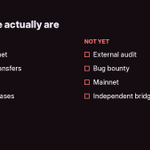
and an external audit of the private layer.
If a privacy project never talks about metadata, ask why.

1
47
What we do on Sunima today: amounts and links are hidden inside the pool, and we publish the limits openly. Entering and leaving are public, and with little traffic someone can try to match them. Our own guide says it plainly: split amounts, wait before exit, and the privacy set grows as more people use it.
1
10
What we are still working on: making the honest defaults automatic so users do not have to think about it, and an external audit of the private layer.
If a privacy project never talks about metadata, ask why.
Known limits, written down: sunima.uk/docs/status

5
Not a mixer. Not surveillance. A third option.
Most privacy projects end up in one of two places.
The first is full anonymity with no way out. It works until an exchange, a bank or a regulator decides it is too risky to touch. Then users cannot get money in or out, and the privacy they had is only useful inside a closed room.
The second is "privacy" where one company can see everything. It looks private to the outside, but one key, one employee or one subpoena opens every account at once. That is not privacy. That is a database with a nicer interface.
We are building a third option.
Transfers are private by default. Amounts and links between people are hidden on chain.
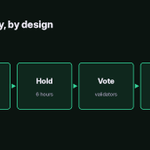
If a court issues an order about specific addresses and specific dates, there is one way to answer it: the order is filed in public, validators review it, and only if most of them sign does that one record open. The key for this is split across the network. No single person holds it. The founder cannot open anything alone.
Why this matters for normal people: privacy that regulators can live with is privacy that lasts. You can pay rent, salaries or suppliers without showing your whole balance to the world, and the network does not get shut off the first time someone asks a legal question.
Where we are today: this runs on our public testnet. The shares are still held by validators our team runs, and there is no external audit yet. Both have to change before mainnet, and we will say when they do.

1
66


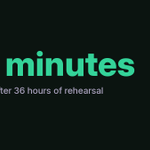
A recent exchange theft reportedly took about 20 minutes.
Before that, the attackers spent about 36 hours sending small test withdrawals to check their route. The first public post about it came around minute 8.

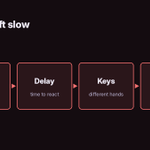
Security saw something odd, but needed time to tell a thief from a large client.
Speed is the weapon. That is why rate limits exist: 20 minutes should not be enough to empty anything.
1
1
53
