
Seattle, United States
Joined October 2022
- Tweets214
- Following124
- Followers245
- Likes1.4K



Pinned Tweet
🎬Introducing COMIC — fully automated AI comedy
Can AI be funny? We've seen AI solve math and code. Comedy is the opposite extreme, whose success is hard to define.
🍿Watch full videos here: susunghong.github.io/COMIC
📄See how we tackle open-ended comedy: arxiv.org/abs/2603.11048
Susung Hong retweeted

Hi all, I have a new result I'm excited to share. It turns out that *all existing implementations* of softmax and cross-entropy (that's JAX, PyTorch, textbooks, etc) have a subtle bug --- two bugs, actually. A simple rewrite fixes both, and eliminates "slingshots" when grokking:
Susung Hong retweeted

Today, Dream Labs is coming out of stealth with Dream-1, a robot foundation model that controls bimanual robots it has never seen, on tasks it was never shown, in places it has never been, from $3/hour.
Dream API is live for everyone, today. 🧵
Susung Hong retweeted
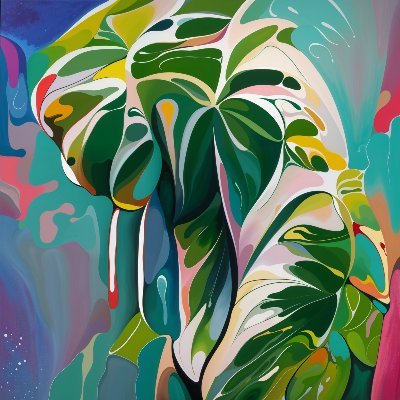
Argon has this amazing natural understanding of the world. It can do so many things from first principles.
Here's a pelican riding a bike, using fourier epicycles.
Video made by Argon.
Time-synced Lyria 3.5 music prompted by Argon.

Gemini 4 Argon is live.
blog.google/innovation-and-a…
There's a lot to show you.

Susung Hong retweeted

Introducing Code Video Model 🎬
Amazing work led by @raywzy1 and the team!
Agentic coding as the engine for controllable video generation.
Scene layout, motion, timing, camera trajectories, and physical dynamics, all in editable code.
A coding agent turns prompts into executable programs that render proxy videos. Our training-free early-step conditioning lets a pretrained video model follow the proxy’s structure while adopting a reference image’s appearance.
From physics-grounded motion and bullet time to 3D/4D reconstruction and robotics simulation, it all starts with code.
Watch the demo and explore more visual results 👇
Project page: code-video-model.github.io/
Paper: code-video-model.github.io/t…
Code: github.com/code-video-model/…
Data: huggingface.co/datasets/code…
Youtube: youtube.com/watch?v=dTtiVkSR…
Susung Hong retweeted

Introducing Gemini 4 Argon, our new frontier model, rolling out to cyber defenders starting today, and more widely as soon as possible. I am really excited by the progress we have made here. Argon is priced at $2 in and $10 out during introductory pricing!


Susung Hong retweeted

I asked Opus 4.6 to 5.5 to generate a realistic 3d model of a medieval castle.
It's scary how much it has improved in the past 7 months.
Susung Hong retweeted

Recursive Self-Improvement (RSI) is transforming how AI agents evolve, but have we considered that it needs regularization too?
🚀 Excited to share our latest work: RRSI (Regularized Recursive Self-Improvement of Agent Harnesses) arxiv.org/abs/2609.24972!


Susung Hong retweeted

Predicting the answer to interventional "what if?" questions — the outcome of an action you never took — need a *mechanistic* model, not a curve fit. And you can only learn one by *experimenting*. Experiments are costly, so the real game is **data efficiency**.
Meet the Model Discovery Agent (MDA). 🧵

Susung Hong retweeted

Introducing Discovery Loop ♾. We’re building AI to run experiments at unprecedented scale and to solve the biggest bottlenecks in science and engineering.
Our founders @JeffDean, @Sanjay_Ghemawat, @quocleix, @OriolVinyalsML helped build the AI infrastructure and models that scaled the modern world. Now, we are scaling discovery itself.
The future can't wait.
Learn more at: discoveryloop.com

Susung Hong retweeted

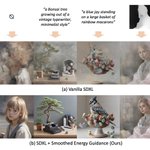
Attending #ICML2026 this week 🇰🇷 and presenting our paper on diffusion guidance!
Training-free, no extra NFE, essentially a free-lunch sampling method to reduce hallucinations in diffusion models.
hyeon-cho.github.io/TAG/
Also happy to chat about diffusion models, DM me!

Susung Hong retweeted

We wanted to see if we could take simple, physical materials (like cardboard and markers) and use AI to bring them to life. What was the result? A short film starring a bunch of TPUs getting ready for the big stage at Google I/O 2026!
Working with director Laurie Rowan and Nexus Studios, we kept human artistry at the center of the film by blending puppetry and 3D animation with our models to do the following ↓
Nano Banana: Generated beautifully stylized first frames from the raw puppet footage and basic 3D animations.
@GoogleAIStudio: Built a custom tool inside the platform to test these frames at scale, ensuring pixel-perfect consistency
Gemini Omni & experimental @GoogleDeepMind Models: Merged the base animation and stylized frames to elevate the final piece to a cinematic level.
Our AI pipelines were specifically designed to protect the crafty details that give these films their heart, like the tiny human imperfections of puppetry, or the nuance an animator can build into an expression.
Susung Hong retweeted

Another 9 open Erdos problems solved, this time by DeepMind team.
Interesting loop of LLM - Lean agents working autonomously, and only after it's verified formally, going through human review.

Susung Hong retweeted

Today, we share a breakthrough on the planar unit distance problem, a famous open question first posed by Paul Erdős in 1946.
For nearly 80 years, mathematicians believed the best possible solutions looked roughly like square grids.
An OpenAI model has now disproved that belief, discovering an entirely new family of constructions that performs better.
This marks the first time AI has autonomously solved a prominent open problem central to a field of mathematics.
Susung Hong retweeted
We have an important result to share: if you reduce multiple dense vision tasks into a single RGB-image-prediction task, fine-tuning a strong image generator (in our case Nano Banana Pro) matches or beats all specialized models for monodepth, normals, and semantic segmentation.

Yay, finally! Introducing Vision Banana🍌 from @GoogleDeepMind, our unified model that outperforms SoTA specialist models on various vision tasks!
By treating 2D/3D vision tasks as image generation, we unlock a new foundation for CV.
Project page: vision-banana.github.io
(1/5)
Susung Hong retweeted
We released "The Newton--Muon Optimizer" . We show that Muon is secretly an implicit Newton method, and use this insight to build a better one. 1/n
Paper: arxiv.org/abs/2604.01472

Susung Hong retweeted

How can we autonomously improve LLM harnesses on problems humans are actively working on?
Doing so requires solving a hard, long-horizon credit-assignment problem over all prior code, traces, and scores.
Announcing Meta-Harness: a method for optimizing harnesses end-to-end

Susung Hong retweeted
I’m incredibly proud of The AI Scientist team for this milestone publication in @Nature. We started this project to explore if foundation models could execute the entire research lifecycle. Seeing this work validated at this level is a special moment. I truly believe AI will forever change the landscape of how scientific discoveries and scientific progress are made.

The AI Scientist: Towards Fully Automated AI Research, Now Published in Nature
Nature: nature.com/articles/s41586-0…
Blog: sakana.ai/ai-scientist-natur…
When we first introduced The AI Scientist, we shared an ambitious vision of an agent powered by foundation models capable of executing the entire machine learning research lifecycle.
From inventing ideas and writing code to executing experiments and drafting the manuscript, the system demonstrated that end-to-end automation of the scientific process is possible.
Soon after, we shared a historic update: the improved AI Scientist-v2 produced the first fully AI-generated paper to pass a rigorous human peer-review process.
Today, we are happy to announce that “The AI Scientist: Towards Fully Automated AI Research,” our paper describing all of this work, along with fresh new insights, has been published in @Nature!
This Nature publication consolidates these milestones and details the underlying foundation model orchestration. It also introduces our Automated Reviewer, which matches human review judgments and actually exceeds standard inter-human agreement.
Crucially, by using this reviewer to grade papers generated by different foundation models, we discovered a clear scaling law of science. As the underlying foundation models improve, the quality of the generated scientific papers increases correspondingly. This implies that as compute costs decrease and model capabilities continue to exponentially increase, future versions of The AI Scientist will be substantially more capable.
Building upon our previous open-source releases (github.com/SakanaAI/AI-Scien…), this open-access Nature publication comprehensively details our system's architecture, outlines several new scaling results, and discusses the promise and challenges of AI-generated science.
This substantial milestone is the result of a close and fruitful collaboration between researchers at Sakana AI, the University of British Columbia (UBC) and the Vector Institute, and the University of Oxford. Congrats to the team!
@_chris_lu_ @cong_ml @RobertTLange @_yutaroyamada @shengranhu @j_foerst @hardmaru @jeffclune
Love this observation. LLMs struggle most where we can't verify their outputs (e.g., humor). One approach that works: arxiv.org/abs/2603.11048


Caught up with @karpathy for a new @NoPriorsPod: on the phase shift in engineering, AI psychosis, claws, AutoResearch, the opportunity for a SETI-at-Home like movement in AI, the model landscape, and second order effects
02:55 - What Capability Limits Remain?
06:15 - What Mastery of Coding Agents Looks Like
11:16 - Second Order Effects of Coding Agents
15:51 - Why AutoResearch
22:45 - Relevant Skills in the AI Era
28:25 - Model Speciation
32:30 - Collaboration Surfaces for Humans and AI
37:28 - Analysis of Jobs Market Data
48:25 - Open vs. Closed Source Models
53:51 - Autonomous Robotics and Atoms
1:00:59 - MicroGPT and Agentic Education
1:05:40 - End Thoughts