




TIME retweeted

"L'absence est la vraie pierre de touche des sentiments, c'est elle seule qui nous donne le secret de notre cœur : deux amis, deux amants, deux époux qui ne se sont jamais quittés ne savent pas encore à quel point ils sont nécessaires ou non à l'autre."
Louis de Bouillé


TIME retweeted

Born on today’s date in 1922, the sultry Veronica Lake. A staple of 1940’s cinema, especially in film noir with frequent costar Alan Ladd, Lake captivated audiences with her screen persona and famous peek-a-boo hairstyle. After a somewhat hard and tumultuous life after Hollywood, she passed away in 1973 at the age of 50.
Films include Sullivan’s Travels (1941), This Gun For Hire (1942), The Glass Key (1942), So Proudly We Hail (1943), The Blue Dahlia (1946), Ramrod (1947) and Slattery’s Hurricane (1949).


TIME retweeted

#MarilynMonroe
#ClassicHollywood
Beautiful Short clip from movie ‘Some Like It Hot’1959. Marilyn is performing the song “I'm Through With Love”.
🖤🎹🖤🎹🖤🎹🖤🎹🖤

TIME retweeted
Bill Evans had a way of making time slow down—his playing is pure reflection, perfect for a quiet Sunday…
TIME retweeted

Remembering the great Bill Evans who was born on this day in 1929. Known for lush harmonies and lyrical improvisation, Evans is regarded as one of the most influential pianists of his time.
The way Evans built and connected chords and improvised melodies gave his playing a romantic quality that contrasted with much of 1950s bebop. In an interview given in 1964, Evans described Bud Powell as his single greatest influence. His repertoire was also unusual. Musical theatre pieces such as “Someday My Prince Will Come” and “My Favorite Things” became in his hands bold rhythmic and chromatic experiments.
During his lifetime, Evans was honored with 31 Grammy nominations and seven Awards. In 1994, he was posthumously honored with the Grammy Lifetime Achievement Award.
Here, he is performing “Emily” with Eddie Gomez on bass and Marty Morell on drums live in Finland, 1970.
TIME retweeted

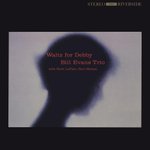
Bill Evans - Waltz For Debby youtu.be/dH3GSrCmzC8?si=bKi6…
一音目はベースから入るんだよね。どこか雑誌とかに書いてあるわけじゃ無いけど

TIME retweeted

Waltz for Debby era de algún modo la obra "mimada" de Bill Evans.
Aquí lo apreciamos en el Village Vanguard de NYC junto al contrabajista Scott LaFaro y Paul Motian en batería.
Antes de LaFaro, el contrabajo cumplía una función básica de soporte rítmico, pero él contribuyó más que ningún otro a liberar el bajo de esta función, para hacer un instrumento más libre y melódico.
Recuerdo que un día le pregunté a mi compadre Andrés (el de la foto) acerca de su influencia y me contestó: Fué alguien que abrió una ventana y no solo entró la luz del sol, sino una bocanada de aire fresco para el Jazz.
❤️


TIME retweeted

Happy Birthday Veronica Lake
Lake was one of the most glamorous leading ladies of the 1940s, famous for her blonde peek-a-boo hairstyle that was copied by millions of women around the world. Specialising in femme fatale roles, she is best remembered for her pairings with Alan Ladd. Lake was born Constance Ockelman in 1922 in Brooklyn. She had a troubled childhood and was diagnosed with schizophrenia, which augured ill for the future. The family moved to California, where she attracted the attention of producer Arthur Hornblow Jr., who was looking for a girl to play a nightclub singer in “I Wanted Wings” (1941). Hornblow changed her name to Veronica Lake, and the film made the teenager a star overnight. During filming, her long hair accidentally fell over her right eye and created a "peek-a-boo" effect. "I had my arm on a table ... it slipped ... and my hair – it was always baby fine and had this natural break – fell over my face ... It became my trademark", she recalled. Lake was then cast in Preston Sturges's “Sullivan's Travels” with Joel McCrea. The usually amiable actor loathed working with her and vowed never to do it again. This was followed by the film noir “This Gun for Hire” (1942) with Robert Preston and Alan Ladd. Her scenes with Ladd were electrifying, prompting Paramount to reteam them in “The Glass Key” Lake then made the comedy “I Married a Witch” with Fredric March, who also detested her, saying she ground her knee into his crotch during love scenes. Both films were highly successful, and when the United States entered World War II, Lake traveled the country raising money for war bonds. She made an appearance in Paramount's musical revue “Star Spangled Rhythm”, performing "A Sweater, Sarong and a Peek-A-Boo Bang" with Paulette Goddard and Dorothy Lamour, and co-starred in “So Proudly We Hail!” (1943), receiving acclaim for her portrayal of a suicidal nurse. Despite her success, Lake suffered a series of setbacks that ultimately destroyed her. Her complex personality led to a reputation for being difficult. Worse, on “Sullivan's Travels”, Lake had omitted to disclose that she was six months pregnant, upsetting Preston Sturges to the extent that he had to be physically restrained. Eddie Bracken was quoted as saying, "She was known as 'The Bitch' and she deserved the title." Yet “I Married A Witch” director, René Clair liked her: “She was a very gifted girl, but she didn't believe she was gifted.” Grace Kelly, who had a friend who knew Lake, commented, “She was terribly insecure and needed constant praise.” In late 1943, Lake took time off after giving birth to a son who died while still in hospital. She filed for divorce from her husband and began drinking heavily. Upon returning to work, Lake was cast in the film noir “The Blue Dahlia” (1946), with Alan Ladd, who had become one of Paramount's top stars. Her performance failed to impress screenwriter Raymond Chandler, who referred to her as "Moronica Lake". It was, however, a box office success. She then starred in the Western “Ramrod” (1947), but after a series of flops, Paramount dropped her. Bankrupt and on the verge of a nervous breakdown, the former star drifted between cheap hotels in New York, and was arrested for drunkenness and disorderly conduct. In 1962, a reporter found her working as a waitress in a cocktail lounge, under the name "Connie de Toth". After the story ran, fans of Lake sent her money which she returned as "a matter of pride". Her memoirs, “Veronica: The Autobiography of Veronica Lake”, were published in 1970. When she visited the UK to promote the book, she received an offer to play Blanche DuBois in a revival of “A Streetcar Named Desire”, and her performance was widely praised. Her final film was “Flesh Feast” a low-budget horror movie. In 1973, Lake returned to America complaining of stomach pains. She was diagnosed with cirrhosis of the liver; the result of years of drinking. Veronica Lake died on July 7, 1973, aged 50.


